Tuesday, March 27, 2018

The archaeologists sorting out Orkney's Neolithic bones

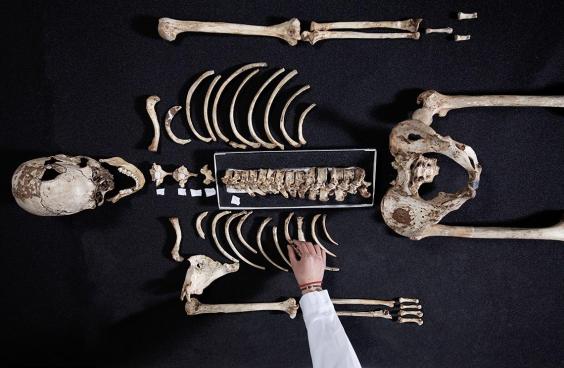
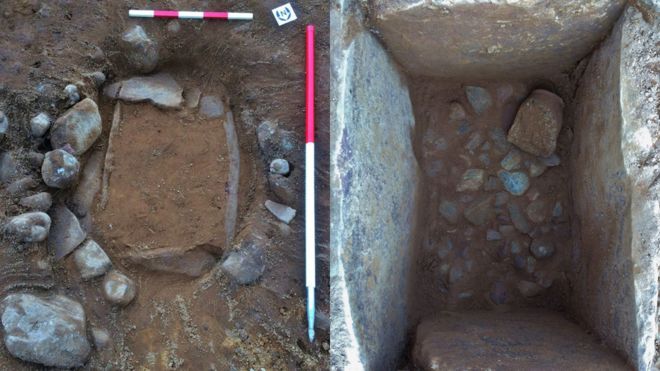
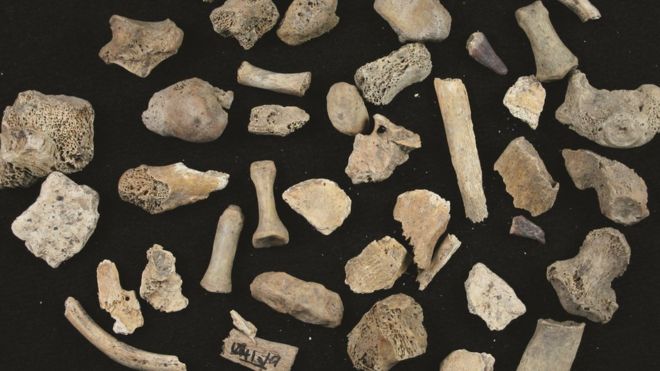
Archaeologists excavating Neolithic tombs in Orkney are used to finding jumbled collections of bones

A new study could potentially transform our understanding of the way Neolithic people dealt with their dead.

Archaeologists excavating Neolithic tombs in Orkney are used to finding jumbled collections of bones that seem unconnected.

Now, work by Dr Rebecca Crozier, from the University of Aberdeen, suggests whole bodies were placed in the chambered structures.

She said they could have been dismembered after being buried.

She told BBC Radio Orkney: "What we're trying to do is look at all the bones and try and understand why they are in the mess that we finding them in.

Read the rest of this article...

Monday, March 19, 2018

Site of huge Iron Age feast celebration found on Orkney

Windwick Bay at South Ronaldsay, close to the site of the massive cliff top feast held more than 1,700 years ago. PIC: www.geography.co.uk

Archaeologists have identified the site of a huge Iron Age feast on Orkney where more than 10,000 animals were cooked and eaten in a vast cliff top celebration. 

Tests have shown that horses, cattle, red deer and otters were on the menu at the gathering above Windwick Bay, South Ronaldsay, more than 1,700 years ago.

Archaeologists from the University of the Highlands and Islands have been working at The Cairns for several years. 

A large number of jewellery fragments and tools have already been discovered at the site, where the remains of an Iron Age broch and metalworking site can be found, with recent radiocarbon tests carried out at a midden - or rubbish tip - nearby.

Read the rest of this article...

Utrecht’s history goes back 11,000 years, archaeologists say


The history of Utrecht begins at least 8,000 years earlier than was previously thought, local broadcaster RTV Utrecht reported this week. 

The discovery was made when archaeologists were digging at the site of the Prinses Máxima Centrum for children with cancer ahead of its expansion. 

The dig yielded traces of human habitation and objects from the early Stone Age, with some indications that Utrecht started as far back as 11,000 BC. 

‘There have been prehistoric finds in Leidsche Rijn and Hoograven, particularly from the Bronze Age and the Iron Age. But this discovery means the history of Utrecht started 8,000 years earlier than the history books tell us,’ Utrecht alderman Kees Geldof told the broadcaster. 

Not only were older indications of a human presence found at the site but the dig also showed evidence that the site had been inhabited without interruption throughout the Stone Age.

Read the rest of this article...

Thursday, March 1, 2018

15,000-year-old artefacts discovered along Scotland's Aberdeen bypass

Artefacts and structures found during archaeological excavations on the Aberdeen Western Peripheral Route/Balmedie to Tipperty (AWPR/B-T) project are shedding light on land use and settlement in the north east over the past 15,000 years, including Mesolithic pits, Roman bread ovens, prehistoric roundhouses and a cremation complex.


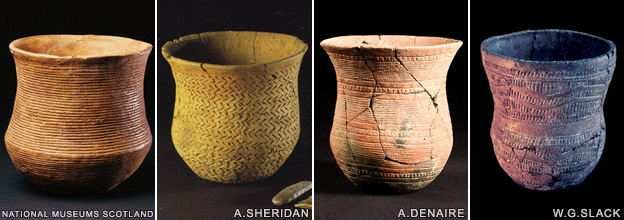
A beaker from the Chalcolithic period; a fluted carinated bowl from early Neolithic times;
impressed ware from the middle Neolithic 
[Credit: Transport Scotland]

Since the archaeological excavations were completed, specialists have been analysing the artefacts and samples recovered from the various sites and will be detailing the results in a new limited edition book due to be published later this year.

Keith Brown, Cabinet Secretary for Economy, Jobs and Fair Work said: “When complete, the AWPR will help to reduce congestion, cut journey times, improve safety and lower pollution in Aberdeen City Centre, as well as enable local authorities to develop public transport solutions."

Read the rest of this article...

Monday, February 26, 2018

Britain's prehistoric catastrophe revealed

Ancient Britons may have been nearly wiped out by bubonic plague brought by newcomers to the island


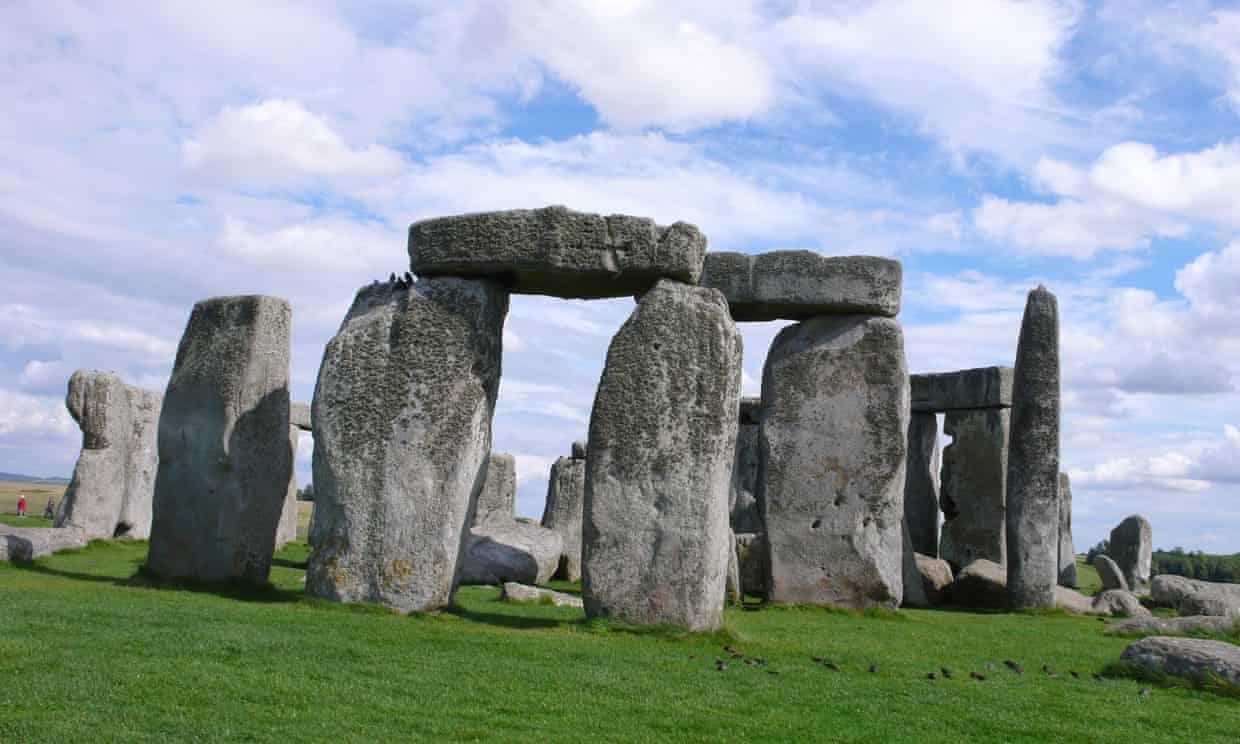
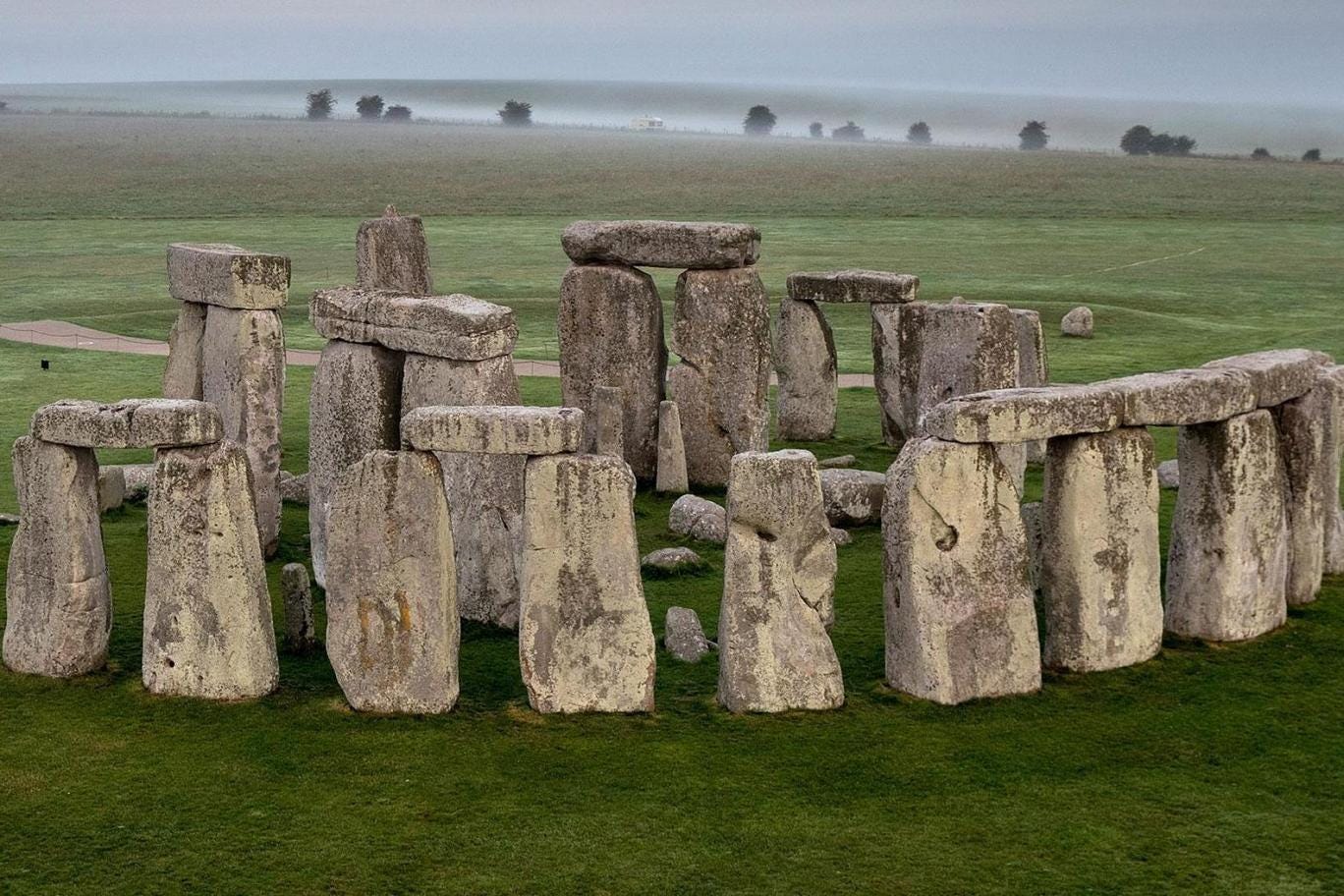
The builders of Stonehenge are thought to be the last of Britain's neolithic people Getty
Extraordinary new genetic evidence is revealing how Britain experienced a mysterious almost total change in its population in just a few centuries after the construction of Stonehenge.

It suggests that some sort of social, economic or epidemiological catastrophe unfolded.

The great 20-30 tonne stones of Stonehenge were erected by Neolithic farmers whose ancestors had lived in Britain for at least the previous 1,500 years – and new genetic research on 51 skeletons from all over Neolithic Britain has now revealed that during the whole of the Neolithic era, the country was inhabited mainly by olive-skinned, dark-haired Mediterranean-looking people.

Read the rest of this article...

The Archaeology of Wealth Inequality

Researchers trace the income gap back more than 11,000 years

When the last of the volcanic ash from Mount Vesuvius settled over Pompeii in A.D. 79, it preserved a detailed portrait of life in the grand Roman city, from bristling military outposts to ingenious aqueducts. Now researchers say the eruption nearly 2,000 years ago also captured clues to one of today’s most pressing social problems.
Analyzing dwellings in Pompeii and 62 other archaeological sites dating back 11,200 years, a team of experts has ranked the distribution of wealth in those communities. Bottom line: economic disparities increased over the centuries and technology played a role. The findings add to our knowledge of history’s haves and have-nots, an urgent concern as the gulf between the 1 percent of ultra-rich and the rest of us continues to grow.
“We wanted to be able to look at the ancient world as a whole and draw connections to today,” says Michael E. Smith, an archaeologist at Arizona State University, who took part in the study. The research is being published this month in Ten Thousand Years of Inequality, a book edited by Smith and Timothy Kohler of Washington State University.
Read the rest of this article...

Ancient Britons 'replaced' by newcomers

Beaker pottery starts to appear in Britain around 4,500 years ago

The ancient population of Britain was almost completely replaced by newcomers about 4,500 years ago, a study shows.

The findings mean modern Britons trace just a small fraction of their ancestry to the people who built Stonehenge.

The astonishing result comes from analysis of DNA extracted from 400 ancient remains across Europe.

The mammoth study, published in Nature, suggests the newcomers, known as Beaker people, replaced 90% of the British gene pool in a few hundred years.

Read the rest of this article...

13,500-year-old carved bison bone fished from the bottom of the North Sea

he carved bison bone was fished out of the North Sea in 2005 and dates to the last Ice Age 
[Credit: Rijksmuseum van Oudheden]

Late Ice Age hunter gatherers roamed the area that became the North Sea but very little evidence of their presence has been found. But sometimes the sea floor yields treasures that shed light on the period. This is a confirmation, the article says, of ‘the importance of continental shelves as archaeological archives’.

In 2005 a Dutch fishing vessel caught a bison bone in its nets on the border of the Dutch part of the continental shelf. The bone, which had a distinctive zigzag pattern carved in it, ended up in the hands of a collector who, the NRC writes, ‘had good contacts with fishermen’ and agreed to let experts at the Leiden archaeological museum take a look at it.

Carbon isotope analysis showed the bone to be 13,500 years old and part of a culture that decorated animal bones with zigzag and herringbone motives. Only three other similarly carved objects have been discovered so far: a horse’s jaw in Wales, deer antlers in Northern France and moose antlers in Poland.

Read the rest of this article...

The Guardian view on Neanderthals: we were not alone

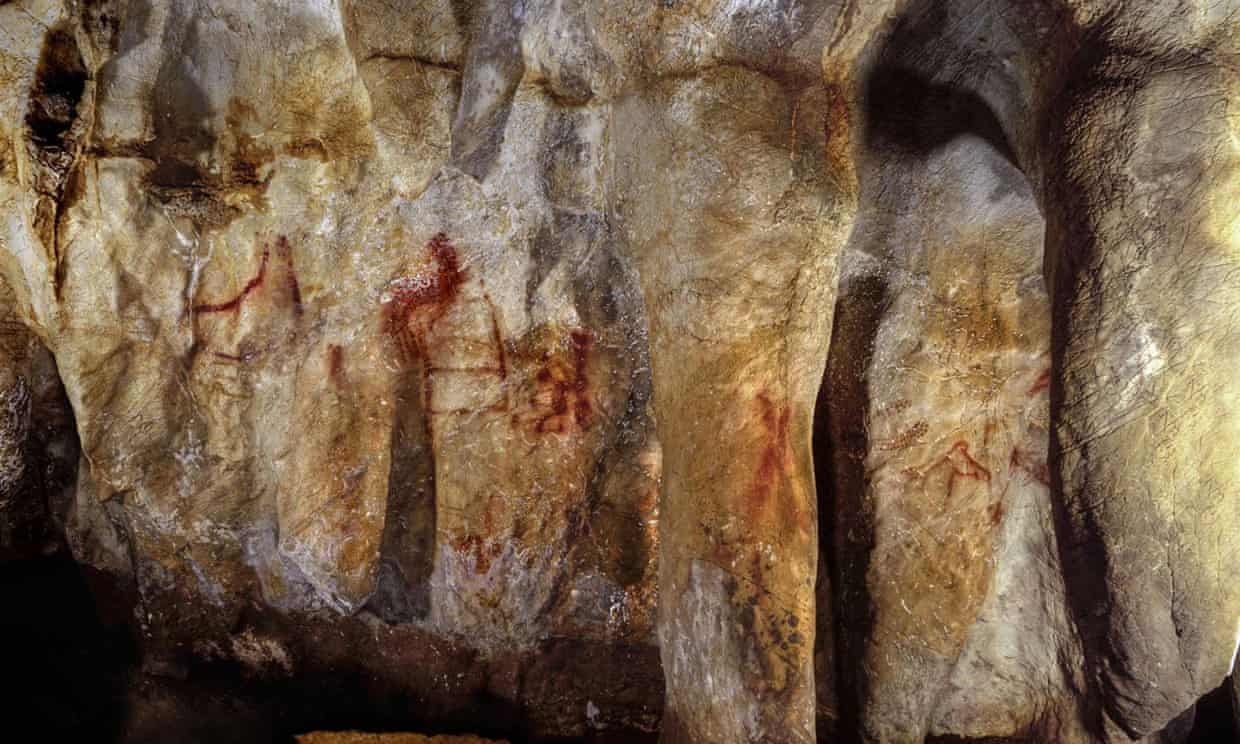
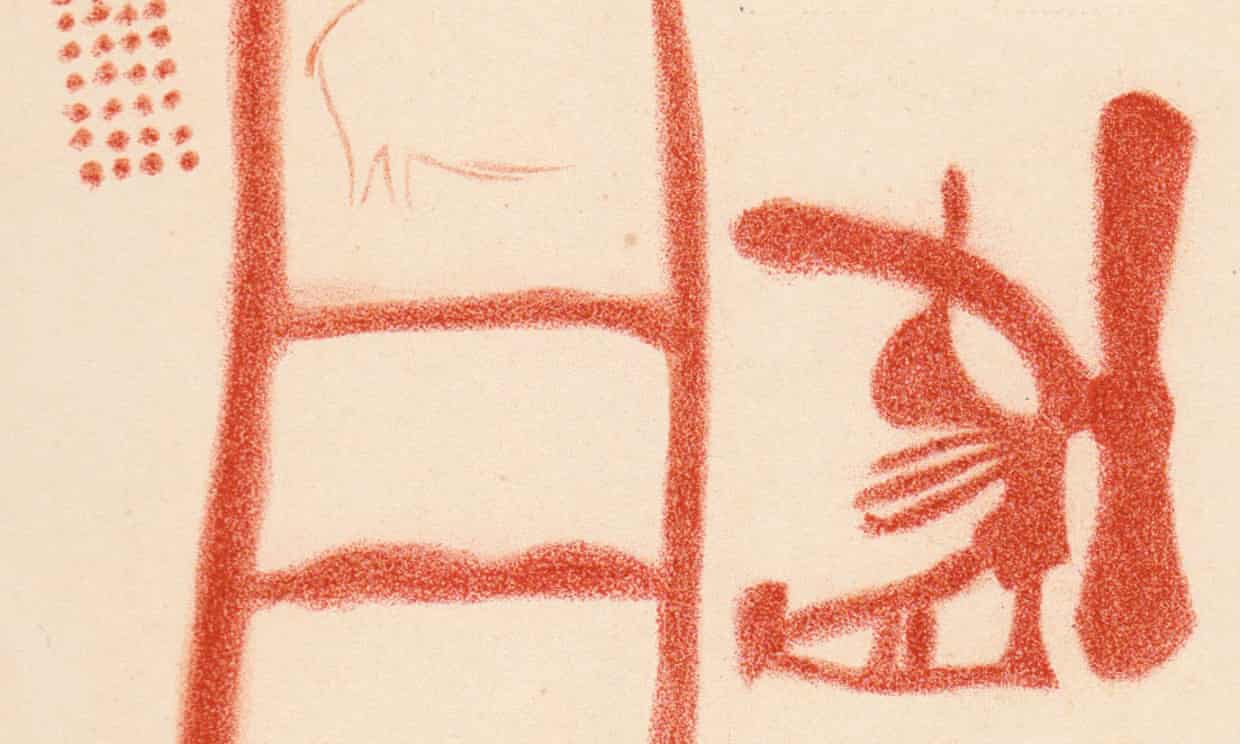
Drawing of Panel 78 in La Pasiega by Breuil et al (1913). The red scalariform (ladder) symbol has a minimum age of 64,000 years but it is unclear if the animals and other symbols were painted later. Photograph: Breuil et al

The three human subspecies known to have hybridised to produce the present human population of the planet, Neanderthals, Homo sapiens and Denisovans, last had a common ancestor more than half a million years ago. Until now it has been assumed that the only branch of her descendants to think symbolically was us, Homo sapiens. In fact, until the development of sequencing techniques sensitive enough to work on ancient DNA, it was thought that the other two species had died out entirely, rather than leaving portions of their genome in European and Melanesian populations respectively. But the discovery, reported last week, of palaeolithic art at four sites in Spain that dates from the time when the peninsula was occupied only by Neanderthals, shows that they worked with symbols of stone and paint.

We have no idea what these markings mean. That is in the nature of symbolism, and indeed of language: the meaning of a sound, or a marking on the wall, is given by the community that uses it; it can’t be read by outsiders. We already know that Neanderthals were anatomically equipped for speech; their use of painted symbols suggests that they could make audible symbols and not just visible ones.

Read the rest of this article...

Neanderthals – not modern humans – were first artists on Earth, experts claim

Paintings on a section of the La Pasiega cave wall, including a ladder shape composed of red horizontal and vertical lines. Photograph: P. Saura/PA

More than 65,000 years ago, a Neanderthal reached out and made strokes in red ochre on the wall of a cave, and in doing so, became the first known artist on Earth, scientists claim.

The discovery overturns the widely-held belief that modern humans are the only species to have expressed themselves through works of art.

In caves separated by hundreds of miles, Neanderthals daubed, drew and spat paint on walls producing artworks, the researchers say, tens of thousands of years before modern humans reached the sites.

Read the rest of this article...

A rare Neanderthal hand axe found in a long lost cave in Wales

Image courtesy National Museum Cardiff

Elizabeth Walker, Palaeolithic & Mesolithic Archaeologist and Head of Collections at National Museum Cardiff, talks about a Neanderthal hand axe, which dates back to c. 60,000-35,000 BC

This hand axe was found during excavations at Coygan Cave, near Laugharne, Carmarthenshire, in advance of the cave’s destruction by quarrying in the 1960s. It is of a form typically made by a Neanderthal and was left at the cave with another similar tool sometime between 60,000 and 35,000 years ago.

Findings like this hint that Neanderthals may have lived in the Carmarthenshire area, but we have no evidence of their physical remains. The two axes we have were found near the wall of the cave, and it’s been suggested they were deliberately cached by their owners, who intended to return to the cave to use them on a future visit.

Read the rest of this article...

Wednesday, February 14, 2018

Northumberland Bronze Age skeleton: Whose bones are these?

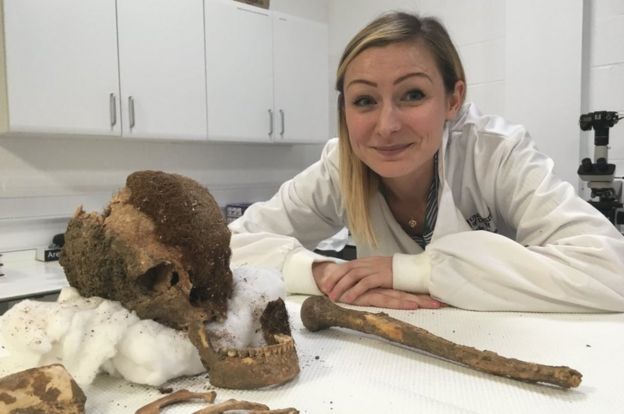
Sanita Nezirovic has been investigating the Bronze Age remains

Forensic scientists have been analysing Bronze Age bones found in a field - but how do they work out who the person was?

In September 2017, a farmer near Rock, Northumberland, preparing his field for drainage discovered a burial cist - or stone coffin - containing a skeleton and a jug.

Sanita Nezirovic, a lecturer in forensic science at the University of Derby, was tasked with finding out whose bones they were.

She has looked at the remains of hundreds of people, dating from the Bronze Age to modern times.

In each case she creates a "presumptive profile", detailing facts such as the person's sex, age and height.

Read the rest of this article...

Bizarre 'Spider Stones' Found at Site of Neolithic Sun-Worshipers


Two of the 5,000-year-old "spider stones" unearthed on the Danish island on Bornholm.
Credit: Bornholm Museum

Strangely marked stones and other artifacts unearthed on the island of Bornholm in Denmark have raised new mysteries about a Neolithic sun-worshipping religion centered there about 5,000 years ago.

The new finds include "spider stones," inscribed with pattern like a spider's web, and a piece of copper from a time when the metal could not be made by the island's Stone Age inhabitants, say the researchers.

The handful of newfound spider stones look a little like hundreds of inscribed "sun stones" or "solar stones" — solsten in Danish — found since the 1990s amid the remains of an earthen-walled Neolithic enclosure, about 650 feet (200 m) across, at the Vasagard archaeological site on Bornholm in the Baltic Sea, between the southern tip of Sweden and the coast of Poland.

Read the rest of this article...

8,000-Year-Old Heads on Stakes Found in Mysterious Underwater Grave

None of the human skulls had jaw bones. There was one human jaw bone at the site, but it wasn't associated with any of the skulls.

The discovery of a burial containing 8,000-year-old battered human skulls, including two that still have pointed wooden stakes through them, has left archaeologists baffled, according to a new study from Sweden.

It's hard to make heads or tails of the finding: During the Stone Age, the grave would have sat at the bottom of a small lake, meaning that the skulls would have been placed underwater. Moreover, of the remains of at least 11 adults placed on top of the grave, only one had a jawbone, the researchers said.

Read the rest of this article...

Neanderthals' lack of drawing ability may relate to hunting techniques


Replica of drawing of lions painted in the Chauvet Cave. Art in the cave has been identified 
as created by early modern humans [Credit: UC Davis]

Neanderthals had large brains and made complex tools but never demonstrated the ability to draw recognizable images, unlike early modern humans who created vivid renderings of animals and other figures on rocks and cave walls. That artistic gap may be due to differences in the way they hunted, suggests a University of California, Davis, expert on predator-prey relations and their impacts on the evolution of behaviour.

Neanderthals used thrusting spears to bring down tamer prey in Eurasia, while Homo sapiens, or modern humans, spent hundreds of thousands of years spear-hunting wary and dangerous game on the open grasslands of Africa.

Richard Coss, a professor emeritus of psychology, says the hand-eye coordination involved in both hunting with throwing spears and drawing representational art could be one factor explaining why modern humans became smarter than Neanderthals.

Read the rest of this article...

Major Neolithic ceremonial enclosure uncovered at Windsor

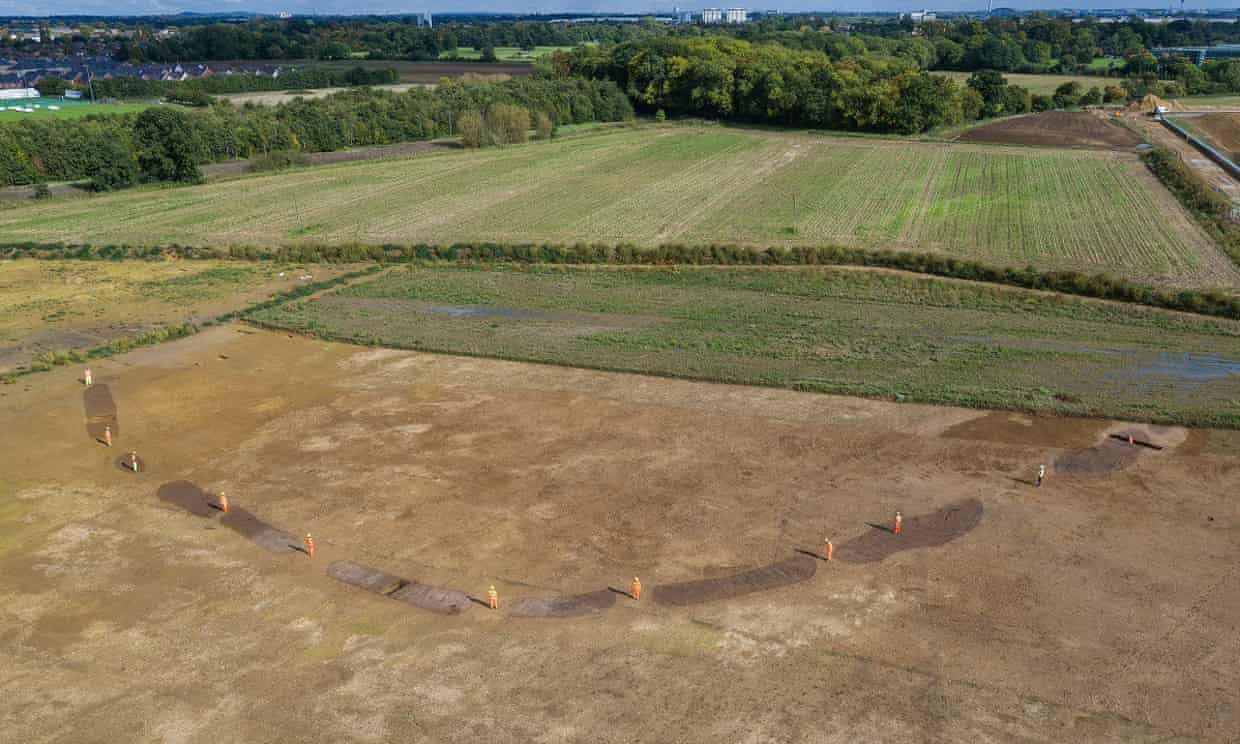
An aerial view of the site of the Neolithic causewayed enclosure 
[Credit: Wessex Archaeology]

A major 5,500 year old Neolithic ceremonial gathering place known as a causewayed enclosure has been partially uncovered within sight of Windsor Castle in Berkshire. The discovery was made at Riding Court Farm, near Datchet as part of CEMEX UK’s archaeological programme on the quarrying site, which is monitored on behalf of the local planning authority by Berkshire Archaeology.

Defined by encircling bank and ditch segments with gap entrances, such sites represent some of the earliest known acts of monument building in Britain. Around 80 monuments have been identified across Britain, and others are known on the Continent. The Riding Court causewayed enclosure may have been seasonally occupied, a place where communities gathered to undertake ceremonial feasting, exchange of goods, the marking of festivals and social obligations. Imported objects found in other enclosures suggest trade and exchange of exotic objects (stone axes and pottery), while evidence of feasting and human burials are known from other sites.

One feature is the deliberate consumption and wasting of meat and the exposure of human remains including the placing of skulls in the base of ditches. There are signs that pots were deliberately smashed perhaps as festivities came to a close.

Read the rest of this article...

Mystery of 8,000-Year-Old Impaled Human Heads Has Researchers Stumped

Archaeologists have never before encountered this grisly phenomenon in Mesolithic Scandinavia, and they're hard-pressed to explain it.


Impaled Mesolithic Skull 
found on the bottom of a shallow lake in Kanaljorden #Sweden
ca. 7,000 years old 

In 2009, a new railway bridging southern Sweden's Motala Ström River was slated for construction. But then, archaeologists began turning up artifacts there that were thousands of years old. Over the next few years, animal bones, tools made from antlers, wooden stakes, and bits of human skull were found in the bog's lime sediment.

The remains belonged to Mesolithic hunter-gatherers, a group that existed around 8,000 years ago between the Old and New Stone Ages. These societies have been known to show respect for the bodily integrity of their dead—that is, until now. (Related: "Mysterious Graves Discovered at Ancient European Cemetery")

In 2011, Fredrik Hallgren of the Cultural Heritage Foundation led an archaeological project on the Kanaljorden excavation site near the Motala Ström River. When the team began excavating the site, they uncovered the first known instance of Mesolithic hunter-gatherers mounting human skulls on stakes. (Related: "Archaeologists Discover New Mass Grave From Notorious Shipwreck")

Read the rest of this article...

Thursday, February 8, 2018

Discovery of Windsor neolithic monument excites archaeologists

Scientists expect to uncover entire circuit of causewayed enclosure at Berkshire quarry


An aerial view of the site of the Neolithic causewayed enclosure. 
Photograph: Wessex Archaeology

A neolithic monument has been discovered less than two miles from Windsor Castle. Dating from 5,500 years ago, it is one of the earliest known examples of monument-building in Britain.

A ceremonial gathering place known as a causewayed enclosure has been revealed with the discovery of a series of encircling ditches, artificial boundaries with gap entrances, at a vast site in Berkshire.

Archaeologists have found extensive quantities of animal bones as well as decorated pottery sherds, and evidence that pots were deliberately smashed, perhaps as festivities came to a boisterous close. Other finds include finely worked, leaf-shaped flint arrowheads, serrated blades, stone axes and grinding stones.

Read the rest of this article...

Housebuilder uncovers Iron Age chamber on Lewis

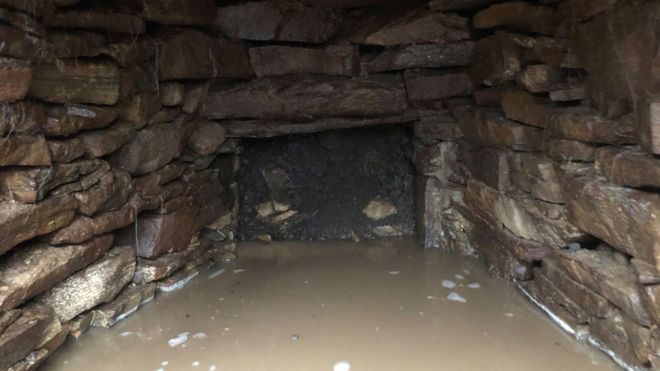
A 2,000-year-old underground chamber has been uncovered during work to build a house on the Isle of Lewis.
The Iron Age soutterrain was revealed during the digging of the foundations for the property in Ness.
Local archaeologists, husband and wife team Chris and Rachel Barrowman, are recording the soutterrain.
Mr Barrowman said theories on the purpose of the stone-lined, flat stone-roofed structures included storing food.

Read the rest of this article...

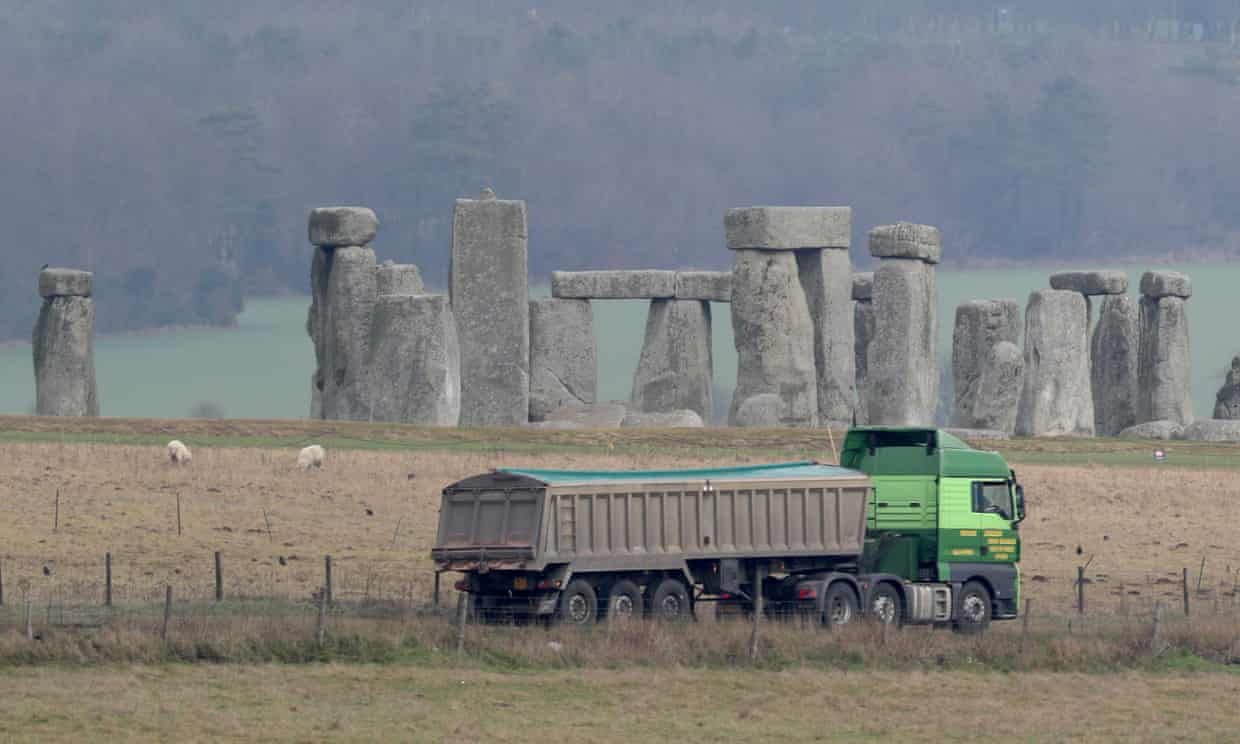
Stonehenge A303 tunnel plans will 'protect and enhance' monument

This is the proposed western approach to the new Longbarrow junction

Plans for a tunnel near Stonehenge will "enhance and protect" the ancient site but need further work, heritage experts have warned.

Initial designs for the scheme have been unveiled for the first time as a major public consultation starts.

Highways England said the design would "restore the tranquil environment and setting of the monument".

Opponents have said the tunnel could destroy archaeological treasures and scar the landscape irreparably.

Read the rest of this article...

Wednesday, February 7, 2018

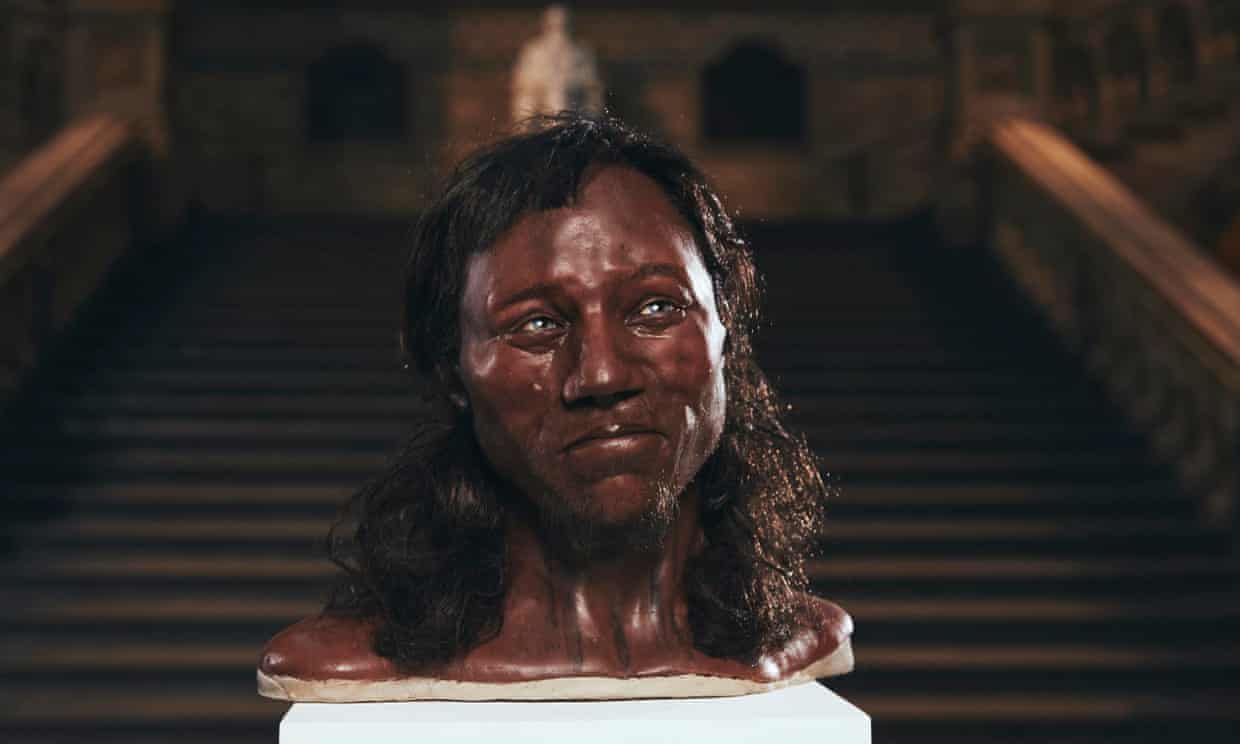
Cheddar Man: First modern Briton had 'dark to black' skin, DNA research reveals


The first modern Briton had “dark to black” skin, groundbreaking new analysis of his 10,000-year-old remains has revealed.
Britain’s oldest complete skeleton, known as Cheddar Man, was unearthed more than a century ago in Gough’s Cave in Somerset.
But an unprecedented examination of his DNA, along with a facial reconstruction of the fossil, shows the young man would have had a darker complexion than previously thought, along with blue eyes and dark, curly hair.
Previous reconstructions of Cheddar Man, which were not based on DNA data, depicted him with a lighter skin tone.
Yet research by evolution and DNA specialists at the Natural History Museum and University College London suggests the pigmentation associated with northern European ancestry is a more recent development.
Read the rest of this article...

Could these be the oldest Neandertal tools made with fire?

These 171,000-year-old digging sticks may have been made by Neandertals.

In the spring of 2012, while digging a hole for a thermal pool, construction workers in Grosseto, Italy, hit scientific pay dirt: layers of stratified soil and rock filled with prehistoric bones and artifacts close to 171,000 years old. Excavating the pool would have to wait. With further digging, the researchers found tantalizing evidence of early fire use—nearly 60 partially burned digging sticks made mostly of boxwood. The most likely creators of the sticks were Neandertals, who are known to have lived in Europe at that time. If our extinct cousins did indeed craft the sticks, they represent the earliest use of fire for toolmaking among Neandertals.

Neandertals evolved in Europe perhaps as early as 400,000 years ago, but it’s unclear when they began to regularly use fire. Until now, the earliest evidence of Neandertals controlling fire dates to the late Middle Pleistocene, about 130,000 years ago. And because wood decomposes easier and faster than materials like bone and stone, it’s unusual to find prehistoric wooden artifacts. The oldest wooden weapons discovered so far are spears in Schöningen, Germany. They are thought to have been made by Homo heidelbergensis or Neandertals some 300,000 years ago.

Read the rest of this article...

First modern Britons had 'dark to black' skin, Cheddar Man DNA analysis reveals

The genome of Cheddar Man, who lived 10,000 years ago, suggests that he had blue eyes, dark skin and dark curly hair


The first modern Britons, who lived about 10,000 years ago, had “dark to black” skin, a groundbreaking DNA analysis of Britain’s oldest complete skeleton has revealed.

The fossil, known as Cheddar Man, was unearthed more than a century ago in Gough’s Cave in Somerset. Intense speculation has built up around Cheddar Man’s origins and appearance because he lived shortly after the first settlers crossed from continental Europe to Britain at the end of the last ice age. People of white British ancestry alive today are descendants of this population.

It was initially assumed that Cheddar Man had pale skin and fair hair, but his DNA paints a different picture, strongly suggesting he had blue eyes, a very dark brown to black complexion and dark curly hair.

The discovery shows that the genes for lighter skin became widespread in European populations far later than originally thought – and that skin colour was not always a proxy for geographic origin in the way it is often seen to be today.

Tom Booth, an archaeologist at the Natural History Museum who worked on the project, said: “It really shows up that these imaginary racial categories that we have are really very modern constructions, or very recent constructions, that really are not applicable to the past at all.”

Read the rest of this article...

Tuesday, February 6, 2018

Genome erzählen die Bevölkerungsgeschichte Nordeuropas


Schädel, der im Rahmen dieser Studie untersucht wurde. Fundort: Ölsund, Hälsingland, Schweden, datiert auf etwa 2,300 v. Chr., im Reinraumlabor für die Analyse alter DNA des Max-Planck-Instituts für Menschheitsgeschichte. (© Alissa Mittnik)

Ein internationales Forschungsteam unter Leitung des Max-Planck-Instituts für Menschheitsgeschichte in Jena, hat das Erbgut von 38 Nordeuropäern aus der Zeit von etwa 7.500 bis 500 vor Christus analysiert. Die Studie, die jetzt in Nature Communications erschien, zeigt, dass Skandinavien ursprünglich über eine südliche und eine nördliche Route besiedelt wurde und dass die Landwirtschaft in Nordeuropa wahrscheinlich durch einwandernde Bauern und Weidehirten rund 2000 Jahre später als in Mitteleuropa eingeführt wurde.

Read the rest of this article...

Monday, February 5, 2018

New tunnel bypassing Stonehenge could destroy traces of human life dating back to the Ice Age, experts warn

Hoof prints dating back 8,000 years could be destroyed by road plans at ‘precious‘ site, archaeologist says

The Government has backed road works to ease traffic congestion near Stonehenge Getty

A new tunnel bypassing Stonehenge could destroy a “unique” site where traces of humans living as far back as the last Ice Age have been preserved, experts have warned.

Hoof prints of wild cattle known as aurochs were recently discovered at excavations a mile and a half from the famous stone circle in Wiltshire, University of Buckingham archaeologist David Jacques said.

The 6,000-year-old marks, preserved in what appears to be a ritualistic manner, are the latest finds of a decade-long dig at Blick Mead, which Prof Jacques said form a "national archive of British history".

However, the proposed tunnel and a flyover close to Blick Mead, which could be built under Government-backed roadwork plans to ease congestion on the A303, could irrevocably damage the site, he warned.

Opponents of the plan fear it could harm the rich archaeological landscape.

Read the rest of this article...

Stonehenge tunnel could destroy 'unique library' of early history

Plans for A303 could spell loss of Blick Mead site, where humans may have lived since the Ice Age


The construction of a tunnel past Stonehenge could spell the loss of a unique site that can trace the presence of people back to the last Ice Age, experts have said.

Perfectly preserved hoofprints of wild cattle known as aurochs have recently been found at excavations a mile and a half from the Wiltshire stone circle, David Jacques, and archaeologist at the University of Buckingham, said.

The 6,000-year-old prints, preserved in what appears to be a ritualistic way, are the latest in a wealth of finds made during a decade-long dig at Blick Mead, which Jacques said amounted a “national archive of British history”.

The tunnel, and a flyover close to the Blick Mead excavations which could also form part of the roadworks to improve the A303, could irrevocably damage the site, he said.

The government has backed plans to build a tunnel to house the A303 as it passes Stonehenge as part of measures to ease congestion and improve the setting of the neolithic site.

Read the rest of this article...

Sunday, February 4, 2018

Scandinavians shaped by several waves of immigration

Directly following the last ice age, people from the western parts of what is now Norway were a population that had substantially different genetics from the people living in the area corresponding to present-day Sweden.

Anne-Marian Snaaijer, a PhD candidate at the Norwegian University of Science and Technology works  in Trondheim's Archive Centre at Dora. The collection trays hold lots of bone discoveries 
[Credit: Ã…ge Hojem, NTNU University Museum]

"We were surprised that the results showed such marked dissimilarities," says associate professor and archaeologist Birgitte Skar at the Norwegian University of Science and Technology's (NTNU) University Museum. Skar is responsible for the museum's Stone Age and Bronze Age collections.

Scandinavia was one of the last parts of Europe to become habitable when the glaciers released their icy grip more than 10,000 years ago. The ocean's resources and the coastal archipelago attracted marine hunter-gatherers of yore to the region.

Swedish and Norwegian researchers have collaborated on analysing the DNA in 9500-year-old bone samples from the southern and western Norwegian coast and from the Swedish islands of Gotland and Stora Karlsö. This period corresponds to the Mesolithic Stone Age.

Read the rest of this article...

Melting Glaciers Could Reveal How Our Ancestors Dealt With Changing Climates

While some archaeologists dig with trowels and shovels, others use a warming planet to their advantage.


Archaeologist holding a c. 1400-year-old arrow, lost reindeer hunting in the high mountains of Oppland, Norway, during the Late Antique Little Ice Age. 
PHOTOGRAPH BYJULIAN MARTINSEN, SECRETS OF THE ICE OPPLAND COUNTY COUNCIL

When Lars Pilø, co-director of the Glacier Archaeology Program at Oppland County Council, noticed Norway was experiencing a particularly warm autumn in 2006, the archaeologist turned to the mountains. If climate change was thawing glacial ice, what did that mean for the artifacts that were emerging from the melt? So, starting officially in 2011, Pilø and an international team took to Norway's icy Jotunheimen and Oppland mountains to see what ancient objects they could rescue from the snowmelt.

Over the years, the archaeologists uncovered thousands of artifacts, some of which date back 6,000 years. Since the ice acts like a giant freezer and preserves the objects, the finds look like they could have been uncovered yesterday. (Read: "Alaska's Thaw Reveals—And Threatens—A Culture's Artifacts")

"The moment these artifacts melt out of the ice, they're immediately vulnerable to the elements," says James H. Barrett, a University of Cambridge environmental archaeologist.

The glacier archaeologists detailed their findings in a Royal Society Open Science paper published January 24. Pilø and Barrett are authors on the paper.

Read the rest of this article...

Friday, February 2, 2018

Archaeologists may have found architects' camp for Stonehenge


A team of archaeologists believe they may have discovered a spot where some of the architects of Stonehenge gathered and camped.
The team have been investigating a causewayed enclosure – these are thought to be ancient meeting places or centres of trade – on army land at Larkhill close to Stonehenge.
They found an alignment of posts that matches the orientation of the circle at Stonehenge, leading to the theory that Larkhill could have been some sort of blueprint for the temple.
Si Cleggett, of Wessex Archaeology, conceded it was possible to suggest that any evidence of prehistoric settlement could be connected to the creation of Stonehenge.
But he argued that the proximity of Larkhill – a relatively short walk from the stone circle – and the coincidence of the alignment of the nine posts gave weight to the idea that the people who created and visited the enclosure could have had a hand in the conceptualisation of Stonehenge.
Read the rest of this article...

Sunday, January 21, 2018

Ancient human remains found in Mayo date back over 5,000 years

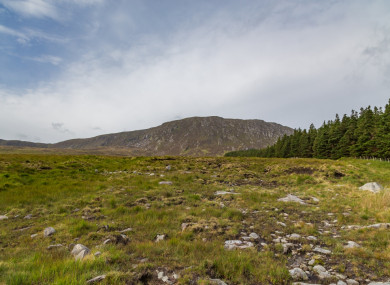
Ben Gorm Mountain, Mayo
Image: T Kahlert via Department of Culture

THE DEPARTMENT OF CULTURE, Heritage and the Gaeltacht has revealed that ancient human remains, which were discovered by a local hillwalker on a Mayo mountainside in 2016, date back as early as 3,600 BC.
The research found that the natural boulder chamber in which the remains were found was used for human burial practice through the Neolithic period.
A least 10 individuals – adults, teenagers and children – were placed in the chamber over a period of up to 1,200 years, according to the research. One of the adult bones dated to 3,600 BC, while a bone of a child skeleton dated to 2,400 BC.
In August 2016, local hillwalker Michael Chambers discovered a cave-like chamber among some large boulders on Ben Gorm Mountain in Newport, Mayo.
He found human bones scattered over the rock floor of the chamber and contacted gardaí in order to have them tested.
Read the rest of this article...

Unusually sophisticated prehistoric monuments and technology in the heart of the Aegean

Excavations underway on Dhaskalio, off Keros 
[Credit: Cambridge Keros Project]

New work at the settlement of Dhaskalio, the site adjoining the prehistoric sanctuary on the Cycladic island of Keros, has shown this to be a more imposing and densely occupied series of structures than had previously been realised, and one of the most impressive sites of the Aegean during the Early Bronze Age (3rd millennium BC).

Until recently, the island of Keros, located in the Cyclades, south of Naxos, was known for ritual activities dating from 4,500 years ago involving broken marble figurines. Now new excavations are showing that the promontory of Dhaskalio (now a tiny islet because of sea level rise), at the west end of the island next to the sanctuary, was almost entirely covered by remarkable monumental constructions built using stone brought painstakingly from Naxos, some 10km distant.

Read the rest of this article...

Bronze Age Arrows and a Viking Sword – The 2017 Fieldwork Was Awesome!

The Storfonne ice patch, photographed in September 2014 during a major melt. Notice the light grey lichen-free zone surrounding the ice. This area was exposed by ice melt in the last 15-20 years. Photo: Lars Pilø, Secrets of the Ice/Oppland County Council.

Both sites had only seen short visits prior to this field-season. This had resulted in a number of artifact recoveries, especially arrows, found close to the melting ice. However, we knew that there were other finds on these sites, and that they were lying on the surface, exposed to the elements. The main job would be to rescue these artefacts. To achieve this, we planned to conduct a systematic and thorough survey of the lichen-free zone (where the ice has melted recently) surrounding the ice on both sites.

The Lauvhøe ice patch

The Lauvhøe ice patch was up first. The earliest finds from this site were reported in 2007: three arrows, dating to the Iron Age and the medieval period. Even with these remarkable finds, the site had to wait ten years for a proper systematic survey. This may sound harsh, but with the short time window available for surveys each year, other sites with more and older finds had to be surveyed first. Lauvhøe’s turn had finally come this year.

Read the rest of this article...

LES FOUILLES ARCHÉOLOGIQUES PRÉVENTIVES DÉMARRENT SUR LA ZAC ODE ACTE 2 SUR LES COMMUNES DE LATTES ET DE PÉROLS (HÉRAULT)


Les fouilles préventives du site des « Hauts de Lattes » s’inscrivent dans la poursuite de l’aménagement de la « Zac Ode Acte 2 », dans le cadre du projet urbain Ode à la Mer qui s’étend depuis la Lironde jusqu’au Parc des Expositions, sur les communes de Lattes et de Pérols.

8 HECTARES DE FOUILLES SUR LE SITE « HAUTS DE LATTES »
À la suite d’un diagnostic archéologique réalisé fin 2015 - début 2016, l’État (Drac Occitanie) a prescrit la réalisation d’une fouille préventive de 8 hectares, situés à l’extrémité nord de la « butte de Pérols », entre la vallée de la Lironde et l’étang de l’Estanel. La SA3M ( Société d’Aménagement de Montpellier Méditerranée Métropole), ainsi que deux autres maîtres d’ouvrage (les sociétés Pitch Promotion et Pégase Immobilier) ont choisi de confier ces recherches à l’Inrap, qui s’est associé au service archéologique de la SAM (Sète Agglopole Méditerranée) pour cette opération.

Read the rest of this article...
Menschheitsgeschichte muss nicht neu geschrieben werden


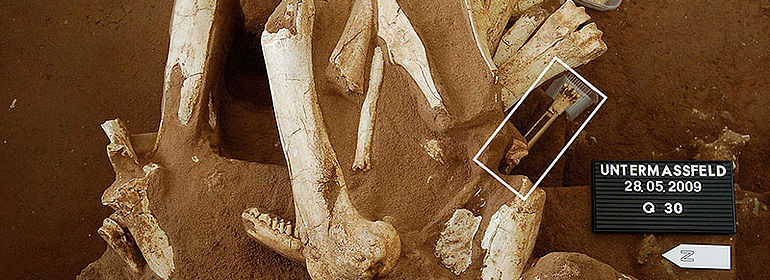
Der »Fall Untermaßfeld«

In einer kürzlich im Fachjournal »Journal of Paleolithic Archaeology« veröffentlichten Studie widerlegt der Senckenberg-Wissenschaftler Prof. Dr. Ralf-Dietrich Kahlke gemeinsam mit einem internationalen Team renommierter Steinzeitexperten eine kürzlich erschienene Veröffentlichung zur Ausbreitung des Menschen in Europa. In dieser wird die These aufgestellt, dass die ersten Menschen schon vor etwa einer Million Jahre in Nord- und Mitteleuropa lebten – gut 200.000 Jahre früher als bisher belegt. Das Team zeigt zudem, dass die »Belegstücke« der archäologischen Untersuchung vermutlich aus der Forschungsgrabung Untermaßfeld gestohlen wurden.

Read the rest of this article...

Monday, January 15, 2018

Neolithic girl's reconstructed face unveiled at Athens Acropolis Museum on January 19th

Myrtis is the reconstructed head of a girl that once lived in Classical-era ancient Athens and died during the plague in Athens in the 5th century BC

An 18-year-old girl who lived in Greece 7,000 years ago and was unearthed by archaeologists in Theopetra cave, near the city of Trikala, has had her face reconstructed and is about to officially introduce herself to the public.

Eight years after the revelation of Myrtis, the reconstructed head of a girl that once lived in Classical-era ancient Athens and died during the plague in Athens in the 5th century BC and following the international sensation that it caused, the Acropolis museum is ready to to introduce Dawn’s new face from an even earlier past, to Greek and international audiences.

Dawn (Avgi in Greek) is a woman from the Mesolithic era (7,000 BC) who lived in the Theopetra cave, according to Athens University professor Manolis Papagrigorakis; who has invested a great deal of time and learning in order to bring Greeks “face to face” with their ancestors.

Read the rest of this article...
Ancient highland ruins probed by archaeologists


ARCHAEOLOGISTS are probing an ancient mystery uncovered by workers deep in a Highland forest.

The crumbling ruins are believed to have been an Iron Age fort, or possibly the home of a local chief or lord, and date back to about 2,400 years ago.

The site was known about from a survey taken in the 1940s, but had been forgotten about until it was spotted by loggers clearing the land.

Now researchers are unravelling its tantalising mystery, with evidence showing the structure may have a violent past and was burnt down twice and rebuilt before finally being abandoned.

Read the rest of this article...

Monday, December 18, 2017

Evidence of 'special site' for Bronze Age burials near Loch Ness

The latest grave to be found is pictured before and after soil was removed from inside it
Archaeologists say they are finding increasing evidence that a site near Loch Ness was important for burials in the Bronze Age.

A second 4,000-year-old grave has been located in an area being developed in Drumnadrochit where a stone-lined grave known as a cist was found in 2015.

The discovery two years ago included human remains.

The latest grave had filled with soil causing degradation to the pit, but a single Beaker pot was found.

Archaeologists said the decorated pot may have held an offering to the person who was buried in the cist.

The first grave was discovered during work constructing the new Drumnadrochit Medical Centre and excavated by AOC Archaeology Group.

Read the rest of this article...
Wednesday, December 6, 2017

Prehistoric women's arms 'stronger than those of today's elite rowers'

Katherine Grainger and Anna Watkins celebrate Olympic victory in 2012. Neolithic women’s arm bones were about 30% stronger than those of women today. 
Photograph: Francisco Leong/IOPP Pool/Getty Images

Prehistoric women had stronger arms than elite female rowing teams do today thanks to the daily grind of farming life, researchers have revealed, shedding light on their role in early communities.

The study of ancient bones suggests that manual agricultural work had a profound effect on the bodies of women living in central Europe between about the early neolithic and late iron age, from about 5,300BC to AD100.

“We think a lot of what we are seeing is the bone’s response to women grinding grain, which is pretty much seated but using your arms really repetitively many hours a day,” said Dr Alison Macintosh, co-author of the research from the University of Cambridge.

Read the rest of this article...