Thursday, July 19, 2018

Research on British teeth unlocks potential for new insights into ancient diets

Skeleton sampled for the study, dating to the post-medieval period in Britain. The analysis suggests the Victorians were partial to a bowl of porridge, while in modern diets potatoes, soybeans and peanuts are flavour of the day 
[Credit: Camilla Speller, University of York]

Dental plaque accumulates on the surface of teeth during life and is mineralised by components of saliva to form tartar or "dental calculus", entombing proteins from the food we eat in the process.

Identifying evidence of many foods, particularly plant crops, in diets of the past is a challenge as they often leave no trace in the archaeological record. But proteins are robust molecules that can survive in tartar for thousands of years.

Archaeological tooth tartar has previously been shown to preserve milk proteins, but the international study, led by researchers at the University of York and the Max Planck Institute for the Science of Human History, has proved for the first time that it can also reveal more precise information about a wider range of food proteins, including those from plants.

The discovery could provide new insights into the diets and lifestyles of our ancestors, adding to the value of dental remains in our understanding of human evolution.

Read the rest of this article...

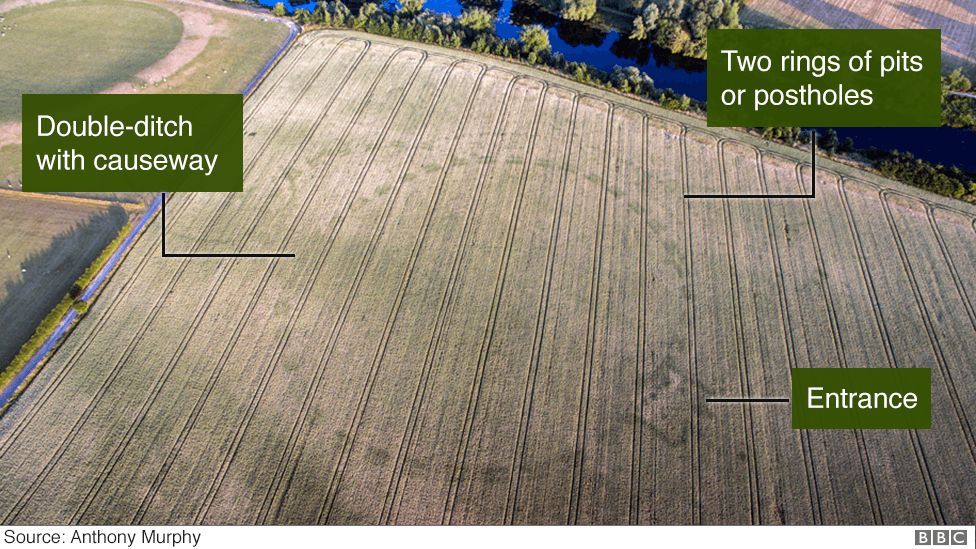
Hidden landscapes the heatwave is revealing


As the summer sun continues to beat down on the British Isles, ghosts are appearing in the yellowing fields.

Normally kept hidden by lush grasses and crops, old and prehistoric features are making themselves known through imprints on fields and lawns, some for the first time in known memory.

It's hard to see these features from the ground - but with the rise of drones for aerial photography, they can be captured where they may have remained unidentified in previous heatwaves.

The marks are revealed when grass or crops on top of wood or stone still in the ground flourish or deteriorate at different rates to surrounding material in the unusually hot weather.

Read the rest of this article...

The real cabbage soup diet: What Britons ate down the ages


Ancient Britons were eating dairy, peas, cabbage and oats, according to gunk trapped in their teeth.
Scientists analysed dental plaque found on the teeth of skeletons from the Iron Age to post-Medieval times.
They found evidence of milk proteins, cereals and plants, as well as an enzyme that aids digestion.
In modern samples, they found proteins that reflect a more cosmopolitan diet, including potatoes, soya and peanuts.
The research gives a picture of what people have been eating through the ages, including food that leaves no trace in the archaeological record.

Read the rest of this article...

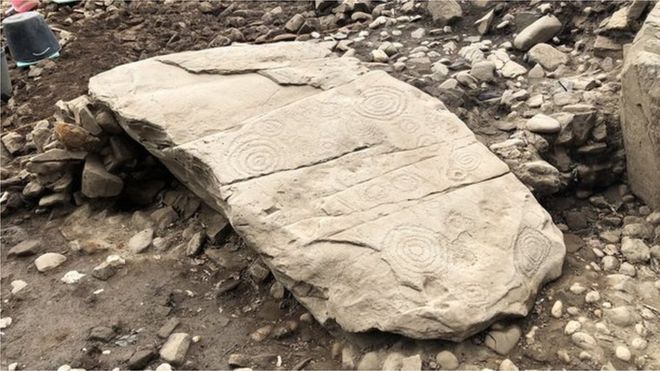
Brú na Bóinne: Megalithic tomb discovered in Meath

One kerbstone is heavily decorated with Neolithic carvings

The discovery of a 5,500-year-old megalithic tomb in County Meath has been described as the "find of a lifetime" by archaeologists.

Two burial chambers, six kerbstones and two suspected satellite tombs have been found during the dig.

The find was made at the 18th Century Dowth Hall, within the Brú na Bóinne complex, a Unesco World Heritage site.

The project is being carried out by the agri-technology company Devenish and University College Dublin (UCD).

Read the rest of this article...

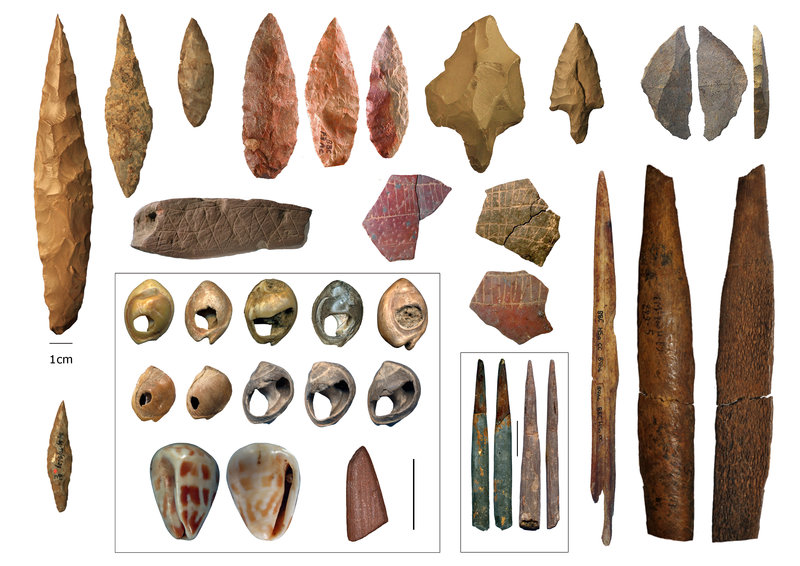
Unsere weitverzweigten afrikanischen Wurzeln

Artefakte aus der Mittleren Steinzeit, die im Norden und Süden des afrikanischen Kontinents gefunden wurden. Bild: Eleanor Scerri/Francesco d»Errico/Christopher Henshilwood

Während allgemein anerkannt ist, dass der moderne Mensch seinen Ursprung in Afrika hat, wurde der Frage, wie sich der Mensch innerhalb des Kontinents entwickelt hat, bislang wenig Aufmerksamkeit geschenkt. Vielfach ging man davon aus, dass die frühen Vorfahren des Menschen als eine einzige, relativ große Bevölkerungsgruppe entstanden sind, welche Gene und Technologien, wie die Herstellung von Steinwerkzeugen, mehr oder weniger zufällig untereinander austauschten.

In einer diese Woche in Trends in Ecology and Evolution veröffentlichten Studie eines wissenschaftlichen Expertenteams unter der Leitung von Eleanor Scerri, Wissenschaftlerin an der British Academy der Universität Oxford und am Max-Planck-Institut für Menschheitsgeschichte in Jena, wird diese Sichtweise nicht nur durch die Untersuchung von versteinerten Knochen (Anthropologie), Steinwerkzeugen (Archäologie) und Genen (Populationsgenetik) in Frage gestellt, sondern auch durch neue und detailliertere Rekonstruktionen von Afrikas Klimazonen und Lebensräumen während der letzten 300.000 Jahre

Read the rest of this article...

Thursday, July 5, 2018

Power company project becomes one of Europe's largest archeological digs

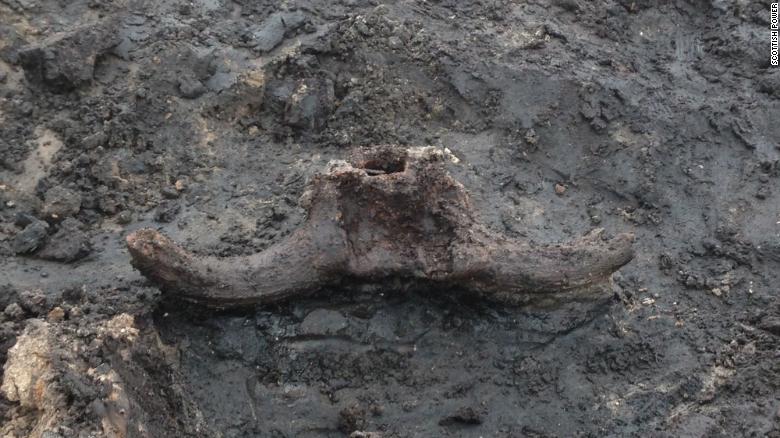
The site included the skull of an auroch, an extinct species of cattle.

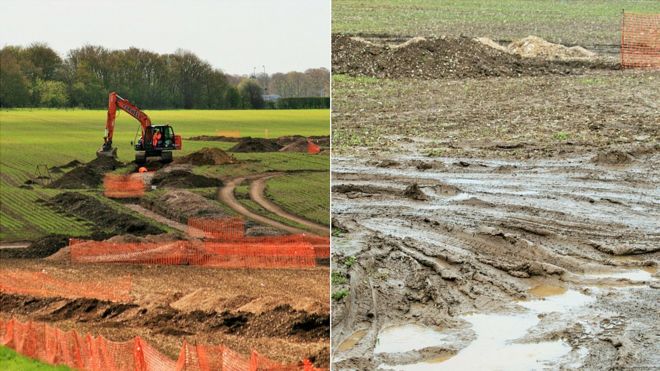
A Neolithic trackway dating to 2300 B.C. was uncovered in a nondescript field in Suffolk, on the east coast of England, thanks to a power company.

Among the findings at the site were the skull of an auroch -- an extinct species of wild cattle dating to about 4000 B.C. -- as well as pottery, building structures, bones, coins and poles to designate the route of the ancient trackway, the centerpiece of this particular excavation. Trackways are ancient roadways that formed when people or animals repeatedly tread the same path.

"Undoubtedly this is a site of international archaeological significance. It is exceptionally rare to find preserved organic materials from the Neolithic period, and we will learn a great deal from this discovery," said Richard Newman, associate director at Wardell Armstrong, the company overseeing the dig.

Read the rest of this article...

'German Stonehenge' Yields Grisly Evidence of Sacrificed Women and Children

A reconstruction of the 4,300-year-old Pömmelte enclosure.
Credit: Landesamt für Denkmalpflege und Archäologie Sachsen-Anhalt” (State Office for Heritage Management and Archaeology Saxony-Anhalt); photographer Juraj Lipták

The broken, battered bones of children, teenagers and women discovered at the newly excavated "German Stonehenge" may be evidence of ancient human sacrifice, a new study finds.

Archaeologists found the fractured skulls and rib bones buried in pits alongside axes, drinking vessels, butchered animal bones and querns (stone mills) at an archaeology site near Pömmelte, a village in Germany about 85 miles (136 kilometers) southwest of Berlin.

The victims' last moments were gruesome; it appears they were thrown or pushed into the pit, and that at least one of the teenagers had their hands bound together, said study lead researcher André Spatzier, an archaeologist at the State Office for the Preservation of Historic Monuments at Baden-Württemberg, a state in southwest Germany. 

Read the rest of this article...

Archaeologists stumble on Neolithic ritual site in Suffolk

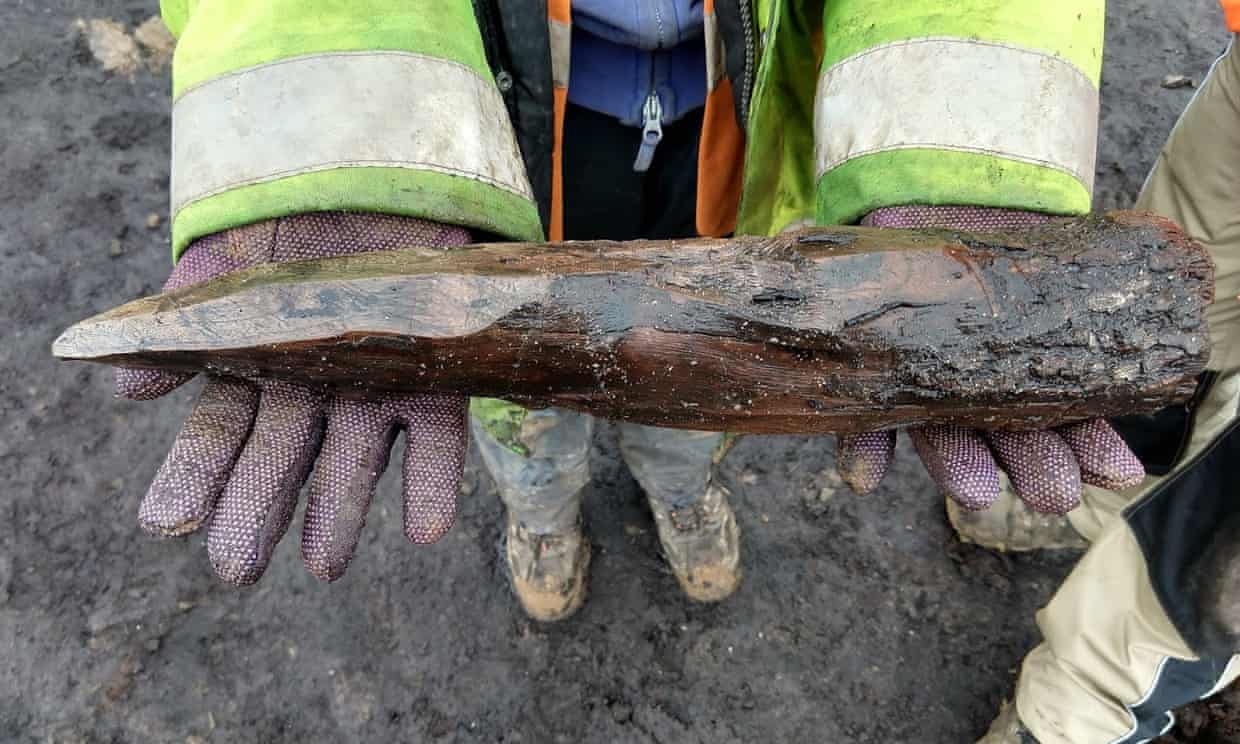
A 4,300-year-old stake discovered in a field in Suffolk. Photograph: Scottish Power

As diggers began to strip the daisies and buttercups and carve down through the parched clay of a field near Woodbridge in Suffolk that sloped down to a riverbank, with archaeologists watching over the pretty but apparently featureless site, something extraordinary began to emerge. Clear spring water came bubbling from the ground, and with it came massive timbers preserved so perfectly that tool marks were still visible and stake posts were sharply pointed.

The archaeologists first thought the timbers must be medieval or even Victorian, and were puzzled to find them so deeply buried. But as 30 metres of timber track were exposed, alongside other unexpected objects too, such as the massive horns and skull of an aurochs, an extinct breed of giant cattle, they realised they were dealing with something far more ancient. The timbers were 4,300 years old, according to the first carbon-14 tests, and underlying ones may be much older.

The Neolithic trackway, which had evidence of being repeatedly restored and renewed over decades and probably generations, seems to have led up to a level timber platform, with spring water deliberately channelled to surround it. From the platform, objects were dropped into the running water, including metal, pottery and the horned aurochs skull. The skull had been carefully shaped either to fix to a pole or use as part of a headdress – and as the archaeologists who had to lift and carry it down the hill could testify, lugging it to the site would have taken considerable effort.

Read the rest of this article...

Mycenaean vessels among finds at Dromolaxia, Cyprus

Chariot krater from Tomb RR, Dromoloaxia-Vyzakia 
[Credit: Cyprus Department of Antiquities]

The Department of Antiquities in Cyprus announced that, during five weeks in April and June 2018, a Swedish team, headed by Professor Peter M. Fischer from the University of Gothenburg, carried out excavations at the Late Cypriot harbour city of Dromolaxia-Vyzakia (Hala Sultan Tekke). The team consisted of 27 students and specialists. Amongst the latter were those trained in osteology, botany, conservation, Aegean and Near Eastern ceramics, and geophysical prospecting.

In June 2017, the site was surveyed with a magnetometer with ten sensors mounted on a 5 m wide cart. This arrangement allowed the mapping of 23 hectares within a week, demonstrating stone structures and “pits” down to a depth of roughly 1.5 m.

The architectural remains point to numerous man-made structures in the entire area of the survey, demonstrating the vast extent of the city. In 2018, 0.6 hectares of the magnetometer-surveyed area were re-investigated with georadar in order to see details of the buried features which facilitates the subsequent excavations.

However, the results of the georadar survey were of limited value: the strong radar attenuation at the site, due to clay-rich soil, did not allow electromagnetic waves to penetrate deeper than a few decimeters from surface.

Read the rest of this article...

Four hundred-year-old fort discovered in County Tyrone


A 400-year-old fort has been discovered in Brockagh, County Tyrone.

Students from Queen's University in Belfast have taken part in the dig over the past month.

Evidence of a settlement going back thousands of years has also been found.

Read the rest of this article...

Ötzi – a new understanding of the holy grail of glacial archaeology

Reinhold Messner (right) looking at Ötzi after more ice had melted or been hacked away. Notice the wooden stick in his companion’s right hand. It was used during the first attempts to hack Ötzi out of the ice. It is in fact part of the frame for Ötzi’s backpack. In the upper right corner, we can see Ötzi’s bow resting against the rock. 

Ötzi the iceman is the holy grail of glacial archaeology, nothing less. The discovery of the 5300-year-old mummified body and the associated artefacts created a media frenzy and great public interest. Today, 250000 people visit the Ötzi Museum in Bolzano each year to get a glimpse of Ötzi and the exhibited artefacts. A wealth of scientific papers, popular books and documentaries have been published.

Ötzi was discovered in 1991 in a gully at the Tisenjoch pass close to the Italian/Austrian border. The original interpretation by the Innsbruck-based archaeologist Konrad Spindler was that Ötzi froze to death in the gully. He was quickly covered by a glacier and remained encased in ice until he melted out in 1991. How else could the body and artefacts be so well preserved?

Read the rest of this article...

Wednesday, June 20, 2018

New technique provides accurate dating of ancient skeletons


EUROPEAN SOCIETY OF HUMAN GENETICS—Milan, Italy: Interest in the origins of human populations and their migration routes has increased greatly in recent years. A critical aspect of tracing migration events is dating them. However, the radiocarbon techniques*, that are commonly used to date and analyze DNA from ancient skeletons can be inaccurate and not always possible to apply. Inspired by the Geographic Population Structure model that can track mutations in DNA that are associated with geography, researchers have developed a new analytic method, the Time Population Structure (TPS), that uses mutations to predict time in order to date the ancient DNA.

Dr Umberto Esposito, a postdoctoral researcher in the laboratory of Dr Eran Elhaik, Department of Animal and Plant Sciences at the University of Sheffield, Sheffield, UK, will tell the annual conference of the European Society of Human Genetics today (Monday) that TPS can calculate the mixtures of DNA deriving from different time periods to estimate its definitive age. “This introduces a completely new approach to dating. At this point, in its embryonic state, TPS has already shown that its results are very similar to those obtained with traditional radiocarbon dating. 

Read the rest of this article...

Enigmatic Stone Balls from 5,000 Years Ago Continue to Baffle Archaeologists

The 3D models of the carved balls of stone, including the spiral-carved Towie ball (center), are now posted online.  Credit: National Museums Scotland

Some of the most enigmatic human-made objects from Europe's late Stone Age — intricately carved balls of stone, each about the size of a baseball — continue to baffle archaeologists more than 200 years after they were first discovered.

More than 500 of the enigmatic objects have now been found, most of them in northeast Scotland, but also in the Orkney Islands, England, Ireland and one in Norway.

Archaeologists still don't know the original purpose or meaning of the Neolithic stone balls, which are recognized as some of the finest examples of Neolithic art found anywhere in the world. But now, they've created virtual 3D models of the gorgeous balls, primarily to share with the public. In addition, the models have revealed some new details, including once-hidden patterns in the carvings on the balls.

Read the rest of this article...

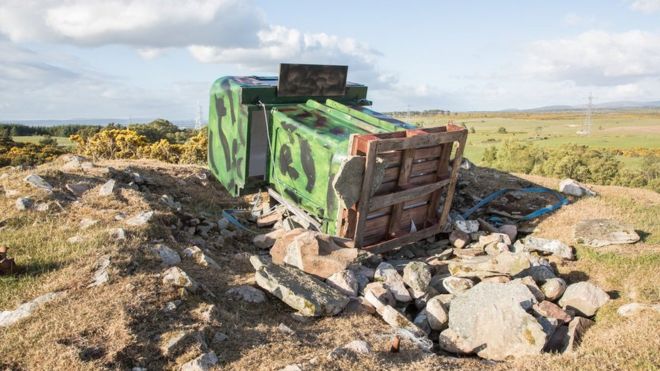
Anger at bird hide damage to Neolithic burial site

The hide, which has toppled over, was constructed on an ancient burial cairn
PAUL CAMPBELL

A makeshift bird hide has been built on the site of a Neolithic burial cairn, damaging the 3,000-year-old archaeological site.

Made from the canopy for a pick-up truck and a wooden pallet, it was constructed on one of three ancient cairns at Carn Glas, near Inverness.

Police Scotland said it was aware of the structure at Essich.

Historic Environment Scotland (HES) said it was taking enforcement action to have the hide removed.

Turf and stones were moved at the cairn, one of three at the site which are of a design usually found further north in the Highlands and also in Orkney.

The hide, which has toppled over, had been fixed in place by heavy metal pins.

Read the rest of this article...

Monday, June 18, 2018

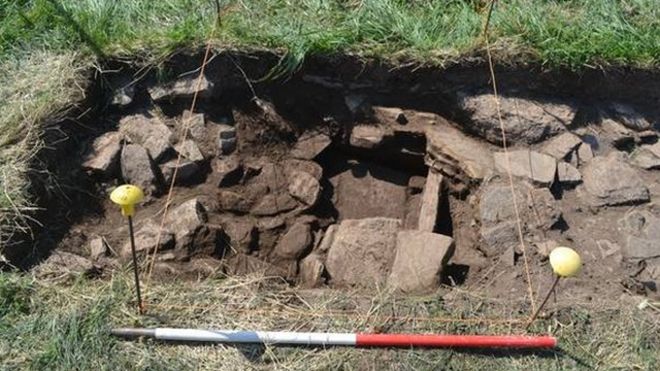
Possible discovery of prehistoric settlement near Thurso

Archaeologists are to make further investigations of the structures found
ORKNEY RESEARCH CENTRE FOR ARCHAEOLOGY

A community archaeology event may have uncovered a previously unknown prehistoric settlement in the Highlands.

Led by a team of archaeologists, more than 40 people, including children, dug a series of trenches at Thusater Burn near Thurso.

A geophysical survey had suggested the remains of a building beneath the soil.

The dig revealed rubble, a hearth constructed from stone slabs, a hammer stone and other tools.

A "wonderfully preserved" pig's tooth was also found. Archaeologists said such a find was usually associated with high status sites.

Read the rest of this article...

Wednesday, June 13, 2018

Detection of invisible elements in ancient rock engravings

Detailed picture of a bovine animal after applying the methodology 
[Credit: Aroa Gutiérrez Alonso]

Two researchers from Universidad Politécnica de Madrid (UPM) in collaboration with a researcher from Czech University of Life Sciences Prague (CULS) have developed a methodology to detect archaeological elements invisible to the naked eye.

Starting from photographs taken with common digital cameras and the range of the visible spectrum, a team of researchers from School of Land Surveying, Geodesy and Mapping Engineering at UPM and Faculty of Environmental Sciences from CULS suggest a new non-invasive methodology of archaeological documentation and analysis to show digital elements that are invisible to the naked eye. The method consists of applying techniques of both remote sensing and spectral treatment in order to uncover hidden elements and later carry out their morphometric analysis.

Mercedes Farjas, Aroa Gutiérrez and José Antonio Domínguez started by studying a limestone mold in the lab. The first goal was to assess the influence of the angle of the light of the photographs.

Later, after studying the effect of diverse filters on the mold, the researchers carried out combination tests of the filters in order to create a protocol of sequential application that allowed them to obtain conclusive results. As a result of these tests, they selected a set of filters and established an order of application.
Read the rest of this article...

Tuesday, June 12, 2018

3,000-year-old Bronze Age oak road to be preserved in Co Westmeath

Bronze Age track at Mayne Bog: when Westland Horticulture uncovered it in 2005 the National Monuments Service did not issue a preservation order or record it in the Register of Historic Monuments

Bronze Age track at Mayne Bog: when Westland HoA 3,000-year-old, oak road through Mayne bog, near Coole in Co Westmeath is to be protected following an agreement between peat extraction companies and conservationists.

Under the terms of the agreement approved by the High Court, Westland Horticulture Limited, Westmeath Peat Limited and Cavan Peat Limited have committed to cease milling peat near the bronze-age road and establish a buffer zone around it and associated subterranean structural supports.

The agreement also provides for the development of a “bund” to prevent operations elsewhere from dewatering the area around the oak road and structures.

The discovery of the bog road was made in 2005 and the National Monuments Service established it was a grander and far longer oak road than the previously discovered, Iron Age road at Corlea Bog in Co Longford.rticulture uncovered it in 2005 the National Monuments Service did not issue a preservation order or record it in the Register of Historic Monuments

Read the rest of this article...

When prehistoric man lived around Glasgow

The Cochno Stone at Faifley was excavated in 2015 and 2016 and then reburied to protect it from damage. PIC: John Devlin/TSPL.

Prehistoric man was likely to have lived in a number of settlements scattered around present-day Glasgow, research has found. Analysis of ancient rock art sites has identified a “ring” of probable settlements around the city with the creation of Glasgow likely to have destroyed further evidence of Neolithic life in the area.

People settled close to the River Clyde from at least 3,000BC given the area’s quality farmland and good access to waterways, experts believe. READ MORE: Archaeologists hit jackpot after sun reveals Neolithic markings The findings come as Scotland’s Rock Art Project works with communities across the country to record in detail some 2,000 ancient sites where mysterious cup and ring carvings can be found.

Read the rest of this article...

Oldest Bubonic Plague Genome Decoded

Double burial of the two plague victims in the Samara region, Russia 
[Credit: V.V. Kondrashin and V.A. Tsybin; Spyrou et al. 
Nature Communications, 2018]

The plague, caused by the bacterium Yersinia pestis, was the cause of some of the world's deadliest pandemics, including the Justinian Plague, the Black Death, and the major epidemics that swept through China in the late 1800s. The disease continues to affect populations around the world today. Despite its historical and modern significance, the origin and age of the disease are not well understood. In particular, exactly when and where Y. pestis acquired the virulence profile that allows it to colonize and transmit through the flea vector has been unclear.

Recent studies of ancient Y. pestis genomes identified its earliest known variants, dating to the Late Neolithic and Early Bronze Age, but these genomes did not show the genetic signatures thought to make the plague particularly efficient - namely, adaptation to survival in fleas, which act as the main vectors that transmit the disease to mammals. This study aimed to look at more Bronze Age Y. pestis genomes, in order to investigate when and where these important adaptations occurred.

Read the rest of this article...

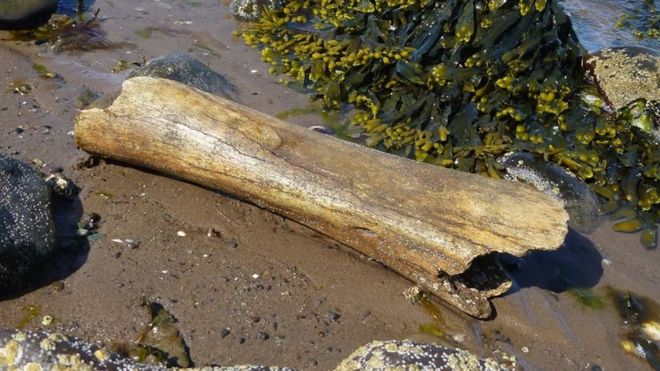
Woolly mammoth bone discovered on shore near Stranraer

The discovery was made on the shore near Stranraer
SOLWAY FIRTH PARTNERSHIP

A bone believed to have come from a woolly mammoth has been discovered on the south of Scotland coastline.

The find was made near Stranraer by Nic Coombey, co-ordinator of the Solway Coastwise project.

He said he realised straight away that it was an "extraordinary thing" due to its size.

It has now been passed to National Museums Scotland to carry out tests in order to find out exactly how old the bone might be.

Read the rest of this article...

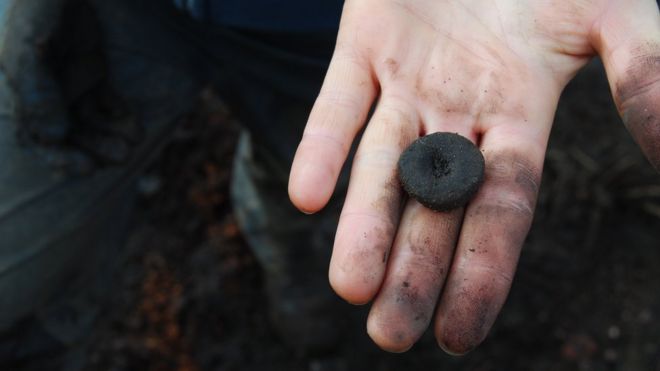
Prehistoric roundhouse excavated at Tore near Inverness

A stone bead or spindle whorl from the excavation
AOC ARCHAEOLOGY

The remains of an ancient roundhouse have been uncovered by archaeologists in the Highlands.

The prehistoric property was excavated ahead of the construction of a new business park at Mullan's Wood at Tore, near Inverness.

Archaeologists said the roundhouse may have been built in the Iron Age 2,000 years ago, or earlier.

The excavation area has been reinstated and the site will be protected during the future building work.

Environmental samples taken during the fieldwork has the potential to provide material for dating the site.

Read the rest of this article...

Tuesday, June 5, 2018

Take your pick: Is this Britain's oldest tin mining tool?


New research suggests Cornwall can lay claim to having Britain's oldest tin mining tool.

A pick made from a deer antler found near Truro in the 1800s has been on show at the Royal Cornwall Museum for decades.

Part of the prehistoric tool has now been radiocarbon dated, revealing that it is about 3,500 years old.

Simon Timberlake, a freelance archaeologist from Cambridge, said it's still in a remarkable condition 

Read the rest of this article...

Monday, May 7, 2018

Scientists Confirm Earliest Use of Fire and Oldest Stone Handaxe in Europe


In a recently published paper* in the journal, Historical Biology, researchers report confirmation that sediments bearing early human cultural remains in the Cueva Negra del Estrecho del Río Quípar rockshelter in southeastern Spain are dated to over 800,000 years ago. The sediments include an Acheulean style stone handaxe and evidence for the use of fire within the rockshelter.

“We regard its age as quite likely between 865,000 and 810,000 years ago,” said Michael Walker of Spain’s Murcia University, a lead researcher on Cueva Negra.

“[Arguably] Until now hand-axes in Europe have not been recorded from before 500,000 years ago,” said Walker. Moreover, he adds, “the evidence of combustion [use of fire] is also the oldest anywhere outside Africa.”

Read the rest of this article...

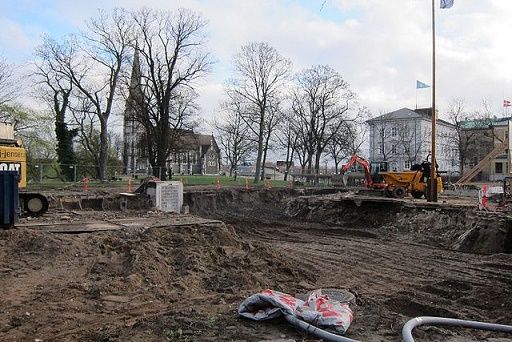
Stone Age settlement found in the middle of Copenhagen


Traces of Copenhagen’s Stone Age past were found under the resistance museum just opposite the Anglican church (photo: Henrik Lundbak, Nationalmuseet)

Archaeologists from the Museum of Copenhagen have made a rather sensational discovery: evidence of a settlement estimated to be around 7,000 years old.

During the building work for the new museum of Danish resistance at Kastellet, flint arrowheads, animal bones and even a couple of human bones have come to light, a municipal press release reveals.

“Finding a Stone Age settlement is special because it reveals the history of the area long before it became Copenhagen,” said the deputy mayor for culture and leisure, Niko Grünfeld.

Read the rest of this article...

Iron Age finds to go on display in Alderney


A display of Iron Age finds that were dug up in Alderney are going on display in the island.

Guernsey Museums is also heading back to the island in July to carry out three archaeological excavations at the Nunnery, a Roman gate and a cemetery.
Dr Jason Monaghan, head of heritage services at Guernsey Museums, said the Iron Age finds were of a "really high quality for such a small place".

"This must mean it was an important place - we think the trade routes may have come right past Alderney," he added.

Read the rest of this article...

Meet the ancestors… the two brothers creating lifelike figures of early man


Compare and contrast (l-r): Homo sapiens and a Neanderthal man. Photograph: Kevin Webb/
The Natural History Museum, London 


Dutch twins Adrie and Alfons Kennis are showing their uncanny models in museums all over Europe. Adrie discusses how their creations are realised and the extreme reactions they can provoke
Identical twins with a combined age of 102, Adrie and Alfons Kennis are among Europe’s most sought-after – and controversial – hominid palaeo-artists: sculptors of lifesize reconstructions of early humans.

Working from a studio in their home town of Arnhem in the Netherlands, the brothers bring a surplus of exuberance to their creations, which are richly animated, expressive and – how better to put it? – human, even when they aren’t quite human. “If we have to make a reconstruction,” says Adrie, “we always want it to be a fascinating one, not some dull white dummy that’s just come out of the shower.”
In the 10 or so full-sized reconstructions completed during their career they have run the gamut of human history, from “Lucy” – the earliest known hominin fossil – to Homo erectus, Neanderthal man and, of course, Homo sapiens. Just last week, they put the finishing touches to a model for St Fagans National Museum of History in Wales. Due to be unveiled in October, it will be the third Kennis & Kennis work on display in the UK.

The process is exhausting. First, they rebuild the skeleton, sometimes using fossils from several different sites, with the help of computer scans and 3D printing. The skeleton is suspended with wire cables and the spine is made flexible using silicone cartilage between the vertebrae. “We use a kind of paraffin wax clay to sculpt the muscles,” says Adrie, “and we make arteries using small ropes which lie over the muscles.” Layers of another clay are then wrapped around the sculpture as skin, and a mould is made to replicate the sculpture in silicone. “We do five layers of silicone to make the skin colour,” explains Adrie, “because real skin is translucent.”

Read the rest of this article...

Thursday, April 26, 2018

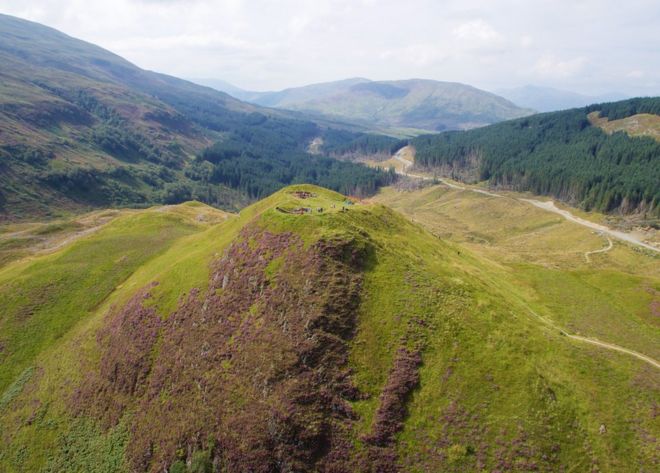
Ash from destructive hill fort fire 'preserved in peat'

Dun Deardail was built 2,500 years ago
NEVIS LANDSCAPE PARTNERSHIP

Archaeologists believe they have found, preserved in peat, charcoal from a fire that destroyed an ancient hillfort.

Dun Deardail was built about 2,500 years ago on a prominent knoll on Sgorr Chalum, a hill overlooking the River Nevis in Glen Nevis.

Charcoal found in surrounding peatbog has been analysed.

Four "significant fire events" were identified as layers of charcoal or soot. One, from around 310BC, is thought to be the fort's burning.

Archaeologists said the fire that destroyed Dun Deardail would have "created towering plumes of smoke rising up from the fort, expelling ash and charcoal into the air".

Read the rest of this article...

Megalithic Malta : Prehistoric but far from Primitive


If the Neolithic (New Stone Age) seems remote, primitive and ‘Just a load of old stones’, take a visit to Malta.   Here you can go back in time over 5,000 years; the remains of the amazing temples and the figurines and artefacts that folk left behind here are sophisticated and imaginative.  As far back as 4,000 BC, the sites here bear witness to a culture and a civilisation that was full of art, architecture and spirituality; society here was vibrant and the island is still littered with impressive structures that, even now, fill us with awe.
Unique and, oh, SO Ancient
The megalithic (‘huge stones’) temples in Malta are unique.  Nowhere else can you find structures quite like these.  Huge stones were not that unusual in the Neolithic; explore Orkney’s stone circles and Maes Howe tomb, wander along the long lines of standing stones at Carnac in France or gaze at the massive blocks at Stonehenge and you will see large and heavy stones used for monumental effect.
Read the rest of this article...

Monday, April 23, 2018

Neolithic Surgeons May Have Practiced on Animals


PARIS, FRANCE—Paleontologists Alain Froment and Fernando Ramirez Rozzi of the French National Center for Scientific Research suggest a hole in a cow skull uncovered at the Neolithic site of Champ-Durand in southwestern France could be evidence of a surgical procedure. According to a Gizmodo report, their analysis of the hole found no trace of fracturing or splintering, indicating it was not caused by goring from another cow, or a puncture from a powerful blow with a stone tool. 

Read the rest of this article...

Stonehenge archaeology 'under threat' from Highways England diggers

Stonehenge Alliance said using heavy machinery on wet ground could "devastate any fragile archaeological deposits"

Heavy diggers being used by Highways England near Stonehenge are threatening its "fragile archaeology", campaigners have warned.

The agency has been surveying the proposed site of a controversial tunnel near the monument since January.

Stonehenge Alliance said archaeological evidence may be lost due to heavy machinery being used on wet ground.

Highways England said the claims were "alarmist and untrue" and "due care" was being "exercised at all times".

Plans for 1.8-mile (2.9km) underground dual carriageway as part of a £1.6bn upgrade of the A303, were unveiled by the government in January.

But Dr Kate Fielden, from Stonehenge Alliance - a campaign group which includes archaeologists and environmental campaigners - said what Highways England were doing in the area "beggars belief".

Read the rest of this article...

DES OCCUPATIONS DU NÉOLITHIQUE À L’ÂGE DU FER SUR LE CONTOURNEMENT OUEST DE STRASBOURG


Une équipe d’archéologues de l’Inrap mène actuellement une fouille archéologique à Berstett (Bas-Rhin), sur prescription de l’Etat (Drac Grand Est), en amont de la construction de l’autoroute du Contournement Ouest de Strasbourg portée par le Groupe Vinci Autoroutes. Les archéologues mettent principalement au jour des vestiges des périodes du Néolithique jusqu’à l’âge du Fer.

Read the rest of this article...

Thursday, April 19, 2018

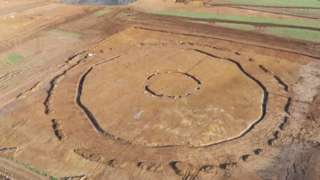
Raunds henge 'discovered' by Warth Park building work


An archaeological site thought to be 4,000 years old has been fully unearthed by work to extend an industrial estate.

Builders have uncovered the henge, which is 100m (330ft) in diameter, at Warth Park in Raunds, Northamptonshire.

An aerial photo showing the scale of the Neolithic monument first emerged on Twitter on Tuesday, but was deleted.

However, archaeologists say that site, known as Cotton Henge, has previously been investigated twice before.

Oxford Archaeology East, working on behalf of developer Roxhill, said the henge was first identified by aerial photography in the 1970s.

They added that it was likely to date from the late Neolithic period (circa 3000BC -2500BC) and forms part of a larger group of ceremonial landscape features located and excavated as part of the Raunds Area Project.

Read the rest of this article...

The nineteenth century doctor who practiced neolithic trepanation

Human skull illustrating different methods of trephination owned by Dr. T. Wilson Parry, skull of Guanche, Canary Islands, 1871-1930 (approx). Credit: Science Museum, London. CC BY

Using images from the Science Museum and Wellcome Collection we explore the neolithic practice of trepanation
Archaeologists might not be able to agree on the reason why our ancestors made holes in their skulls, but what they can agree on is that humans on every continent have done it at some point in history, suggesting the seemingly-bizarre practice developed independently across multiple civilizations.

To date, thousands of skulls with trepanation holes have been unearthed at archaeological sites around the world.

Read the rest of this article...

Skull and mandible


Bronze Age skull and mandible of an adult male recovered from Rathlin Island, Co. Antrim.
The skull and mandible were both modelled 360 using AgiSoft PhotoScan before being assembled in Blender. Outputs included animations and the SketchFab model as educational aids for our osteoarchaeology students.

Created by Dr Siobhán McDermott, Centre for Archaeological Fieldwork, QUB. #ActualLivingTechnician.

Read the rest of this article...

Tuesday, April 17, 2018

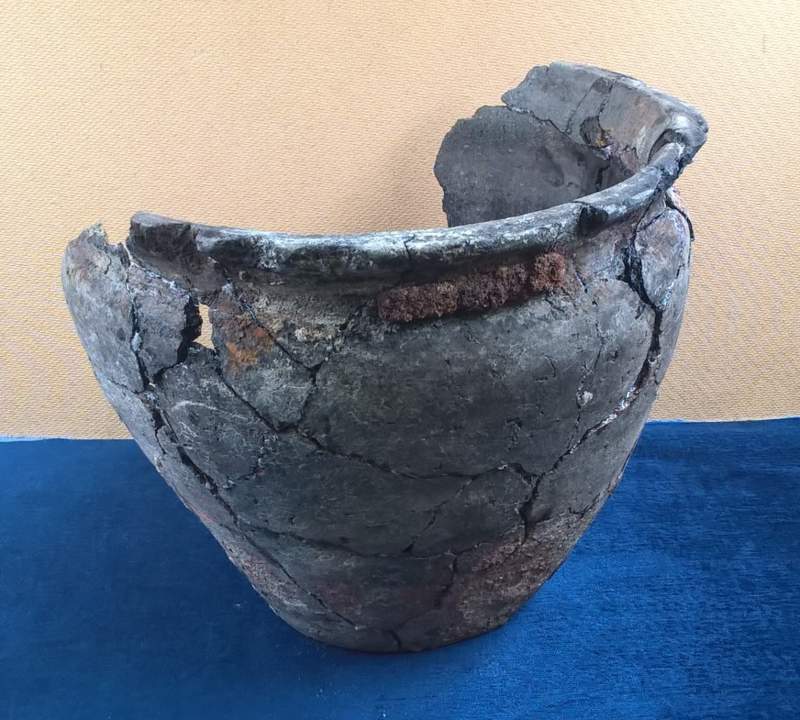
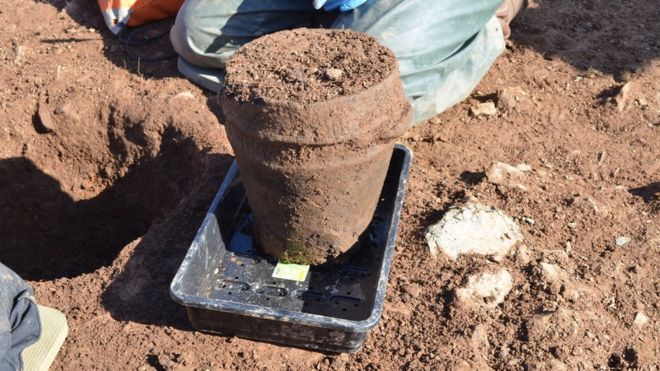
Bronze age pot uncovered in Cornwall field

A tenant farmer on the National Trust land where the pot was found had suggested the archaeology team should investigate his field

An intact earthenware pot thought to date back to the Bronze Age has been unearthed in a field in Cornwall.

The pot, which is 12in (30cm) high, is about 4,000 years old and thought to contain human remains.

It was found just below the surface, along with other Bronze Age artefacts like pottery and flint tools, at Hendersick Barrow near Looe.

Lead archaeologist Dr Catherine Frieman said: "It's almost a miracle that a plough has never hit it."

The project is part of the Southeast Kernow Archaeological Survey, with input from the Australian National University (ANU).

Read the rest of this article...

Tuesday, March 27, 2018

Skilled female potters travelled around the Baltic nearly 5000 years ago

These are Neolithic Corded ware pottery recovered in Southern Finland
[Credit: Elisabeth Holmqvist-Sipilä]

Was it the fine pottery itself, or the artisans who made it, that moved around the Baltic Sea region during the Corded Ware Culture of late Neolithic period? Are the archaeological artefacts found in Finland imported goods or were they made out of Finnish clay by artisans who had mastered the new technology? These are the questions researchers are trying to answer in the most extensive original study of archaeological ceramics ever undertaken in the Nordic countries.

Researchers mapped the arrival routes of pottery and people representing the Corded Ware Culture complex (c. 2900-2300 BCE) into the Nordic countries by identifying the areas where the pottery was made.

Corded Ware pottery was very different from earlier Stone Age pottery. It represented a new technology and style, and as a new innovation, used crushed ceramics -- or broken pottery -- mixed in with the clay.

Read the rest of this article...

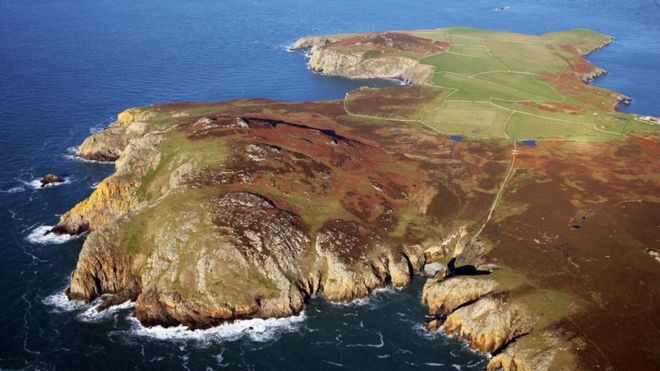
Ramsey Island: New survey finds 'Bronze Age' site

Ramsey Island is owned and managed by the RSPB

New archaeological sites on a small island off the coast of west Wales have been discovered.

The laser scan of Ramsey Island uncovered a "hidden" landscape thought to date back to the Bronze Age.

The survey, taken from the air, has also seen a detailed 3D model of the two mile-long beauty spot made for the first time.

Experts say the data could also be used to see if climate change affects the environment on the island.

Royal Commission archaeologist Dan Hunt described the findings as "incredible".

He added: "It has presented us with a stunning view of the island in enormous detail."

Read the rest of this article...

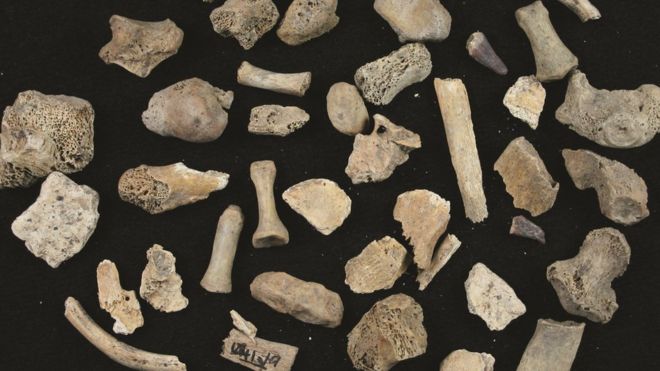
The archaeologists sorting out Orkney's Neolithic bones

Archaeologists excavating Neolithic tombs in Orkney are used to finding jumbled collections of bones

A new study could potentially transform our understanding of the way Neolithic people dealt with their dead.

Archaeologists excavating Neolithic tombs in Orkney are used to finding jumbled collections of bones that seem unconnected.

Now, work by Dr Rebecca Crozier, from the University of Aberdeen, suggests whole bodies were placed in the chambered structures.

She said they could have been dismembered after being buried.

She told BBC Radio Orkney: "What we're trying to do is look at all the bones and try and understand why they are in the mess that we finding them in.

Read the rest of this article...

Monday, March 19, 2018

Site of huge Iron Age feast celebration found on Orkney

Windwick Bay at South Ronaldsay, close to the site of the massive cliff top feast held more than 1,700 years ago. PIC: www.geography.co.uk

Archaeologists have identified the site of a huge Iron Age feast on Orkney where more than 10,000 animals were cooked and eaten in a vast cliff top celebration. 

Tests have shown that horses, cattle, red deer and otters were on the menu at the gathering above Windwick Bay, South Ronaldsay, more than 1,700 years ago.

Archaeologists from the University of the Highlands and Islands have been working at The Cairns for several years. 

A large number of jewellery fragments and tools have already been discovered at the site, where the remains of an Iron Age broch and metalworking site can be found, with recent radiocarbon tests carried out at a midden - or rubbish tip - nearby.

Read the rest of this article...

Utrecht’s history goes back 11,000 years, archaeologists say


The history of Utrecht begins at least 8,000 years earlier than was previously thought, local broadcaster RTV Utrecht reported this week. 

The discovery was made when archaeologists were digging at the site of the Prinses Máxima Centrum for children with cancer ahead of its expansion. 

The dig yielded traces of human habitation and objects from the early Stone Age, with some indications that Utrecht started as far back as 11,000 BC. 

‘There have been prehistoric finds in Leidsche Rijn and Hoograven, particularly from the Bronze Age and the Iron Age. But this discovery means the history of Utrecht started 8,000 years earlier than the history books tell us,’ Utrecht alderman Kees Geldof told the broadcaster. 

Not only were older indications of a human presence found at the site but the dig also showed evidence that the site had been inhabited without interruption throughout the Stone Age.

Read the rest of this article...

Thursday, March 1, 2018

15,000-year-old artefacts discovered along Scotland's Aberdeen bypass

Artefacts and structures found during archaeological excavations on the Aberdeen Western Peripheral Route/Balmedie to Tipperty (AWPR/B-T) project are shedding light on land use and settlement in the north east over the past 15,000 years, including Mesolithic pits, Roman bread ovens, prehistoric roundhouses and a cremation complex.


A beaker from the Chalcolithic period; a fluted carinated bowl from early Neolithic times;
impressed ware from the middle Neolithic 
[Credit: Transport Scotland]

Since the archaeological excavations were completed, specialists have been analysing the artefacts and samples recovered from the various sites and will be detailing the results in a new limited edition book due to be published later this year.

Keith Brown, Cabinet Secretary for Economy, Jobs and Fair Work said: “When complete, the AWPR will help to reduce congestion, cut journey times, improve safety and lower pollution in Aberdeen City Centre, as well as enable local authorities to develop public transport solutions."

Read the rest of this article...