Monday, June 17, 2019

Anglesey archaeology: Bronze Age cairn dig at Bryn Celli Ddu

Bryn Celli Ddu burial chamber is aligned to the sun and is lit during the summer solstice
AERIAL-CAM

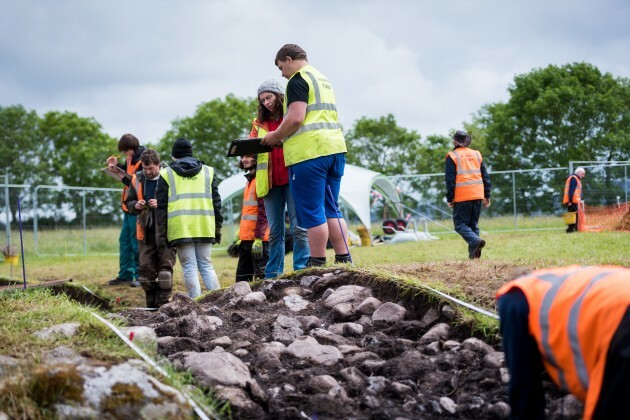
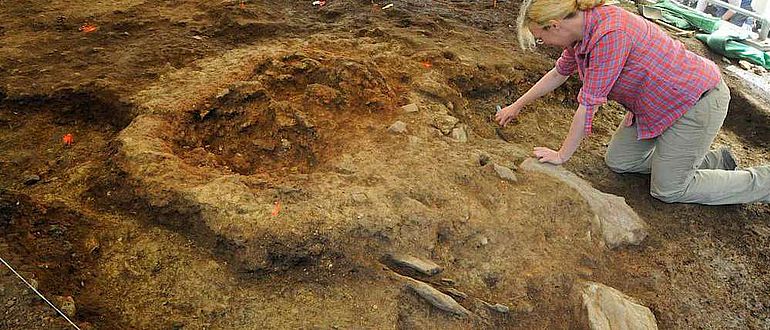
An excavation is under way on the site of a suspected 4,500-year-old burial cairn that lies next to one of Wales' most important prehistoric monuments.

Experts are hoping to learn more about it and its relationship to Bryn Celli Ddu burial chamber at Anglesey.

The 5,000-year-old "passage tomb" is aligned to coincide with the rising sun on the summer solstice.

Dr Ffion Reynolds said the cairn showed the site remained a "special location" centuries after the chamber was built.

Read the rest of this article...

Sunday, June 16, 2019

Archaeologists uncover megalithic monument thought to be unlike any found in Ireland to date

IT Sligo Archaeology students Jazmin Scally Koulak and Eugene Anderson sieving the soil at Carrowmore excavation

AN ARCHAEOLOGICAL EXCAVATION in Co Sligo has uncovered a megalithic monument thought to be unlike any found in Ireland to date. 

Several prehistoric tools made from a hard stone called chert were discovered and are thought to have been used for activities such as working animal hides, cutting and preparing food, basket food, basket working and bone working. 

The discovery was made by a team of archaeologists from IT Sligo during a two-week excavation of a prehistoric monument in the heart of the Carrowmore megalithic complex in Co Sligo. 

Carrowmore in the largest cemetery of megalithic tombs in Ireland, with 5,500-year-old passage tombs dating from 3,600 BC. 

Read the rest of this article...

Thursday, June 13, 2019

Artificial islands older than Stonehenge stump scientists

A diver holds a Neolithic (ca. 3,500 B.C) Ustan vessel found near a crannog (artificial island) 
in Loch Arnish, Scotland. PHOTOGRAPH BY C. MURRAY

When it comes to studying Neolithic Britain (4,000-2,500 B.C.), a bit of archaeological mystery is to be expected. Since Neolithic farmers existed long before written language made its way to the British Isles, the only records of their lives are the things they left behind. And while they did leave us a lot of monuments that took, well, monumental effort to build—think Stonehenge or the stone circles of Orkney—the cultural practices and deeper intentions behind these sites are largely unknown.

Now it looks like there may potentially be a whole new type of Neolithic monument for archaeologists to scratch their heads over: crannogs.

Artificial islands commonly known as crannogs dot hundreds of Scottish and Irish lakes and waterways. Until now, researchers thought most were built when people in the Iron Age (800-43 B.C.) created stone causeways and dwellings in the middle of bodies of water. But a new paper published today in the journal Antiquity suggests that at least some of Scotland’s nearly 600 crannogs are much, much older—nearly three thousand years older—putting them firmly in the Neolithic era. What’s more, the artifacts that help push back the date of the crannogs into the far deeper past may also point to a kind of behavior not previously suspected in this prehistoric period.

Read the rest of this article...

Friday, June 7, 2019

DNA from 31,000-year-old milk teeth leads to discovery of new Ice Age population of big game hunters

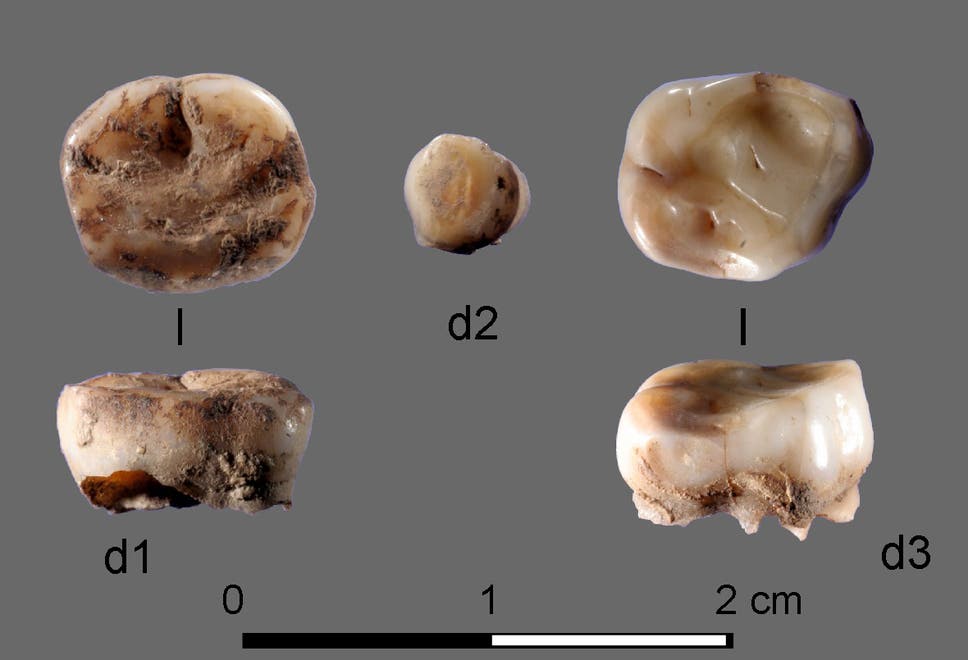
The DNA was recovered from the only human remains discovered during the era – two tiny milk teeth ( Russian Academy of Sciences )

A new Ice Age population of big game hunters that lived in the depths of Siberia has been discovered using DNA taken from 31,000-year-old human milk teeth. 

Named the ‘Ancient North Siberians’ the hardy population would have hunted lions, wolves, woolly mammoths and bison, according to a study led by Cambridge University.

The find was one aspect of new research into the genetic composition of Native Americans who in part descended from these Siberian hunters. 

The existence of this fierce population, who first evolved 38,000 years ago, forms “a significant part of human history”, according to lead researcher Professor Eske Willerslev.

He told The Independent: “These humans had adapted to an extremely harsh environment in terms of temperatures – it’s a part of the world that is almost completely dark all winter. There are basically no trees and they were living alongside lions, wolves, bison and rhinos.

Read the rest of this article...

Thursday, June 6, 2019

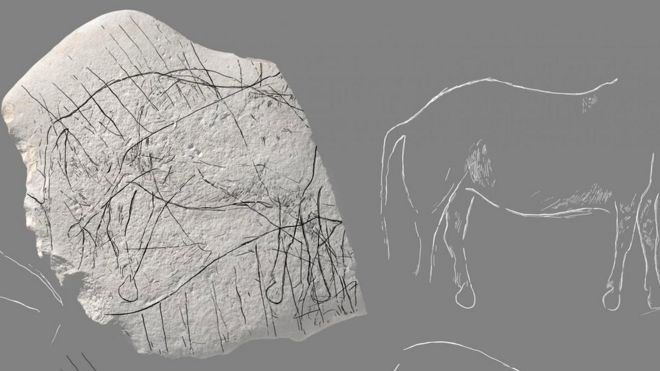
Prehistoric stone engraved with horses found in France

A generated image of the prehistoric sandstone plate and its engraving
DENIS GLIKSMAN/INRAP

A stone believed to be about 12,000 years old and engraved with what appears to be a horse and other animals has been discovered in France.

The prehistoric find by archaeologists excavating a site in the south-western Angoulême district, north of Bordeaux, has been described as "exceptional".

Markings appear on both sides of the sandstone, the National Archaeological Research Institute (Inrap) said.

It was found during work at an "ancient hunting site" near Angoulême station.

The Palaeolithic stone plate, which is said to be about 25cm long, 18cm wide and 3cm thick, "combines geometric and figurative motifs", Inrap said.

Read the rest of this article...

Wednesday, June 5, 2019

Africa’s first herders spread pastoralism by mating with foragers

INHERITING HERDING  Ancient DNA indicates that early African herders started mating with hunter-gatherers more than 5,000 years ago. Here, modern herders in Tanzania watch over their goats.

Ancient sheep, goat and cattle herders made Africa their home by hooking up with the continent’s native hunter-gatherers, a study suggests.

DNA analysis shows that African herders and foragers mated with each other in two phases, says a team led by archaeologist Mary Prendergast of Saint Louis University in Madrid. After entering northeastern Africa from the Middle East around 8,000 years ago, herders swapped DNA with native foragers between roughly 6,000 and 5,000 years ago. Herders possessing some forager heritage then trekked about halfway down the continent and mated with eastern African foragers around 4,000 years ago, the scientists report online May 30 in Science.

Present-day herders, such as the Dinka in South Sudan, still live in eastern Africa. But how pastoralism spread into the region has been a mystery. In particular, it has been difficult to tell whether ancient African hunter-gatherers mated with early herders or simply adopted their livestock practices. The new study supports an emerging view from ancient DNA studies that human cultural evolution has often featured mating across groups with different traditions and lifestyles.

Read the rest of this article...

Monday, June 3, 2019

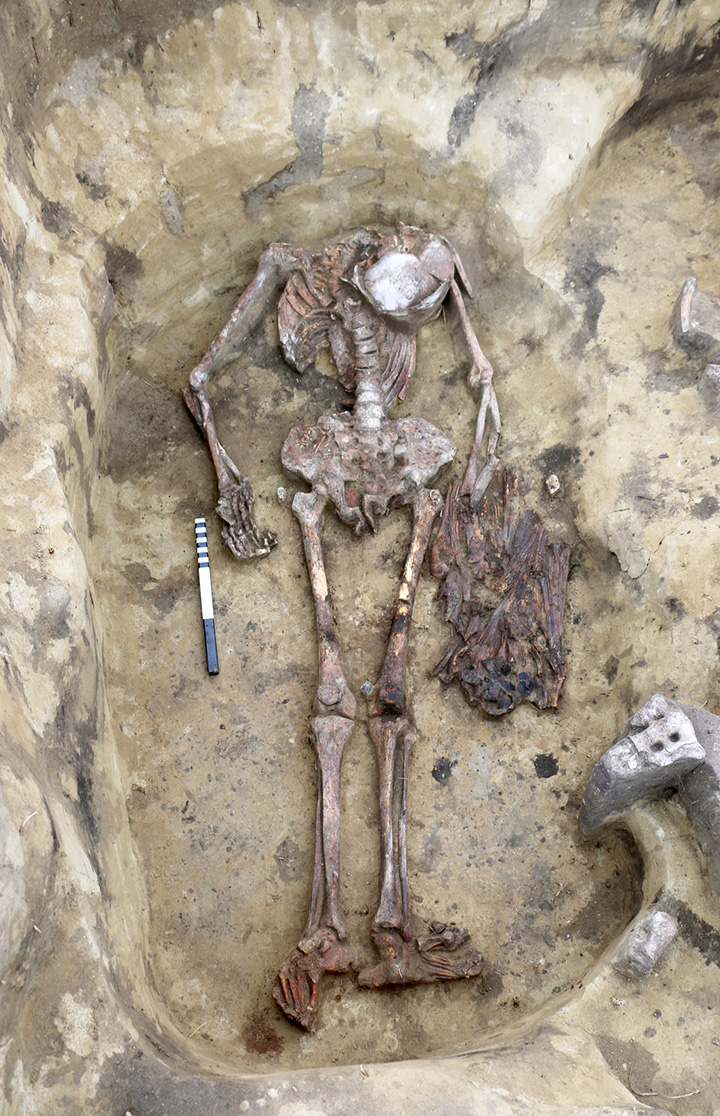
The Birdman of Siberia: sensational finds in the heart of Russia puzzle scientists


Two unique burials of the Odinov culture (early Bronze) were unearthed last year at the Ust-Tartas site in Novosibirsk region.

Inside one of them researches found several dozen long beaks and skulls of large birds assembled into something looking like a collar, a head dress, or armour. 

‘Nothing of this kind was ever found as part of Odinov culture in all of Western Siberia’ said researcher Lilia Kobeleva from Novosibirsk Institute of Archeology and Ethnography. 

‘Why do we think this was a part of clothing? The beaks were assembled at the back of the skull, along the neck, as if it was a collar that protected the owner when he lived here.’

Read the rest of this article...

17 amphorae from the 3rd century BC discovered off Cannes

Credit: Marc Langleur

A campaign of underwater archaeological excavations has uncovered 17 amphorae dating from the 3rd century BC at a depth of twenty metres, not far from the Lérins islands off the Bay of Cannes.

According to Anne Joncheray, archaeologist and director of the Saint-Raphaël Museum of Archaeology, the 2,300-year-old amphorae are remarkably well-preserved and were likely used to transport locally produced wine to the Greek trading posts of the Mediterranean.

Read the rest of this article...

Sunday, June 2, 2019

Whipworm eggs found in 8000-year-old human coprolites. Andrew Masterson reports.

Archaeologists carefully excavating the neolithic village.
SCOTT HADDOW

Researchers picking though 8000-year-old human faeces have identified the earliest evidence of intestinal parasite infection in the mainland Near East.

A team led by archaeologist Piers Mitchell of Cambridge University in the UK travelled to the well preserve remains of a prehistoric village called Çatalhöyük, in southern Anatolia. 

The site was occupied from about 7500 to 5700 BCE, and is today a UNESCO World Heritage Site.

Apart from the extraordinarily good state of its survival, the village is of key interest because it was occupied around the period that populations in the region shifted from foraging to farming. 

The change in both diet and lifestyle – particularly the emergence of permanent settlements – introduces the question of whether such a shift in living conditions also brought about a consequent change in disease profiles.

Read the rest of this article...

Monday, May 27, 2019

LATE BRONZE AGE SETTLEMENT DISCOVERED IN NORTHWEST BULGARIA IN TURKISH STREAM GAS PIPELINE RESCUE DIGS


A settlement originally dating back to the Late Bronze Age, which was also subsequently inhabited in the Thracian and Roman Antiquity, and the Middle Age, has been discovered by archaeologists near Rasovo in Northwest Bulgaria during rescue excavation on the projected route of the Turkish Stream natural gas transit pipeline.

A total of three archaeological sites have been found along the route of the proposed extension of the Turkish Stream gas pipeline (dubbed Turkish Stream – Northwest) that would potentially be transporting natural gas from Russian via the Black Sea, Turkey, and Bulgaria into Central Europe.

One of the three newly discovered sites is the settlement from the very end of the Bronze Age dating back to ca. 1,200 BC near today’s town of Rasovo, Medkovets Municipality, Montana District, in Northwest Bulgaria.

Because of the fact it was also inhabited during later historical periods, however, the archaeologists have described it as a “multilayer settlement".

Read the rest of this article...

Roadworks uncover Bronze Age urn burial site in Saxony-Anhalt, Germany

Credit: ct-press

Construction work along the future A14 highway between Dolle and Lüderitz has revealed an urn burial ground from the late Bronze Age.

More than 100 cremation burials dating to around 800 BC have been found here, reports chief archaeologist Susanne Friederich, head of the department for the preservation of archaeological monuments at the State Office for Archaeology and Monument Conservation.

"The place obviously served as a 'cemetery' for several villages, whose remains were also found nearby", she said

"The deceased were burned on pyres. Their relatives placed their ashes and bone remains in urns, together with anything which had not been destroyed by fire, such as bronze clasps or jewellery made of metal," excavation leader Anette Schubert explains.

Read the rest of this article...

NOUVELLE FOUILLE DE LA TOMBE DE LA « DAME DE VIX »


Le site de Vix en Côte-d’Or est avant tout célèbre pour la tombe de « la Dame de Vix », dont la fouille, menée en 1953, a révélé un mobilier d’une incroyable richesse. Hormis la sépulture, le vaste monument funéraire qui l’abritait n’a jamais été réellement fouillé. D’août à novembre 2019, il fera l’objet, d’une importante fouille sous la direction de l’Inrap (Bastien Dubuis), en partenariat avec le Laboratoire ARTEHIS (CNRS/Université de Bourgogne) et avec le soutien de la DRAC Bourgogne-Franche-Comté et de la Communauté de Communes du Pays Châtillonnais. Les nouvelles approches et méthodes de l’archéologie devraient permettre une contextualisation et une compréhension plus fine de cette tombe emblématique du phénomène princier celtique.

Read the rest of this article...

Sunday, May 26, 2019

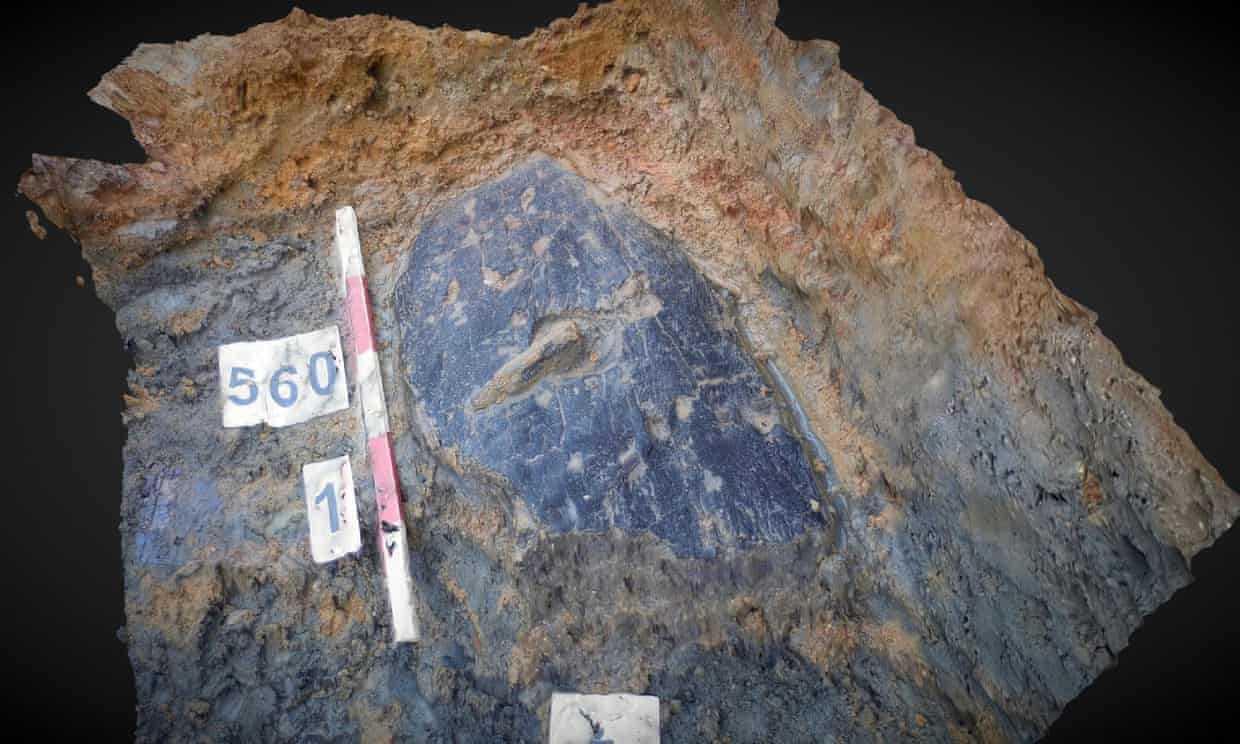
'Phenomenal' 2,300-year-old bark shield found in Leicestershire

The shield is made from green bark that has been stiffened with internal wooden laths.

An “astonishing and unparalleled” 2,300-year-old shield made of tree bark has been discovered in Leicestershire, the only example of its kind ever found in Europe.

Archaeologists say the discovery of the shield, made between 395 and 250BC, has completely overturned assumptions about the weapons used in the iron age, sparking breathless reactions among experts of the period.

“This is an absolutely phenomenal object, one of the most marvellous, internationally important finds that I have encountered in my career,” said Julia Farley, curator of British and European iron age collections at the British Museum.

“So often it is gold which grabs the headlines, but this bark shield is much rarer.”

Read the rest of this article...

Wednesday, May 22, 2019

New data platform illuminates history of humans' environmental impact

Animal bones on display.
Credit: © DedMityay / Adobe Stock

The human environmental footprint is not only deep, but old.

Ancient traces of this footprint can be found in animal bones, shells, scales and antlers at archaeological sites. Together, these specimens tell the millennia-long story of how humans have hunted, domesticated and transported animals, altered landscapes and responded to environmental changes such as shifting temperatures and sea levels.

Now, that story is available digitally through a new open-access data platform known as ZooArchNet, which links records of animals across biological and archaeological databases.

Making these specimen records accessible digitally helps provide a long-term perspective on current biodiversity crises, such as animal extinction and habitat loss, and could lead to more informed conservation policies, said Michelle LeFebvre, postdoctoral associate at the Florida Museum of Natural History and lead author of a study introducing ZooArchNet.

Read the rest of this article...
Sunday, May 19, 2019

Analysis of the Palaeolithic diet shows no social divisions in food consumption

Credit: University of Granada

The study of the human diet in Palaeolithic times is currently among the research areas generating the greatest advances in knowledge. Analysis of the Palaeolithic diet is conducted mainly on the basis of stable isotopes of carbon and nitrogen, which are present in the collagen of human bones. These isotopes indicate the types of food consumed by the individual in the years leading up to their death.

Researchers from the University of Granada (UGR) have analyzed the diets of past peoples from samples in the anthropological collections of the Megalithic necropolises of Panoria (Darro, Granada) and El Barranquete (Nijar, Almeria). They find that although Megalithic communities did vary their eating habits over time, there were no relevant social differences, either in the type of food or in the proportion of proteins consumed.


Read the rest of this article...

Friday, May 17, 2019

Chewing gums reveal the oldest Scandinavian human DNA

Masticate being examined
[Credit: Natalija Kashuba/Stockholm University]


The first humans who settled in Scandinavia more than 10,000 years ago left their DNA behind in ancient chewing gums, which are masticated lumps made from birch bark pitch. This is shown in a new study conducted at Stockholm University and published in Communications Biology.

Ancient chewing gums are as of now an alternative source for human DNA and possibly a good proxy for human bones in archaeogenetic studies. The investigated pieces come from Huseby-Klev, an early Mesolithic hunter-fisher site on the Swedish west coast. The sites excavation was done in the early 1990's, but at this time it was not possible to analyse ancient human DNA at all, let alone from non-human tissue. The masticates were made out of birch bark tar and used as glue in tool production and other types of technology during the Stone Age.

Read the rest of this article...
Fossil teeth push the human-Neandertal split back to about 1 million years ago

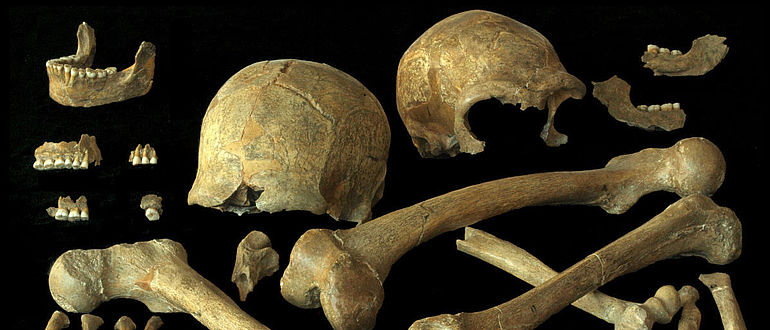
CROWNING ROOTS An analysis of hominid tooth evolution, including specimens from Spanish Neandertals (top row), pushes back the age of a common Neandertal-human ancestor to more than 800,000 years ago. The bottom row shows Homo sapiens teeth.

People and Neandertals separated from a common ancestor more than 800,000 years ago — much earlier than many researchers had thought.

That conclusion, published online May 15 in Science Advances, stems from an analysis of early fossilized Neandertal teeth found at a Spanish site called Sima de los Huesos. During hominid evolution, tooth crowns changed in size and shape at a steady rate, says Aida Gómez-Robles, a paleoanthropologist at University College London. The Neandertal teeth, which date to around 430,000 years ago, could have evolved their distinctive shapes at a pace typical of other hominids only if Neandertals originated between 800,000 and 1.2 million years ago, she finds. 

Gómez-Robles’ study indicates that, if a common ancestor of present-day humans and Neandertals existed after around 1 million years ago, “there wasn’t enough time for Neandertal teeth to change at the rate [teeth] do in other parts of the human family tree” in order to end up looking like the Spanish finds, says palaeoanthropologist Bernard Wood of George Washington University in Washington, D.C.

Read the rest of this article...

Bronze Age Caernarfon bypass find 'could be canoe'

If proven to be a canoe the timber would be a "rare find", according to experts
WELSH GOVERNMENT

Work on a bypass in Gwynedd has revealed the site of a Bronze Age mound which could contain an ancient canoe.

Archaeological excavation on the site of the Caernarfon-Bontnewydd bypass uncovered three troughs underneath a burnt mound dating back about 3,500 years.

Experts think one of the troughs may have been originally used as a dug-out canoe hollowed from an oak tree.

It would be the first prehistoric canoe ever found in north Wales if proven.

The timber has now been lifted from its discovery site and is being examined in more detail.

Read the rest of this article...

Bronze age burial uncovered at Orkney sub station site

The cist archaeologists have uncovered lies on top of a glacial mound
ORCA ARCHAEOLOGY

Archaeologists have discovered a Bronze age burial pit while excavating the site of a proposed new sub electricity sub station in Orkney.

The stone lined box capped with a large flat stone was unearthed at Finstown, ahead of construction work by SSEN Transmission.

The pit - known as a cist - appears to be empty, though it would once have contained bones or cremated remains.

It's thought the burial dates back around 3,500 years.

The team from ORCA Archaeology based at Orkney College are exploring and recording the features and history of the site on behalf of the power firm.

Read the rest of this article...

Thursday, April 11, 2019

Stone Circles Ringed House That May Have Belonged to the Neolithic 'One Percent'

The Avebury henge consists of at least two stone circles enclosed within a larger stone circle.
Credit: Kevin Standage/Shutterstock

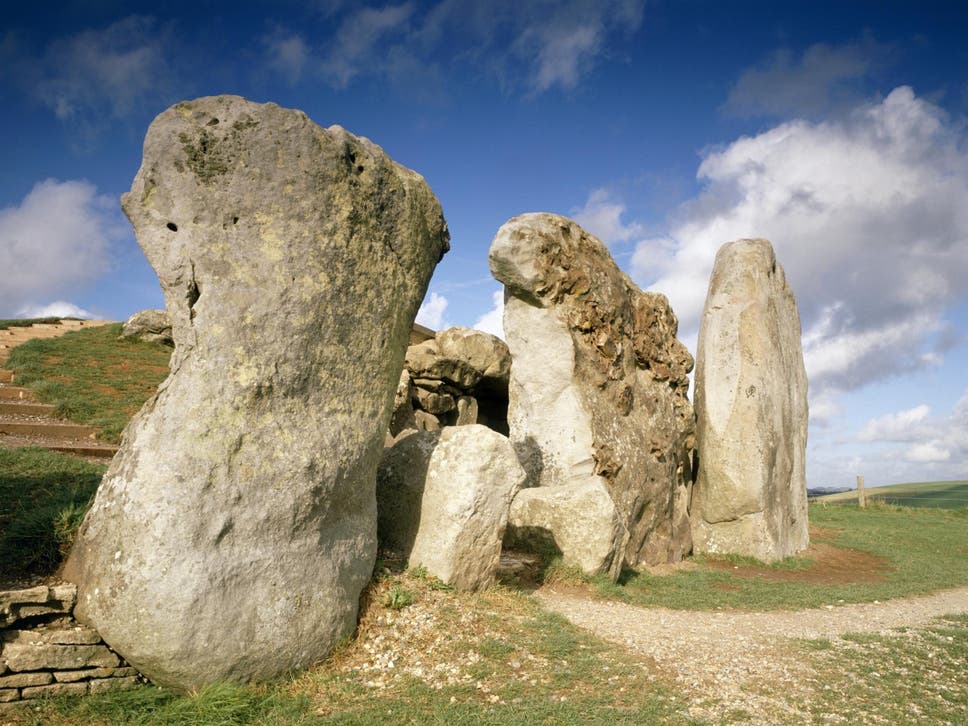
The massive and ancient stone circles around Stonehenge and Avebury in southern England may have all started with the commemoration of a single Neolithic house that probably belonged to an elite family, archaeologists now say.

Using ground-penetrating radar, the researchers found that the monumental stone circles of Avebury, about 25 miles (40 kilometers) north of Stonehenge, were centered on an early Neolithic habitation, with the concentric stone circles and large earthen embankment being built around it probably centuries later.

They say the Neolithic house at Avebury was built sometime after 3700 B.C. — but centuries before the creation of the larger rings of stone at Avebury and the megalithic monument at Stonehenge, which research shows were built after 3000 B.C.

Read the rest of this article...

Woolly mammoth mystery solved? Study reveals shocking details about prehistoric creature


A new study suggests that woolly mammoths and mankind's ancestors, the Neanderthals, may have shared genetic traits.

Extinct for thousands of years, the woolly mammoth continues to fascinate humanity, as the prospect of eventually reviving the species is pondered among the scientific community. Now, a new study suggests that the giant creatures and mankind's ancestors, the Neanderthals, may have shared genetic traits.

The study, published by researchers at Tel Aviv University, suggests that because of their shared geography, mammoths and Neanderthals likely had similar molecular characteristics that allowed them to adapt to their harsh environmental surroundings.

"Neanderthals and mammoths lived together in Europe during the Ice Age. The evidence suggests that Neanderthals hunted and ate mammoths for tens of thousands of years and were actually physically dependent on calories extracted from mammoths for their successful adaptation," said professor Ran Barkai in a statement.

Read the rest of this article...

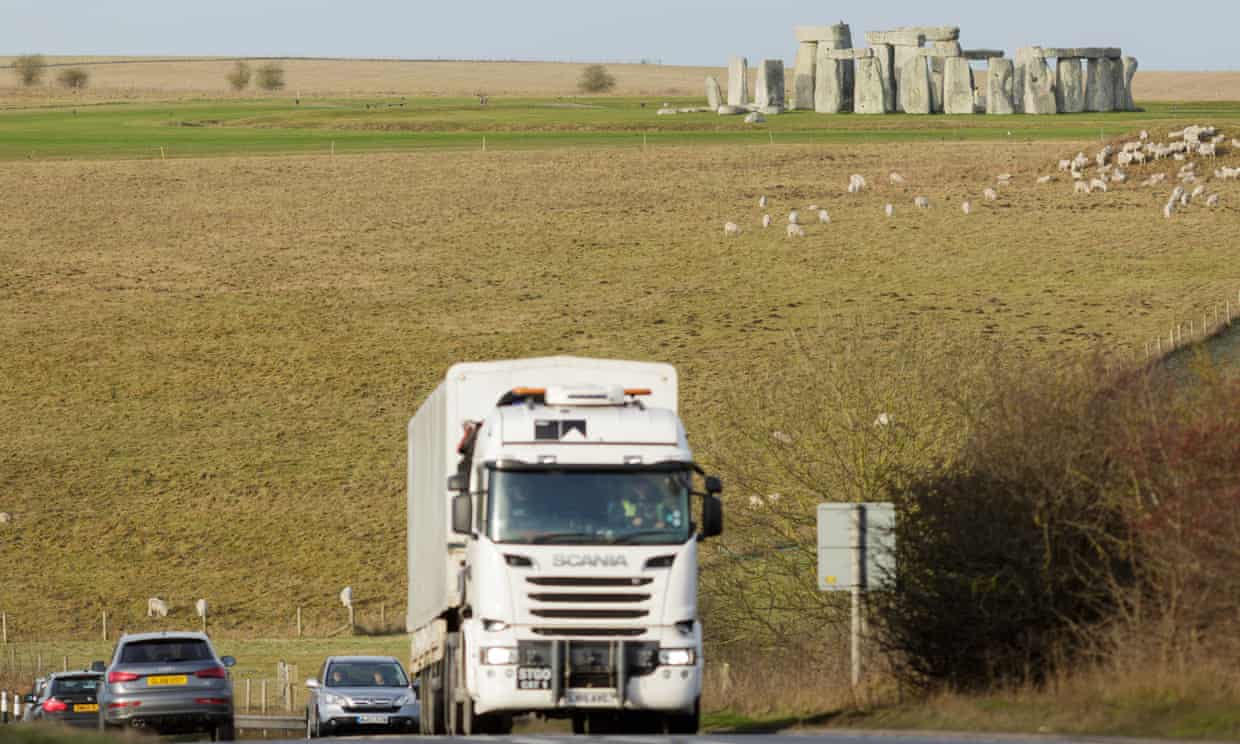
Stonehenge tunnel: Row over building clause in deeds

Campaigners say the deeds prevent work close to the stones

Plans for a controversial road tunnel near Stonehenge could be blocked because of conditions in the ancient monument's deeds.

The government wants to build a 1.9 mile (3km) tunnel past the Neolithic stone circle.

But when the monument was gifted to the nation by Sir Cecil Chubb in 1918 its deeds contained conditions.

Highways England said it believed the proposed tunnel did not fall within the covenant's boundary.

The issue was raised during a Planning Inspectorate preliminary meeting into the application to build the tunnel past the stones.

Read the rest of this article...
Von den Kelten bis zum Mittelalter: Eisenverhüttung im Siegerland


Vor über 2.000 Jahren war das Siegerland eine blühende Region für Eisenproduktion. In den bislang größten bekannten Verhüttungsöfen ihrer Epoche in Europa gewannen keltische Hüttenleute große Mengen an Stahl. Archäologen gelang in Siegen nun ein Nachweis dieser bisher für die Eisenzeit in Mitteleuropa einzigartigen großen Zahl an Werkstätten zur Eisenverarbeitung.

Read the rest of this article...

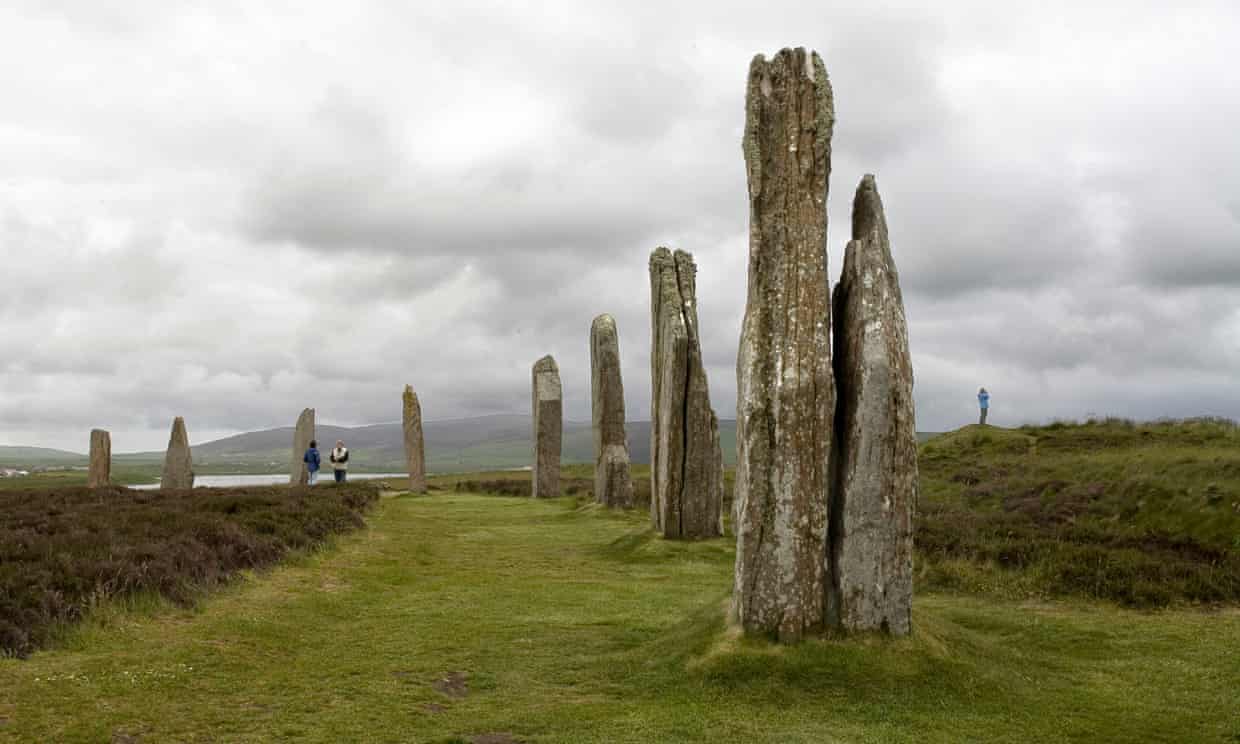
World-renowned Ring of Brodgar stone circle vandalised in Orkney


The Ring of Brodgar originally comprised 60 stones, of which 36 survive. 
Photograph: Murdo Macleod/The Guardian

Graffiti engraved on a stone at Neolithic monument that is part of world heritage site

A world-renowned stone circle in Orkney, which is more than 4,000 years old, has been vandalised.

Damage to the Ring of Brodgar includes graffiti that has been engraved into one of the stones at the Neolithic site near Stenness. It is believed to have been caused sometime between Friday afternoon and Sunday morning.

Insp David Hall from Police Scotland said: “The stones at the Ring of Brodgar are priceless historical artefacts and the damage caused cannot simply be estimated in monetary terms.

“For someone to damage them in this way is a particularly mindless act. I would urge anyone who has visited the area over the last weekend to think back and if they believe they may have seen something suspicious, even if it didn’t seem of much note at the time, to let us know.

Read the rest of this article...

'New species of human' found in cave throws doubt over evolution theories

Key site: Callao Cave on Luzon island in the Philippines, where fossils of Homo luzonensis were found. Photo: AFP/Getty Images

A previously unknown species of human that lived at the same time our ancient ancestors were colonising Europe has been discovered in the Philippines.
Bones and teeth of the "hominin" were found in Callao Cave on Luzon, the largest island in the Asian archipelago. They contain a mixture of old and new features that have excited scientists and threaten to overturn accepted theories of human evolution.
Hominins are members of the human family tree more closely related to one another than to apes.
Today, only one species of this group remains, Homo sapiens, to which everyone on Earth belongs.
Read the rest of this article...

New species of ancient human discovered in Philippines cave

Callao cave, where the fossils of Homo luzonensis were discovered. 
Photograph: Quincy/Alamy

Homo luzonensis fossils found in Luzon island cave, dating back up to 67,000 years
A new species of ancient human, thought to have been under 4ft tall and adapted to climbing trees, has been discovered in the Philippines, providing a twist in the story of human evolution.

The specimen, named Homo luzonensis, was excavated from Callao cave on Luzon island in the northern Philippines and has been dated to 50,000-67,000 years ago – when our own ancestors and the Neanderthals were spreading across Europe and into Asia.

Florent Détroit, of the Natural History Museum in Paris and the paper’s first author, said the discovery provided the latest challenge to the fairly straightforward prevalent narrative of human evolution.

Read the rest of this article...

Thursday, April 4, 2019

A 5,000-year-old barley grain discovered in Finland

Researchers determined the age of millennia-old barley grains using radiocarbon dating 
[Credit: Santeri Vanhanen]

On the basis of prior research, representatives of the Pitted Ware Culture from the Stone Age have been known as hard-core sealers, or even Inuits of the Baltic Sea. Now, researchers have discovered barley and wheat grains in areas previously inhabited by this culture, leading to the conclusion that the Pitted Ware Culture adopted agriculture on a small scale.

A study carried out in cooperation with parties representing the discipline of archaeology and the Department of Chemistry at the University of Helsinki, as well as Swedish operators in the field of archaeology (The Archaeologists, a governmental consultant agency, and Arkeologikonsult, a business), found grains of barley and wheat in Pitted Ware settlements on Finland's Aland Islands and in the region of modern Stockholm.

The age of the grains was ascertained using radiocarbon dating. Based on the results, the grains originated in the period of the Pitted Ware culture, thus being approximately 4,300-5,300 years old. In addition to the cereal grains, the plant remnants found in the sites included hazelnut shells, apple seeds, tuberous roots of lesser celandine and rose hips.

Read the rest of this article...
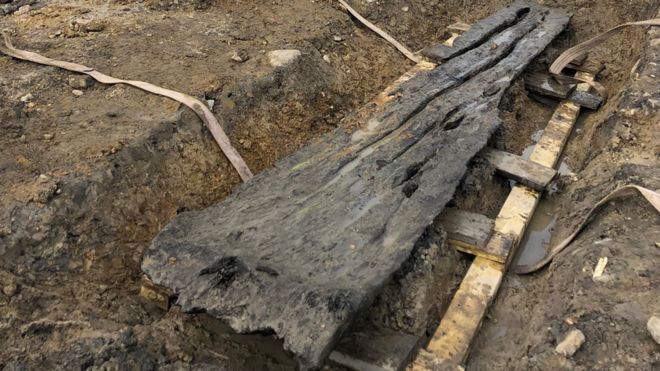
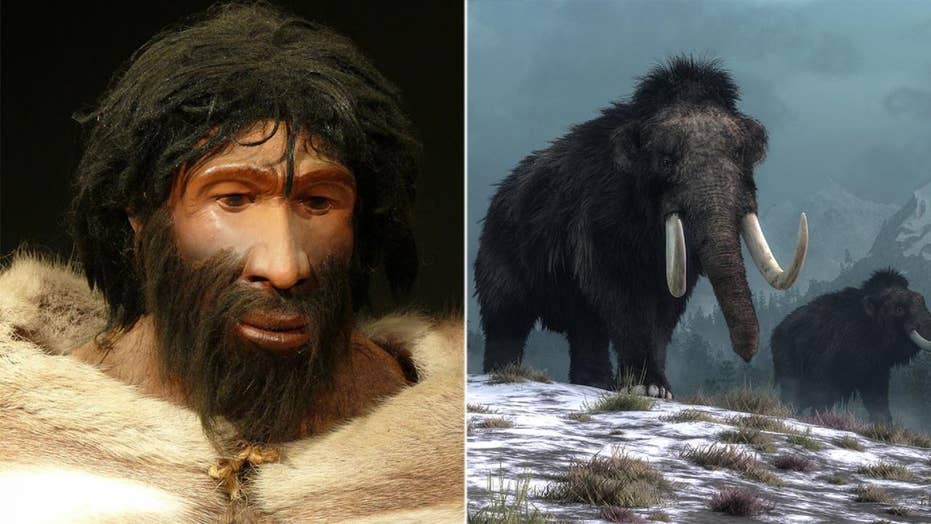
Climate change drove some Neanderthals to cannibalism

File photo - Hyperrealistic face of a neanderthal male is displayed in a cave in the new Neanderthal Museum in the northern Croatian town of Krapina Feb. 25, 2010. (REUTERS/Nikola Solic)

Six Neanderthals who lived in what is now France were eaten by their fellow Neanderthals some 100,000 years ago, according to gruesome evidence of the cannibalistic event discovered by scientists in a cave in the 1990s.

Now, researchers may have figured out why the Neanderthals, including two children, became victims of cannibalism: global warming.

While prior studies have interpreted Neanderthal remains to find proof of cannibalistic behavior, this is the first study to offer clues as to what may have led Neanderthals to become cannibals. Scientists found that rapid shifts in local ecosystems as the planet warmed may have extinguished the animal species that Neanderthals ate, forcing them to look elsewhere to fill their bellies. 

Read the rest of this article...
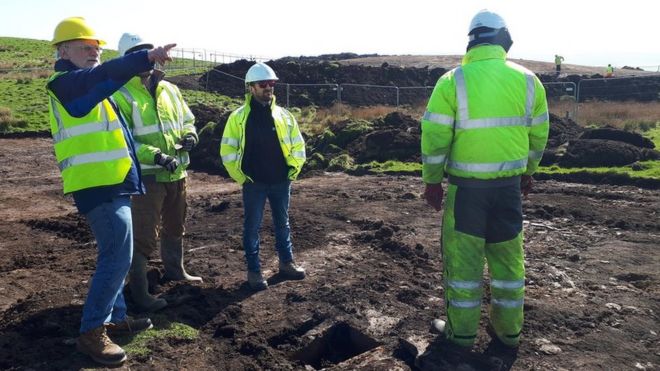
Wednesday, April 3, 2019

Neolithic Britons travelled across country for regular mass national feasts 4,500 years ago, new research claims

Feasts were held at ritual sites, including Avebury ( English Heritage )

Findings suggest prehistoric tribes may have established cultural and political bonds – and an early national identity – long before previously believed

New scientific discoveries are set to dramatically transform our understanding of prehistoric Britain.

A study of Stonehenge-era archaeological material from large-scale ceremonial feasts is revealing that neolithic Britain was, in key respects, much more interconnected and unified than previously thought.

The evidence reveals that people from virtually every part of the country came together to participate in major, almost certainly politico-religious, ceremonies.

Some participants travelled hundreds of miles from Scotland, northeast England, the midlands and Wales to significant ritual locations in what are now Wiltshire and Dorset.

Read the rest of this article...

Ancient teeth hint at mysterious human relative

The gorges of Guizhou Province glimmer in the sunlight in China. Fossil teeth found in this province suggest that millions of years ago, a cave here was home to a mysterious branch of the human family tree.
PHOTOGRAPH BY NOVARC IMAGES/ ALAMY

The find adds to a growing number of fossils from China that don't fit neatly in the existing human family tree.

FOUR TEETH FOUND in a cave in the Tongzi county of southern China have scientists scratching their heads.

In 1972 and 1983, researchers extracted the roughly 200,000-year-old teeth from the silty sediments of the Yanhui cave floor, initially labeling them as Homo erectus, the upright-walking hominins thought to be the first to leave Africa. Later analysis suggested they didn't quite fit with Homo erectus, but that's where the story paused for nearly two decades.

Now, a study published in the Journal of Human Evolution takes a fresh look at these ancient teeth, using modern methods to examine the curious remains. The new analysis excludes the possibility that the teeth could come from Homo erectus or the more advanced Neanderthals, but the elusive owner remains unknown.

Read the rest of this article...
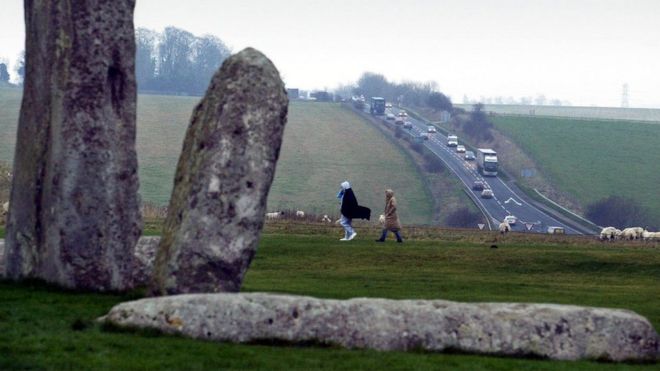
Concerns mount over plans for two-mile road tunnel past Stonehenge

Stonehenge lies within 165 metres of the A303, a key transport link for people travelling to and from England’s south-west. Photograph: Sam Frost/The Guardian

Highways England claims scheme will improve travel and visits to site but many oppose it

Environmentalists, archaeologists, residents and druids have expressed deep concerns about a controversial scheme to build a road tunnel through the Stonehenge landscape as the £1.6bn project reaches a key milestone.

A six-month long examination of the scheme that will consider issues ranging from the impact on precious archaeological remains to how it may affect endangered birdlife and the darkness of the night sky begins on Wednesday.

At a packed preliminary meeting at Salisbury racecourse on Tuesday, there were protests about the scheme, which some have branded vandalism. More than 2,000 people, many of them opposed, have said they want to make submissions and hundreds want to give evidence in person over the next six months.

Read the rest of this article...
Monday, March 18, 2019

Archaeologists discovered a flintstone workshop of Neanderthals in the southern Poland; it is approx. 60,000 years old


Researchers discovered a flint workshop of Neanderthals in Pietraszyno (Silesia). According to scientists, it is the first such large workshop in Central Europe that was not located in a cave. So far, researchers have counted 17,000 stone products created 60 thousand years ago.

Neandertals (Homo neanderthalensis) were very close relatives of contemporary man (Homo sapiens). They probably appeared in Poland approximately 300,000 years ago. The oldest stone tools they used, discovered on the Vistula, are over 200,000 years old, and the remains are over 100,000 years old.

"On the bank of the river in Pietraszyno, we discovered an unprecedented amount of flint products - 17,000 - abandoned by Neanderthals approximately 60,000 years ago" - says Dr. Andrzej Wiśniewski from the Institute of Archaeology, University of Wrocław. Since 2018, the researcher has been conducting joint excavations with researchers from the Max Planck Institute for Evolutionary Anthropology in Leipzig in the framework of a National Science Centre project. In his opinion, this is the first such large Neandertal workshop discovered in Central Europe that was not located in a cave.

Read the rest of this article...
Ancient switch to soft food gave us an overbite—and the ability to pronounce ‘f’s and ‘v’s

An ancient woman from Romania shows an edgeto-edge bite (left). A Bronze Age man from Austria had a slight overbite (right). D. E. BLASI ET AL., SCIENCE, 363, 1192 (2019)

Don't like the F-word? Blame farmers and soft food. When humans switched to processed foods after the spread of agriculture, they put less wear and tear on their teeth. That changed the growth of their jaws, giving adults the overbites normal in children. Within a few thousand years, those slight overbites made it easy for people in farming cultures to fire off sounds like "f" and "v," opening a world of new words.

The newly favored consonants, known as labiodentals, helped spur the diversification of languages in Europe and Asia at least 4000 years ago; they led to such changes as the replacement of the Proto-Indo-European patēr to Old English faeder about 1500 years ago, according to linguist and senior author Balthasar Bickel at the University of Zurich in Switzerland. The paper shows "that a cultural shift can change our biology in such a way that it affects our language," says evolutionary morphologist Noreen Von Cramon-Taubadel of the University at Buffalo, part of the State University of New York system, who was not part of the study.

Read the rest of this article...
Ancient migration transformed Spain's DNA

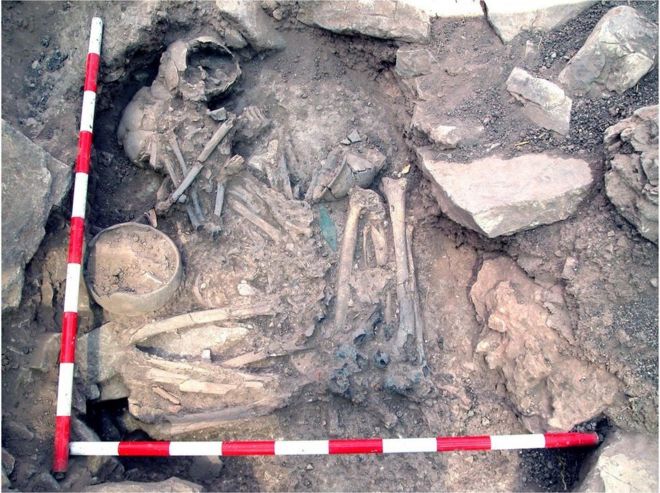
Bronze Age burials: Iberia saw a dramatic genetic shift during this period
L BENITEZ DE LUGO ENRICH - JOSE LUIS FUENTES SANCH

A migration from Central Europe transformed the genetic make-up of people in Spain during the Bronze Age, a study reveals.

DNA evidence shows the migrants streamed over the Pyrenees, replacing existing male lineages across the region within a space of 400 years.

It remains unclear whether violence played a role or whether a male-centric social structure was more important.

The result comes from the most extensive study of its kind.

Researchers reconstructed the population history of Iberia (modern Spain, Portugal, Gibraltar and Andorra) over 8,000 years - the biggest slice of time tackled by a single ancient DNA study. The region has been a crossroads for different cultures over time.

Read the rest of this article...

Neandertaler und moderne Menschen hatten ähnliche Speisezettel

Knochen aus Spy geben Aufschluss über Ernährung und Mobilität der dortigen Neandertaler. Foto: Royal Belgian Institute of Natural Sciences (RBINS)

Internationale Studie findet mehr gemeinsame Nahrungsvorlieben als angenommen ‒ Rätselhafte Spuren von Kannibalismus

Neandertaler und der frühe moderne Mensch ernährten sich vermutlich sehr ähnlich: Zu diesem Schluss kommt eine internationale Studie und widerspricht damit der Annahme, die Neandertaler seien ausgestorben, weil ihr Ernährungsspektrum eingeschränkt war. Die Ergebnisse zeigten aber auch, dass moderne Menschen dennoch einen Vorteil hatten, weil sie vermutlich mobiler und besser vernetzt waren, berichtet das Team um Dr. Christoph Wißing von der Universität Tübingen.

Read the rest of this article...

Thursday, March 14, 2019

Hominids may have hunted rabbits as far back as 400,000 years ago

BUNNY TRAIL  Fossils from southern European sites indicate that ancient relatives of humans hunted small, fast animals as early as around 400,000 years ago. Ends of rabbit bones (shown) were probably snapped off to remove marrow.

In Europe, Stone Age hominids began adding small, fast animals to their menus much earlier than previously thought, scientists say.

Now-extinct members of the human genus, Homohunted rabbits and, to a lesser extent, hares in southern France and probably other Mediterranean parts of Europe by around 400,000 years ago, researchers report online March 6 in Science Advances. Hunters also bagged larger creatures such as wild goats and deer. The new finding may highlight the flexibility and innovativeness of these ancient relatives of humans.

That dietary shift to smaller animals away from eating primarily large game emerged long before a previously recognized change in ancient humans’ eating habits, concludes a team led by paleoanthropologist Eugène Morin of Trent University in Peterborough, Canada. In the later transition, Stone Age people dramatically broadened what they ate, including a wide variety of small animals, starting around 36,000 years ago.

Read the rest of this article...

Researchers find a piece of Palaeolithic art featuring birds and humans

A tracing of the engraved figures over the stone [Credit: University of Barcelona]

It is not very common to find representations of scenes instead of individual figures in Palaeolithic art, but it is even harder for these figures to be birds instead of mammals such as goats, deer or horses. So far, historians have only found three scenes of Palaeolithic art featuring humans and birds in Europe.

Now, an article published in the journal L'Anthropologie tells how University of Barcelona researchers found -in the site of Hort de la Bequera (Margalef de Montsant, Priorat)-, an artistic piece from 12,500 years ago in which humans and birds try to interact in a pictorial scene with exceptional traits: figures seem to star a narration on hunting and motherhood.

Regarding the Catalan context in particular, this is an important finding regarding the few pieces of Palaeolithic art in Catalonia and it places this territory within the stream of artistic production of the upper Palaeolithic in the Mediterranean.

Read the rest of this article...

Stonehenge was 'hub for Britain's earliest mass parties'

Pigs were the main food at the feasts and were brought from as far away as Scotland and the North East of England to Stonehenge
ENGLISH HERITAGE/PA

Evidence of large-scale prehistoric feasting rituals found at Stonehenge could be the earliest mass celebrations in Britain, say archaeologists.

The study examined 131 pigs' bones at four Late Neolithic sites, Durrington Walls, Marden, Mount Pleasant and West Kennet Palisade Enclosures.

The sites, which served Stonehenge and Avebury, hosted the feasts.

Researchers think guests had to bring meat raised locally to them, resulting in pigs arriving from distant places.

Read the rest of this article...
HABITATS DE L’ÂGE DU BRONZE, SILOS ET RITUELS GAULOIS À FAUX-FRESNAY


À Faux-Fresnay, dans la Marne, une équipe d’archéologues de l’Inrap a découvert des vestiges de deux villages de l’âge du Bronze et de l’âge du Fer qui témoignent d’une importante activité agricole. Des silos où reposent des restes d’animaux interrogent sur des rituels qui auraient impliqué le cheptel. Cette fouille est réalisée en amont de l’aménagement d’un poste électrique par RTE.

Read the rest of this article...

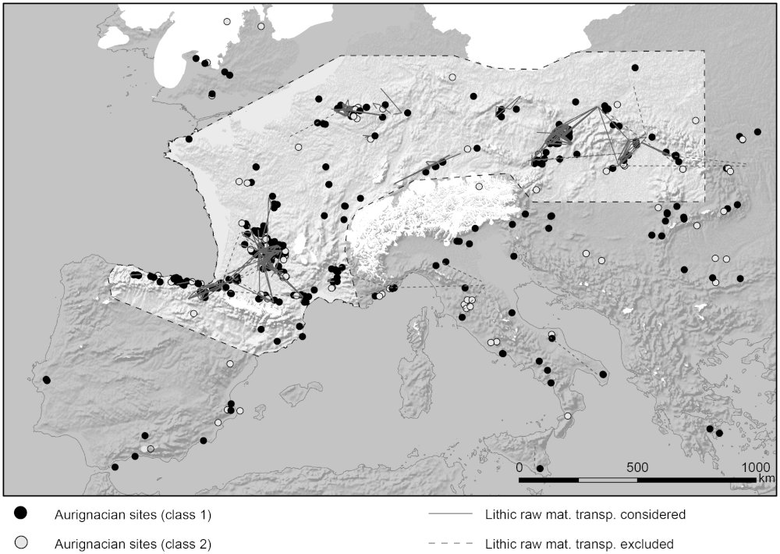
In Europa lebten im frühen Jungpaläolithikum im Schnitt nur 1.500 Menschen


Mit einem an der Universität zu Köln entwickelten Protokoll können die Forscherinnen und Forscher des Sonderforschungsbereiches 806 "Our Way to Europe" rekonstruieren, wie die Besiedlung Europas durch den anatomisch modernen Menschen verlief. Die Daten zeigen, dass die Population der gesamten europäischen Jäger und Sammler in der Zeitspanne von etwa 42.000 bis etwa 33.000 Jahren vor heute – dem sogenannten Aurignacien – durchschnittlich nur etwa 1.500 Personen betrug.

Read the rest of this article...
Tuesday, March 12, 2019

'Hobbit' human story gets a twist, thanks to thousands of rat bones


The limestone cave of Liang Bua, on the Indonesian island of Flores, is widely known as the hobbit cave, the site where the surprisingly tiny and enormously controversial extinct human relative Homo floresiensis was discovered. But to the scientists who excavate there, the site is known as something else entirely: the rat cave.
“The first time I went to the excavations at Liang Bua, I remember watching the bones coming out of the ground and being amazed at how it was almost all rat,” recalls Matthew Tocheri, the Canada Research Chair in Human Origins at Lakehead University.
Read the rest of this article...