Thursday, October 3, 2019

Ancient asteroid apocalypse destroyed early human civilisations, scientists claim

A map showing the ‘platinum spikes’ found across the world


A cataclysmic asteroid impact caused a global disaster which destroyed early human proto-civilisations in Africa and America, researchers have claimed. 

In a study published in a respected journal, scientists presented evidence which indicates Earth was struck by an asteroid 12,800 years ago. 

This caused a worldwide catastrophe which plunged animal species into extinction and may have caused the abrupt demise of the mysterious Clovis people, although this hypothesis is controversial. 

The Clovis was a prehistoric society that lived in North America but abruptly disappeared. 

Now a team from the University of the Witwatersrand in Johannesburg have uncovered evidence of a gigantic impact which preceded a period of massive climate change, spelling doom for the Clovis and potentially other early societies around the world

Read the rest of this article...

Archives, Possible Throne Room Discovered in Ancient Palace on Crete

Source: Ministry of Culture

The Greek Ministry of Culture announced on Thursday that a new storage room for valuables in Zominthos Palace, on the plateau of Mount Psiloritis on Crete, was discovered at the sprawling site during this year’s excavation season.

Supporting evidence for the Palace room being used as a type of archive includes its location and other circumstantial evidence.

Besides the multitude of vessels found throughout the site, discoveries included a hallway with pillars, leading to what could possibly be a throne room. The remains of a seat were found in that room, which was ostensibly used in earlier periods as well, from 1900 BC to Mycenaean times, ca. 1400 BC.

Read the rest of this article...
Zentralismus in den ältesten vorstädtischen Siedlungen Europas

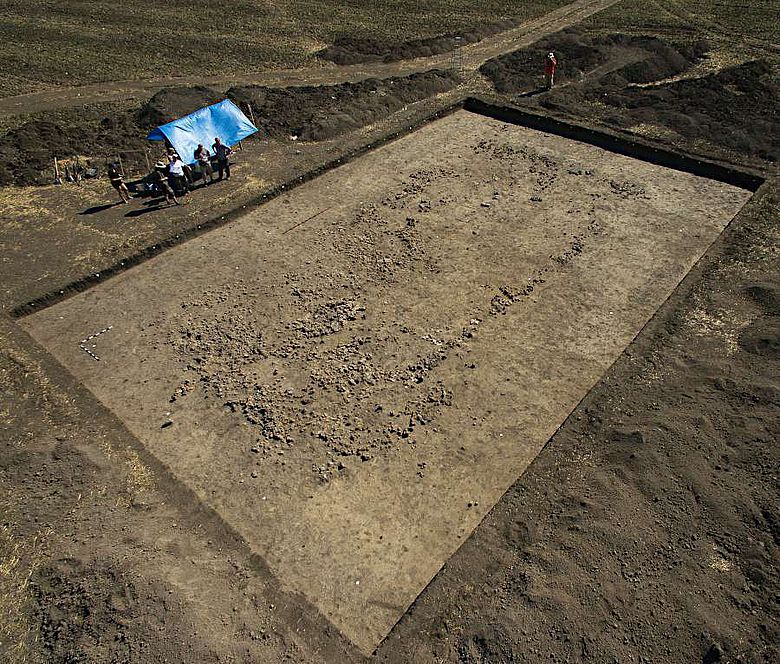
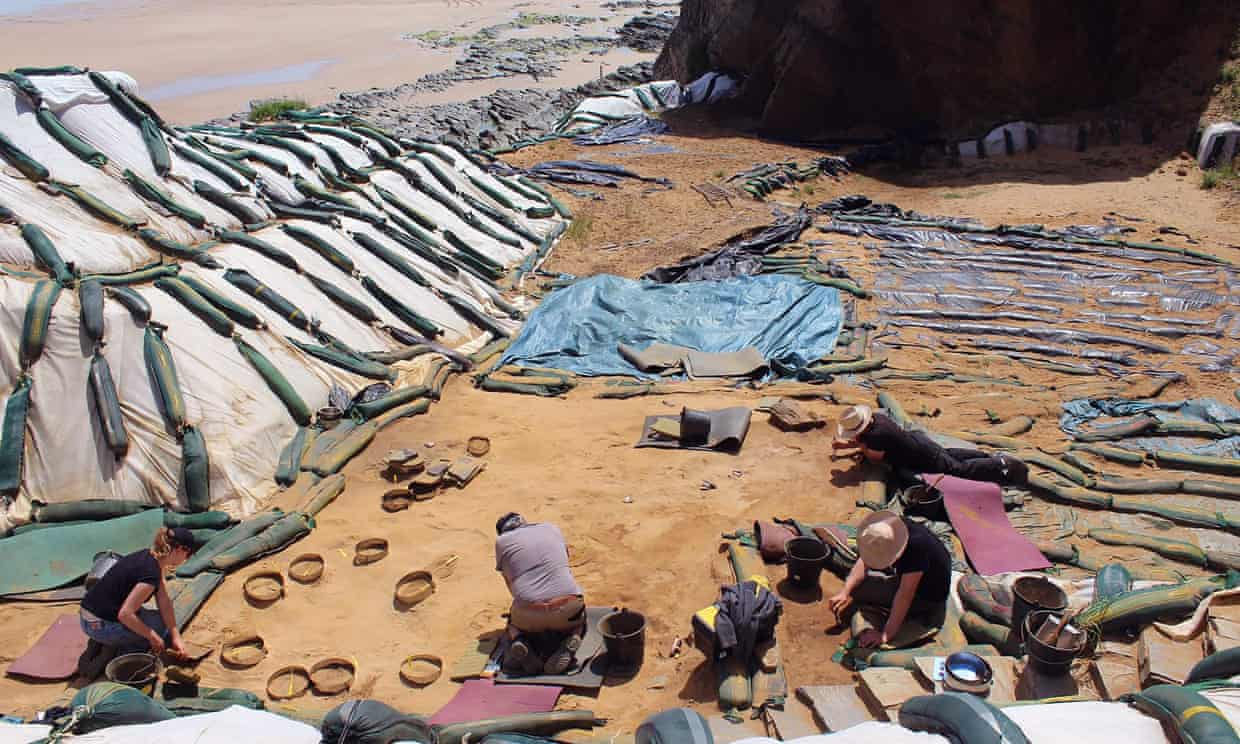
Kupferzeitliches Versammlungshaus nach der Freilegung: In einem offenen Hof und einem angrenzenden, überdachten Gebäudeteil fanden eine Vielzahl unterschiedlicher integrativer Aktivitäten statt. (© SFB 1266)

Ein ukrainisch-deutsches Forschungsteam sieht in undemokratischen Entscheidungsstrukturen und der Bündelung von Macht die vermutliche Ursache für den Zusammenbruch der ältesten vorstädtischen Großsiedlungen Europas um 3.700 vor Christus.

Zwischen 5000 und 2700 vor Christus breitete sich in Osteuropa auf dem heutigen Gebiet der Ukraine, Moldawiens und Rumäniens die sogenannte Tripolye-Kultur aus und schuf die größten bekannten Siedlungen dieser Zeit in Europa: sogenannte Megasiedlungen mit bis zu 15.000 Einwohnern, die sich über Flächen von bis zu 340 Hektar erstreckten.

Staatliche Strukturen waren zu dieser Zeit unbekannt und so wirft die Größe dieser Siedlungen viele Fragen bezüglich ihrer gesellschaftlichen Organisation auf: Wie liefen Entscheidungsprozesse ab? Gab es gesellschaftliche Unterschiede, demokratische Prozesse, Führer? Insbesondere bewegt die Wissenschaft aber die Frage, warum die Siedlungen nach nur wenigen hundert Jahren wieder verschwanden.

Read the rest of this article...
Sunday, September 29, 2019

Did a common childhood illness take down the Neanderthals?

MAGE: THIS ILLUSTRATION SHOWS THE STRUCTURE OF THE EUSTACHIAN TUBE IN NEANDERTHAL MAN AND IT'S SIMILARITY TO THE HUMAN INFANT.

BROOKLYN, NY - It is one of the great unsolved mysteries of anthropology. What killed off the Neanderthals, and why did Homo sapiens thrive even as Neanderthals withered to extinction? Was it some sort of plague specific only to Neanderthals? Was there some sort of cataclysmic event in their homelands of Eurasia that lead to their disappearance?

A new study from a team of physical anthropologists and head & neck anatomists suggests a less dramatic but equally deadly cause.

Published online by the journal, The Anatomical Record, the study, "Reconstructing the Neanderthal Eustachian Tube: New Insights on Disease Susceptibility, Fitness Cost, and Extinction"1 suggests that the real culprit in the demise of the Neanderthals was not some exotic pathogen.

Read the rest of this article...

Saturday, September 28, 2019

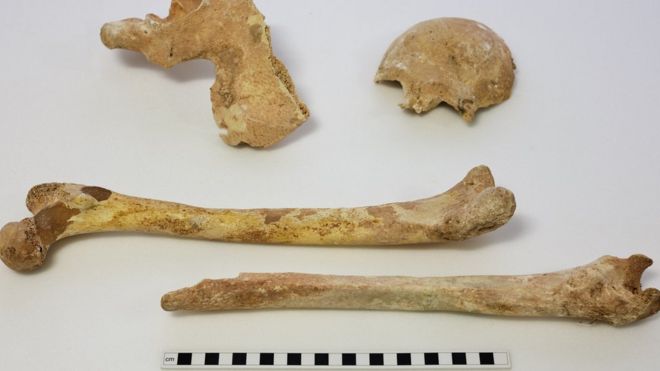
Somerset human remains 'as old as Cheddar Man'

The human remains were found to be as old as Britain's oldest complete skeleton, the Cheddar Man
SOUTH WEST HERITAGE TRUST

Two boxes of human remains rediscovered after 55 years have been found to be as old as the Cheddar Man - Britain's oldest complete skeleton.

The bones were discovered in a cave in Cannington Park Quarry near Bridgwater, Somerset, in the 1960s.

Soon after they "disappeared", and were recently found at Somerset Heritage Centre near Taunton, Cotswold Archaeology said.

Radiocarbon dating has shown them to be more than 9,000 years old.

Read the rest of this article...
Thursday, September 26, 2019

Historic find suggests bottle-feeding not a modern phenomenon

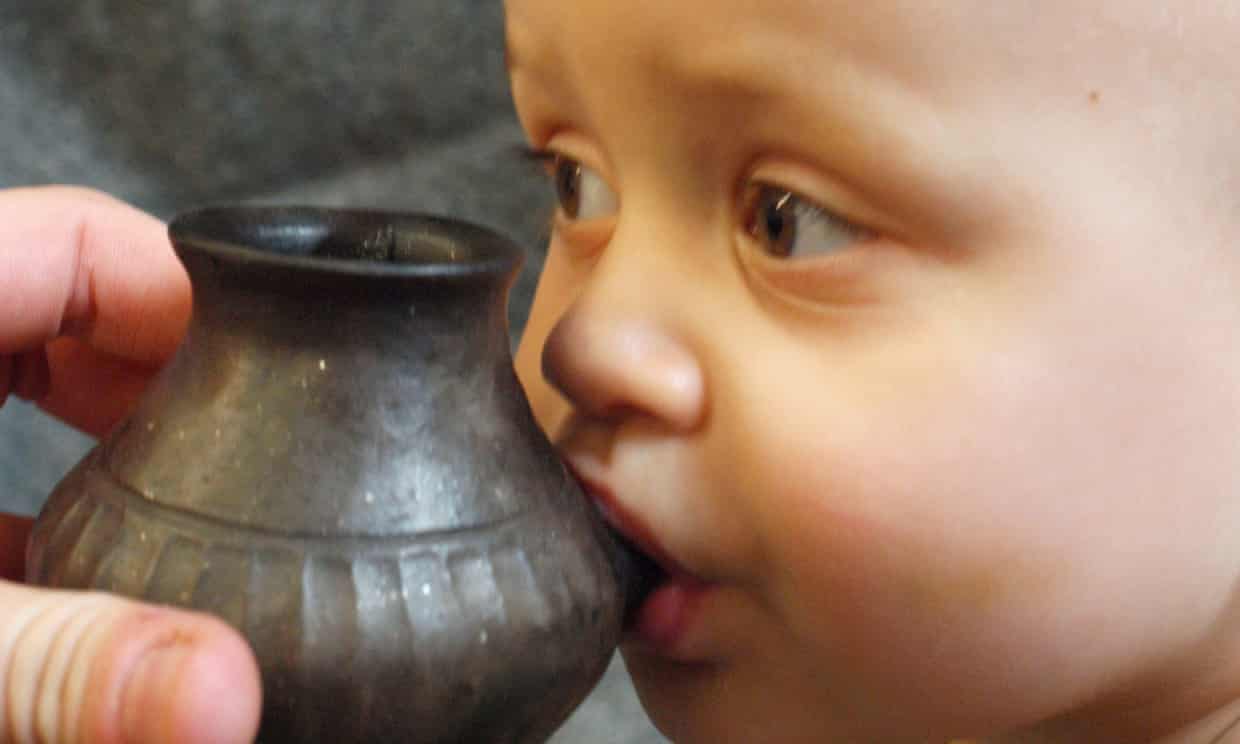
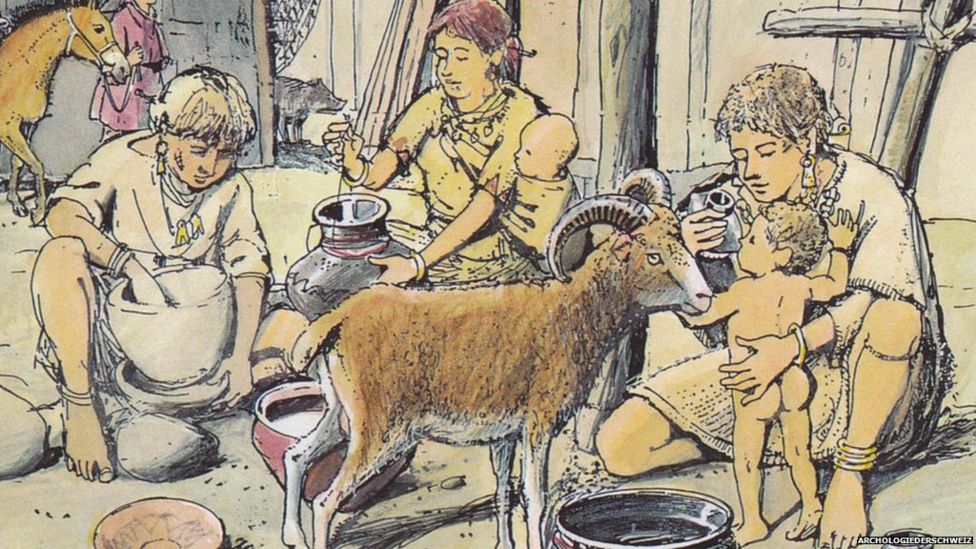
A reconstruction of a baby being fed using a vessel. 
Photograph: Helena Seidl da Fonseca/PA

Babies from prehistoric cultures were fed animal milk in small ceramic pots, according to a study that suggests bottle-feeding is not a modern phenomenon.

The drinking vessels, which were excavated from children’s graves in Bavaria, date to between 450 and 1,200BC. They have teat-shaped spouts, appear designed to be easily held by an older baby or toddler and one is shaped as an imaginary animal, suggesting it may have doubled as a toy.

Julie Dunne, a chemist at the University of Bristol and lead author, said: “These very small, evocative, vessels give us valuable information on how and what babies were fed thousands of years ago, providing a real connection to mothers and infants in the past.”

Read the rest of this article...

Prehistoric babies fed animal milk in bottles

Prehistoric family scene ARCHOLOGIEDERSCHWEIZ

Prehistoric babies were bottle-fed with animal milk more than 3,000 years ago, according to new evidence.

Archaeologists found traces of animal fats inside ancient clay vessels, giving a rare insight into the diets of Bronze and Iron Age infants.

The discovery suggests milk was given to infants to supplement breast feeding and could have contributed to a baby boom.

The type of milk is unknown, but goats or cows are likely suspects.

This is the first direct evidence for how prehistoric infants were fed, said Dr Julie Dunne of the University of Bristol, adding that the practice could have boosted fertility.

Read the rest of this article...

Wednesday, September 25, 2019

Neanderthal footprints found in France offer snapshot of their lives

The excavation site of the footprint layer in Le Rozel, France. 
Photograph: Dominique Cliquet/AFP/Getty Images

Scientists find 257 prints that were preserved in wind-driven sand 80,000 years ago

Scientists have found hundreds of perfectly preserved footprints, providing evidence that Neanderthals walked the Normandy coast in France.

The prints suggest a group of 10-13 individuals, mostly children and adolescents, were on the shoreline 80,000 years ago.

Neanderthals, the closest evolutionary cousins to present-day humans and primates, have long been thought to have lived in social groups, but details have been hard to establish.

The 257 footprints discovered at Le Rozel in western France give a snapshot of how Neanderthals lived and suggest they may have been taller than previously thought.

Read the rest of this article...

Giving birth two million years ago was 'relatively easy'

Human childbirth can be a long, painful, drawn-out process, needing assistance 
and sometimes taking days. GETTY IMAGES

Human childbirth can be a long, painful, drawn-out process, needing assistance and sometimes taking days.

So why do close living relatives like chimps have an easier labour, giving birth in hours and on their own?

In an attempt to answer this evolutionary question, scientists have been looking at how ancient members of the human family tree gave birth.

Human-like relatives two million years ago had it "pretty easy", according to birth reconstruction in a fossil.

For Australopithecus sediba, which lived 1.95 million years ago in South Africa, we see "a relatively easy birth process", says study researcher Dr Natalie Laudicina.

"The foetal head and shoulder breadth have ample space to pass through even the tightest dimensions of the maternal birth canal," she says.

Read the rest of this article...
Monday, September 16, 2019

Earliest direct evidence of milk consumption

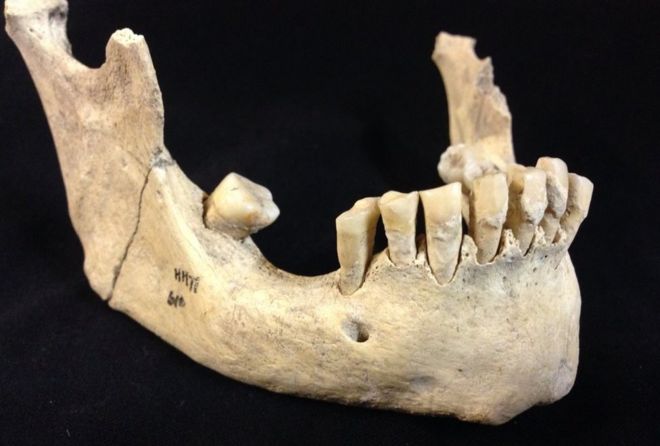
The evidence comes from dental plaque from Neolithic remains
SOPHY CHARLTON / DORSET COUNTY MUSEUM

Scientists have discovered the earliest direct evidence of milk consumption by humans.

The team identified milk protein entombed in calcified dental plaque (calculus) on the teeth of prehistoric farmers from Britain.

It shows that humans were consuming dairy products as early as 6,000 years ago - despite being lactose intolerant.

This could suggest they processed the raw milk into cheese, yoghurt or some other fermented product.

This would have reduced its lactose content, making it more palatable.

The team members scraped samples of plaque off the teeth, separated the different components within it and analysed them using mass spectrometry.

They detected a milk protein called beta-lactoglobulin (BLG) in the tartar of seven individuals spanning early to middle Neolithic times.

Read the rest of this article...

Wednesday, August 14, 2019

Ancient Tombs Unearthed in Nemea, Greece Shed Light on Mycenaean Civilization

Aerial view of the road and the chamber of the two tombs in the eastern part of the Mycenaean cemetery at Aidonia, along with the tombs from the old excavation.
Source: Ephorate of Antiquities of Corinth

The Greek Ministry of Culture announced on Sunday that archaeologists have discovered two ancient, unlooted chamber tombs dating from the Late Mycenaean period, (1400 – 1200 BC), near Nemea in the Peloponnesian Peninsula.

The newly-found tombs at the Aidonia burial site include five full burials and the skeletons of fourteen individuals whose remains had been transferred there from other tombs.

The finds will shed more light on the Mycenaean civilization, the Greek Culture Ministry announced.

Both chamber tombs provided an array clay pots and figurines to the discoverers, as well as other small objects.

Read the rest of this article...

Monday, August 12, 2019

Archaeology Dig to start at Iron Age site in Caithness

Aerial view of the Swartigill site. Photo: Bobby Friel @Takethehighview

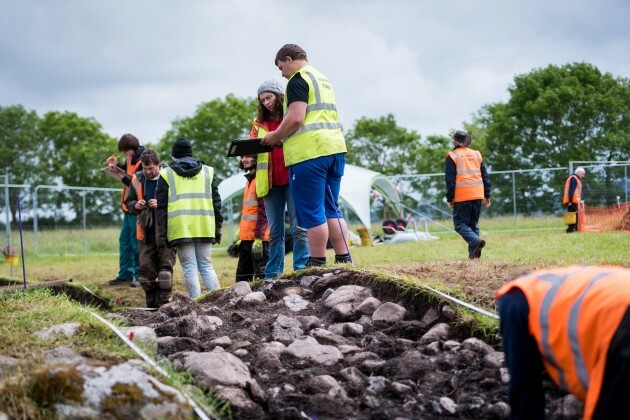
The University of the Highlands and Islands Archaeology Institute, in partnership with the Yarrows Heritage Trust, are preparing for a fourth season of excavation at the Burn of Swartigill in Thrumster, Caithness, Scotland.

Previous seasons of excavation at the site have uncovered a complex of Iron Age structures, which are providing an important window into Iron Age society away from the monumental architecture of the Brochs.

This season the team led by Rick Barton from ORCA Archaeology hope to continue to reveal the extent of some of these structures so that they can better understand just how complex the site is. We will also be aiming to recover more information about what life was like for the Iron Age people who lived there two thousand years ago. Analysis of the precious remnants of people’s day to day lives will not only help us to understand the environment and economy of the site at the Burn of Swartigill, but also potentially that of Iron Age Scotland in a much broader context.

Read the rest of this article...

Sunday, August 11, 2019

Ancient Greek skull found in Turkey shows evidence of neurosurgery performed 2,200 years ago

Credit: AA

Archaeologists carrying out excavations at the ancient Greek city of Euromus dating to the 5th century BC, in the area now occupied by Turkey found a skull with marks indicating that neurosurgery existed 2,200 years ago.

The Anadolu News Agency reports that the skull was found in a burial chamber during new excavations led by Turkish archaeologist Abuzer Kizil found that brain surgery was performed on one of the skulls belonging to an adult male.

“We believe this surgery was performed due to a headache or a problem that had to do with the skull,” Kizil said.

Read the rest of this article...

‘Perhaps the most important isotope’: how carbon-14 revolutionised science

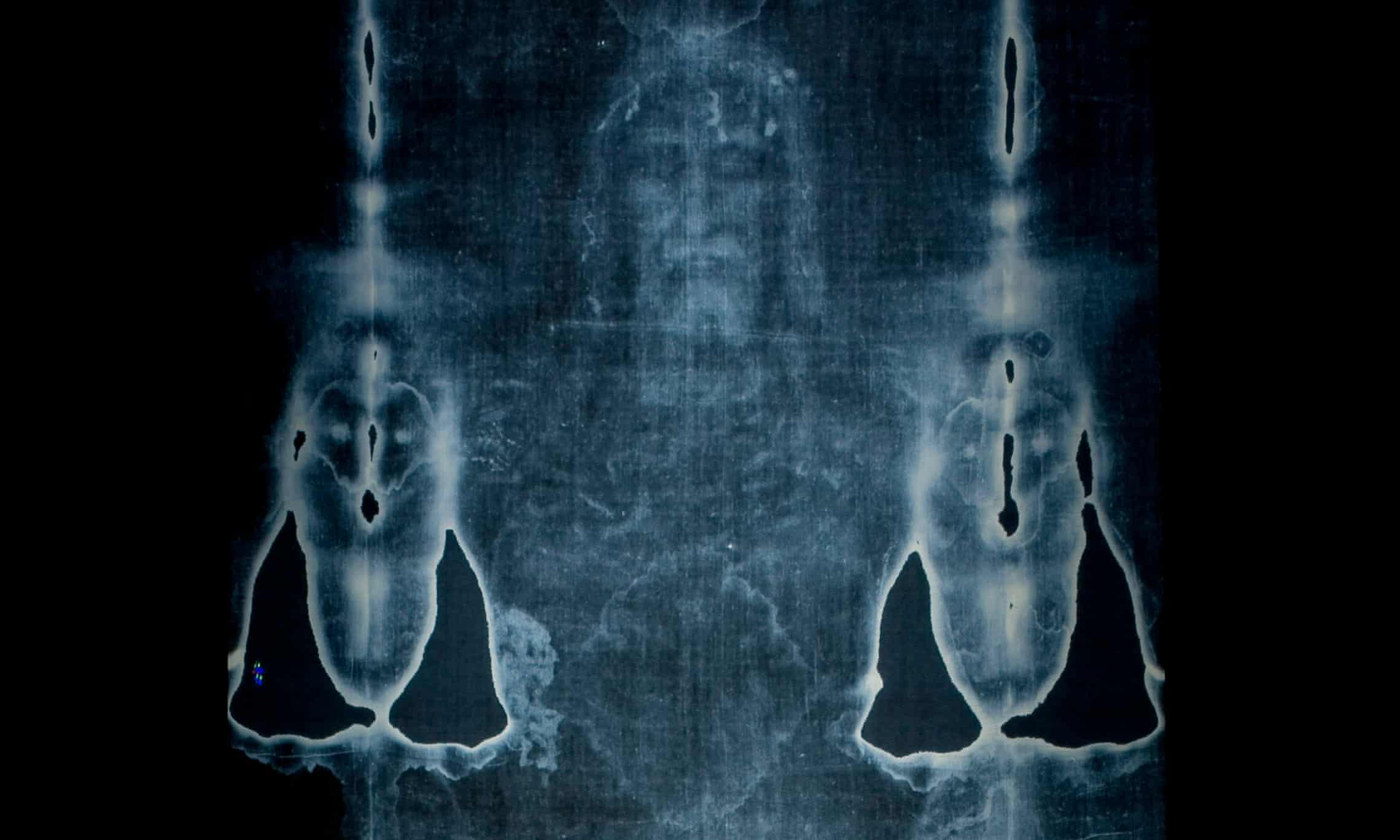
A photographic reproduction of the Turin shroud. 
Photograph: Jorge Guerrero/AFP/Getty Images

The discovery that carbon atoms act as a marker of time of death transformed everything from biochemistry to oceanography – but the breakthrough nearly didn’t happen

Martin Kamen had worked for three days and three nights without sleep. The US chemist was finishing off a project in which he and a colleague, Sam Ruben, had bombarded a piece of graphite with subatomic particles. The aim of their work was to create new forms of carbon, ones that might have practical uses.

Exhausted, Kamen staggered out of his laboratory at Berkeley in California, having finished off the project in the early hours of 27 February 1940. He desperately needed a break. Rumpled, red eyed and with a three-day growth of beard, he looked a mess.

And that was unfortunate. Berkeley police were then searching for an escaped convict who had just committed several murders. So when they saw the unkempt Kamen they promptly picked him up, bundled him into the back of their patrol car and interrogated him as a suspected killer.

Thus one of most revolutionary pieces of research undertaken in the past century was nearly terminated at birth when one of its lead scientists was accused of murder. It was only when witnesses made it clear that Kamen was not the man the police were after that he was released and allowed to go back to the University of California Radiation Laboratory to look at the lump of graphite that he and Ruben had been irradiating.

Read the rest of this article...

Thursday, August 8, 2019

Archaeologists discover almost 40 new monuments close to Newgrange

The site of one of the newly discovered monuments found near Newgrange. 
Credit: University College Dublin

A team from University College Dublin have unearth almost 40 previously unknown monuments close to Newgrange, including a "spectacular" monument that aligns with the Winter Solstice sunrise.

The findings likely range from the Neolithic period (4000 BC), through the Bronze Age (2500 BC), and the early Middle Ages.

The monument aligned with the Winter Solstice sunrise is believed to be around 200—300 years newer than the Stone Age passage tomb at Newgrange, dated around 3200 BC, and was discovered in a field just metres from the famous site.

Dr. Steve Davis and a team from the UCD School of Archaeology used a large-scale geophysical imaging system to reveal the new monuments as a part of a joint project with the Romano-Germanic Commission.

"These methods have in the last few years changed our understanding of the Brú na Bóinne landscape beyond all recognition," Dr. Davis said.

Read the rest of this article...

Monday, August 5, 2019

Archaeologists find rare Stone Age graves in Germany


Archaeologists have discovered 25 rare Stone Age graves in the district of Borde, north of the city of Magdeburg in eastern Germany, according to project director Susanne Friederich of the Ludwig-Maximilian University in Munich.

Friederich said the 6,500-year-old find near Wedringen is a cremation cemetery of the so-called Central European Rossen culture.

This is a peculiarity, since in this culture the dead were normally buried in the earth. "They are not tombs with urns, but the holes of the tombs have a size that corresponds to the burials of entire bodies," said Friederich.

Instead of a complete skeleton, the archaeologists found only fragments of cremated corpses. The dead were burned with their personal belongings. This was evidenced by stone axes cracked by the effect of heat

Read the rest of this article...

The road to Scandinavia's bronze age: Trade routes, metal provenance, and mixing


The geographic origins of the metals in Scandinavian mixed-metal artifacts reveal a crucial dependency on British and continental European trading sources during the beginnings of the Nordic Bronze Age, according to a study published July 24, 2019 in the open-access journal PLOS ONE by Heide W. Nørgaard from Aarhus University, Denmark, and colleagues.

2000-1700BC marks the earliest Nordic Bronze Age, when the use and availability of metal--specifically tin and copper, which when alloyed together creates bronze--increased drastically in Scandinavia. The authors performed isotope and trace-element analyses on 210 Bronze Age artifact samples, predominantly axeheads, originally collected in Denmark and representing almost 50% of all known existing Danish metal objects from this period.

Read the rest of this article...

Bronze Age children’s cemetery uncovered near Kilcreggan

Sandra Kelly was uncovering a stone coffin yesterday

Archaeologists have uncovered a series of graves dating back over 3,000 years at a site on the Rosneath Peninsula.

They found six graves so far, as well as pottery and a bead.

The team from the North Clyde Archaeological Society have worked on remains from three periods on the site at Portkil near Kilcreggan – military installations and roads from before World War One, a lime kiln from the late 18th or early 19th century and a series of Bronze Age burials and artefacts.

They have been working since November and are currently uncovering a stone coffin.

The society’s vice chair Tam Ward said it was relatively commonplace to find individual graves from the Bronze Age, but the number and combination at Portkil was unusual.

Read the rest of this article...
Thursday, August 1, 2019

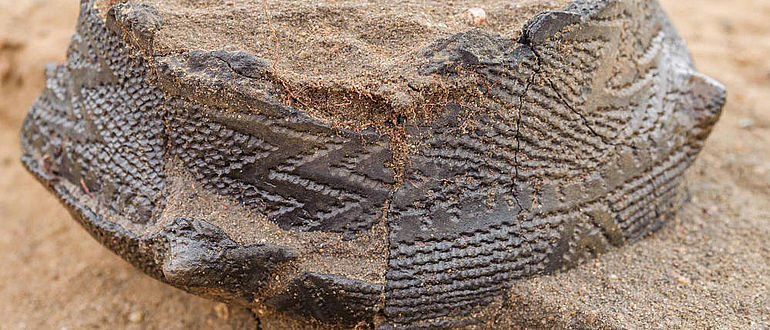
Standing stones uncovered near important archaeological site

This view of the site shows the alignment of the standing stones that have been found.
(SBMA-ARIA SA.)

Six aligned standing stones have been discovered on a building site in Sion, southwest Switzerland, in what local authorities call an important archaeological find.   

“This discovery is of prime importance to help us understand social rituals at the end of the Neolithic period (around 2,500BC) in central Europe,” says a press releaseexternal link from canton Valais’s buildings, monuments and archaeology department.   

The find was made by chance during work for a new residential building in the Petit-Chasseur quarter of the cantonal capital Sion. This is the same area where, in the 1960s, several dolmens (collective tombs) and some 30 standing stones were found.  

Three of the recently found standing stones are engraved with markings. The biggest find is a stone weighing nearly two tonnes bearing a representation of a male figure wearing geometrically patterned clothing and with a sun-like motif around his face.   

Read the rest of this article...

Monday, July 29, 2019

Slovakia/Thousands of years old traces of human presence found in Tatra cave


Source: Prof. Paweł Valde-Nowak

Researchers including Polish archaeologists discovered 14-15 thousand years old traces of human presence in the Hučava Cave in the Belianske Tatras. These are stone blades used by hunters. Until now, no prehistoric items have been found in any of the Tatra caves.

The discovery was made in July by a Slovak-Polish archaeological expedition. The Hučava Cave (Hučivá diera) is located in the Belianske Tatras in Slovakia, on the slopes of Kobylí Vrch, at 937 m a.s.l. Excavations are being carried out both at the entrance and in the cavern chamber.

"We have discovered dozens of stone blades that have survived completely or in fragments, originally embedded on poles (that have not survived until our time). We recovered some of the blades from the remnants of a hearth" - says Prof. Paweł Valde-Nowak from the Institute of Archaeology of the Jagiellonian University in Kraków. Valde-Nowak leads the research project together with Dr. Marian Sojak from the Institute of Archaeology of the Slovak Academy of Sciences in Nitra.


Read the rest of this article...
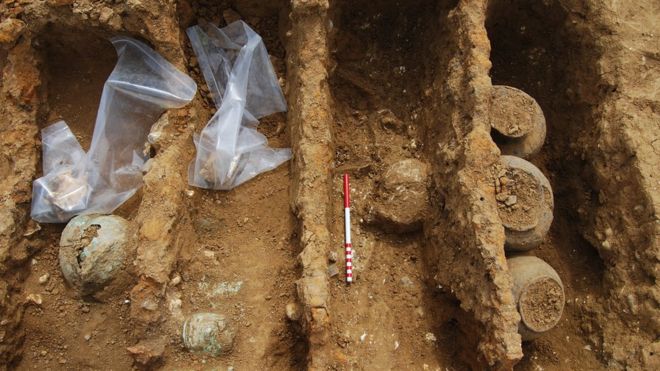
10,000-year-old engraved 'pebble' found near Rome said to be earliest known lunar calendar

The 10,000-year-old pebble which is believed to be the oldest lunar calendar in the world
[Credit: Sapienza Universita di Roma]

The oldest known lunar calendar may be an engraved pebble dating back to the Upper Palaeolithic found in Velletri, in the Alban Hills, south of Rome. The news has been announced by Flavio Altamura, a researcher at the Department of Antiquities of Sapienza University, who analyzed this enigmatic object in collaboration with the Superintendency for Archaeology, Fine Arts and Landscape in the Rome Metropolitan Area, the Province of Viterbo and Southern Etruria. The results of this study have been published in the Journal of Archaeological Science: Reports.

"The study reveals," explains Flavio Altamura, "that the notches were made over time using more than one kind of sharp cutting stone tool, as if they had been used for counting and calculating, or to store some kind of information over a period of time.”

Read the rest of this article...

Sunday, July 28, 2019

Finds from Celtic grave found in Zurich analyzed

Reconstruction of the grave with tree coffin [Credit: Amt für Städtebau, City of Zurich]

The tree coffin burial of a Celtic woman, which was discovered in March 2017 during construction work on the Kern school building, was examined by the Archaeology City of Zurich in an interdisciplinary evaluation. The bones and the unusual burial objects were carefully documented, salvaged, preserved and evaluated. Thus the grave can be assigned to the Late Iron Age around 200 BC. Of the artefacts that have been found, a string of glass beads in particular is unique in its form: it is fastened between two fibulae (clasps) and fitted with precious glass and amber beads.

The now completed interdisciplinary evaluation of the archaeology department of the city of Zurich paints a fairly accurate picture of the deceased. The examination of the skeleton and especially the teeth shows, among other things, that she died at the age of about 40, did little physical work during her lifetime and probably ate a relatively large amount of starchy or sweetened food.

Read the rest of this article...
Seltene Brandgräber aus der Steinzeit bei Wedringen


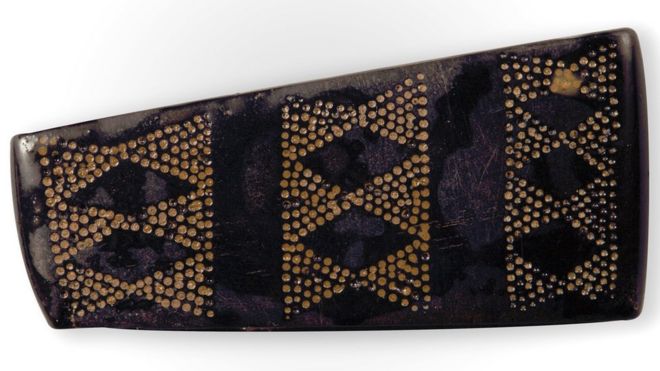
Im Zuge des Neubaus der Ortsumfahrung bei Wedringen, Ortsteil von Haldensleben, Ldkr. Börde, führt das Landesamt für Denkmalpflege und Archäologie Sachsen-Anhalt (LDA) derzeit archäologische Ausgrabungen durch. Auf dem aktuellen Abschnitt der Grabungsfläche wurden seltene Brandgräber der Rössener Kultur (ca. 6600–6450 vor heute) entdeckt. Die etwa 25 Grabgruben sind an der dunklen, aschigen Verfüllung gut in dem sie umgebenden Boden erkennbar. Als Beigaben in den Gräbern sind reich verzierte Gefäße sowie Beile und Äxte aus Felsgestein zu finden. Im näheren Umfeld der Brandbestattungen und ohne erkennbaren Befundzusammenhang deponierte Keramikgefäße lassen an ein noch nicht näher zu definierendes Ritual während der Bestattungszeremonie denken.

Read the rest of this article...
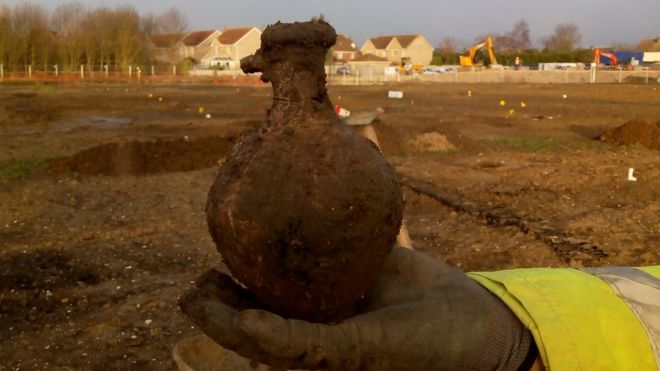
Rare relics of an Iron Age warrior who fought the Romans

The helmet and crest of the Iron Age warrior. Photo Allan HutchingsPhotography

As the Novium in Chichester prepares to display the late Iron Age Bersted Warrior and his possessions in January 2020, we talk to archaeologist James Kenny about one of the most spectacular warrior burials ever found in Britain

When archaeologists arrived to investigate a grave discovery on the site of a new housing development near Chichester in West Sussex, they had little idea what was awaiting them.

A large scale archaeological excavation had been taking place ahead of the development in 2008 at North Bersted, and when the grave was uncovered Chichester District Council’s archaeologist, James Kenny, was one of the first people to view it.

Read the rest of this article...

Iron Age warrior's remains to go on show in Chichester


The grave contained "significant" artefacts
Chichester District Council

The remains of an Iron Age warrior and his possessions - hailed as a "spectacular discovery" by archaeologists - are to go on display.

Weaponry and other artefacts were found alongside the ancient fighter during excavations at a site near Chichester, West Sussex.

It is thought the grave belonged to someone of high status.

The man, who may have fought alongside a Roman king, will be the centre-piece of an exhibition at a city museum.

A team from Thames Valley Archaeological Services found the grave on land at North Bersted, near Bognor Regis, in 2008.

Read the rest of this article...

Grave of 'real-life Asterix' who fought Caesar found amid trove of weapons and possessions in West Sussex

'Unique find': the artefacts have been carefully studied for the last decade CREDIT: PA

The grave of a real-life Asterix containing what is believed to be an ancient Gallic warrior who came to Britain and fought Julius Caesar has been discovered, archaeologists have announced.

The unique and highly-elaborate resting place was found on a West Sussex building site.

The Iron Age warrior, buried with his glamorous and ornate head-dress, is thought to have been a refugee French Gallic fighter who fled Julius Caesar's legionnaires as they swept across continental Europe in about 50BC.

Archaeologists have described the discovery, which will go on display at Chichester's Novium Museum in January 2020, as "the most elaborately equipped warrior grave ever found in England".

Read the rest of this article...

Tuesday, July 23, 2019

Isle of Man Round Mounds: 'Spectacular' 4,000-year-old jet necklace found

Sand on the beads from the burial site will be removed as part of the conservation process
MNH

A 4,000-year-old necklace has been uncovered during an archaeological dig on the Isle of Man.

The piece of jewellery, found in the west of the island, is made up of 122 "intricately" decorated jet beads each measuring between 1cm and 5cm.

Thought to have originated in Whitby, North Yorkshire it is the first of its kind to be found on the Isle of Man.

When fully assembled, the necklace was crescent-shaped and made from multiple strings.

Read the rest of this article...

'Important' Iron Age settlement found at Warboys dig

Roman finds include this jug and human remains, including six skeletons
Oxford Archaeology East

Iron Age roundhouses, Roman burials and Saxon pottery have been discovered in a "hugely important and hitherto unknown settlement".

The seven month-long dig in Warboys in Cambridgeshire also uncovered "a rare example" of "early Saxon occupation mingled with the latest Roman remains".

Archaeologist Stephen Macaulay said: "We almost never find actual physical evidence of this."

The settlement reverted to agricultural use after the 7th Century.

"What makes this site really significant is we have evidence of early Saxon occupation mingled with the latest Roman remains," said Mr Macaulay, deputy regional manager for Oxford Archaeology East.

Read the rest of this article...
Friday, July 19, 2019

Stone tool changes may show how Mesolithic hunter-gatherers responded to changing climate

Reconstruction of a Mesolithic camp-site with a hunter in the front ready to fire an arrow
 mounted with stone microliths [Credit: Ulco Glimmerveen]

The development of new hunting projectiles by European hunter-gatherers during the Mesolithic may have been linked to territoriality in a rapidly-changing climate, according to a study published in the open-access journal PLOS ONE by Philippe Crombé from Ghent University, Belgium.

As a result of warming occurring at a rate of ca. 1.5 to 2°C per century, hunter-gatherers in Europe during the Mesolithic era (approximately 11,000-6,000 years ago) experienced significant environmental changes, very similar to the ones we face today: rising sea levels, increased drought, plant and animal migrations and wildfires. Here, Crombé examined microliths, small stone arrowheads/barbs used in hunting, to see how their design and usage by Mesolithic hunter-gatherers shifted in conjunction with climatic and environmental changes.

Building on archaeological research from the last two decades, Crombé used Bayesian modelling to reveal potential correlations between 228 radiocarbon dates specific to Mesolithic sites along the southern North Sea basin and the different types and shapes of microliths (triangles, crescents, leaf-shaped and mistletoe-shaped microliths, trapezes, etc.) found at these sites.

Read the rest of this article...

Thursday, July 18, 2019

Archaeology Anthropology Palaeontology Evolution Exhibitions Natural Heritage Astronomy Out of Africa and into an archaic human melting pot

A map showing where the ancestors of modern humans appear to have met and mixed
with archaic hominins [Credit: University of Adelaide]

Genetic analysis has revealed that the ancestors of modern humans interbred with at least five different archaic human groups as they moved out of Africa and across Eurasia.


While two of the archaic groups are currently known - the Neanderthals and their sister group the Denisovans from Asia ¬- the others remain unnamed and have only been detected as traces of DNA surviving in different modern populations. Island Southeast Asia appears to have been a particular hotbed of diversity.

Published in the Proceedings of the National Academy of Sciences, researchers from the University of Adelaide's Australian Centre for Ancient DNA (ACAD) have mapped the location of past "mixing events" (analysed from existing scientific literature) by contrasting the levels of archaic ancestry in the genomes of present-day populations around the world.


Read the rest of this article...
Maternal secrets of our earliest ancestors unlocked

Australopithecus africanus impression by Jose Garcia and Renaud Joannes-Boyau, Southern Cross University
[Credit: Jose Garcia and Renaud Joannes-Boyau, Southern Cross University]

Analysis of more than two-million-year-old teeth from Australopithecus africanus fossils found in South Africa have revealed that infants were breastfed continuously from birth to about one year of age. Nursing appears to continue in a cyclical pattern in the early years for infants; seasonal changes and food shortages caused the mother to supplement gathered foods with breastmilk. An international research team led by Dr Renaud Joannes-Boyau of Southern Cross University, and by Dr Luca Fiorenza and Dr Justin W. Adams from Monash University, published the details of their research into the species in the journal Nature.

"For the first time, we gained new insight into the way our ancestors raised their young, and how mothers had to supplement solid food intake with breastmilk when resources were scarce," said geochemist Dr Joannes-Boyau from the Geoarchaeology and Archaeometry Research Group (GARG) at Southern Cross University.

"These finds suggest for the first time the existence of a long-lasting mother-infant bond in Australopithecus. This makes us to rethink on the social organisations among our earliest ancestors," said Dr Fiorenza, who is an expert in the evolution of human diet at the Monash Biomedicine Discovery Institute (BDI)
Read the rest of this article...

Stonehenge may have been built using pig fat

Fat residues on shards of pottery found at Durrington Walls, near Stonehenge, have long been assumed to be connected with feeding the many hundreds of people that came from across Britain to help construct the ancient monument.
But, new analysis by archaeologists at Newcastle University, UK, suggests that because the fragments came from dishes that would have been the size and shape of buckets, not cooking or serving dishes, they could have been used for the collection and storage of tallow—a form of animal fat.

Dr. Lisa-Marie Shillito, Senior Lecturer in Landscape Archaeology, Newcastle University, said: "I was interested in the exceptional level of preservation and high quantities of lipids—or fatty residues—we recovered from the pottery. I wanted to know more about why we see these high quantities of pig fat in pottery, when the animal bones that have been excavated at the site show that many of the pigs were 'spit roasted' rather than chopped up as you would expect if they were being

Read the rest of this article...
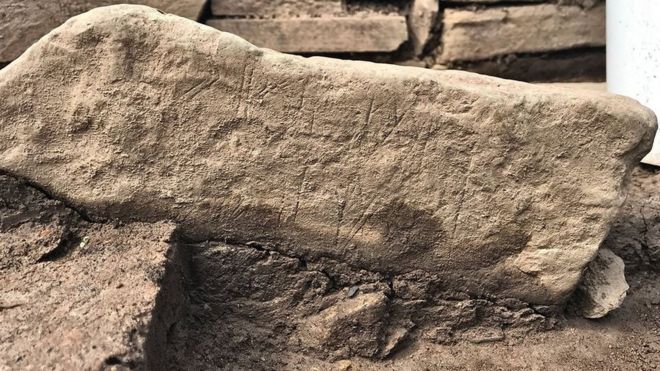
'Stunning' decorated Neolithic stone discovered in Orkney

The decorated stone was discovered on Monday
Ness of Brodgar

Archaeologists have uncovered what they describe as a "stunning example" of Neolithic decorate stone in Orkney.

The notch-marked slab was discovered at Ness of Brodgar, the location of a well-preserved and sophisticated complex of stone buildings.

The site was built and occupied by people more than 5,000 years ago.

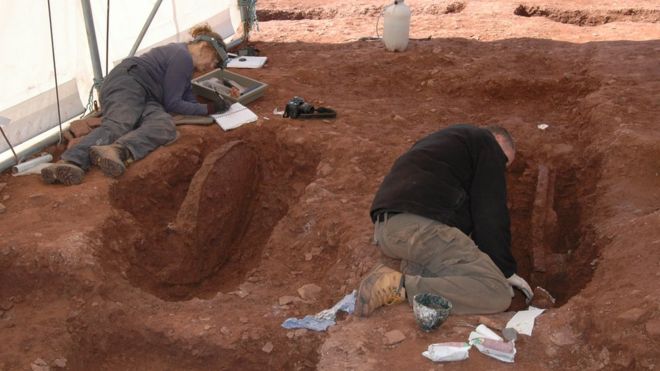
Archaeological excavations began at Ness of Brodgar more than 15 years ago and the site covers an area of about six acres (2.5 ha).

The decorated stone was found on Monday, followed by further discoveries of smaller carved stones during the rest of the week

Read the rest of this article...

Thursday, July 11, 2019

A reconstruction of Apidima 2, which was shown to be a Neanderthal skull. A far older skull fragment, Apidima 1, was also assumed to be Neanderthal, but scientists now say it belonged to a modern human.
CreditCreditKaterina Harvati, Eberhard Karls University of Tübingen

The bone, found in a cave, is the oldest modern human fossil ever discovered in Europe. It hints that humans began leaving Africa far earlier than once thought.
A skull fragment found in the roof of a cave in southern Greece is the oldest fossil of Homo sapiens ever discovered in Europe, scientists reported on Wednesday.

Until now, the earliest remains of modern humans found on the Continent were less than 45,000 years old. The skull bone is more than four times as old, dating back over 210,000 years, researchers reported in the journal Nature.

The finding is likely to reshape the story of how humans spread into Europe, and may revise theories about the history of our species.


Read the rest of this article...

Wednesday, July 10, 2019

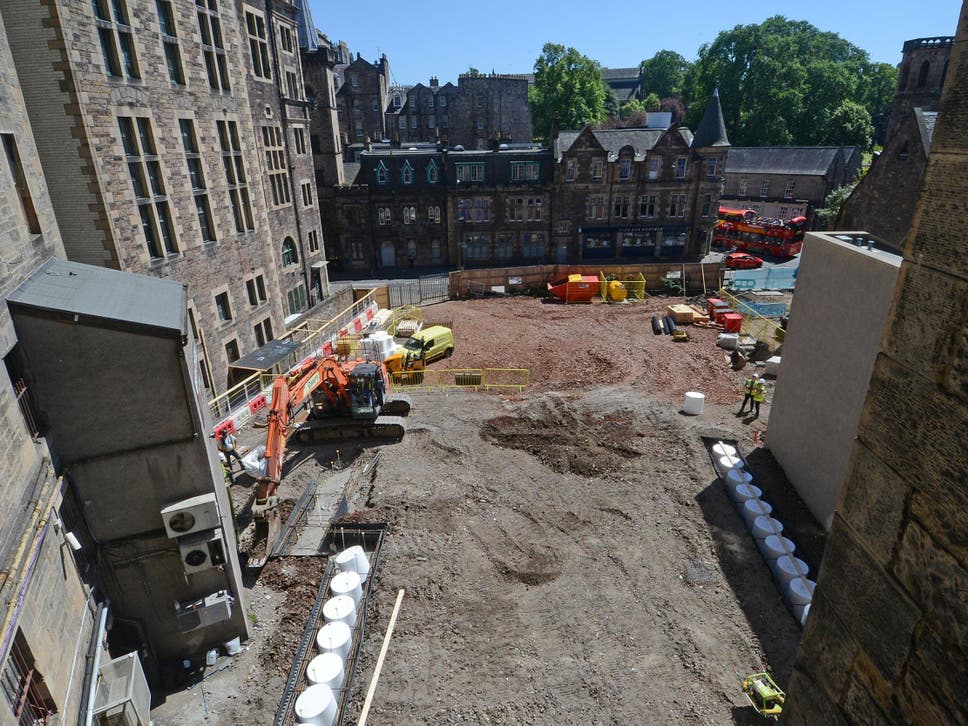
Cannonballs, skulls and jewellery: Archaeologists discover 'Bronze Age relics' in Edinburgh city centre, delaying Richard Branson’s new hotel

Building of first Virgin Hotel in Britain has been delayed for a year after archaeologists at the Edinburgh site unearthed artefacts dating back 1,000 years ( Jon Savage /SWNS ) 

The opening of Sir Richard Branson‘s first Virgin Hotel in Britain has been delayed by a year after archaeologists at the site unearthed artefacts dating back 1,000 years.

The excavation in Edinburgh has lasted more than a year, three times longer than expected, due to the range of objects and material discovered from the 10th century.

Experts say the remains of buildings found predate Edinburgh Castle and the creation of the town burgh by David I by around 200 years.

The work has also unearthed ditches and walls marking the original boundary of the city and some of the discoveries could date as far back as the Bronze Age.


Read the rest of this article...

The first Europeans weren’t who you might think


Genetic tests of ancient settlers' remains show that Europe is a melting pot of bloodlines from Africa, the Middle East, and today's Russia.
The idea that there were once “pure” populations of ancestral Europeans, there since the days of woolly mammoths, has inspired ideologues since well before the Nazis. It has long nourished white racism, and in recent years it has stoked fears about the impact of immigrants: fears that have threatened to rip apart the European Union and roiled politics in the United States.

Now scientists are delivering new answers to the question of who Europeans really are and where they came from. Their findings suggest that the continent has been a melting pot since the Ice Age. Europeans living today, in whatever country, are a varying mix of ancient bloodlines hailing from Africa, the Middle East, and the Russian steppe.

The evidence comes from archaeological artifacts, from the analysis of ancient teeth and bones, and from linguistics. But above all it comes from the new field of paleogenetics. During the past decade it has become possible to sequence the entire genome of humans who lived tens of millennia ago. Technical advances in just the past few years have made it cheap and efficient to do so; a well-preserved bit of skeleton can now be sequenced for around $500.

The result has been an explosion of new information that is transforming archaeology. In 2018 alone, the genomes of more than a thousand prehistoric humans were determined, mostly from bones dug up years ago and preserved in museums and archaeological labs. In the process any notion of European genetic purity has been swept away on a tide of powdered bone.


Read the rest of this article...

Thursday, July 4, 2019

Late Iron Age chariot pieces found in Pembrokeshire

Archaeologists discovered bronze artefacts, the iron tyres of the chariot wheels and an iron sword
MUSEUM WALES

Archaeologists have discovered more artefacts at the first Celtic chariot burial site to be found in southern Britain.

Two iron tyres and a sword from the chariot were retrieved during an excavation in Pembrokeshire.

The exact site remains a secret and follows the discovery of decorative objects by a metal detector enthusiast on the same land in February 2018.

National Museum Wales is conserving the chariot pieces.

Archaeologists had suspected they would uncover more beneath the farmland where metal detectorist Mike Smith found a number of objects associated with a chariot.

Following an initial investigation in June 2018 by archaeologists from National Museum Wales and Dyfed Archaeological Trust, a dig was carried out in March and April, funded by National Museum Wales, Cadw and the National Lottery Heritage Fund.

Read the rest of this article...

Ancient Humans Dietary Habits Reflected In Bonobo Aquatic Greens Diet


Bonobos have been spotted doing something interesting in the Congo basin. They are scouring the swamp in search of aquatic herbs that are packed with iodine, a nutrient that is very important for advancing the growth of higher cognitive abilities. That could help scientists understand the nutritional needs and practices of ancient humans. The Bonobo consumption of food rich in iodine is the first-ever recorded by a species other than humans.

“Our results have implications for our understanding of the immigration of prehistoric human populations into the Congo basin,” Dr. Gottfried Hohmann, the lead author of the study comments.

“Bonobos as a species can be expected to have similar iodine requirements to humans, so our study offers—for the first time—a possible answer on how pre-industrial human migrants may have survived in the Congo basin without artificial supplementation of iodine,” the researcher added.

Read the rest of this article...

Monday, June 17, 2019

Britain’s Atlantis: Evidence of Stone Age human activity found beneath North Sea

Archaeologists have found evidence of ancient human activity on Britain’s very own “Atlantis”. 

Scientists investigating a drowned Stone Age landscape at the bottom of the North Sea have discovered two potential prehistoric settlement sites on the banks of a long-vanished ancient river.


It is the first time that an archaeological expedition has ever found such evidence far offshore under the huge body of water. 


In the past, prehistoric artefacts have on occasions been trawled up by fishermen and found by oil exploration teams – but the seabed contexts they came from were never archaeologically assessed.


This time, the discoveries are part of a systematic archaeological survey.


Read the rest of this article...

Anglesey archaeology: Bronze Age cairn dig at Bryn Celli Ddu

Bryn Celli Ddu burial chamber is aligned to the sun and is lit during the summer solstice
AERIAL-CAM

An excavation is under way on the site of a suspected 4,500-year-old burial cairn that lies next to one of Wales' most important prehistoric monuments.

Experts are hoping to learn more about it and its relationship to Bryn Celli Ddu burial chamber at Anglesey.

The 5,000-year-old "passage tomb" is aligned to coincide with the rising sun on the summer solstice.

Dr Ffion Reynolds said the cairn showed the site remained a "special location" centuries after the chamber was built.

Read the rest of this article...

Sunday, June 16, 2019

Archaeologists uncover megalithic monument thought to be unlike any found in Ireland to date

IT Sligo Archaeology students Jazmin Scally Koulak and Eugene Anderson sieving the soil at Carrowmore excavation

AN ARCHAEOLOGICAL EXCAVATION in Co Sligo has uncovered a megalithic monument thought to be unlike any found in Ireland to date. 

Several prehistoric tools made from a hard stone called chert were discovered and are thought to have been used for activities such as working animal hides, cutting and preparing food, basket food, basket working and bone working. 

The discovery was made by a team of archaeologists from IT Sligo during a two-week excavation of a prehistoric monument in the heart of the Carrowmore megalithic complex in Co Sligo. 

Carrowmore in the largest cemetery of megalithic tombs in Ireland, with 5,500-year-old passage tombs dating from 3,600 BC. 

Read the rest of this article...

Thursday, June 13, 2019

Artificial islands older than Stonehenge stump scientists

A diver holds a Neolithic (ca. 3,500 B.C) Ustan vessel found near a crannog (artificial island) 
in Loch Arnish, Scotland. PHOTOGRAPH BY C. MURRAY

When it comes to studying Neolithic Britain (4,000-2,500 B.C.), a bit of archaeological mystery is to be expected. Since Neolithic farmers existed long before written language made its way to the British Isles, the only records of their lives are the things they left behind. And while they did leave us a lot of monuments that took, well, monumental effort to build—think Stonehenge or the stone circles of Orkney—the cultural practices and deeper intentions behind these sites are largely unknown.

Now it looks like there may potentially be a whole new type of Neolithic monument for archaeologists to scratch their heads over: crannogs.

Artificial islands commonly known as crannogs dot hundreds of Scottish and Irish lakes and waterways. Until now, researchers thought most were built when people in the Iron Age (800-43 B.C.) created stone causeways and dwellings in the middle of bodies of water. But a new paper published today in the journal Antiquity suggests that at least some of Scotland’s nearly 600 crannogs are much, much older—nearly three thousand years older—putting them firmly in the Neolithic era. What’s more, the artifacts that help push back the date of the crannogs into the far deeper past may also point to a kind of behavior not previously suspected in this prehistoric period.

Read the rest of this article...