Sunday, February 9, 2014

Earliest human footprints outside Africa found – in Norfolk


Archaeologists have found the earliest human footprints known outside Africa, at Happisburghon the Norfolk coast.
Dating back 800,000 years, the prints are thought to have been made by five individuals, including both adults and children.
They were identified by a team of scientists led by the British Museum, Natural History Museum, and Queen Mary University of London, after heavy seas removed beach sands to reveal a series of hollows in the silt at low tide.
Read the rest of this article...

900,000 year old footprints of earliest northern Europeans discovered


Footprints left behind by the earliest known human ancestors to live in northern Europe have been discovered after stormy seas swept sand off a beach in Norfolk

Footprints left behind by what may be one our first human ancestors to arrive in Britain have been discovered on a beach in Norfolk.
The preserved tracks, which consisted of 49 imprints in a soft sedimentary rock, are believed to be around 900,000 years old and could transform scientists understanding of how early humans moved around the world.
The footprints were found in what scientists have described as a "million to one" discovery last summer when heavy seas washed sand off the foreshore in Happisburgh, Norfolk.
Read the rest of this article...

Earliest footprints outside Africa discovered in Norfolk


Scientists have discovered the earliest evidence of human footprints outside of Africa, on the Norfolk Coast in the East of England.
The footprints are more than 800,000 years old and were found on the shores of Happisburgh.
They are direct evidence of the earliest known humans in northern Europe.
Details of the extraordinary markings have been published in thescience journal Plos One.
Read the rest of this article...

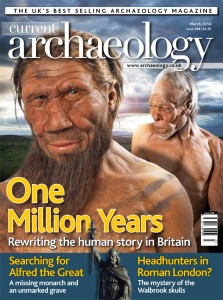
When was Britain first colonised by early humans?


When was Britain first colonised by early humans? The famous Boxgrove bones, found in the 1990s, date back about 500,000 years, and are still the earliest hominin fossils yet found on these shores. Flints from the Cromer Forest Bed, Norfolk, though, are increasingly pointing to a much longer duration. We explore how the story of early human activity in Britain, currently the subject of a major Natural History Museum exhibition, has come to span almost one million years

Read the rest of this article...

Dartmoor tomb treasure hoard uncovered by archaeologists


Archaeologists from around the UK have been examining a hoard of treasures unearthed in a 4,000-year-old tomb on Dartmoor.
Prehistoric jewellery, animal pelts and beads made of amber were among the finds about two years ago in the burial chamber.
The chamber, known as a cist, was found on Whitehorse Hill, near Chagford.
Dartmoor National Park archaeologists have called it the most important ancient find on the moor.
When they levered off the chamber's lid they discovered an intact burial of cremated remains.
Read the rest of this article...

Thursday, February 6, 2014

Rabbits unearth a trove of New Stone Age treasure at Land's End


Burrowing bunnies have uncovered an 8,000-year old treasure trove buried near Land’s End.
The family of rabbits are believed to be responsible for unearthing the archaeological “gold mine” less than 200 yards from the Cornish landmark.

Archaeologists said that the animals had uncovered arrow heads, flint tools and hide scrapers dating back to the Neolithic Age.

Although a formal excavation of the 150-acre site hasn't started yet, the discovery suggests there could also be a large Neolithic – or New Stone Age -  cemetery, Bronze Age burial mounds and an Iron Age hill fort buried there.
Read the rest of this article...

Edinburgh Bronze Age bodies ‘part of burial sites’


Two Bronze Age bodies discovered beneath an Edinburgh primary school could be part of a nationally significant network of burial plots, archaeologists said. 


Janitor Robert Murray shows the area where prehistoric bones were uncovered [Credit: Phil Wilkinson] 

The discovery of the adult-sized figures, from about 4,000 years ago, has stunned local archaeologists. The dig was carried out as part of a routine survey ahead of the extension of Victoria Primary, in Newhaven. 

Dr Alison Sheridan, principal curator of early prehistory at the National Museums of Scotland, said: “It’s wonderful and very exciting. It’s not unique – in Merrilees Close, in Yardheads, in the 19th century, they found a cist stone box grave with two skeletons who were crouched like this. They were from around 1600BC.”


Read the rest of this article...

Monday, February 3, 2014

Ancient site hope after airborne scanner used in Surrey

LiDAR has revealed a possible Iron Age hill fort (circled in blue) on a promontory of Black Down


A new form of airborne laser scanning used in an archaeological survey near Haslemere may have revealed an ancient hill fort and burial mound.
The scanner, known as LiDAR, uses infra-red laser to see beneath trees and map inaccessible landscapes.
The survey, carried out by the National Trust at Black Down, has found evidence that people may have lived there from 10,000 years ago.
An exhibition about the findings opens on Wednesday.
Read the rest of this article...

More about the exhibition...

Greenhouse 'time machine' sheds light on corn domestication

Smithsonian archaeologist, Dolores Piperno, measures a teosinte plant growing under past climate conditions.

By simulating the environment when corn was first exploited by people and then domesticated, Smithsonian scientists discovered that corn's ancestor; a wild grass called teosinte, may have looked more like corn then than it does today. The fact that it looked more like corn under past conditions may help to explain how teosinte came to be selected by early farmers who turned it into one of the most important staple crops in the world.

The vegetative and flowering structures of modern teosinte are very different from those of corn. These and other differences led to a century-long dispute as to whether teosinte could really be the ancestor of corn.

But new findings reported in the journal Quaternary International show that teosinte may have looked very different in the past. "We grew teosinte in the conditions that it encountered 10,000 years ago during the early Holocene period: temperatures 2–3 degrees Celsius cooler than today's with atmospheric carbon dioxide levels at around 260 parts per million," said Dolores Piperno, senior scientist and curator of archaeobotany and South American archaeology at the Smithsonian's National Museum of Natural History and the Smithsonian Tropical Research Institute, who led the project. "Intriguingly, the teosinte plants grown under past conditions exhibit characteristics more like corn; a single main stem topped by a single tassle, a few, very short branches tipped by female ears and synchronous seed maturation.

Read the rest of this article...

Sunday, February 2, 2014

Summer Courses in Archaeology


The Oxford Experience Summer School


Courses in Archaeology


The Oxford Experience Summer School is held at Christ Church, Oxford

The Oxford Experience Summer School offers a number of one-week courses in archaeology as part of its programme.

Participants live in Christ Church - the largest of the Oxford Colleges - and take their meals in the Great Hall, which is the hall that inspired the Hogwarts Hall in the Harry Potter films.

Courses are limited to a maximum of twelve participants and tend to fill up rather quickly, so early application is advised.


Youcan find out more about the Oxford Experience here...

Training Digs for 2014


Now is the time to start thinking about training digs for the summer.

If you are planning to go on a training dig, take a look at our list here...

If you would like to submit details of a training dig (or any other archaeological event), please use the contact form here...

Blue-Eyed Hunter-Gatherers Roamed Prehistoric Europe, Gene Map Reveals


Apologies to Frank Sinatra, but the real Ol' Blue Eyes has been found—a 7,000-year-old Spaniard whose fossil genes reveal that early Europeans sported blue eyes and dark skin.
Mapping the blue-eyed boy's genes is part of ongoing effort to uncover the DNA of ancient humans. The new study in the journal Nature, led byInigo Olalde of Spain's Institut de Biología Evolutiva in Barcelona, reports the genetic map of a skeleton found in a Spanish cave. (See also: "Modern Europe's Genetic History Starts in Stone Age.")
Why It Matters
Scholars had suspected that blue eyes arrived as an import into Europe, brought by late-arriving farmers who invaded the continent more than 5,000 years ago. Contrary to the conventional picture of a blue-eyed, fair-haired northern European, the study suggests that blue eyes were already common among the continent's early hunter-gatherers, along with darker skin.

The Neanderthals' genetic legacy


Remnants of Neanderthal DNA in modern humans are associated with genes affecting type 2 diabetes, Crohn's disease, lupus, biliary cirrhosis and smoking behavior. They also concentrate in genes that influence skin and hair characteristics. At the same time, Neanderthal DNA is conspicuously low in regions of the X chromosome and testes-specific genes. 


Many of the Neanderthal genes that live on in people today are involved in making keratin, a protein used in skin, hair and nails [Credit: Jose A Astor/Alamy] 

The research, led by Harvard Medical School geneticists and published Jan. 29 in Nature, suggests ways in which genetic material inherited from Neanderthals has proven both adaptive and maladaptive for modern humans. (A related paper by a separate team was published concurrently in Science.) 

Read the rest of this article...

Thursday, January 30, 2014

Neanderthals gave us disease genes


Gene types that influence disease in people today were picked up through interbreeding with Neanderthals, a major study in Nature journal suggests.
They passed on variants involved in type 2 diabetes, Crohn's disease and - curiously - smoking addiction.
Genome studies reveal that our species (Homo sapiens) mated with Neanderthals after leaving Africa.
But it was previously unclear what this Neanderthal DNA did and whether there were any implications for human health.
Read the rest of this article...

Tuesday, January 28, 2014

300,000-year-old hearth found: Microscopic evidence shows repeated fire use in one spot over time

Upper left: Infrared spectrum of the grey sediments, right, showing that the dominant material is calcite, the mineral of which the wood ash ...
Credit: Image courtesy of Weizmann Institute of Science

When did humans really begin to control fire and use it for their daily needs? Scientists discovered in the Qesem Cave, an archaeological site near present-day Rosh Ha'ayin, the earliest evidence -- dating to around 300,000 years ago -- of unequivocal repeated fire building over a continuous period. These findings help answer the question and hint that those prehistoric humans already had a highly advanced social structure and intellectual capacity.

Humans, by most estimates, discovered fire over a million years ago. But when did they really begin to control fire and use it for their daily needs? That question -- one which is central to the subject of the rise of human culture -- is still hotly debated. A team of Israeli scientists recently discovered in the Qesem Cave, an archaeological site near present-day Rosh Ha'ayin, the earliest evidence -- dating to around 300,000 years ago -- of unequivocal repeated fire building over a continuous period. These findings not only help answer the question, they hint that those prehistoric humans already had a highly advanced social structure and intellectual capacity.

Read the rest of this article...

Swedish divers unearth Stone Age settlement


"One-of-a-kind" Stone Age artefacts left by Swedish nomads 11,000 years ago have been discovered by divers in the Baltic Sea, prompting some to claim that Sweden's Atlantis had been found.

A diver exams an 11,000-year old tree trunk [Credit: Arne Sjostrom]

 "What we have here is maybe one of the oldest settlements from the first more permanent sites in Scania and in Sweden full stop," project leader and archaeology professor at Sodertorn University Bjorn Nilsson told The Local. 

Nilsson's team has been diving in Hano, a sandy bay off the coast of Skane County, and has been given the resources by the Swedish National Heritage Board (Riksantikvarieambetet) needed for a three-year excavation of an area 16 metres below the water's surface.

Read the rest of this article...

History-Making Expedition Recruits New Scientists


The "Rising Star Expedition", known for its recent recovery of one of the largest troves of hominin (early human) fossils ever discovered in one place, is now ambitiously seeking new early-career scientists to study the more than 1,200 fossil elements retrieved from the site and now housed at the University of the Witwatersrand (Wits University) in Johannesburg, South Africa. 

"The fossil material is an exceptional sample representing most of the parts of the skeleton, and our first task is to describe the material and place it into the context of hominin evolution," says John Hawks, a paleoanthropologist with the University of Wisconsin-Madison and a key member of the team that recovered the fossils during the Fall of 2013.
Read the rest of this article...

Old Norse people drank wine 3,000 years ago

Researchers have found traces of wine in jars, dating back to 1100 BC. The finds suggest that wine was imported long before previously thought.


The discovery of traces of wine in an Old Norse jar reveals that Nordic people drank wine as early as 1100 BC. The archaeologists behind the discovery believe that Nordic people may have received the wine through trading with central and southern Europeans. (Illustration: Robert Brown)

Having recently studied three jars from ancient Denmark and one cup from southern Sweden, researchers found traces of wine in one of the jars, which may originate as far back as 1100 BC.
The new study indicates that Old Norse people traded wine with central and southern Europeans long before the Iron Age, when most of the earliest traces of wine in the North started to appear.
Read the rest of this article...

Hunter-gatherer European had blue eyes and dark skin

The team was surprised by the hunter gatherer's unusual colouring

Scientists have shed light on what ancient Europeans looked like.
Genetic tests reveal that a hunter-gatherer who lived 7,000 years ago had the unusual combination of dark skin and hair and blue eyes.
It has surprised scientists, who thought that the early inhabitants of Europe were fair.
The research, led by the Institute of Evolutionary Biology in Barcelona, Spain, is published in the journal Nature.
Read the rest of this article...

World's oldest-known living cancer '11,000 years old'


The world's oldest-known living cancer dates back 11,000 years, according to UK scientists.
It arose in a single dog and has survived in canines ever since, with the cancer cells passing between animals when they mate.
A team led by the Wellcome Trust Sanger Institute near Cambridge decoded the DNA of the cancer.
It revealed the "genetic identikit" of an ancient husky-like dog, which first developed the disease.
Read the rest of this article...

Thursday, January 23, 2014

Didcot dig: Campaign against road near Bronze Age monument


Campaigners trying to save archaeology have urged housing estate developers to change the route of a road to save a Bronze Age burial monument.
A dig ahead of the development of the Great Western Park estate in Didcot, Oxfordshire, discovered humans had lived on the site for 9,000 years.
The Didcot Dogmile group said Taylor Wimpey's planned road would cut across the rare pond barrow.
Read the rest of this article...

Greeks reject call to privatize ancient sites


Greek archaeologists have rejected suggestions that private companies should be allowed to run ancient sites, insisting that this task should be retained by the state. 


Stephen Miller stands in front of the Temple of Nemean Zeus, September 25, 2013 [Credit: ekathimerini] 

The Association of Greek Archaeologists issued a statement on Monday following the publication of a Time magazine article in which American archaeologist Stephen Miller, who has spent more than three decades in Greece helping unearth antiquities at Ancient Nemea, suggested allowing private companies take over the development, promotion and security of under-used sites.

Read the rest of this article...

THE OSWESTRY HILLFORT PEGASUS STONE


Today the magnificent 3,000 year old Shropshire hillfort of Old Oswestry is in the news while campaigners fight to halt several proposed housing developments that threatens both the setting and archaeology surrounding the monument. But, as if to highlight the importance of this place, a new discovery from 2008 has been dubbed the Oswestry Pegasus Stone.

The  engraved stone currently stands in the Oswestry Town Museum and Professor George Nash was invited by Rodney Farmer to review the previous interpretation.
The stone was recovered during an archaeological watching brief in February 2008 from undergrowth near the main entrance to Old Oswestry Hillfort, close to the western outer ramparts.  
Read the rest of this article...

Sunday, January 19, 2014

Hilary Term Online Courses in Archaeology


Hillary Term begins tomorrow at Oxford, but there is still time to enrol for one of the online courses in archaeology.

Cave paintings, castles and pyramids, Neanderthals, Romans and Vikings - archaeology is about the excitement of discovery, finding out about our ancestors, exploring landscape through time, piecing together puzzles of the past from material remains.

These courses enable you to experience all this through online archaeological resources based on primary evidence from excavations and artefacts and from complex scientific processes and current thinking. Together with guided reading, discussion and activities you can experience how archaeologists work today to increase our knowledge of people and societies from the past.

The following courses are available:

East Lothian's Broxmouth fort reveals edge of steel

Broxmouth was a settlement for nearly 1,000 years, from the Iron Age until the Roman occupation

Archaeologists have identified the earliest use of steel in the British Isles from a site in East Lothian.
They now believe artifacts recovered from the site of the Broxmouth Iron Age hill fort were made from high-carbon steel.
This would have been deliberately heated and quenched in water, indicating "sophisticated blacksmithing skills".
The steel objects were manufactured in the years 490-375BC.
Read the rest of this article...

Ireland’s storms unearth 6,000-year-old dwellings near Galway


Archaeologist Michael Gibbons investigates the area on Omey Island where 6,000-year-old dwellings were revealed by storm damage.


The recent storms that battered Ireland's countryside and coastlines unearthed a hidden gem amidst the devastation to properties and landscape.

The storms have exposed evidence of life dating back to the Neolithic period on Connemara’s Omey island. Large linear archaeological deposits of up to a meter thick have been exposed on the western and northern shorelines of the tidal island off Claddaghduff.

The Irish Times reports two sets of medieval burial sites, traces of sunken dwellings and parts of a Neolithic bog which had been covered over for millennia by shifting sands, have been revealed.

Clifden-based archaeologist Michael Gibbons has classified the weather impact on Omey as “spectacular,” but says that many important archaeological features, such as midden deposits, have been destroyed along the Atlantic rim in the “severe beating of Connacht’s coastal dunes” since mid-December.


Read the rest of this article...

New biomolecular archaeological evidence for Nordic "grog," expansion of wine trade, discovered in ancient Scandinavia


Winters in Scandinavia were long and cold in the Bronze and Iron Ages, then as now—but a blazing fire was not the only thing to keep people warm. From northwest Denmark, circa 1500–1300 BC, to the Swedish island of Gotland as late as the first century AD, Nordic peoples were imbibing an alcoholic "grog" or extreme hybrid beverage rich in local ingredients, including honey, bog cranberry, lingonberry, bog myrtle, yarrow, juniper, birch tree resin, and cereals including wheat, barley and/or rye—and sometimes, grape wine imported from southern or central Europe.
Such is the conclusion based on new archaeochemical evidence derived from samples inside pottery and bronze drinking vessels and strainers from four sites in Demark and Sweden, combined with previous archaeobotanical data. The research ("A biomolecular archaeological approach to 'Nordic grog'") was recently published online in the Danish Journal of Archaeology (Dec. 23, 2013). 
Read the rest of this article...

Genomes of Modern Dogs and Wolves Provide New Insights On Domestication

This chart depicts wolf and dog lineages as they diverge over time. (Credit: Freedma, et al. / PLoS Genetics)

Dogs and wolves evolved from a common ancestor between 9,000 and 34,000 years ago, before humans transitioned to agricultural societies, according to an analysis of modern dog and wolf genomes from areas of the world thought to be centers of dog domestication.

The study, published in PLoS Geneticson January 16, 2014, also shows that dogs are more closely related to each other than wolves, regardless of geographic origin. This suggests that part of the genetic overlap observed between some modern dogs and wolves is the result of interbreeding after dog domestication, not a direct line of descent from one group of wolves.

Read the rest of this article...

Thursday, January 16, 2014

Earliest use of steel in Britain uncovered


Archaeologists have identified examples of the earliest use of steel in the British Isles from a site in East Lothian. The site, an Iron Age hill fort known as Broxmouth, was excavated in the 1970s, however the discoveries are only now being published. 


An aerial photograph of the excavation at Broxmouth, taken before the site was covered over 
[Credit: Historic Scotland] 

As part of the re-examination of the findings at Broxmouth, new analysis of some iron artefacts has found that they can be dated to 490-375BC. Made from high-carbon steel which had been deliberately heated and quenched in water, the artefacts are the earliest evidence of sophisticated blacksmithing skills in Britain. 

Read the rest of this article...

Wednesday, January 15, 2014

Firefighter's Guildford Stone Age flints lead to major find

William Mills, from Oxford Archaeology, who worked on the dig, said the site was exceptional and one of two or three in England

A firefighter who found Stone Age flints at the fire station he worked at 40 years ago says he is "thrilled" that find has now led to a nationally-important archaeological discovery.
Ron Shettle, 88, first spotted the flints while working there decades ago.
A recent rebuild of the Guildford station has now allowed experts to carry out a dig.

Read the rest of this article...

Storms expose archaeology on Omey island


Destruction wreaked along Connacht’s coastline in the recent storms has exposed archaeology dating back to the Neolithic period on Connemara’s Omey island. Large linear archaeological deposits of up to a metre thick have been exposed on the western and northern shorelines of the tidal island off Claddaghduff. 


Archaeologist Michael Gibbons at the area on Omey Island where prehistoric remains were revealed by damage caused by the Atlantic storms [Credit: Joe O’Shaughnessy] 

Two sets of medieval burial sites, traces of sunken dwellings and parts of a Neolithic bog, which had been covered over millenniums by shifting sands, have been revealed.


Read the rest of this article...

Ritual burial site older than previously thought


A ritual burial site in Pembrokeshire may have been in use 10,000 years ago - almost twice as far back as expected, said archaeologists. 

Marks on the Trefael Stone are now thought to resemble stellar constellations [Credit: BBC] The Trefael Stone near Nevern was reclassified as a Stone Age burial chamber after its capstone was studied. 

But a three-year dig has since found beads dating back much further, perhaps to the Neolithic or Mesolithic periods.

Read the rest of this article...

Tuesday, January 14, 2014

Land by Neolithic site churned up by vehicles


The area around one of the island’s most important archaeological monuments, the Neolithic stone circle at Meayll Hill, Rushen, has been badly churned up by four-wheel vehicles and motorcyclists over the Christmas period. 
Damage caused by vehicle use on land at the Meayll Peninsular, Rushen [Credit: IOM Today] 

Port Erin resident Philip Maddrell, who walks there several times a week, said something should be done to protect the area. 

‘It’s just spoiling it for everybody,’ he said. ‘Also [motor] bike riders were up the top, it’s a public right of way. It’s a damn nuisance. They churn it up.’

Read the rest of this article...

Friday, January 10, 2014

Ancient Greeks Used Portable Grills at Their Picnic


The ancient Mycenaeans have a reputation as palace-builders and warriors, but they were also quite sophisticated cooks. More than 3,000 years ago, they used portable grill pits to make souvlaki and non-stick pans to make bread, new cooking experiments suggest.
The Mycenaean civilization, which was the backdrop for Homer's "Odyssey" and "Iliad," thrived in Greece during the late Bronze Age from around 1700 B.C. until the society mysteriously collapsed around 1200 B.C. The Mycenaeans left behind amazing palaces and gold-littered tombs at sites like Pylos and Mycenae, but in these places, archaeologists also have found less glamorous artifacts, such as souvlaki trays and griddles made from gritty clays.
It wasn't clear how these two types of pans were used, said Julie Hruby of Dartmouth College, presenting her research at the Archaeological Institute of America's annual meeting here on Saturday (Jan. 4). [The 7 Most Mysterious Archaeological Finds on Earth]
Read the rest of this article...

Google Earth Zooms in on Ancient Trade Routes

Using Google Earth software, researchers can track changes in Antioch as the ancient city was absorbed by the Roman Empire.

Google Earth may be a fun way to bring the far reaches of the present-day globe to people's fingertips, but archaeologists are now using the high-tech software to recreate maps of ancient civilizations. The endeavor is opening a window for researchers to the political and geographical changes that have shaped history.

Kristina Neumann, a doctoral candidate in the department of classics at the University of Cincinnati in Ohio, used Google Earth to track trade around the ancient city of Antioch, located in present-day southeastern Turkey, near the Syrian border, at the beginning of its takeover by the Roman Empire in 64 B.C. Neumann found the use of Antioch's civic coins was more widespread than was previously thought, suggesting the city had developed broad political authority within the region before being absorbed into the Roman Empire.

Read the rest of this article...

“Nutcracker Man” Noshed on Tiger Nuts


According to a review of baboon diets by Gabriele Macho of Oxford University, Paranthropus boisei, a hominid who lived in East Africa between 2.4 million and 1.4 million years ago, probably survived on a diet of grass bulbs, or tiger nuts, supplemented with fruits and invertebrates such as worms and grasshoppers. Paranthropus boisei is nicknamed “Nutcracker Man” for its powerful jaws, but its teeth are better suited for eating soft foods, and show signs of abrasion. In addition, stable isotope analysis indicated that the hominids ate grasses and sedges.

Read the rest of this article...

French town probes 'second' Lascaux cave


Authorities in the southwestern French town of Montignac are investigating the extraordinary possibility that, just 4km from the famous Lascaux caves, there may exist another set of prehistoric paintings hidden away in a separate underground cavern.

A group of teenagers in the south west of France in 1940 stumble across what turns out to be a complex network of Paleolithic caves with a series of astonishing 17,000-year-old frescos, which becomes known as the “Sistine Chapel of the Prehistoric era.” 

You might assume this type of thing only happens once in the same region, but authorities in the town of Montignac, Dordogne are probing the possibility of the existence of a second Lascaux cave.

Read the rest of this article...

Sunday, December 22, 2013

OCHRE HAND IMPRINT OF HOMO ERECTUS REVEALED


Once again, the Homo erectus site  of Lehberg near Haidershofen in the Lower Austrian part of the Enns (a southern tributary of the Danube River), is in the spotlight for Lower Palaeolithic research.
After the recent discovery of several well-preserved hand axes of Acheulean age  dating to approximately 500,000 years ago, as well as a phallus shaped object coated with traces of ocre (see Fundsache Homo erectus, Archaeology Online 2012) a number of hammerstones were also recovered.
These hammerstones of oval quartzite and quartz cobbles come from the local Günz-gravels and have clear use marks on the longitudinal edges. However, after close examination, one of these stones revealed something quite remarkable.

Read the rest of this article...

Neanderthals could speak like modern humans, study suggests


An analysis of a Neanderthal's fossilised hyoid bone - a horseshoe-shaped structure in the neck - suggests the species had the ability to speak.
This has been suspected since the 1989 discovery of a Neanderthal hyoid that looks just like a modern human's.
But now computer modelling of how it works has shown this bone was also used in a very similar way.
Writing in journal Plos One, scientists say its study is "highly suggestive" of complex speech in Neanderthals.
Read the rest of this article...

Friday, December 20, 2013

Neandertal genome project reaches its goal


An international research team led by Kay Prüfer and Svante Pääbo of the Max Planck Institute for Evolutionary Anthropology in Leipzig, Germany, has determined a high-quality genome sequence of a Neandertal woman. The genome allows detailed insights into the relationships and population history of the Neandertals and other extinct hominin groups. The results reveal that gene flow among such groups was common but generally of low magnitude. It also provides a definitive list of the DNA sequence changes that distinguish modern humans from our nearest extinct relatives.

Read the rest of this article...

Thursday, December 19, 2013

Neanderthal Genome Shows Early Human Interbreeding, Inbreeding

Family tree of the four groups of early humans living in Eurasia 50,000 years ago and the lingering genetic heritage due to interbreeding. (Credit: Image courtesy of University of California - Berkeley)

The most complete sequence to date of the Neanderthal genome, using DNA extracted from a woman's toe bone that dates back 50,000 years, reveals a long history of interbreeding among at least four different types of early humans living in Europe and Asia at that time, according to University of California, Berkeley, scientists.

Population geneticist Montgomery Slatkin, graduate student Fernando Racimo and post-doctoral student Flora Jay were part of an international team of anthropologists and geneticists who generated a high-quality sequence of the Neanderthal genome and compared it with the genomes of modern humans and a recently recognized group of early humans called Denisovans.

Read the rest of this article...

Ancient Incest Uncovered in Neanderthal Genome


Data obtained from a Neanderthal woman's toe bone points to incest and inbreeding among early humans, an international genetics team reported on Wednesday.
The fossil's genetic map, or genome, reported from Denisova cave in Siberia's Altai Mountains dates to more than 50,000 years ago. The cave was home at separate times to both Neanderthalsand the so-called Denisovans, two sister families of now-extinct early humans. (See also "New Type of Ancient Human Found.")
Adding to increasing evidence of a tangled human family tree, the new Neanderthal genome study released by the journal Nature also suggests that another previously unknown archaic human species shared its genes with some of our ancestors. The study authors suggest that it wasHomo erectus, one of the earliest human species, which first arose around 1.8 million years ago. (See also "Why Am I a Neanderthal?")
Read the rest of this article...