Tuesday, October 9, 2012

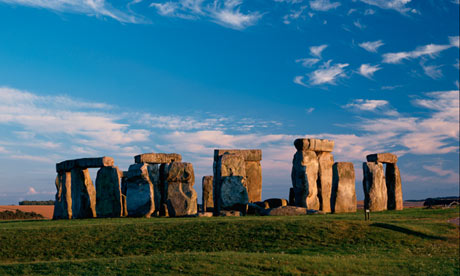
Stonehenge up close: digital laser scan reveals secrets of the past

Most detailed analysis yet of prehistoric stone circle shows how masons spent more time making key areas look the best


Stonehenge: a digital laser scan has revealed tool marks from 4,500 years ago, and graffiti made by Victorian visitors. Photograph: Yoshihiro Takada/Corbis
 
Like any corner-cutting modern builder, the ancient stonemasons who built Stonehenge lavished the most work and best materials where they would be first seen –shining in the last light of the setting winter solstice sun, or at dawn on the longest day.

The first complete 3D laser scan of the stone circle has also revealed tool marks made 4,500 years ago, scores of little axehead graffiti added when the enormous slabs were already 1,000 years old, and damage and graffiti contributed by Georgian and Victorian visitors.

The survey, carried out for English Heritage, exposes numerous details now invisible to the naked eye and will be used in displays for the long-awaited new visitor centre, due to open late next year. It shows the stones in unprecedented precision, from the double-decker bus height sarsens from Salisbury Plain that give the monument its unmistakable profile, to the smaller bluestones brought from west Wales by means still hotly debated, and the stumps of stones that have almost been destroyed.

Read the rest of this article...

Monday, October 8, 2012

Neolithic discovery: why Orkney is the centre of ancient Britain


Long before the Egyptians began the pyramids, Neolithic man built a vast temple complex at the top of what is now Scotland. Robin McKie visits the astonishing Ness of Brodgar

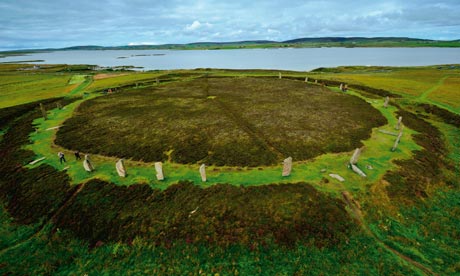
Circle of life: the Ring of Brodgar – a stone circle, or henge – is a World Heritage Site.
Photograph: Adam Stanford
 
Drive west from Orkney's capital, Kirkwall, and then head north on the narrow B9055 and you will reach a single stone monolith that guards the entrance to a spit of land known as the Ness of Brodgar. The promontory separates the island's two largest bodies of freshwater, the Loch of Stenness and the Loch of Harray. At their furthest edges, the lochs' peaty brown water laps against fields and hills that form a natural amphitheatre; a landscape peppered with giant rings of stone, chambered cairns, ancient villages and other archaeological riches.

This is the heartland of the Neolithic North, a bleak, mysterious place that has made Orkney a magnet for archaeologists, historians and other researchers. For decades they have tramped the island measuring and ex- cavating its great Stone Age sites. The land was surveyed, mapped and known until a recent chance discovery revealed that for all their attention, scientists had completely overlooked a Neolithic treasure that utterly eclipses all others on Orkney – and in the rest of Europe.

Read the rest of this article...

'Significant' finds at Crossrail site


Excavations at Tottenham Court Road [Credit: Crossrail]

 The UK’s largest archaeology programme has uncovered its first Bronze Age find as it continues a search for remains of a 3,500 year old Bronze Age transport pathway along the same route that London’s newest railway, Crossrail, will follow in east London.

The first Bronze Age artefacts for Crossrail come as Europe’s largest construction project opens a month long exhibition in London to showcase its archaeology finds to-date. Among the exhibits are medieval human bones found at Liverpool Street, the UK’s largest rare amber find and a piece of mammoth jaw bone. The items have been found during archaeology digs at Crossrail worksites across London.

The Bronze Age finds include two wooden stakes that have been cut by early London hunters with an axe, and which may have been used to build a timber pathway, and a hammer stone used as a tool. The discovery has been made during excavations at the Plumstead tunnel entrance in east London where two tunnel boring machines will begin constructing Crossrail’s Thames Tunnels early next year. Excavations of the site are continuing this week.


Read the rest of this article...

Divers return to ancient Greek 'computer' wreck site


Main Antikythera mechanism fragment. The mechanism consists of a complex system of 32 wheels and plates with inscriptions relating to the signs of the zodiac and the months [Credit: National Archaeological Museum, Athens, No. 15987]

A new search has begun at a Greek island where an ancient device known as the world's "oldest computer" was found over a century ago, an official said, adding that other discoveries were possible.

Archaeologists this week returned to Antikythera, the Aegean Sea island where sponge divers in 1900-1901 found the so-called Antikythera Mechanism, a remarkable 2nd-century BCE device that tracked the cycles of the solar system.

"These are unexplored sea depths beneath a trade route known since antiquity," said Angeliki Simosi, head of Greece's ephorate of underwater antiquities. "This is virgin territory."


Read the rest of this article...

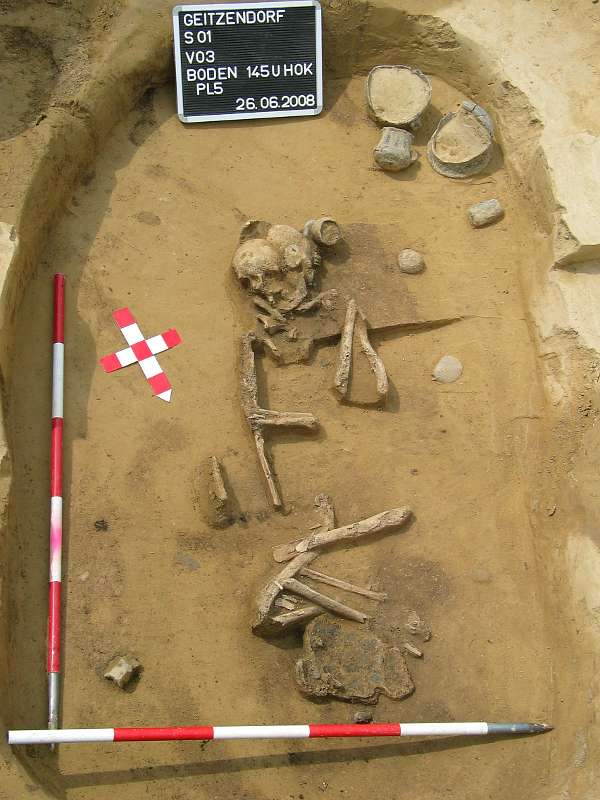
Eine Metallverarbeiterin in der Bronzezeit?


Das Grab "V3" aus dem frühbronzezeitlichen Gräberfeld von Geitzdendorf, NÖ (Foto: Urgeschichtemuseum Niederösterreich)

Eine archäologische Überraschung verbarg sich im bronzezeitlichen Gräberfeld in Geitzendorf. Das Grab einer Metallverarbeiterin wurde gefunden – es könnte der erste Beleg einer Frau in diesem historischen Beruf sein.

Die Ausgrabungen fanden bereits in den Sommermonaten 2008 und 2009 statt. 15 Gräber wurden ergraben. Dass eines davon die Vorstellungen der Geschlechterrollen in der Bronzezeit verändern kann, ahnte damals niemand. Nach den anthropologischen Untersuchungen in den letzten Jahren wurde festgestellt: es könnte dabei das erste bekannte Grab einer Metallverarbeiterin der Feinschmiedetechnik darunter sein. 

Read the rest of this article...

Mammoth carcass found in Siberia


A well-preserved mammoth carcass has been found by an 11-year-old boy in the permafrost of northern Siberia.

The remains were discovered at the end of August in Sopochnaya Karga, 3,500km (2,200 miles) northeast of Moscow.

A team of experts from St Petersburg then spent five days in September extracting the body from frozen mud.

The mammoth is estimated to have been around 16 years old when it died; it stood 2m tall and weighed 500kg.

It has been named Zhenya, after Zhenya Salinder, the 11-year-old who found the carcass while walking his dogs in the area.

Read the rest of this article...

Friday, October 5, 2012

Who Mastered Fire?

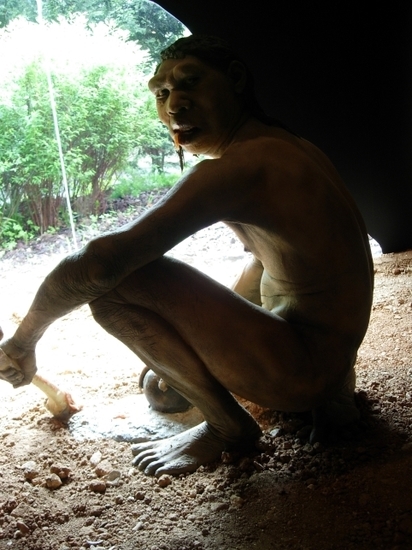
Mannequin of a Tautavel Man—would he have had known how to make fire?
Photo credit by Eric Cabanis/AFP/Getty Images.

The heated archaeological debate about which hominids first started cooking.

Richard Wrangham, an anthropologist at Harvard, claims that hominids became people—that is, acquired traits like big brains and dainty jaws—by mastering fire. He places this development at about 1.8 million years ago. This is an appealing premise no matter who you are. For those who see cooking as morally, culturally, and socially superior to not cooking, it is scientific validation of a worldview: proof that cooking is literally what makes us human. For the rest of us, it means we have a clever retort the next time one of those annoying raw-food faddists starts going on about how natural it is never to eat anything heated above 115 degrees Fahrenheit.

There’s one problem with Wrangham’s elegant hypothesis: It’s hardly the scientific consensus. In fact, since 2009, when Wrangham explained his theory in the book Catching Fire, several archaeologists have come forward with their own, wildly divergent opinions about what is arguably the oldest intellectual property debate in the world. Who really mastered fire, in the sense of being able to create it, control it, and cook with it regularly? Was it Homo erectus, Neanderthals, or modern humans?

Read the rest of this article...

Bronze Age transport route 'found during Crossrail dig'


Wood found during excavation work for Crossrail could be evidence of a 3,500-year-old Bronze Age transport route through London, experts believe.

Archaeologists examining a site in Plumstead have been searching for the pathway, which ran along the same route of the new rail link in east London.

They have unearthed wooden stakes which they say may have been used in the construction of the transport link.

Crossrail archaeologist Jay Carver said it was a "very significant find".

Read the rest of this article...

Thursday, October 4, 2012

Oxford Experience on Facebook


The Oxford Experience - an Oxford University summer school that offers many courses in archaeology and history - now has a Facebook site.

You can find the site at: www.facebook.com/OxfordExperience


You can find out more about the Oxford Experience here...

Stonehenge life-sized Neolithic homes to be built


A contract to build three life-sized Neolithic homes at Stonehenge in Wiltshire has been put out to tender. 

English Heritage is inviting contractors to bid for the £60,000 project, which is part of a £27m scheme to improve the setting of the monument.

Using authentic materials, the prehistoric homes will be based on those excavated at Durrington Walls.
English Heritage said the buildings will provide a "real and tangible link for visitors to the distant past".

The £27m scheme to build a new visitor centre and close the road alongside the ancient monument, was begun in July.

Read the rest of this article...

Neolithic dentists?


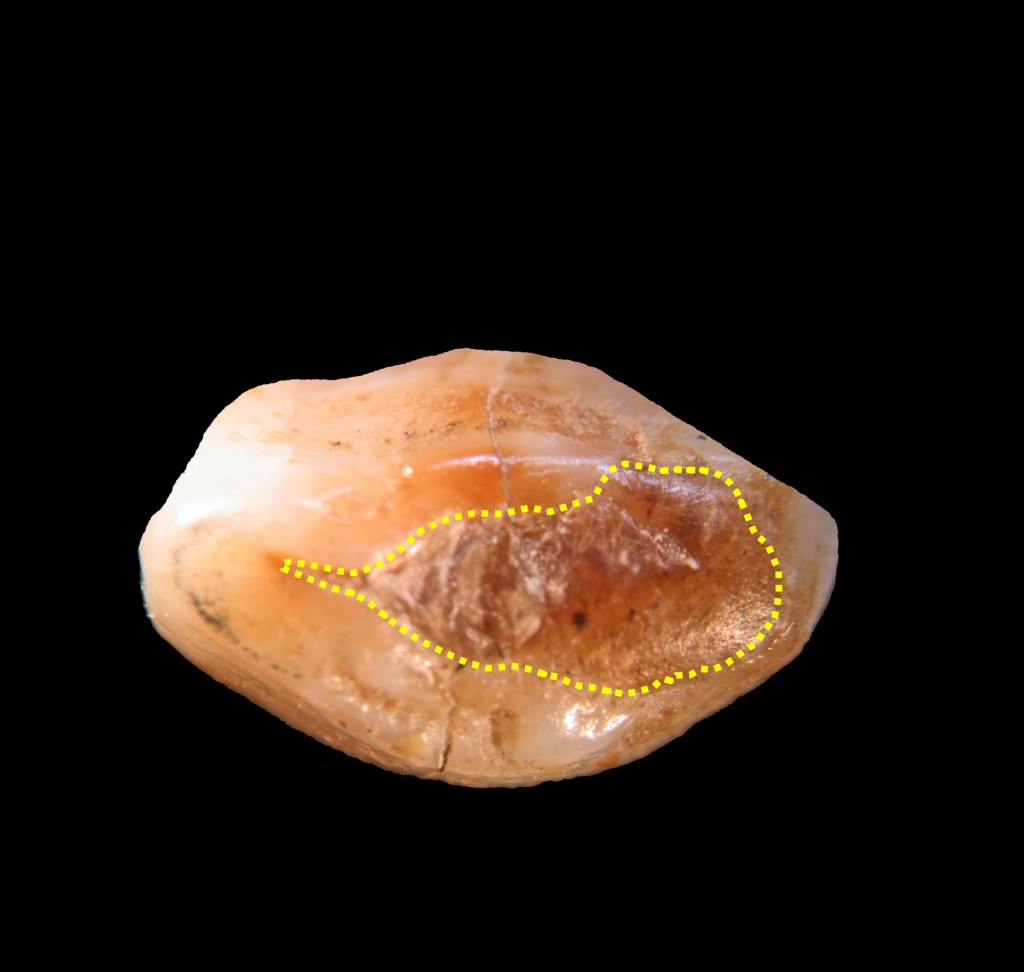
A 6,500-year-old tooth packed with beeswax could represent the earliest evidence of a dental filling, newly-published research has announced.
 
Found in part of a human jaw excavated in a cave near Lonche, Slovenia, the tooth is a left canine, thought to have belonged to a man aged between 24 and 30.

Research led by Federico Bernardini and Claudio Tuniz of the Abdus Salam Centre for Theoretical Physics in Italy examined a vertical crack in the tooth, which had been filled with a resinous substance.
Now analysis published in the journal PLOS ONE has revealed this to be beeswax, possibly used to alleviate pain and sensitivity when chewing on the broken tooth.

Read the rest of this article...

Cavewoman jeweller rewrites gender history


A skeleton uncovered north of Vienna is forcing archaeologists to take a fresh look at prehistoric gender roles after it appeared to be that of a female fine metal worker - a profession that was previously thought to have been carried out exclusively by men.

The Museum of Ancient History in Lower Austria says the grave originates from the Bronze Age around 2,000 years before the birth of Christ, and that the bones belonged to a woman who would have been aged between 45 and 60.


The museum says tools used to make metal ornaments were also found in the grave at Geitzendorf Northwest of Vienna, leading to the conclusion that it was that of a female fine metal worker who had been given the items to take with her into the afterlife.


The items included an anvil, hammers and flint chisels as well as some small items of dress jewellery that may well have been made by the woman herself.


Read the rest of this article...

8,000-year-old rock carvings under threat of destruction


Rock carvings at the Five Fingers Mountains discovered by Dr. Anneliese Peschlow-Bindokat are pictured [Credit: İHA]

 Thousands of rock carvings discovered at the beginning of the 1990s in the ancient city of Heraklia at Latmos in southwestern Turkey are faced with destruction due to plans to open a stone quarry at the site.

At the beginning of the '90s, many rock carvings were discovered at the Five Finger Mountains in research by Dr. Anneliese Peschlow-Bindokat from the German Archaeological Institute. The carvings have been dated to the sixth to fifth centuries B.C., and are considered one of the most significant discoveries of Near Eastern archaeology. However, seven feldspar stone quarries have been opened in the vicinity to meet the demand for raw material to be used in the production of glass, ceramics and in the dye industry in recent years. There are now new plans to opening further quarries close to the site where most of the carvings are located.

According to the Radikal daily, Peschlow is now preparing a report for the United Nations Educational, Scientific and Cultural Organization (UNESCO) and the Muğla and Aydın Board of Cultural and Natural Heritage to save the area from destruction.


Read the rest of this article...

Wednesday, October 3, 2012

Peat bogs yielding secrets of Dartmoor's history


Plymouth University's Dr Ralph Fyfe has been carrying out palaeoecological and archaeological surveys of Dartmoor Mires Project restoration areas [Credit:This is Exeter]

What did Britain look like before mankind turned up and started changing things thousands of years ago? It's a question many people ask – and now some answers are being found on the roof of Dartmoor.

Using the latest technology in two separate projects, scientists have been delving into the moor's infamous peat bogs to find out what the world was like when extinct creatures like the giant aurochs were still roaming around the South West.

Palaeoecological and archaeological surveys of Dartmoor Mires Project restoration areas have been undertaken by Dr Ralph Fyfe and his team at the University of Plymouth, while Dr Phil Newman has produced an extensive and up-to-date study of the peat-cutting industry on the north moor.


Read the rest of this article...

Tuesday, October 2, 2012

A Neanderthal trove in Madrid


The Lozoya River Valley, in the Madrid mountain range of Guadarrama, could easily be called "Neanderthal Valley," says the paleontologist Juan Luis Arsuaga.

"It is protected by two strings of mountains, it is rich in fauna, it is a privileged spot from an environmental viewpoint, and it is ideal for the Neanderthal, given that it provided the with good hunting grounds."

This is not just a hypothesis: scientists working on site in Pinilla del Valle, near the reservoir, have already found nine Neanderthal teeth, remains of bonfires and thousands of animal fossils, including some from enormous aurochs (the ancestor of cattle, each the length of two bulls), rhinoceros and fallow deer.

Read the rest of this article...

Monday, October 1, 2012

Excavation unearths Bronze Age cultures


The large building unearthed during the Aslantepe excavations in Malatya shows that there was an important person lived there, according to archaeologists [Credit: Hurriyet/AA]

Excavations at the Aslantepe tumulus near the central Anatolian city of Malatya have unearthed a large building containing two spearheads and a necklace, all of which appear to date to the early trans-Caucasian culture.

Excavation work continued this year on part of a structure in the southern portion of the tumulus that is believed to be the world’s first palace, the head of the Aslantepe excavations, Professor Marcella Frangipane of Rome’s La Sapienze University, told members of the press. Some other buildings found to the north of the palace in earlier phases of the excavation date from the Bronze Age, she said.

“We also dug below part of a city wall dating back to 2,800 B.C., and found a palace hall underneath it. In the middle of this hall, we found a large Bronze-Age building, reflecting features common to the early trans-Caucasian culture. So far only smaller buildings belonging to this culture have been discovered; this is the first time we have found such a large building. It shows us that there was an important person here,” Frangipane said.


Read the rest of this article...
Stinging nettles reveal Bronze Age trade routes


A piece of nettle cloth retrieved from Denmark's richest known Bronze Age burial mound Lusehøj may actually derive from Austria, new findings suggest. The cloth thus tells a surprising story about long-distance Bronze Age trade connections around 800 BC.

2,800 years ago, one of Denmark's richest and most powerful men died. His body was burned. And the bereaved wrapped his bones in a cloth made from stinging nettle and put them in a stately bronze container, which also functioned as urn.

Now new findings suggest that the man's voyage to his final resting place may have been longer than such voyages usually were during the Bronze Age: the nettle cloth, which was wrapped around the deceased's bones, was not made in Denmark, and the evidence points to present-day Austria as the place of origin.
 

Read the rest of this article...

Friday, September 28, 2012

La Bastida unearths 4,200-year-old fortification, unique in continental Europe


Similar characteristics have not been observed in other constructions of the Bronze Age, with three-metre thick walls, square towers originally measuring up to seven metres, a monumental entrance and an ogival arched postern gate; a fully conserved architectural element unique in Europe in that period. 

The wall protected a city measuring 4 hectares located on top of a hill. With architectural elements reminiscent of people with Eastern styled military skills, its model is typical of ancient civilisations of the Mediterranean, such as the second city of Troy. 

The alignment and characteristics reveal a shrewd defence strategy which represented a new way of fighting, and the implementation of a violent and class-based power structure which conditioned the development of other communities in the Iberian Peninsula during the following seven centuries.
The discovery poses new questions about what is known of the origin of economic and political inequalities in Europe, the formation of the military and the role violence played in the formation of identities. 

The discoveries made in the past few years at La Bastida point to the importance of this site in Prehistoric Europe, comparable only to the Minoan civilisation of Crete, and represent a strong addition to the projection of heritage in the region of Murcia, Spain and Europe in general.

Read the rest of this article...

Thursday, September 27, 2012

Dorset's Iron Age Chesil Mirror to be sold


An Iron Age mirror discovered by a metal detectorist in Dorset has been put up for sale.

The finely decorated Chesil Mirror and a number of other items were discovered in a grave between Abbotsbury and Chickerell in 2010.

Dorset County Museum is hoping to raise £23,000 to buy the artefacts for its collection and prevent them from being taken overseas.

The money would be split between the finder and the landowner.

The copper-alloy mirror is similar to the Portesham Mirror - already part of the museum's collection - which was acquired in 1994. Fewer than 30 of its type have been discovered in the UK.

Read the rest of this article...

Bronze Age skeletons reveal strange secrets


Mystery … a skeleton made up of the bones of several individuals. Photo: Theresa Ambrose

IT IS one of Britain's most intriguing archaeological finds. When two almost perfectly preserved 3000-year-old skeletons were dug up on a remote Scottish island they were the first evidence that ancient Britons preserved their dead using mummification.

The scientists who uncovered the skeletons also found clues that one of them, apparently a man buried in a crouching position, was not a single individual, but had been assembled from the body parts of different people.

The discovery began a 10-year investigation into what had led the Bronze Age islanders to this strange fate. Now, a study using the latest technology has found that the two skeletons together comprise the remains of at least six individuals who died several hundred years apart

Read the rest of this article...

Skokholm island settlements revealed by laser survey


New light has been shed on Skokholm's medieval history by aeriel mapping 
[Credit: Sid Howells]

 Archaeologists say an innovative aerial laser survey has uncovered new clues to the history of a Pembrokeshire island.

 Skokholm, best known for its colony of breeding seabirds, was known to have been settled in prehistoric times.

The Royal Commission on the Ancient and Historical Monuments of Wales says a new laser survey from the air shows detail of Iron Age and medieval use.

The research team involved now plans to visit the island to look for more evidence on the ground.


Read the rest of this article...

Prehistoric ivory workshop discovered in Germany


Excavations at Breitenbach [Credit Olaf Jöris MONREPOS]

Excavations at the mammoth hunting site of Breitenbach near Zeitz uncover 35,000 year old ivory workshop

In an international co-operation project, archaeologists from the Monrepos Archaeological Research Centre and Museum for the Evolution of Hominin Behaviour, part of the Römisch-Germanisches Zentralmuseum, (RGZM) and the Landesamt für Denkmalpflege and Archäologie in Saxony-Anhalt are excavating the 35,000 year old site of Breitenbach, close to Zeitz in Saxony-Anhalt. Other co-operation partners are the Faculty of Archaeology at the University of Leiden (NL), the Ludwig Boltzmann Institute of Archaeological Prospection and Virtual Archaeology (ArchPro) in Vienna, the Institute of Geoinformatics i3mainz of the University of Applied Sciences in Mainz as well as the Institutes of Geosciences at the universities of Mainz, Tübingen and Cologne.

Read the rest of this article...
Menschgemachte Ökokatastrophen der Bronze- und Eisenzeit


Wissenschaftler der Goethe-Universität um den Archäologen Rüdiger Krause finden erstmals Belege für massive Umweltzerstörungen in der antiken Tallandschaft des österreichischen Montafon.

Die scheinbar unberührte Idylle der Alpenlandschaft, der charakteristische Wechsel zwischen Weideflächen und Bergwäldern, ist offenbar auch das Ergebnis eines Jahrtausende währenden Raubbaus des Menschen an der Natur und daraus resultierender massiver Landschaftsveränderungen. 

Massive Umweltzerstörungen und daraus entstehende Katastrophen für Mensch und Tier sind damit nicht nur ein Phänomen der Moderne. Forscher und 25 Studierende der Goethe-Universität unter Leitung des Archäologen Prof. Rüdiger Krause können dank wegweisender Funde im Montafon (Österreich) nun erstmals umfassend belegen, dass bereits die Menschen der Bronze- und Eisenzeit im 2. und 1. Jahrtausend vor Christus ihre Heimatlandschaft durch extensiven Bergbau und weiträumige Brandrodung derartig stark veränderten, dass sie dafür am Ende einen hohen Preis zahlen mussten.
Read the rest of this article...

Thursday, September 20, 2012

Studies slow the human DNA clock


The story of human ancestors used to be writ only in bones and tools, but since the 1960s DNA has given its own version of events. Some results were revelatory, such as when DNA studies showed that all modern humans descended from ancestors who lived in Africa more than 100,000 years ago. Others were baffling, suggesting that key events in human evolution happened at times that flatly contradicted the archaeology.

Now archaeologists and geneticists are beginning to tell the same story, thanks to improved estimates of DNA’s mutation rate — the molecular clock that underpins genetic dating1–4. “It’s incredibly vindicating to finally have some reconciliation between genetics and archaeology,” says Jeff Rose, an archaeologist at the University of Birmingham, UK. Archaeologists and geneticists may now be able to tackle nuanced questions about human history with greater confidence in one another’s data. “They do have to agree,” says Aylwyn Scally, an evolutionary genomicist at the Wellcome Trust Sanger Institute in Hinxton, UK. “There was a real story.”

Read the rest of this article...

Lower Palaeolithic hunting spears found in Germany


Finds from early stone age site in north-central Germany show that human ingenuity is nothing new - and was probably shared by now-extinct species of humans.

Archaeologists from the University of Tübingen have found eight extremely well-preserved spears -- an astonishing 300,000 years old, making them the oldest known weapons anywhere. The spears and other artifacts as well as animal remains found at the site demonstrate that their users were highly skilled craftsmen and hunters, well adapted to their environment - with a capacity for abstract thought and complex planning comparable to our own. It is likely that they were members of the species Homo heidelbergensis, although no human remains have yet been found at the site.

The project is headed by Prof. Nicholas Conard and the excavations are supervised by Dr. Jordi Serangeli, both from the University of Tübingen's Institute of Prehistory, which has been supporting the local authority's excavation in an open-cast brown coal mine in Schöningen since 2008. They are applying skills from several disciplines at this uniquely well-preserved site find out more about how humans lived in the environment of 300,000 years ago.


Read the rest of this article...

Tuesday, September 18, 2012

Neanderthals used feathers as 'personal ornaments'


Ravens are among the birds whose remains are found at Neanderthal sites

Our evolutionary cousins the Neanderthals were harvesting feathers from birds in order to use them as personal ornaments, a study suggests.

The authors say the result provides yet more evidence that Neanderthal thinking ability was similar to our own.

The analysis even suggests they had a preference for dark feathers, which they selected from birds of prey and corvids - such as ravens and rooks.

Details of the research appear in Plos One journal.

Monday, September 10, 2012

Ancient henge discovered in North Downs


An ancient ceremonial site the size of Stonehenge has been discovered on the North Downs.
The exact purpose of the site - a neolithic “henge” near Hollingbourne - remains shrouded in mystery, but a large amount of burnt bone and pottery uncovered suggest it was used in a ritual capacity for almost 2000 years, as far back as 2500BC, the end of the Stone Age.

Dr Paul Wilkinson (pictured below) of the Kent Archaeological Field School, which led the investigation, said the first tantalising clue had come in the form of a circular mark spotted in satellite images of a tract of land called The Holmsdale, near the Pilgrims Way.

Digging began last month and has revealed a 50 metre wide henge - a large earthwork consisting of a circular area surrounded by a ditch and a perimeter bank - which has horn shaped entrances to the east and west.


Herders, not farmers, built Stonehenge


The ancient builders of Stonehenge may have had a surprisingly meaty diet and mobile way of life. Although farming first reached the British Isles around 6,000 years ago, cultivation had given way to animal raising and herding by the time Stonehenge and other massive stone monuments began to dot the landscape, a new study finds.

Agriculture’s British debut occurred during a mild, wet period that enabled the introduction of Mediterranean crops such as emmer wheat, barley and grapes, say archaeobotanists Chris Stevens of Wessex Archaeology in Salisbury, England, and Dorian Fuller of University College London. Farming existed at first alongside foraging for wild fruits and nuts and limited cattle raising, but the rapid onset of cool, dry conditions in Britain about 5,300 years ago spurred a move to raising cattle, sheep and pigs, Stevens and Fuller propose in the September Antiquity.

With the return of a cultivation-friendly climate about 3,500 years ago, during Britain’s Bronze Age, crop growing came back strong, the scientists contend. Farming villages rapidly replaced a mobile, herding way of life.

Early Cannibalism Tied to Territorial Defense?


The earliest known instance of cannibalism among hominids occurred roughly 800,000 years ago. The victims, mainly children, may have been eaten as part of a strategy to defend territories against neighbors, researchers report online in the Journal of Human Evolution. The new study shows how anthropologists use the behavior of modern humans and primates to make inferences about what hominids did in the past—and demonstrates the limitations of such comparisons.

The cannibalism in question was discovered in the Gran Dolina cave site of Spain’s Atapuerca Mountains. Eudald Carbonell of the University of Rovira and Virgili in Spain and colleagues found evidence of butchering on bones belonging to Homo antecessor, a controversial species that lived in Europe as early as 1.2 million years ago. Because no other hominid species has been found in the region at the same time as the butchered bones, the victims must have been eaten by their own kind, the team concluded in 2010 in the journal Current Anthropology (PDF).

Monday, August 20, 2012

Annual dig at Gibraltar's Gorham’s Cave


The annual expert exploration of Gorham’s Cave is well under way, but the access to the potential World Heritage Site is an arduous daily trek for the volunteers, as it was for the local media when they were invited to see what was happening down there. 

No less than 350 steep and broken steps, with a rickety handrail, have to be negotiated, followed by about 100 metres across the rockiest beach imaginable – a ragged mix of boulders, smaller rocks, and fossilised sand, with no clear path through, which now cover the former Governor’s Beach, the rubble having been thrown there during tunnel excavations in the last thirty years 

Our Gibraltar Museum guide, Dr Geraldine Finlayson, told the half-heat-stricken press corps that we were lucky, as the volunteer archaeologists not only have to make the journey twice a day, but they also carry their food, water, equipment, and petrol for the generators down with them, and then lug sacks of samples back up. No wonder they opt to spend their lunch break down there in the shade of the cave’s massive entrance. In fact, all food is eaten outside to avoid contamination of the cave floor.

Sunday, August 19, 2012

Henge found on North Downs from satellite images


Circular earthworks dating back to the stone age have been discovered on the North Downs in Kent.

The henge was found after satellite images were studied by archaeologists.

The circle is about 50m across and archaeologists said bones discovered in the area suggest it was a religious site.

Read the rest of this article...
Study casts doubt on human-Neanderthal interbreeding theory


Cambridge scientists claim DNA overlap between Neanderthals and modern humans is a remnant of a common ancestor

When scientists discovered a few years ago that modern humans shared swaths of DNA with long-extinct Neanderthals, their best explanation was that at some point the two species must have interbred.

Now a study by scientists at the University of Cambridge has questioned this conclusion, hypothesising instead that the DNA overlap is a remnant of a common ancestor of both Neanderthals and modern humans.

When the genetic sequence of Homo neanderthalensis was published in 2010, one of the headline findings was that most people outside Africa could trace up to 4% of their DNA to Neanderthals. This was widely interpreted as an indication of interbreeding between Neanderthals and early Homo sapiens just as the latter were leaving Africa. The two species would have lived in the same regions around modern-day Europe, until Neanderthals died out about 30,000 years ago.

Monmouth site is Bronze Age - archaeologist in row with minister


A MAN who is leading a dig at a site in Monmouth says he's found evidence to dispute claims by a minister who claimed remains there were not Bronze Age.

Steve Clarke of Monmouth Archaeology says latest scientific results from the Parc Glyndwr site shows the area was teeming with prehistoric activity, especially during the bronze ages.

Mr Clarke claims the development refutes comments by heritage minister Huw Lewis that what had been found at the Rockfield Road site was from a later period.

Read the rest of this article...

Friday, August 10, 2012

Neolithic Man: The First Lumberjack?


A polished axe from the PPNB period. American Friends of Tel Aviv University

Transition from hunting to agricultural society parallels development of woodworking tools, TAU research reveals

During the Neolithic Age (approximately 10000–6000 BCE), early man evolved from hunter-gatherer to farmer and agriculturalist, living in larger, permanent settlements with a variety of domesticated animals and plant life. This transition brought about significant changes in terms of the economy, architecture, man’s relationship to the environment, and more.

Now Dr. Ran Barkai of Tel Aviv University‘s Department of Archaeology and Ancient Near Eastern Civilizations has shed new light on this milestone in human evolution, demonstrating a direct connection between the development of an agricultural society and the development of woodworking tools.

Fossils point to a big family for human ancestors


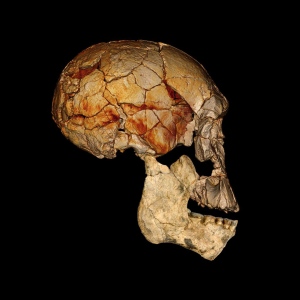
An upper skull found in 1972 and a newly discovered lower jaw are both thought to belong to the enigmatic hominin species Homo rudolfensis.

Fossilized skulls show that at least three distinct species belonging to the genus Homo existed between 1.7 million and 2 million years ago, settling a long-standing debate in palaeoanthropology.

A study published this week in Nature1 focuses on Homo rudolfensis, a hominin with a relatively flat face, which was first identified from a single large skull in 1972. Several other big-skulled fossils have been attributed to the species since then, but none has included both a face and a lower jaw. This has been problematic: in palaeoanthropology, faces and jaws function like fingerprints for identifying a specimen as a particular species (which is indicated by the second word in a Linnaean title, such as 'rudolfensis'), as opposed to the broader grouping of genus (the first word, as in'Homo').

Without complete skulls, it has been difficult to reach a consensus on whether specimens attributed to H. rudolfensis are genuinely members of a distinct species, or actually belong to other Homo species that lived around the same time, such as Homo habilis or Homo erectus. Understanding how many different Homo species there were, and whether they lived concurrently, would help to determine whether the history of the human lineage saw fierce competition between multiple hominins, or a steady succession from one species to another.

Neue Zweige im Stammbaum des Menschen


Zwei weitere Frühmenschen-Arten in Kenia gefunden


Montage des neu entdeckten Unterkiefer KNM-ER 60000 mit dem Schädel KNM-ER 1470; man nimmt an, dass beide zur selben Art gehören. © Foto: Fred Spoor

Neue Fossilien, die im Osten des Turkana-Sees in Kenia entdeckt wurden, bestätigen nun, dass dort vor zwei Millionen Jahren neben unserem direkten Vorfahren Homo erectus zwei weitere Arten der Gattung Homo lebten.

Die Funde - ein Gesichtsschädel, ein bemerkenswert vollständiger Unterkiefer und der Teil eines zweiten Unterkiefers - werden in der renommierten Fachzeitschrift Nature am 9. August 2012 beschrieben. Ausgegraben wurden die Fossilien zwischen 2007 und 2009 im Rahmen des von Meave und Louise Leakey geleiteten Koobi Fora Forschungsprojekts (Koobi Fora Research Project, KFRP). Fred Spoor, KFRP-Mitglied und Wissenschaftler der Abteilung Humanevolution am Max-Planck-Institut für evolutionäre Anthropologie koordinierte die wissenschaftlichen Untersuchungen der Fossilien. Zahlreiche Analysen wurden in Leipzig durchgeführt, darunter auch die virtuelle Rekonstruktion der neuen Funde mittels modernster Computertechnologie. 

Monday, August 6, 2012

Volcanic cryptotephra gives clues to Neanderthal demise

Invisible to the human eye, cryptotephra is a fine volcanic glass that is blasted out of erupting volcanoes along with ash. It leaves behind a hidden layer, in the earth, which has now been detected, giving clues about why the Neanderthals died out.

About 40,000 years ago, a layer of cryptotephra particles carpeted a huge area of Central and Eastern Europe after a massive volcanic eruption in Italy called the Campanian Ignimbrite (CI). This eruption, and the resulting environmental and climatic disruption, has been suggested as a factor in the extinction of the Neanderthals.

Interaction with us, modern humans, is one of the other possibilities. Neanderthals, who were our closest relatives, had been living in Europe for hundreds of thousands of years. But all physical evidence of them disappears after about 30,000 years ago. Early modern humans were known to have arrived in Europe at least 35,000 years ago, having originated in Africa, but precise dates, and the length of time they overlapped with the last Neanderthals, are unclear.

Soldiers uncover 27 ancient bodies on Salisbury Plain


All the burials at the mound, which was under attack from burrowing badgers, were excavated by soldiers from The Rifles

Soldiers have unearthed 27 bodies during an archaeological dig on Salisbury Plain.

Troops from The Rifles, injured in Afghanistan, were excavating the 6th Century burial site at Barrow Clump, as part of a programme of rehabilitation.

The bodies, including Anglo-Saxon warriors, had been buried with a range of personal possessions.
Rifleman Mike Kelly said: "As a modern day warrior, unearthing the remains... fills me with overwhelming respect."

Sunday, August 5, 2012

Silchester Iron Age finds reveal secrets of pre-Roman Britain


By the gap in a hedge bordering the entrance off a muddy lane in Hampshire, the young diggers on one of the most fascinating archaeological sites in Britain have made a herb garden: four small square plots. The sudden blast of sunshine after months of heavy rain has brought everything into bloom, and there’s a heady scent of curry plant and dill, marigold and mint.

Many of the plant seeds are familiar from Roman sites across Britain, as the invaders brought the flavours and the medical remedies of the Mediterranean to their wind-blasted and sodden new territory, but there is something extraordinary about the seeds from the abandoned Iron Age and Roman town of Silchester.

The excavation run every summer by Dr Amanda Clarke and Professor Michael Fulford of the archaeology department at Reading University, using hundreds of volunteer students, amateurs and professionals, now in its 15th season, is rewriting British history.

The banal seeds are astonishing because many came from a level dating to a century before the Romans. More evidence is emerging every day, and it is clear that from around 50BC the Iron Age Atrebates tribe, whose name survived in the Latin Calleva Atrebatum, the wooded place of the Atrebates, enjoyed a lifestyle that would have been completely familiar to the Romans when they arrived in AD43.

Wednesday, August 1, 2012

Brewing Stone Age beer


Jørn Kragtorp (left) and Manfred Heun brew beer from the primitive wheat known as einkorn. Here they are adding a malt of einkorn, ready to start the brewing process. (Photo: Asle Rønning)

Beer enthusiasts are using a barn in Norway’s Akershus County to brew a special ale which has scientific pretensions and roots back to the dawn of human culture.

The beer is made from einkorn wheat, a single-grain species that has followed humankind since we first started tilling the soil, but which has been neglected for the last 2,500 years.

“This is fun − really thrilling. It’s hard to say whether this has ever been tried before in Norway,” says Jørn Kragtorp.

He started brewing as a hobby four years ago. He represents the fourth generation on the family farm of Nedre Kragtorp in Aurskog-Høland, Akershus County.

Later Stone Age got earlier start in South Africa than thought


New research led by CU-Boulder on South Africa's Border Cave shows the Later Stone Age emerged more than 20,000 years than previously thought [Credit: Courtesy Paola Villa, University of Colorado] 

The Later Stone Age emerged in South Africa more than 20,000 years earlier than previously believed -- about the same time humans were migrating from Africa to the European continent, says a new international study led by the University of Colorado Boulder. 

The study shows the onset of the Later Stone Age in South Africa likely began some 44,000 to 42,000 years ago, said Paola Villa, a curator at the University of Colorado Museum of Natural History and lead study author.  The new dates are based on the use of precisely calibrated radiocarbon dates linked to organic artifacts found at Border Cave in the Lebombo Mountains on the border of South Africa and Swaziland containing evidence of hominid occupation going back 200,000 years. 

The Later Stone Age is synonymous to many archaeologists with the Upper Paleolithic Period, when modern humans moved from Africa into Europe roughly 45,000 years ago and spread rapidly, displacing and eventually driving Neanderthals to extinction. The timing of the technological innovations and changes in the Later Stone Age in South Africa are comparable to that of the Upper Paleolithic, said Villa.

Giant Neo-Hittite sculpture unearthed in Turkey


Side view of the Suppiluliuma statue [Credit: Jennifer Jackson]

A beautiful and colossal human sculpture is one of the latest cultural treasures unearthed by an international team at the Tayinat Archaeological Project (TAP) excavation site in southeastern Turkey. A large semi-circular column base, ornately decorated on one side, was also discovered. Both pieces are from a monumental gate complex that provided access to the upper citadel of Kunulua, capital of the Neo-Hittite Kingdom of Patina (ca. 1000-738 BC). 

"These newly discovered Tayinat sculptures are the product of a vibrant local Neo-Hittite sculptural tradition," said Professor Tim Harrison, the Tayinat Project director and professor of Near Eastern Archaeology in the University of Toronto's Department of Near and Middle Eastern Civilizations. "They provide a vivid glimpse into the innovative character and sophistication of the Iron Age cultures that emerged in the eastern Mediterranean following the collapse of the great imperial powers of the Bronze Age at the end of the second millennium BC."