Saturday, November 10, 2012

Unique Thracian treasure found in Bulgaria


Bulgarian archaeologists have found a unique gold Thracian treasure in the famous Sveshtari tomb.

The team, led by one of the most prominent Bulgarian experts on Thracian archaeology, Prof. Diana Gergova, from the National Archaeology Institute at the Bulgarian Academy of Sciences, BAS, made the discovery during excavations at the so-called Omurtag mount.

The researchers found fragments of a wooden box, containing charred bones and ashes, along with a number of extremely well-preserved golden objects, dated from the end of the 4th and the beginning of the 3rd century B. C.. They include four spiral gold bracelets, and a number of intricate applications like one which shows the head of a female goddess adorned with beads, applications on horse riding gear and a forehead covering in the shape of a horse head with a base shaped like a lion head. The objects weigh 1.5 kg, but the excavations continue.

The precious find also contains a ring, buttons and beads. Gergova explains that it seemed the treasure was wrapped in a gold-woven cloth because a number of gold threads were discovered nearby.


Read the rest of this article...

Thursday, November 8, 2012

Oldest Arrowheads Hint at How Modern Humans Overtook Neandertals

Tiny stone blades from Pinnacle Point Cave 5-6 in South Africa that once tipped arrows or darts represent the oldest known projectile weapons. Image: Simen Oestmo

Archaeologists excavating a cave on the southern coast of South Africa have recovered remains of the oldest known projectile weapons. The tiny stone blades, which were probably affixed to wooden shafts for use as arrows, date to 71,000 years ago and represent a sophisticated technological tradition that endured for thousands of years. The discovery bears on an abiding question about when and how modern human cognition emerged, and suggests a way by which early modern Homo sapiens outcompeted Neandertals to eventually become the last human species standing.

Fossils show that humans who basically looked like us had evolved by around 200,000 years ago. Yet based on the cultural stuff they left behind, it looked as though anatomically modern humans didn’t begin thinking like us until much later. And when the creative spark did eventually ignite, the flame flickered only briefly before fizzling, only to spark and fade again and again as populations died out, taking their innovations to the grave. Projectile weapon technology, for example, seemed to make a brief first appearance sometime between 65,000 and 60,000 years ago and didn’t stick until after 40,000 years ago. But whether this flickering pattern in the archaeological record is real or merely an artifact of the small number of sites excavated has been unclear. The new South African finds, which come from a site called Pinnacle Point 5 – 6 (PP5-6), support the latter scenario.

Read the rest of this article...

Wednesday, November 7, 2012

Mammoth skeleton found in France


Archaeologists in France have unearthed a rather hairy fossil — a nearly complete skeleton of a mammoth.

The bones — thought to belong to a creature that roamed the earth between 200,000 and 50,000 years ago — were discovered by accident during the excavation of an ancient Roman site 30 miles (50 kilometers) east of Paris.

It may be only the third remains of a long-haired woolly mammoth discovered in France in the last 150 years. Such discoveries are more common in Siberia.

Archaeologists will try to establish the circumstances of the long tusked specimen's death: If it drowned in the River Marne or was hunted by Neanderthal Man.

Read the rest of this article...

Archeologists Examine One of the Oldest Hoards Found in Europe


Jewelry and female figurines from Belica, Serbia, to be exhibited for the first time at Tübingen University Museum.

Archeologists from the University of Tübingen's Institute of Prehistory are working with the Serbian Archeological Institute in Belgrade to analyze the most comprehensive Early Neolithic hoard ever found. Work on the nearly 8000 year old collection of jewelry and figurines is funded by the Thyssen Foundation.

The unique hoard is composed of some 80 objects made of stone, clay and bone. "This collection from Belica, in all its completeness, provides a unique glimpse into the symbols of the earliest farmers and herdsmen in Europe," says Tübingen archeologist Dr. Raiko Krauss, who heads the German side of the project.

The objects include stylized female figures, parts of the human body, as well as miniature axes and abstract figures. Much attention has been given to the rotund female figures of water-smoothed stone given human features by human hands. Were they idols, lucky charms or fertility symbols? Their purpose is unknown.

Read the rest of this article...

Tolkien estate bans reference to 'hobbits'


It was, perhaps, inevitable that Homo floresiensis, the one-metre-tall species of primitive human discovered on the Indonesian island of Flores, would come to be widely known as "hobbits". After all, like JRR Tolkien's creation, they were "a little people, about half our height". But a New Zealand scientist planning an event about the species has been banned from describing the ancient people as "hobbits" by representatives of the Tolkien estate.

Brent Alloway, associate professor at Victoria University, is planning a free lecture next month at which two of the archaeologists involved in the discovery of Homo floresiensis in 2003, Mike Morwood and Thomas Sutikna, will speak about the species. The talk is planned to coincide with the premiere of The Hobbit film, and Dr Alloway had planned to call the lecture "The Other Hobbit", as Homo floresiensis is commonly known.

But when he approached the Saul Zaentz Company/Middle-earth Enterprises, which owns certain rights in The Hobbit, he was told by their lawyer that "it is not possible for our client to allow generic use of the trade mark HOBBIT".


Read the rest of this article...

Tuesday, November 6, 2012

Archaeologists find prehistoric remains in Truro

A slate disc decorated on both sides is believed to date to the later Neolithic, found at the Truro site Credit: Cornwall Council

Archaeologists working at the site of the future Truro Eastern District Centre (TEDC) have discovered the fragmentary remains of a prehistoric enclosure likely to have been built around 5,500 years ago.

Initial findings from the excavations, led by Cornwall Council’s Historic Environment Service, suggest the eastern end of the site may have been a ‘causewayed enclosure’ dating from the early Neolithic period (3800BC to 3600BC).
Now the team will catalogue their findings, take samples and, in line with national guidance, carefully re-bury the site to protect it for future generations.
“While it is important that we take the opportunity to learn more about our findings now, best practice is for the site to be preserved for future generations of archaeologists who will have better technologies to understand it than we do today,” said Dan Ratcliffe from the Council’s Historic Environment Service. “Scientific analysis of evidence recovered during the excavations is expected to take some years after the sample excavation has concluded.”
Read the rest of this article...

Monday, November 5, 2012

Europe's oldest prehistoric town unearthed in Bulgaria


Archaeologists in Bulgaria say they have uncovered the oldest prehistoric town found to date in Europe.

The walled fortified settlement, near the modern town of Provadia, is thought to have been an important centre for salt production.

Its discovery in north-east Bulgaria may explain the huge gold hoard found nearby 40 years ago.

Archaeologists believe that the town was home to some 350 people and dates back to between 4700 and 4200 BC. 

That is about 1,500 years before the start of ancient Greek civilisation.

Read the rest of this article...

Prehistoric remains unearthed in Cornwall


Archaeologists working at the site of the future Truro Eastern District Centre (TEDC) have discovered the fragmentary remains of a prehistoric enclosure likely to have been built around 5,500 years ago.

Initial findings from the excavations, led by Cornwall Council’s Historic Environment Service, suggest the eastern end of the site may have been a ‘causewayed enclosure’ dating from the early Neolithic period (3800BC to 3600BC).

Now the team will catalogue their findings, take samples and, in line with national guidance, carefully re-bury the site to protect it for future generations.


Read the rest of this article...

Monday, October 22, 2012

Breakthrough in world's oldest undeciphered writing

Experts working on proto-Elamite hope they are on the point of 'a breakthrough'

The world's oldest undeciphered writing system, which has so far defied attempts to uncover its 5,000-year-old secrets, could be about to be decoded by Oxford University academics.

This international research project is already casting light on a lost bronze age middle eastern society where enslaved workers lived on rations close to the starvation level.

"I think we are finally on the point of making a breakthrough," says Jacob Dahl, fellow of Wolfson College, Oxford and director of the Ancient World Research Cluster.

Dr Dahl's secret weapon is being able to see this writing more clearly than ever before.

Read the rest of this article...

Core sample sends carbon clock farther back in time


The carbon clock is getting reset. Climate records from a Japanese lake are set to improve the accuracy of the dating technique, which could help to shed light on archaeological mysteries such as why Neanderthals became extinct.

Carbon dating is used to work out the age of organic material — in effect, any living thing. The technique hinges on carbon-14, a radioactive isotope of the element that, unlike other more stable forms of carbon, decays away at a steady rate. Organisms capture a certain amount of carbon-14 from the atmosphere when they are alive. By measuring the ratio of the radio isotope to non-radioactive carbon, the amount of carbon-14 decay can be worked out, thereby giving an age for the specimen in question.

But that assumes that the amount of carbon-14 in the atmosphere was constant — any variation would speed up or slow down the clock. The clock was initially calibrated by dating objects of known age such as Egyptian mummies and bread from Pompeii; work that won Willard Libby the 1960 Nobel Prize in Chemistry. But even he “realized that there probably would be variation”, says Christopher Bronk Ramsey, a geochronologist at the University of Oxford, UK, who led the latest work, published today in Science1. Various geologic, atmospheric and solar processes can influence atmospheric carbon-14 levels.

Read the rest of this article...

Ancient sundial found in northern Greece

The ancient sundial dating from the Greco-Roman period found in Polichrono in Chalkidiki [Credit: Greek Reporter]

One of the rarest sundials dating from the Greco-Roman period was found in Polichrono in Chalkidiki, northern Greece. This sundial is not a usual one as it shows the correct time at any given place.

It is noteworthy that in the Ancient Greek world, sundials consisted of a gnomon (indicator) in the form of a vertical post or peg set in a flat surface, upon which the shadow of the gnomon served to indicate the time.

This sundial has a surface which is separated in 12 parts representing 12 hours of the day. More particularly, the sundial consists of a hyperbola tracing the shadow’s path at the winter solstice, a second one for the summer solstice, and a straight east-west line in between marking the equinoctial shadows.


Read the rest of this article...

»Ötzi 3« wird nun bestattet

Vitrinenfenster zur Kühlzelle der Mumie vom Hauslabjoch (© Südtiroler Archäologiemuseum)

»Ötzi 3« ist ein Mann, der seinen Körper nach seinem Tod der Wissenschaft zur Verfügung gestellt hat. 15 Jahre lang, seit 1997, diente er der Forschung im Südtiroler Archäologiemuseum in Bozen, um die Kühlkammer von Ötzi zu perfektionieren. Nun ist die Aufgabe beendet und der Leichnam wurde nach Innsbruck überführt, wo er begraben wird.

Read the rest of this article...

Friday, October 19, 2012

Prehistoric Autopsy: Alice Roberts

Professor Alice Roberts, one of the presenters of Prehistoric Autopsy (credit: BBC) 

Professor Alice Roberts is back on our screens next week with Prehistoric Autopsy, which sees a team of experts reconstructing some of our ancient ancestors. We caught up with Alice to ask her about the three early human relatives that will feature in the programme.

Lucy's species (Australopithecus Afarensis)

"Our closest living relatives – chimpanzees – stand on two legs. The distinction is, are you a habitual biped? To get from A to B, is that your locomotion of choice? If it is, that causes changes in your anatomy. Lucy’s skeleton had these changes, and it’s very similar to our skeletons." 

"Another piece of evidence is the ‘Laetoli footprints’ from Tanzania. One expert on Prehistoric Autopsy is Robin Crompton, who’s studied Lucy’s gait, primarily by analysing the Laetoli footprints and how they represent stepping onto the ground – compared with humans and chimpanzees. The way we form footprints reflects the pressures applied at different points, because the whole of your foot doesn’t hit the floor at the same time: pressure comes through the heel, then down onto the ball and onto the toes. And when Robin looks at Lucy’s footprint, it appears quite similar to the way we walk."

Read the rest of this article...

‘Time-capsule’ Japanese lake sediment advances radiocarbon dating for older objects


A new series of radiocarbon measurements from Japan’s Lake Suigetsu will give scientists a more accurate benchmark for dating materials, especially for older objects, according to a research team that included Oxford University’s Radiocarbon Accelerator Unit.

The research team extracted cores of beautifully preserved layers of sediment, containing organic material (such as tree leaf and twig fossils), from the bottom of the Japanese lake where they had lain undisturbed for tens of thousands of years. As an article in the journal Science explains, the findings are hugely significant because they provide a much more precise way to examine radiocarbon ages of organic material for the entire 11,000-53,000-year time range. For example, archaeologists should now be able to pinpoint more accurately the timing of the extinction of Neanderthals or the spread of modern humans into Europe.

At the Oxford Radiocarbon Accelerator Unit, Professor Christopher Ramsey with his doctoral student Richard Staff and chemist Dr Fiona Brock worked with two other radiocarbon laboratories (the NERC facility at East Kilbride, Scotland, and Groningen in the Netherlands) on the radiocarbon record from the lake. This research is part of a large international research team, led by Professor Takeshi Nakagawa of Newcastle University, studying the cores for clues about past climate and environmental change.

Read the rest of this article...

'Fox hole' opens passage to Neolithic past, possibly Hades

(Photo Courtesy of Bill Parkinson)
Alepotrypa Cave was home to a Neolithic community more than 5,000 years ago. The first archaeologist to dig inside unearthed hundreds of burials and hypothesized that the cave was believed to be Hades, or the underworld in Greek mythology.
 
A Field Museum curator is digging around a cave in Southern Greece that’s been compared to the mythical underworld, Hades.  That cave might help explain why people choose to migrate to big cities or high tail it to the suburbs.

And it has a surprising Chicago tie. 

William Parkinson is the associate curator of Eurasian anthropology at the Field Museum. He is on a research team, called The Diros Project, made up of two Greek and two American archaeologists (both Chicago natives).

They are excavating Alepotrypa Cave, which is nearly four football fields long. The researchers compare the most striking room in the cave to a Cathedral.

Read the rest of this article...

Thursday, October 18, 2012

Ancient 'sauna' unearthed in Assynt


Archaeologists have uncovered the remains of what they believe could be an Bronze Age bathing site, or a sauna.

The metre-deep pit with a channel to a nearby stream was discovered at Stronechrubie, Assynt, in the north west Highlands.

The find was made by the Fire and Water Project, which is run by archaeology and history group Historic Assynt.

The project team had been trying to understand what a crescent shaped mound of stones had been created for.

Excavations at the mound by archaeologists and volunteers unearthed the pit and channel from beneath a layer of clay.

Read the rest of this article...

Ancient tomb found at 'Sweden's Stonehenge'

Sweden's 'Stonehenge', the Ale's Stones in Skane [Credit: Xuanxu/Flickr[

Swedish archaeologists have unearthed what is presumed to be a dolmen, or a portal tomb, that is believed to be over 5,000 years old near the megalithic monument Ale’s stones in southern Sweden.

”The findings confirm what we have believed; that this has been a special place for a very long time,” said archaeologist Bengt Söderberg to news agency TT.

On Saturday, the first day of the dig, the scientists already had a hunch that they would find something on the site, expecting a Stone Age grave and a Bronze Age monument.

And since, the hunch has become stronger.


Read the rest of this article...

Monday, October 15, 2012

Dig team uncovers 4,000-year-old artefact

Project manager Jane Harrison

VOLUNTEER archaeologists in Blackbird Leys had a shock on their second day of digging yesterday, when they stumbled upon a 4,000-year-old artefact. 

Around 20 people started digging near the Kassam Stadium on Tuesday, as part of a five week project to learn more about the area’s history. 

Organised by the lottery-funded Archaeology of East Oxford Project (Archeox), the diggers hope to discover information about a 12th century priory on the site. 

But they got more than they bargained for at the site on Minchery Farm Paddock yesterday morning.
Project manager Jane Harrison said: “It was pretty exciting. I got into the trench we have there, took four swipes with a trowel and it just popped up.

Read the rest of this article...

Neanderthals ... They're Just Like Us?


Like some other Neanderthals, "Wilma," a DNA-based reconstruction, was red-headed, freckled, and fair.

The Neanderthals are both the most familiar and the least understood of all our fossil kin.

For decades after the initial discovery of their bones in a cave in Germany in 1856 Homo neanderthalensis was viewed as a hairy brute who stumbled around Ice Age Eurasia on bent knees, eventually to be replaced by elegant, upright Cro-Magnon, the true ancestor of modern Europeans.

Science has long since killed off the notion of that witless caveman, but Neanderthals have still been regarded as quintessential losers—a large-brained, well-adapted species of human that went extinct nevertheless, yielding the Eurasian continent to anatomically modern humans, who began to migrate out of Africa some 60,000 years ago.

Lately, the relationship between Neanderthals and modern humans has gotten spicier.

Read the rest of this article...

Thursday, October 11, 2012

Archaeology Summer Courses in Oxford


The Oxford Experience, Christ Church, Oxford

The Oxford Experience summer school offers one-week introductory classes in the humanities and sciences, including a number of archaeology courses.

You can find details of the Oxford Experience summer school here...

You can find a list of the archaeology courses here...


You may be particularly interested in this course: The Age of Stonehenge

Archaeology: Europe’s ‘oldest town’ found near Bulgaria’s Varna, professor says


Europe’s oldest urban settlement is near Provadia, a town of about 13 000 people about 40km inland from Bulgaria’s Black Sea city of Varna, according to archaeology Professor Vassil Nikolov, citing evidence from work done at the Provadia – Solnitsata archaeological site in summer 2012.
 
The team of archaeologists headed by Nikolov excavated stone walls estimated to date from 4700 to 4200 BCE. The walls are two metres thick and three metres high, and according to Nikolov are the earliest and most massive fortifications from Europe’s pre-history.
 
There were about 300 to 350 people living at the site in those times, living in two-storey houses and earning their living by salt mining.
 
To this day, Provadia is an important salt centre, with a large-scale foreign investor represented in the area. Estimates are that salt has been extracted in the area for about 7500.

Read the rest of this article...

Italy's Riace Bronzes languish in limbo


The Greek statues have not been seen in public since 2008 while museum renovation is mired in controversy [Credit: The Art Newspaper]

When two large bronze sculptures dating back to the fifth century BC were hauled out of the sea just off the coast of Calabria almost 40 years ago, the Italian authorities and international academics were quick to recognise it as one of the most important archeological discoveries of the century. Yet today these extraordinary finds are languishing on stretchers in a regional government office in Reggio Calabria and it is unclear when they will be put back on display.

The sculptures, known as the Riace Bronzes after the nearest town on the coast to their findspot, are one of the few surviving examples of bronzes made by the master sculptors of ancient Greece (most sculptures of this age were melted down and the bronze re-used). After they were found by divers, they were taken to Florence’s Opificio delle Pietre Dure to be restored. They were exhibited in 1980 at the Museo Archeologico Nazionale in Florence, where they were seen by 1.3 million people. They then travelled through Italy, via Rome, back to Calabria for display in Reggio Calabria’s archaeology museum, which claimed the works as its own. They remained there until 2009, when the museum was closed for renovation, and were transferred to the council offices. 

Read the rest of this article...
Tuesday, October 9, 2012

Neolithic discovery: why Orkney is the centre of ancient Britain


Drive west from Orkney’s capital, Kirkwall, and then head north on the narrow B9055 and you will reach a single stone monolith that guards the entrance to a spit of land known as the Ness of Brodgar. The promontory separates the island’s two largest bodies of freshwater, the Loch of Stenness and the Loch of Harray. At their furthest edges, the lochs’ peaty brown water laps against fields and hills that form a natural amphitheatre; a landscape peppered with giant rings of stone, chambered cairns, ancient villages and other archaeological riches.

This is the heartland of the Neolithic North, a bleak, mysterious place that has made Orkney a magnet for archaeologists, historians and other researchers. For decades they have tramped the island measuring and ex- cavating its great Stone Age sites. The land was surveyed, mapped and known until a recent chance discovery revealed that for all their attention, scientists had completely overlooked a Neolithic treasure that utterly eclipses all others on Orkney – and in the rest of Europe.

This is the temple complex of the Ness of Brodgar, and its size, complexity and sophistication have left archaeologists desperately struggling to find superlatives to describe the wonders they found there. “We have discovered a Neolithic temple complex that is without parallel in western Europe. Yet for decades we thought it was just a hill made of glacial moraine,” says discoverer Nick Card of the Orkney Research Centre for Archaeology. “In fact the place is entirely manmade, although it covers more than six acres of land.”

Read the rest of this article...

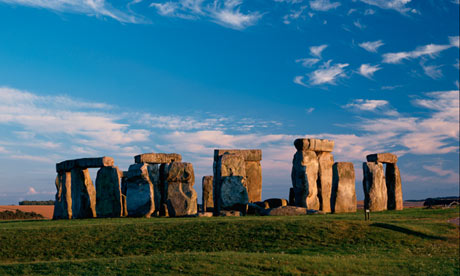
Stonehenge up close: digital laser scan reveals secrets of the past

Most detailed analysis yet of prehistoric stone circle shows how masons spent more time making key areas look the best


Stonehenge: a digital laser scan has revealed tool marks from 4,500 years ago, and graffiti made by Victorian visitors. Photograph: Yoshihiro Takada/Corbis
 
Like any corner-cutting modern builder, the ancient stonemasons who built Stonehenge lavished the most work and best materials where they would be first seen –shining in the last light of the setting winter solstice sun, or at dawn on the longest day.

The first complete 3D laser scan of the stone circle has also revealed tool marks made 4,500 years ago, scores of little axehead graffiti added when the enormous slabs were already 1,000 years old, and damage and graffiti contributed by Georgian and Victorian visitors.

The survey, carried out for English Heritage, exposes numerous details now invisible to the naked eye and will be used in displays for the long-awaited new visitor centre, due to open late next year. It shows the stones in unprecedented precision, from the double-decker bus height sarsens from Salisbury Plain that give the monument its unmistakable profile, to the smaller bluestones brought from west Wales by means still hotly debated, and the stumps of stones that have almost been destroyed.

Read the rest of this article...

Monday, October 8, 2012

Neolithic discovery: why Orkney is the centre of ancient Britain


Long before the Egyptians began the pyramids, Neolithic man built a vast temple complex at the top of what is now Scotland. Robin McKie visits the astonishing Ness of Brodgar

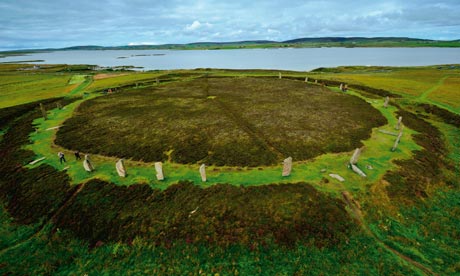
Circle of life: the Ring of Brodgar – a stone circle, or henge – is a World Heritage Site.
Photograph: Adam Stanford
 
Drive west from Orkney's capital, Kirkwall, and then head north on the narrow B9055 and you will reach a single stone monolith that guards the entrance to a spit of land known as the Ness of Brodgar. The promontory separates the island's two largest bodies of freshwater, the Loch of Stenness and the Loch of Harray. At their furthest edges, the lochs' peaty brown water laps against fields and hills that form a natural amphitheatre; a landscape peppered with giant rings of stone, chambered cairns, ancient villages and other archaeological riches.

This is the heartland of the Neolithic North, a bleak, mysterious place that has made Orkney a magnet for archaeologists, historians and other researchers. For decades they have tramped the island measuring and ex- cavating its great Stone Age sites. The land was surveyed, mapped and known until a recent chance discovery revealed that for all their attention, scientists had completely overlooked a Neolithic treasure that utterly eclipses all others on Orkney – and in the rest of Europe.

Read the rest of this article...

'Significant' finds at Crossrail site


Excavations at Tottenham Court Road [Credit: Crossrail]

 The UK’s largest archaeology programme has uncovered its first Bronze Age find as it continues a search for remains of a 3,500 year old Bronze Age transport pathway along the same route that London’s newest railway, Crossrail, will follow in east London.

The first Bronze Age artefacts for Crossrail come as Europe’s largest construction project opens a month long exhibition in London to showcase its archaeology finds to-date. Among the exhibits are medieval human bones found at Liverpool Street, the UK’s largest rare amber find and a piece of mammoth jaw bone. The items have been found during archaeology digs at Crossrail worksites across London.

The Bronze Age finds include two wooden stakes that have been cut by early London hunters with an axe, and which may have been used to build a timber pathway, and a hammer stone used as a tool. The discovery has been made during excavations at the Plumstead tunnel entrance in east London where two tunnel boring machines will begin constructing Crossrail’s Thames Tunnels early next year. Excavations of the site are continuing this week.


Read the rest of this article...

Divers return to ancient Greek 'computer' wreck site


Main Antikythera mechanism fragment. The mechanism consists of a complex system of 32 wheels and plates with inscriptions relating to the signs of the zodiac and the months [Credit: National Archaeological Museum, Athens, No. 15987]

A new search has begun at a Greek island where an ancient device known as the world's "oldest computer" was found over a century ago, an official said, adding that other discoveries were possible.

Archaeologists this week returned to Antikythera, the Aegean Sea island where sponge divers in 1900-1901 found the so-called Antikythera Mechanism, a remarkable 2nd-century BCE device that tracked the cycles of the solar system.

"These are unexplored sea depths beneath a trade route known since antiquity," said Angeliki Simosi, head of Greece's ephorate of underwater antiquities. "This is virgin territory."


Read the rest of this article...

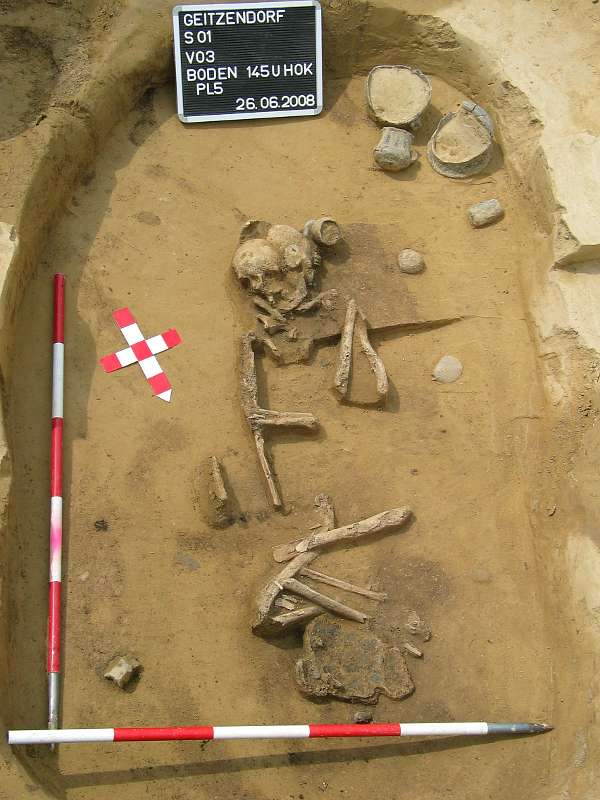
Eine Metallverarbeiterin in der Bronzezeit?


Das Grab "V3" aus dem frühbronzezeitlichen Gräberfeld von Geitzdendorf, NÖ (Foto: Urgeschichtemuseum Niederösterreich)

Eine archäologische Überraschung verbarg sich im bronzezeitlichen Gräberfeld in Geitzendorf. Das Grab einer Metallverarbeiterin wurde gefunden – es könnte der erste Beleg einer Frau in diesem historischen Beruf sein.

Die Ausgrabungen fanden bereits in den Sommermonaten 2008 und 2009 statt. 15 Gräber wurden ergraben. Dass eines davon die Vorstellungen der Geschlechterrollen in der Bronzezeit verändern kann, ahnte damals niemand. Nach den anthropologischen Untersuchungen in den letzten Jahren wurde festgestellt: es könnte dabei das erste bekannte Grab einer Metallverarbeiterin der Feinschmiedetechnik darunter sein. 

Read the rest of this article...

Mammoth carcass found in Siberia


A well-preserved mammoth carcass has been found by an 11-year-old boy in the permafrost of northern Siberia.

The remains were discovered at the end of August in Sopochnaya Karga, 3,500km (2,200 miles) northeast of Moscow.

A team of experts from St Petersburg then spent five days in September extracting the body from frozen mud.

The mammoth is estimated to have been around 16 years old when it died; it stood 2m tall and weighed 500kg.

It has been named Zhenya, after Zhenya Salinder, the 11-year-old who found the carcass while walking his dogs in the area.

Read the rest of this article...

Friday, October 5, 2012

Who Mastered Fire?

Mannequin of a Tautavel Man—would he have had known how to make fire?
Photo credit by Eric Cabanis/AFP/Getty Images.

The heated archaeological debate about which hominids first started cooking.

Richard Wrangham, an anthropologist at Harvard, claims that hominids became people—that is, acquired traits like big brains and dainty jaws—by mastering fire. He places this development at about 1.8 million years ago. This is an appealing premise no matter who you are. For those who see cooking as morally, culturally, and socially superior to not cooking, it is scientific validation of a worldview: proof that cooking is literally what makes us human. For the rest of us, it means we have a clever retort the next time one of those annoying raw-food faddists starts going on about how natural it is never to eat anything heated above 115 degrees Fahrenheit.

There’s one problem with Wrangham’s elegant hypothesis: It’s hardly the scientific consensus. In fact, since 2009, when Wrangham explained his theory in the book Catching Fire, several archaeologists have come forward with their own, wildly divergent opinions about what is arguably the oldest intellectual property debate in the world. Who really mastered fire, in the sense of being able to create it, control it, and cook with it regularly? Was it Homo erectus, Neanderthals, or modern humans?

Read the rest of this article...

Bronze Age transport route 'found during Crossrail dig'


Wood found during excavation work for Crossrail could be evidence of a 3,500-year-old Bronze Age transport route through London, experts believe.

Archaeologists examining a site in Plumstead have been searching for the pathway, which ran along the same route of the new rail link in east London.

They have unearthed wooden stakes which they say may have been used in the construction of the transport link.

Crossrail archaeologist Jay Carver said it was a "very significant find".

Read the rest of this article...

Thursday, October 4, 2012

Oxford Experience on Facebook


The Oxford Experience - an Oxford University summer school that offers many courses in archaeology and history - now has a Facebook site.

You can find the site at: www.facebook.com/OxfordExperience


You can find out more about the Oxford Experience here...

Stonehenge life-sized Neolithic homes to be built


A contract to build three life-sized Neolithic homes at Stonehenge in Wiltshire has been put out to tender. 

English Heritage is inviting contractors to bid for the £60,000 project, which is part of a £27m scheme to improve the setting of the monument.

Using authentic materials, the prehistoric homes will be based on those excavated at Durrington Walls.
English Heritage said the buildings will provide a "real and tangible link for visitors to the distant past".

The £27m scheme to build a new visitor centre and close the road alongside the ancient monument, was begun in July.

Read the rest of this article...

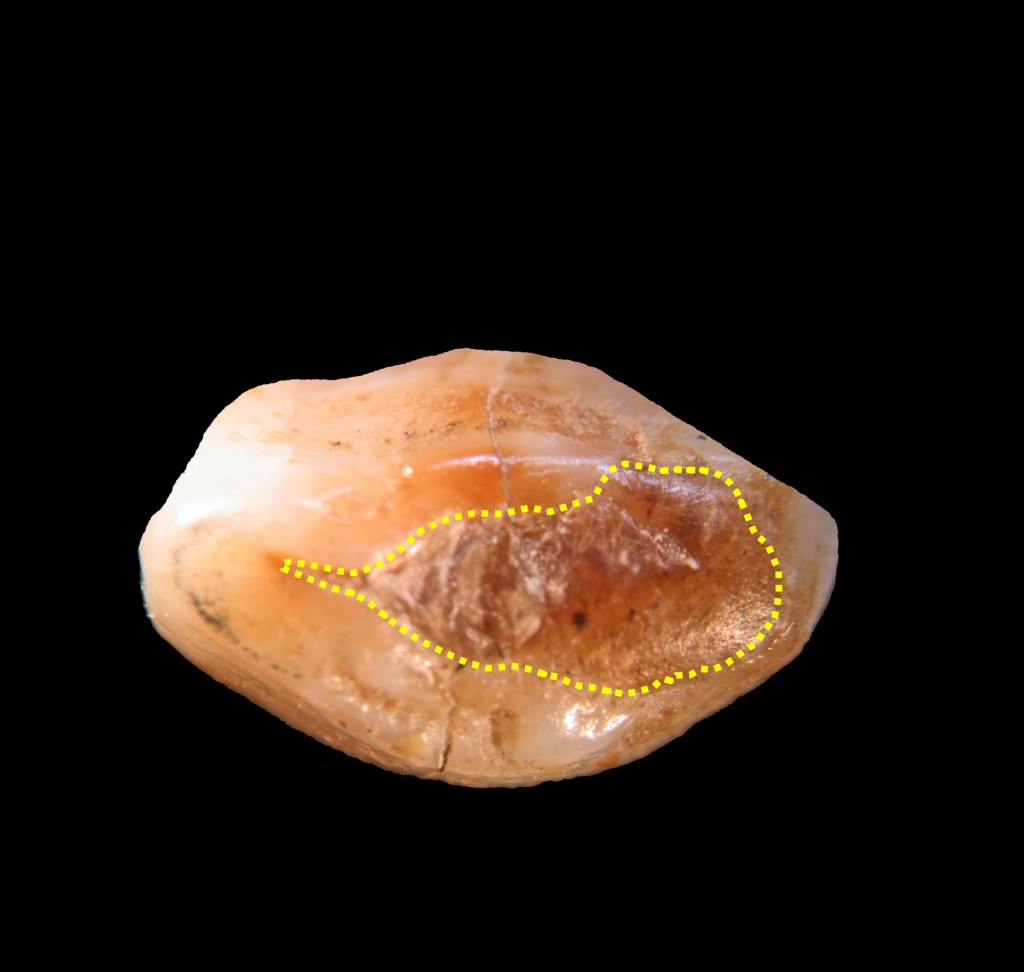
Neolithic dentists?


A 6,500-year-old tooth packed with beeswax could represent the earliest evidence of a dental filling, newly-published research has announced.
 
Found in part of a human jaw excavated in a cave near Lonche, Slovenia, the tooth is a left canine, thought to have belonged to a man aged between 24 and 30.

Research led by Federico Bernardini and Claudio Tuniz of the Abdus Salam Centre for Theoretical Physics in Italy examined a vertical crack in the tooth, which had been filled with a resinous substance.
Now analysis published in the journal PLOS ONE has revealed this to be beeswax, possibly used to alleviate pain and sensitivity when chewing on the broken tooth.

Read the rest of this article...

Cavewoman jeweller rewrites gender history


A skeleton uncovered north of Vienna is forcing archaeologists to take a fresh look at prehistoric gender roles after it appeared to be that of a female fine metal worker - a profession that was previously thought to have been carried out exclusively by men.

The Museum of Ancient History in Lower Austria says the grave originates from the Bronze Age around 2,000 years before the birth of Christ, and that the bones belonged to a woman who would have been aged between 45 and 60.


The museum says tools used to make metal ornaments were also found in the grave at Geitzendorf Northwest of Vienna, leading to the conclusion that it was that of a female fine metal worker who had been given the items to take with her into the afterlife.


The items included an anvil, hammers and flint chisels as well as some small items of dress jewellery that may well have been made by the woman herself.


Read the rest of this article...

8,000-year-old rock carvings under threat of destruction


Rock carvings at the Five Fingers Mountains discovered by Dr. Anneliese Peschlow-Bindokat are pictured [Credit: İHA]

 Thousands of rock carvings discovered at the beginning of the 1990s in the ancient city of Heraklia at Latmos in southwestern Turkey are faced with destruction due to plans to open a stone quarry at the site.

At the beginning of the '90s, many rock carvings were discovered at the Five Finger Mountains in research by Dr. Anneliese Peschlow-Bindokat from the German Archaeological Institute. The carvings have been dated to the sixth to fifth centuries B.C., and are considered one of the most significant discoveries of Near Eastern archaeology. However, seven feldspar stone quarries have been opened in the vicinity to meet the demand for raw material to be used in the production of glass, ceramics and in the dye industry in recent years. There are now new plans to opening further quarries close to the site where most of the carvings are located.

According to the Radikal daily, Peschlow is now preparing a report for the United Nations Educational, Scientific and Cultural Organization (UNESCO) and the Muğla and Aydın Board of Cultural and Natural Heritage to save the area from destruction.


Read the rest of this article...

Wednesday, October 3, 2012

Peat bogs yielding secrets of Dartmoor's history


Plymouth University's Dr Ralph Fyfe has been carrying out palaeoecological and archaeological surveys of Dartmoor Mires Project restoration areas [Credit:This is Exeter]

What did Britain look like before mankind turned up and started changing things thousands of years ago? It's a question many people ask – and now some answers are being found on the roof of Dartmoor.

Using the latest technology in two separate projects, scientists have been delving into the moor's infamous peat bogs to find out what the world was like when extinct creatures like the giant aurochs were still roaming around the South West.

Palaeoecological and archaeological surveys of Dartmoor Mires Project restoration areas have been undertaken by Dr Ralph Fyfe and his team at the University of Plymouth, while Dr Phil Newman has produced an extensive and up-to-date study of the peat-cutting industry on the north moor.


Read the rest of this article...

Tuesday, October 2, 2012

A Neanderthal trove in Madrid


The Lozoya River Valley, in the Madrid mountain range of Guadarrama, could easily be called "Neanderthal Valley," says the paleontologist Juan Luis Arsuaga.

"It is protected by two strings of mountains, it is rich in fauna, it is a privileged spot from an environmental viewpoint, and it is ideal for the Neanderthal, given that it provided the with good hunting grounds."

This is not just a hypothesis: scientists working on site in Pinilla del Valle, near the reservoir, have already found nine Neanderthal teeth, remains of bonfires and thousands of animal fossils, including some from enormous aurochs (the ancestor of cattle, each the length of two bulls), rhinoceros and fallow deer.

Read the rest of this article...
Monday, October 1, 2012

Excavation unearths Bronze Age cultures


The large building unearthed during the Aslantepe excavations in Malatya shows that there was an important person lived there, according to archaeologists [Credit: Hurriyet/AA]

Excavations at the Aslantepe tumulus near the central Anatolian city of Malatya have unearthed a large building containing two spearheads and a necklace, all of which appear to date to the early trans-Caucasian culture.

Excavation work continued this year on part of a structure in the southern portion of the tumulus that is believed to be the world’s first palace, the head of the Aslantepe excavations, Professor Marcella Frangipane of Rome’s La Sapienze University, told members of the press. Some other buildings found to the north of the palace in earlier phases of the excavation date from the Bronze Age, she said.

“We also dug below part of a city wall dating back to 2,800 B.C., and found a palace hall underneath it. In the middle of this hall, we found a large Bronze-Age building, reflecting features common to the early trans-Caucasian culture. So far only smaller buildings belonging to this culture have been discovered; this is the first time we have found such a large building. It shows us that there was an important person here,” Frangipane said.


Read the rest of this article...
Stinging nettles reveal Bronze Age trade routes


A piece of nettle cloth retrieved from Denmark's richest known Bronze Age burial mound Lusehøj may actually derive from Austria, new findings suggest. The cloth thus tells a surprising story about long-distance Bronze Age trade connections around 800 BC.
2,800 years ago, one of Denmark's richest and most powerful men died. His body was burned. And the bereaved wrapped his bones in a cloth made from stinging nettle and put them in a stately bronze container, which also functioned as urn.

Now new findings suggest that the man's voyage to his final resting place may have been longer than such voyages usually were during the Bronze Age: the nettle cloth, which was wrapped around the deceased's bones, was not made in Denmark, and the evidence points to present-day Austria as the place of origin.
 

Read the rest of this article...