Thursday, June 18, 2020

Incest uncovered at the elite prehistoric Newgrange monument in Ireland

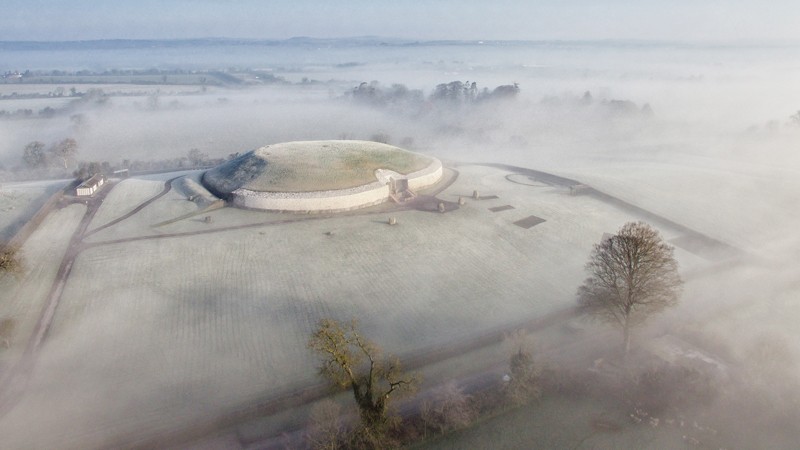
A misty morning view of the passage tomb of Newgrange overlooking the Boyne Valley, County Meath, Ireland.
Figure 1 | Newgrange passage tomb, Ireland. Cassidy et al.1 report that the analysis of DNA from a man buried in this 5,000-year-old monument reveals evidence of incest.Credit: Ken Williams/ShadowsandStone.com

A study of the DNA of Ireland’s Stone Age inhabitants has produced spectacular results, with far-reaching consequences for our understanding of prehistoric population movement and the structure of that ancient society. Writing in Nature, Cassidy et al.1 report their striking discoveries from this project.

The authors looked at the period, around 4000 BC, when farming appeared as a new, Neolithic way of life, supplanting the older and more mobile Mesolithic lifestyle based on fishing, hunting and foraging for wild foods. Cassidy et al. examined the social structures of these farming communities over the following 1,500 years, focusing on the people buried in passage tombs — a type of monument featuring a chamber, covered by a mound, that is entered along a passage. The most famous Irish passage tomb is the enormous monument at Newgrange (Fig. 1), which is part of a World Heritage site of the United Nations Educational, Scientific and Cultural Organization. This huge circular mound is one of three major tombs built in the Brú na Bóinne cemetery complex in County Meath, north of Dublin, in eastern Ireland.

Read the paper: 
A dynastic elite in monumental Neolithic society
Newgrange was constructed between around 3200 and 3000 BC. It was built using sophisticated engineering to ensure that, at the end of a long, stone-lined passage, a burial chamber is lit up for a few minutes every year by the rays of the rising Sun, on and around the shortest day of the year. The monument pre-dates, by around 500 years, the huge trilithon stones at Stonehenge, which align to the winter and summer solstices. Marking the winter solstice was crucial for early farmers, who needed to know when the days would start to get longer. It took a massive effort to build Newgrange, and archaeologists think it was constructed as a burial place for a wealthy and powerful elite. People probably journeyed there from far and wide to participate in major solstice-marking ceremonies. Perhaps this elite claimed to have divine power by ‘controlling’ the Sun’s movement2.

Read the rest of this article...

Saturday, June 13, 2020

Schoolboy Cathal gets a hands-on history lesson with 4,000-year-old boat

Ancient treasure: Cathal McDonagh (12) and his family help to retrieve the ancient longboat 
he found in the inland lake

A bored schoolboy who abandoned his homework to go paddling in a lake uncovered an ancient boat that could be more than 4,000 years old.

The 17ft longboat was lodged in the mud in the lake at the back of 12-year-old Cathal McDonagh's home in Lisacul, Castlerea, Co Roscommon.

Archaeologists have told the family the ancient vessel could date back as far as 2000 BC.

A team will travel down from Dublin this week to examine the amazing find, which Cathal tripped over as he paddled in shallow water.

While a river may have flowed through the area thousands of years ago, the lake is inland, and is home to at least one crannóg - an ancient artificial island usually built for defensive reasons. They are the oldest dwelling places in prehistoric Ireland.

Read the rest of this article...

Thursday, May 28, 2020

Early Iron Age burials discovered in France

General view of the site with a circular enclosure from the Early Iron Age in the foreground
[Credit: Philippe Alix, Inrap]

Several excavations have been requested by the DRAC Auvergne-Rhone-Alpes authorities since 2016 as part of the development of the Plaine de l'Ain Industrial Park (PIPA) in the commune of Saint-Vulbas. One of them, carried out by a team from Inrap, has, among other things, brought to light several funerary structures from the Early Iron Age.

The excavation of almost one hectare took place to the north of a vast protohistoric funerary area (Bronze Age and Iron Age), which was identified during the course of a series of preliminary surveys, extending over several dozens of hectares on the right bank of the Rhone.

One burial and three circular enclosures, probably tumuli, were found from the very beginning of the Iron Age (first half of the 8th century BC), one of which still has a central cremation repository. Towards the end of the 5th century BC a new grave site was established which consists of cremation pit associated with a four-post aedicula in the centre of a small quadrangular enclosure. 

Read the rest of this article...

Butchery Marks Suggest Paleolithic Hunters Ate Large Carnivores

Courtesy Piotr Wojtal)

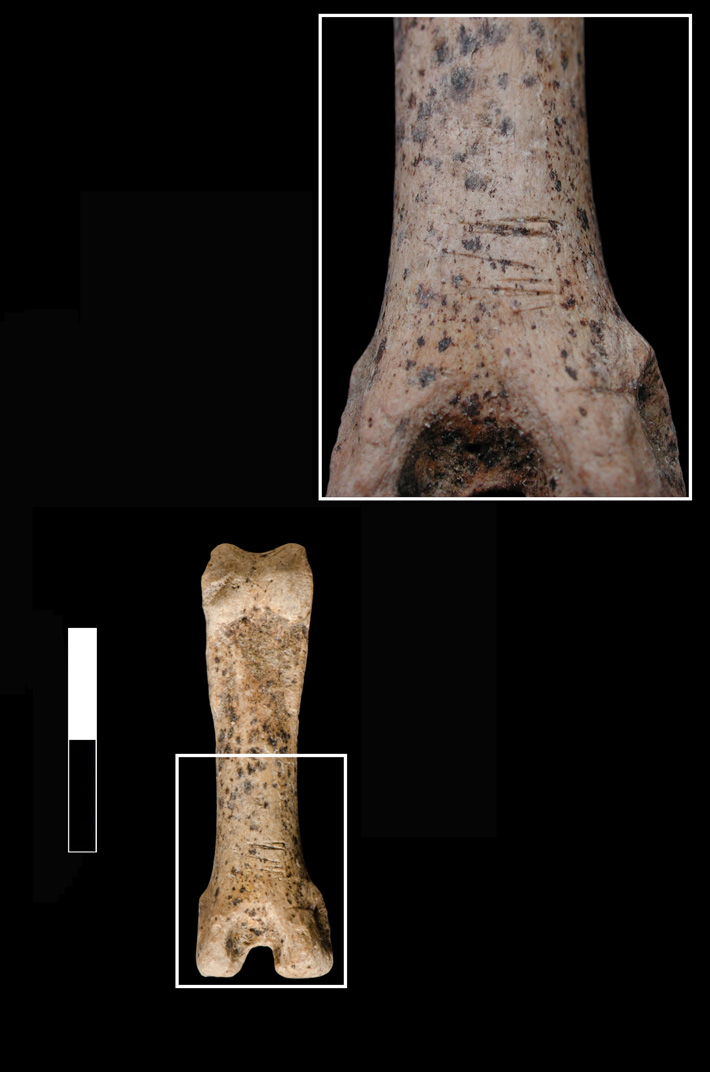
KRAKÓW, POLAND—Science in Poland reports that Piotr Wojtal of the Polish Academy of Sciences identified butchered wolf bones among a collection of 30,000-year-old flint and bone artifacts and tools unearthed in the Czech Republic. “Until now, scientists were convinced that wolves and other predators were the target of hunting primarily because of their skins, and certainly not as a source of meat,” Wojtal said. Some of the marks on the wolf bones were the result of removing the skin, he explained, but other marks are only associated with dividing a carcass into portions.

Read the rest of this article...

Monday, May 25, 2020

Neolithic Skeleton “Lovingly Buried” in Fetal Position


A “lovingly” buried Neolithic skeleton is offering archaeologists new insights on burial practices 4,500-years ago.

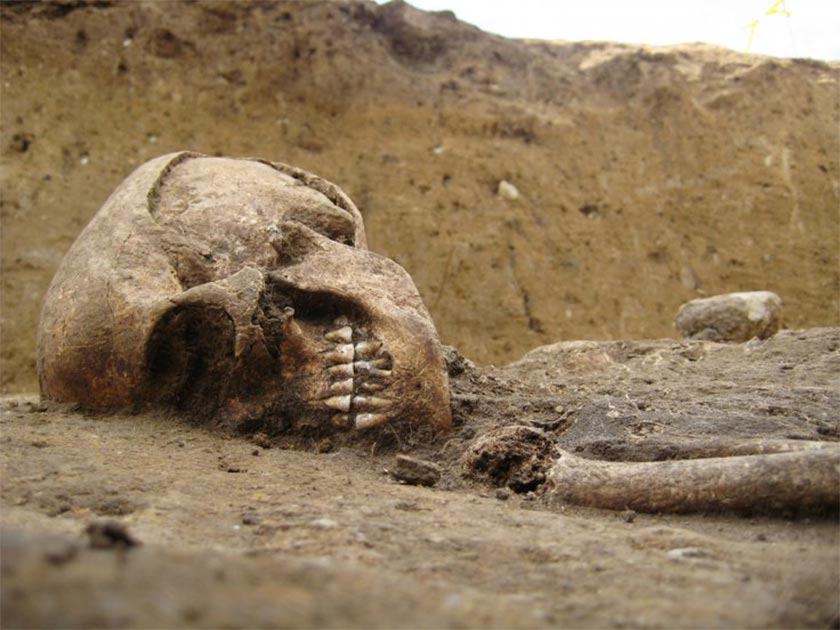
The gravesite is located in the idyllic German countryside at Uckermark, a rural county around 60 miles (96.56 km) northeast of Berlin. It contained the remains of a woman who had been carefully buried in a north-facing fetal position with her back to the Sun. Because bodies found in other graves across Neolithic Europe have been found in this position, the archaeologists suspect this was possibly a shared burial practice that they say reached as far away as Scotland.

A Woman “Lovingly Laid” in The Fetal Position
A Newsweek article explains how Dr. Philipp Roskoschinski and a team of archaeologists from the private archaeology company Archaeros discovered the roughly 4,500-year-old remains of the woman. He believes the Neolithic skeleton was buried in a simple but “lovingly made gravesite.” And Roskoschinski said in an interview with Tagespeigel he has “never found anything like this.”

Read the rest of this article...

Sunday, May 24, 2020

A 5,000-year-old mystery: recording rock art within the Dolmen de Soto

The Dolmen de Soto from above, showing both the low earth mound covering the megalithic corridor, and the reconstructed entrance way beside the portal, which provides access to the interior. (Image: Dron Pelayo)

Investigating an isolated Neolithic tomb in Andalucía has revealed a new dimension to its rock art. What can this tell us about life as well as death in a remarkable megalithic monument? George Nash, Sara Garcês, José Julio García Arranz, and Hipólito Collado share the secrets of the Dolmen de Soto.

The origins of Neolithic tomb building in Europe are difficult to pinpoint. We know that the Neolithic Revolution occurred in the ‘Fertile Crescent’ of the Middle East around 10,000 BC, but the development and spread of tomb architecture across Europe is less clear. We can say that during the 5th and 4th millennium BC, passage graves became dominant, probably after emerging from a tomb style popular in eastern Europe. 

Read the rest of this article...

Friday, May 22, 2020

Migration patterns reveal an Eden for ancient humans and animals

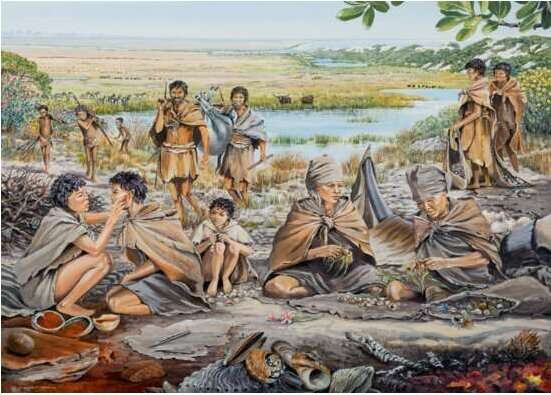
An artist rendering of the Palaeo-Agulhas Plain during the Pleistocene.

Home to some of the richest evidence for the behavior and culture of the earliest clearly modern humans, the submerged shelf called the Palaeo-Agulhas Plain (PAP) once formed its own ecosystem. Co-author Curtis Marean, Ph.D., Arizona State University, has worked with teams of scientists for decades to reconstruct the locale back into the Pleistocene, the time period that spanned from 2.6 million to 11,700 years ago.

In this study, the researchers looked specifically at antelope migratory patterns at Pinnacle Point. This series of cave sites that sit on the modern South African coast offers archaeological materials from humans who were living and hunting there back to 170,000 years ago.

"During glacial cycles, the coastal shelf was exposed," said Hodgkins. "There would have been a huge amount of land in front of the cave sites. We thought it was likely that humans and carnivores were hunting animals as they migrated east and west over the exposed shelve."

Read the rest of this article...

Archaeologists uncover Iron Age tomb of woman adorned with jewellry

Archaeologists are planning to excavate the tomb along with the woman's remains. (Inrap)

The tomb of a woman dating back about 2700 years has been uncovered by archaeologists in France.
The woman, who is believed to have lived at the start of the Iron Age in the eighth century BC, was found adorned with jewelry which had been preserved over millennia.

Several hectares of the ancient grave site on the bank of the Rhone river in eastern France is being excavated by experts from the archaeological research organisation Inrap.

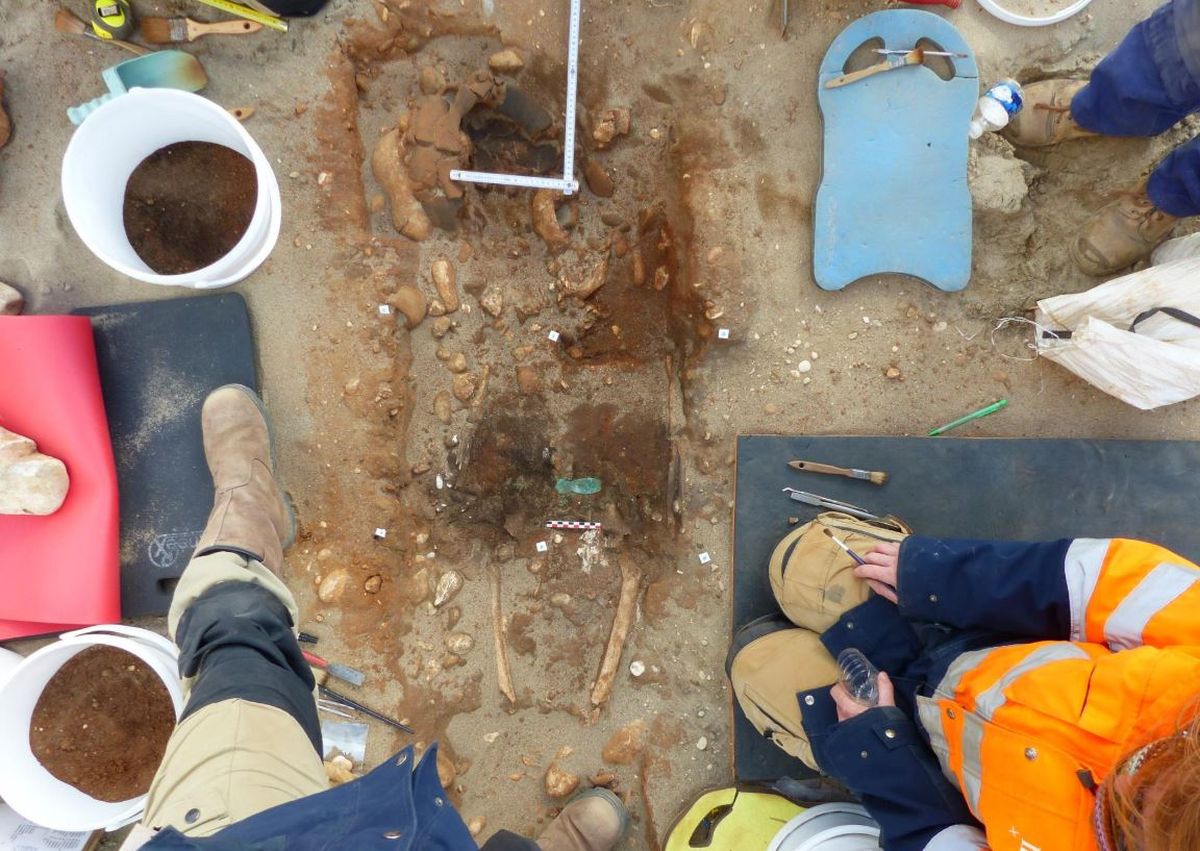
"Inside the coffin, the deceased, a middle-aged woman, was laid on her back, arms beside her body, dressed and adorned with her jewelry," the archaeologists wrote in a statement about the discovery.

Read the rest of this article...

European Ice Age Hunters Ate Wolf Meat


New study reveals that hunters during the Palaeolithic (approx. 30,000 years ago) ate wolf meat.
Archaeologists excavating in the Czech Republic recently discovered thousands of pieces of flint, tools and decorative items manufactured from reindeer bone, artic fox teeth, mammoth tusks, in addition to thousands of animal bone fragments amongst the remains of an ancient Palaeolithic settlement.

The animal remains were examined by Dr Piotr Wojtal from the Institute of Systematics and Evolution of Animals of the Polish Academy of Sciences in Kraków who said: “Until now, scientists were convinced that wolves and other predators were the targets of hunting primarily because of their skins, and certainly not as a source of meat.”

Read the rest of this article...

Homo Sapiens caused Neanderthal extinction according to computer models

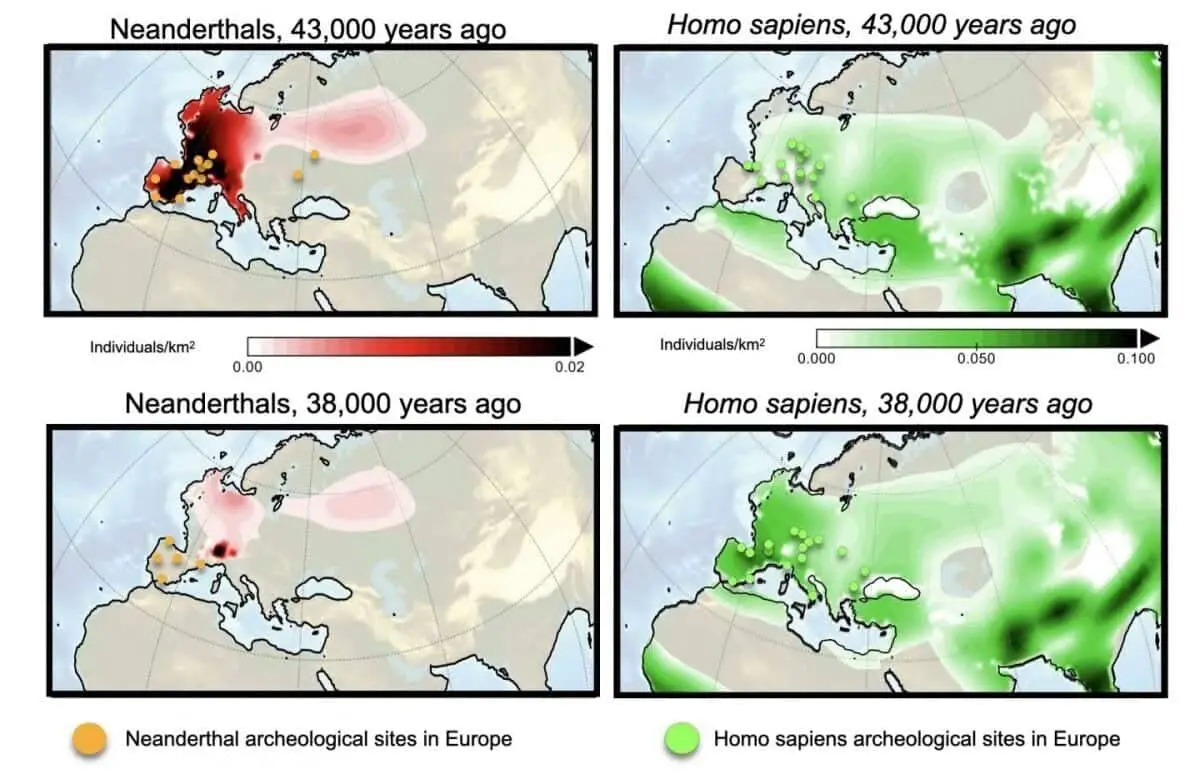
Using computer models, climate scientists from the IBS Centre suggests that Homo Sapiens are responsible for the demise of the Neanderthal between 43-38 thousand years ago.
Previous extinction theories had proposed that Neanderthal extinction was caused by climatic events or interbreeding, but the new computer simulations quantified which processes played a major role in the collapse of Neanderthal populations using mathematical models that can realistically simulate the migration of Neanderthals and Homo sapiens, their interactions, competition and interbreeding in a changing climatic environment. Such models did not exist previously.

Neanderthals lived in Eurasia for at least 300,000 years. Then, around 43 to 38 thousand years ago they quickly disappeared off the face of the earth, leaving only weak genetic traces in present-day Homo sapiens populations. It is well established that their extinction coincided with a period of rapidly fluctuating climatic conditions, as well as with the arrival of Homo sapiens in Europe. However, determining which of these factors was the dominant cause, has remained one of the biggest challenges of evolutionary anthropology.

Read the rest of this article...

Monday, May 18, 2020

Science Notes – Bridging the gap in London’s prehistory

An aerial view of MOLA archaeologists excavating at Principal Place in Shoreditch – the site of the new Amazon UK HQ. [Image: © MOLA]

Over recent decades, developments in radiocarbon dating techniques have revolutionised our ability to establish the age of archaeological material and to interpret the past (see CA 359). In this month’s Science Notes we will be exploring how, thanks to further advances in this field, ‘the most significant group of Early Neolithic pottery ever uncovered in London’ has shed intriguing light on the capital’s prehistoric past.

Neolithic finds from central London are extremely rare, previously limited to a few individual fragments of pottery and stone axes – and so the discovery of almost 6.5kg of ceramics of this period, comprising 436 fragments from at least 24 separate vessels, was always going to be an important find.

Discovered by MOLA (Museum of London Archaeology) during excavation on behalf of Brookfield Properties at Principal Place in Shoreditch – the location of the new Amazon UK HQ – the pot sherds have now been analysed using a brand-new radiocarbon dating technique on traces of milk fats extracted from their surfaces.

Read the rest of this article...

Sunday, May 17, 2020

Drowned Paleo-Agulhas Plain was an Eden for Early humans


The Paleo-Agulhas Plain in South Africa had diverse, verdant ecosystems and abundant game for early Humans.
In contrast to ice age environments elsewhere on Earth, it was a lush environment with a mild climate that disappeared under rising sea levels around 11,500 years ago.

An interdisciplinary, international team of scientists has now brought this pleasant cradle of humankind back to life in a special collection of articles that reconstruct the paleoecology of the Paleo-Agulhas Plain, a now-drowned landscape on the southern tip of Africa that was high and dry during glacial phases of the last 2 million years.

“These Pleistocene glacial periods would have presented a very different resource landscape for early modern human hunter-gatherers than the landscape found in modern Cape coastal lowlands, and may have been instrumental in shaping the evolution of early modern humans,” said Janet Franklin, a distinguished professor of biogeography in the department of Botany and Plant Sciences at UC Riverside, an associate member of the African Centre for Coastal Palaeoscience at Nelson Mandela University in South Africa, and co-author of several of the papers.

Read the rest of this article...

Thursday, May 14, 2020

Study suggests remnants of human migration paths exist underwater at 'choke points'

Artist’s re-creation of the first human migration to North America from across the Bering Sea
[Credit: DEA Picture Library/Deagostini/Getty Images]

Today, sea-level rise is a great concern of humanity as climate change warms the planet and melts ice sheets in Greenland and Antarctica. Indeed, great coastal cities around the world like Miami and New Orleans could be underwater later in this century. But oceans have been rising for thousands of years, and this isn't the first time they have claimed land once settled by people. A new paper published in Geographical Review shows evidence vital to understanding human prehistory beneath the seas in places that were dry during the Last Glacial Maximum. Indeed, this paper informs one of the "hottest mysteries" in science: the debate over when the first Asians peopled North America.

The researchers behind the paper studied "choke points" -- narrow land corridors, called isthmuses but often better known for the canals that cross them, or constricted ocean passages, called straits. Typically isthmuses would have been wider 20,000 years ago due to lower sea levels, and some straits did not even exist back then.

"We looked at nine global choke points -- Bering Strait, Isthmus of Panama, Bosporus and Dardanelles, Strait of Gibraltar, straits of Sicily and Messina, Isthmus of Suez, Bab al Mandab, Strait of Hormuz and Strait of Malacca -- to see what each was like 20,000 years ago when more water was tied up in ice sheets and glaciers," said lead author Jerry Dobson, professor emeritus of geography at the University of Kansas and president emeritus of the American Geographical Society. "During the Last Glacial Maximum, the ocean surface was 410 feet lower than today. So, worldwide the amount of land that has been lost since the glaciers melted is equivalent to South America."

Read the rest of this article...

Ancient Tap O' Noth hillfort in Aberdeenshire one of 'largest ever'

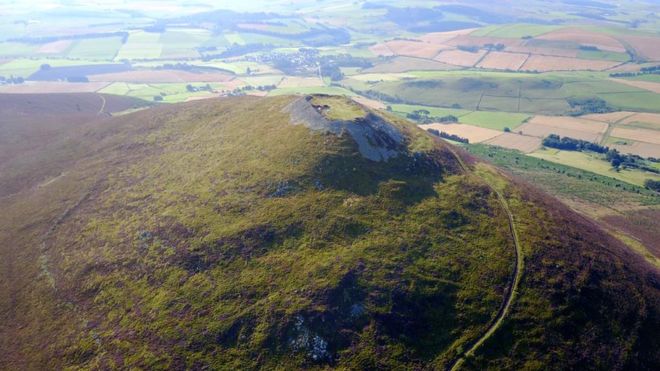
Tap O' Noth overlooks Rhynie
UNIVERSITY OF ABERDEEN

A hillfort in Aberdeenshire is one of the largest ancient settlements ever discovered in Scotland, researchers have said.

University of Aberdeen archaeologists say 4,000 people may have lived in more than 800 huts perched high on the Tap O' Noth near Rhynie.

Many had thought it dated from the Bronze or Iron Age.

The team said carbon dating suggested it was likely to be Pictish, dating back as far as the third century AD.

They believe at its height it may have rivalled the largest known post-Roman settlements in Europe.

Archaeologists from the university have conducted extensive fieldwork in the surrounding area since 2011.

Read the rest of this article...

6000 Jahre altes Gerstenmalz vom Bodensee

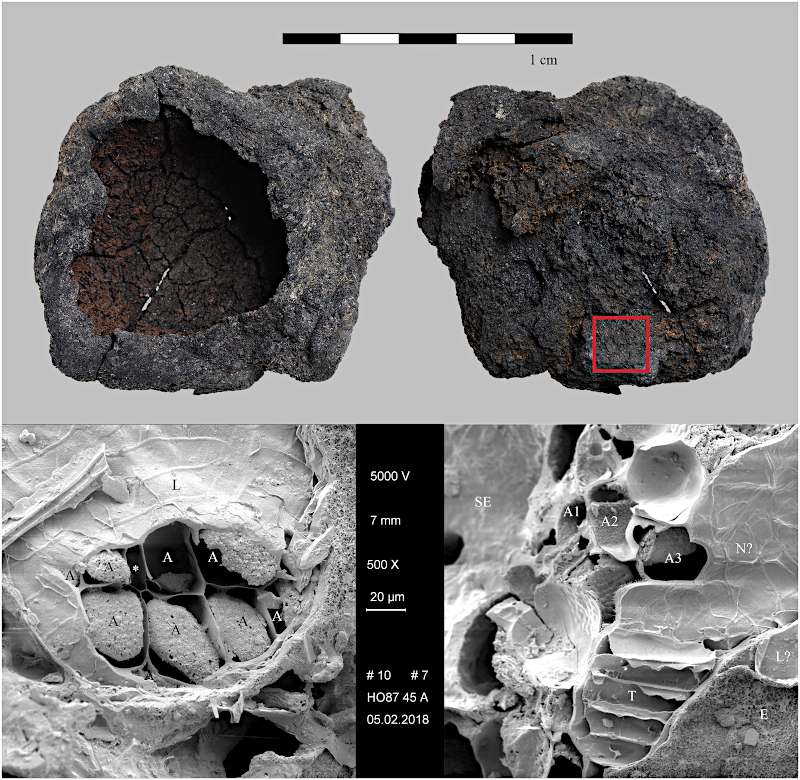
Ein schalenförmiges verkohltes Getreideprodukt von Hornstaad-Hörnle. (Abb: Naturalis Biodiversity Center, Leiden / L. Kubiak-Martens [https://doi.org/10.1371/journal.pone.0231696.g009])

Stammt das älteste Bier Europas aus Baden-Württemberg?

Einem internationalen Forscherteam unter der Leitung des Archäobotanikers Dr. Andreas Heiss (Österreichische Akademie der Wissenschaften) ist es gelungen, gemälzte Gerste in prähistorischen Gefäßen aus Pfahlbausiedlungen am Bodensee nachzuweisen. Die Forschungsergebnisse bestätigen, dass malzhaltige Getränke bereits im 4. Jahrtausend vor Christus in Baden-Württemberg zubereitet wurden.

Bisher galten keltische Fundstellen des 5. bis 4. Jahrhunderts vor Christus, ebenso im heutigen Baden-Württemberg, als älteste Brauereien Mitteleuropas. Weltweit stammen die ältesten Brauereinachweise bisher aus Israel mit Datierungen aus dem 12. Jahrtausend vor Christus.

Read the rest of this article...

Wednesday, May 13, 2020

Coronavirus: Lockdown boost for archaeology as amateurs uncover Roman remains

The technology can 'strip away' vegetation and modern features to reveal what is underneath

Self-isolating volunteers analyse aerial survey maps to reveal ancient roads and settlements.

Lockdown has given archaeology an unexpected boost with volunteers finding previously unrecorded Roman, prehistoric and medieval sites from the comfort of their own homes.

In a project coordinated by a team at Exeter University, enthusiastic amateurs have been analysing images derived from Lidar (light detection and ranging) data - laser technology used during aerial surveys to produce highly detailed topographical maps.

Modern vegetation and buildings can be digitally removed, allowing archaeologists to look at the shape of the land surface to find the remains of archaeological earthworks.

The data is being systematically examined and cross-referenced with records of known archaeology and historic maps, meaning the total of new discoveries regularly changes.

Read the rest of this article...

Archeologists discover prehistoric sites – while working from home

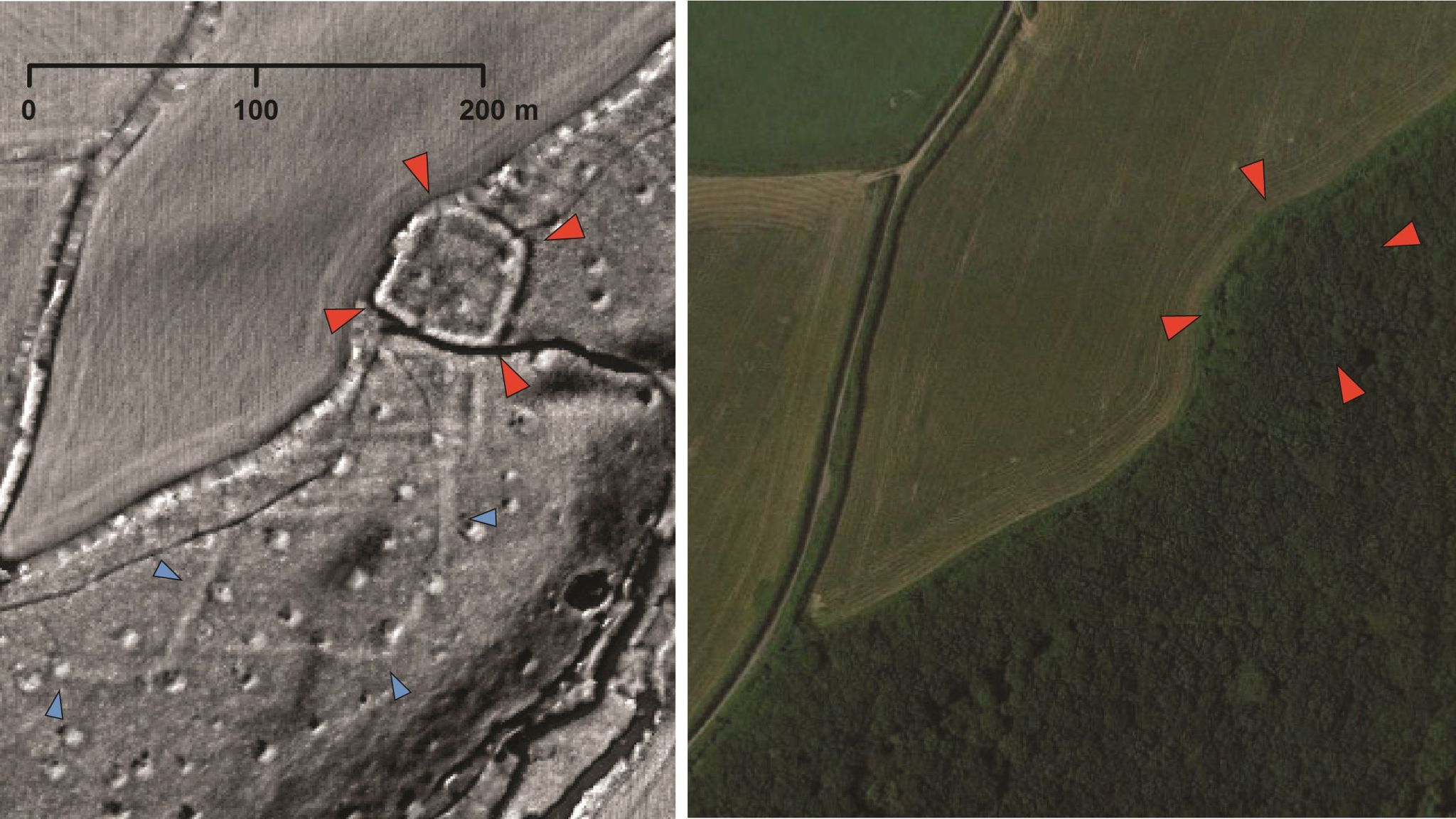
A probable Iron Age or Roman enclosed settlement (indicated by red arrows) and an associated field system (inidicated by blue arrows), which is hidden beneath woodland but has been revealed by volunteers using light detection and ranging (LiDAR) data during lockdown. (Credits: PA)

Dozens of previously-unrecorded Roman, prehistoric and medieval sites have been discovered by archaeology volunteers based at home during the coronavirus lockdown. Digging may be on hold due to the pandemic, but the team have found parts of two Roman roads, around 30 prehistoric or Roman large embanked settlement enclosures, and some 20 prehistoric burial mounds, as well as the remains of hundreds of medieval farms, field systems and quarries. 

Those leading the project believe they will make many more discoveries in the coming weeks. 

The team are analysing images derived from LiDAR (light detection and ranging) data.

Read the rest of this article...

Tuesday, May 12, 2020

Archaeologists find Neolithic quay near Newgrange

The quay was discovered near Newgrange GETTY

The archaeologists told a conference that they had discovered "features that were clearly manmade" under the surface of the River Boyne.

Archaeologists may have uncovered a 5,000-year-old quay on the bottom of the River Boyne, near the famous Newgrange Neolithic passage grave. 

Annalisa Christie, of University College Dublin, and Dr. Kieran Westley, of the University of Ulster, carried out the sonar study at the end of February. 

The scientists made the discovery close to the Brú na Bóinne complex in County Meath, which contains about 100 Neolithic monuments, including the passage graves at Newgrange, Dowth, and Knowth. 

Brú na Bóinne is one of the most important Neolithic sites in the world and it looks as though scientists have made yet another discovery close to the historic area. 

Read the rest of this article...

Humans and Neanderthals 'co-existed in Europe for far longer than thought'

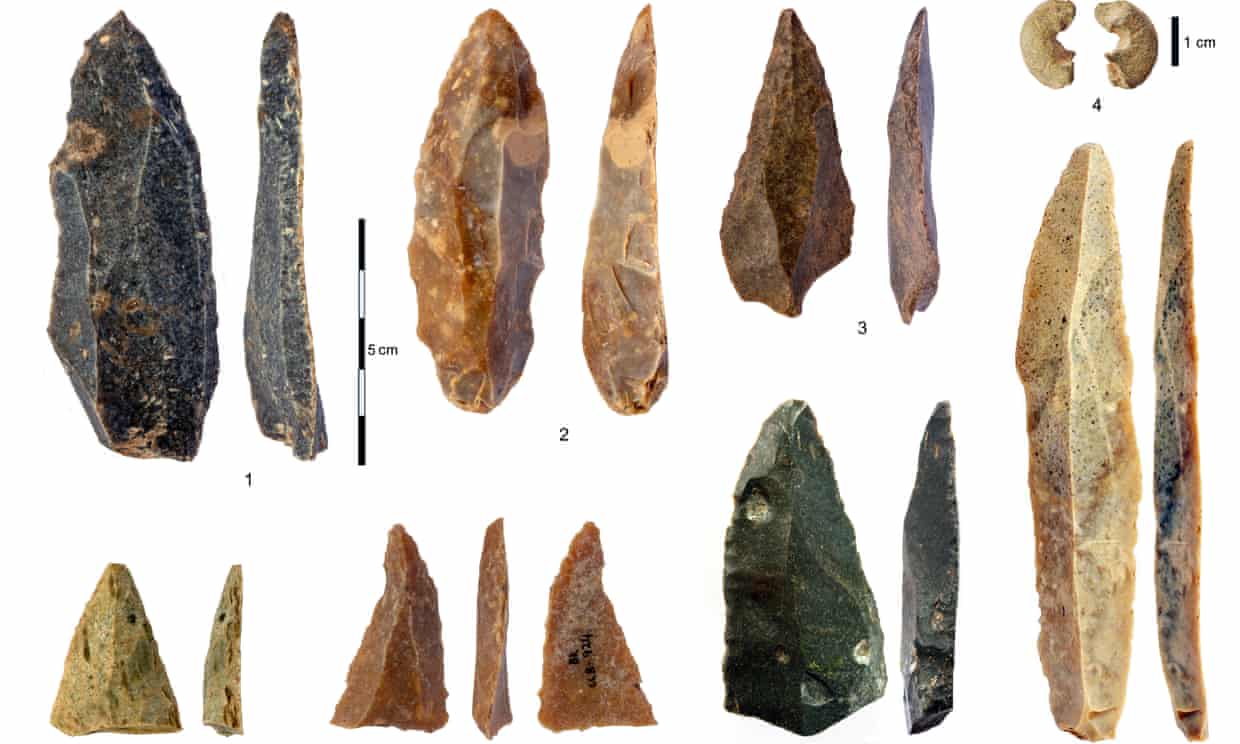
Stone artefacts found at Bacho Kiro cave. Photograph: Tsenka Tsanova/SWNS

Cave objects suggest modern humans and Neanderthals shared continent for several thousand years

Modern humans were present in Europe at least 46,000 years ago, according to new research on objects found in Bulgaria, meaning they overlapped with Neanderthals for far longer than previously thought.

Researchers say remains and tools found at a cave called Bacho Kiro reveal that modern humans and Neanderthals were present at the same time in Europe for several thousand years, giving them ample time for biological and cultural interaction.

“Our work in Bacho Kiro shows there is a time overlap of maybe 8,000 years between the arrival of the first wave of modern humans in eastern Europe and the final extinction of Neanderthals in the far west of Europe,” said Prof Jean-Jacques Hublin, from the Max Planck Institute for Evolutionary Anthropology, a co-author of the research, adding that that was far longer than previously thought. Some scholars have suggested a period of not more than 3,000 years.

Read the rest of this article...

Monday, May 11, 2020

1,700-year-old board game found in Norwegian burial mound

The burial cairn site [Credit: UiB]

This April, the University Museum of Bergen, excavated the remains of a small Early Iron Age grave cairn at Ytre Fosse, Western Norway. The location is spectacular, overlooking Alversund and the “Indre Skipsleia”, a part of the old shipping lane, Nordvegen, – which gave Norway its name. The whole area is dotted with monumental grave mounds on both sides of Alversund, symbols of an Iron Age political landscape and the power and control of goods and travels along the Norwegian coast. 

The grave turned out to be a cremation patch containing 3 ceramic pots, a bronze pin, burnt glass and 18 gaming pieces and an elongated dice. The dice is of a very rare type, exclusive for Roman Iron Age (AD 1 - 400). In Scandinavia, similar dices are found in the famous Vimose weapon-offering site at Fyn, Denmark.

At Vimose also the gaming board was preserved, giving a unique view into Early Iron Age board games among the Germanic tribes in Scandinavia. Board games, inspired by the Roman game Ludus latrunculorum, seems to have been played amongst the elite in Roman Iron Age Scandinavia. These games are also the forerunner to the more famous Viking Age (AD 750-1050) board game Hnefatafl.

Read the rest of this article...