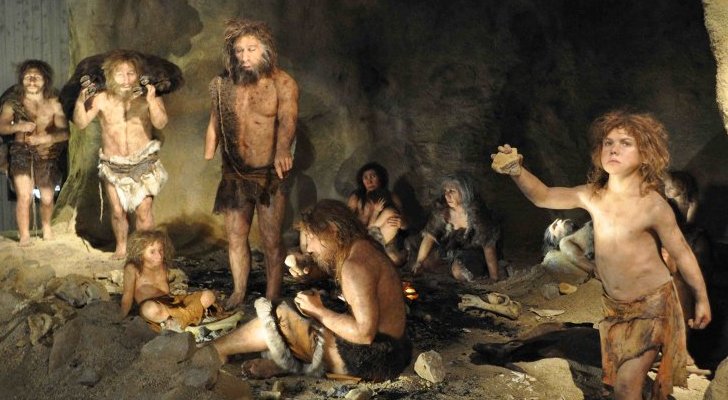
The Prehistoric Archaeology Blog is concerned with news reports featuring Prehistoric period archaeology. If you wish to see news reports for general European archaeology, please go to The Archaeology of Europe Weblog.
Wednesday, July 10, 2013
Chersonesus, Crimea, 2300-Year-Old Massacre
Chersonesus , an ancient Greek colony founded approximately 2,500 years ago in the southwestern part of the Crimean Peninsula, known then as Taurica, was established in the 6th Century BC by settlers from Heraclea Pontica.
“We’ve learned things that have changed our view of what life was like in the Chersonesean countryside, which the Greeks called chora. The city’s rural territory, particularly on the Herakleian and Tarkhankut peninsulas, is incredibly well preserved. The houses of the rural population dating back to about 300 BC lie dotted around the untouched landscape in the form of ruins that are still visible. For instance, in one of the excavated ruins we have found the remains of a whole family. So we’re working on a murder scene dating back 2,300 years,” reports project director Vladimir Stolba, an archaeologist from Aarhus University.
Read the rest of this article...
City quarters from Late Bronze Age revealed
The 2013 field season at the Late Bronze Age harbour city of Hala Sultan Tekke, near Larnaka International Airport, has been completed.. The excavations, which took place for over five weeks during May and June, were conducted under the direction of Professor Peter M. Fischer from the University of Gothenburg, Sweden.
![]() |
| Aerial photograph of the building excavated at the site in 2012 [Credit: Department of Antiquities, Republic of Cyprus] |
Read the rest of this article...
Sunday, July 7, 2013
Neanderthals Had Homes, Returned to Them After Going on Hunting Expeditions
Researchers say our ancestors liked certain caves better than others, considered them their homes
Neanderthals used to have homes to which they returned after going on hunting expeditions, Oxford University and Gibraltar Museum researchers claim.
Granted, their homes would've probably never made it on MTV's “Cribs,” but they were surprisingly clean and tidy, the scientists argue.
While exploring ancient caves in Gibraltar, archaeologists reportedly found that some of them contained more artifacts than others did.
The best explanation for this discovery is that the Neanderthals preferred certain caves to others. These “privileged” caves are the ones believed to have been their homes.
They were both bigger and brighter than the ones Neanderthals only inhabited for short periods of time.
Read the rest of this article...
Neuer alter Löwenmensch
Mit Fragementen aus den Nachgrabungen im Stadel soll die bekannte Figur des »Löwenmenschen« aus dem Lonetal weiter ergänzt werden. Das aktuelle Restaurierungsprojekt wurde am vergangenen Mittwoch der Öffentlichkeit vorgestellt.
Regierungspräsident Johannes Schmalzl präsentierte gemeinsam mit dem Abteilungspräsidenten des im Stuttgarter Regierungspräsidium angesiedelten Landesamtes für Denkmalpflege Prof. Claus Wolf die Restaurierungsarbeiten an einem der ältesten Kunstwerke der Menschheit.
Read the rest of this article...
Friday, July 5, 2013
Barrow Clump 2013: Phil's Round-up Week One
Following on from the fantastic success of the Operation Nightingale excavation at Barrow Clump last summer, the soldiers have returned for a second year. The 2013 excavations will explore new areas of this Bronze Age burial mound and aim to identify the extent of the Saxon cemetery.
Site Director, Phil Andrews has agreed to produce his popular weekly round-ups for the blog again this year, starting with week one below:
Read the rest of this article...Here we go again!A year passes very quickly and we started again at Barrow Clump last week, this time for five weeks until the end of July. Site camp was established, nettles cleared and trees trimmed, whilst the badgers appear to have temporarily vacated the site.
How X-Rays Demystified a 2,500-Year-Old Battle Wound (Op-Ed)
Dr. Helise Coopersmith (left), North Shore-LIJ musculoskeletal radiologist, joins Anagnostis Agelarakis, professor and chair of anthropology at Adelphi University, and Argie Agelarakis, a scientific illustrator, as they examine a 2,500-year-old bone fragment.
CREDIT: North Shore-LIJ Health System.
Dr. Helise Coopersmith is a musculoskeletal and body imaging radiologist for the North Shore-LIJ Health System, assistant professor of radiology at the Hofstra North Shore-LIJ School of Medicine and a member of the Hofstra medical school's admissions committee. She contributed this article to LiveScience's Expert Voices: Op-Ed & Insights.
I have worked as a musculoskeletal radiologist for many years and have seen a wide range of bone injuries. But recently, I found myself for the first time using my X-ray table to look at a 2,500-year-old bone and a piece of an ancient arrow.
Read the rest of this article...
German Society for Pre- and Protohistory hands over petition against funding cuts
The DGUF has today handed over its petition against the cuts and the planned axing of the Federal State funding for archaeology and the preservation of ancient buildings and monuments in North-Rhine Westphalia (NRW) to Carina Gödecke (SPD), President of the NRW Parliament, and Michael Groschek (SPD), Minister for Building, Housing, City Development and Transport. More than 27,000 people signed the petition, including over 13,000 from NRW. This petition is thus the largest collection of signatures ever against cuts in the budget for the preservation of historic monuments in Germany.
![]() |
| Reconstruction of Homo neanderthalensis at Neanderthal Museum, Mettmann, Germany [Credit: Erich Ferdinand/WikiCommons] |
Read the rest of this article...
Tuesday, July 2, 2013
Exhibition opening overshadowed by diplomatic row
The exhibition Bronze Age. Europe without borders. Fourth-first millenia BC opened last Friday on June 21st. The exhibition is one of the most important museum and research projects of Russia and Germany in 2009-2013 and it closes the Year of Germany in Russia. However, the event of the grand opening has been overshadowed by a diplomatic row between Germany and Russia, with Moscow objecting to Angela Merkel’s plan to use her speech to refer to hundreds of German works of art looted by Red Army soldiers after the war.
![]() |
| Golden bowl. One of the items, which were obtained in the result of the Second World War Treasure of Eberswalde [Credit: Pushkin Museum of Fine Arts] |
Read the rest of this article...
Monday, July 1, 2013
Prehistoric cave art in the Dordogne
Caves in the Dordogne's Vézère valley contain some of the oldest artworks known to man. Robin McKie enjoys the visit both below – and above – ground
Off the wall: a close-up view of cave art in the Vallee de la Vezere.
Photograph: Jean-Daniel Sudres/Corbis
At some point in remote prehistory, roughly 12,000 years ago, a group of men and women – no more than half a dozen, scientists believe – crawled into the labyrinth of Rouffignac cavern in the Dordogne's Vézère valley. Once in its deepest recess, they lay on their backs and, in flickering candlelight, started painting on the rock ceiling 3ft above them. More than 60 images of mammoths, horses and ibex were outlined, each animal depicted in simple, confident lines that reveal startling artistic talent.
This is the Great Ceiling of Rouffignac, one of the world's oldest and most beautiful art galleries. We have few clues as to who created it, though it was probably the work of the Cro-Magnons, the first members of Homo sapiens to settle in Europe 45,000 years ago and survivors of the Ice Age that later gripped the continent. Nor do we know why these artists picked such an inaccessible spot to display their genius – though fortunately it can be reached easily today. A tiny electric train runs from Rouffignac's entrance to the Great Ceiling, the floor of which has been lowered to allow visitors to gaze up at its wonders.
Read the rest of this article...
Friday, June 28, 2013
Vandals graffiti Bronze Age standing stone
A Bronze Age standing stone in the Brecon Beacons National Park has been vandalised. The Maen Llia standing stone, a Scheduled Ancient Monument situated between Heol Senni and Ystradfellte, has been defaced, with graffiti daubed on the protected stone.
![]() |
| The Maen Llia standing stone, a Scheduled Ancient Monument situated between Heol Senni and Ystradfellte, has been defaced, with graffiti daubed on the protected stone [Credit: WalesOnline] |
Brecon Beacons National Park Authority is currently working with Cadw, the Welsh Government’s historic environment service, and landowners to arrange for the graffiti to be sensitively removed.
Read the rest of this article...
Thursday, June 27, 2013
Horse Fossil Yields Astonishingly Old Genome—Are Similarly Ancient Human Genomes Next?
Horse fossil dating to around 700,000 years ago has yielded the oldest complete genome yet. Image: D. G. Froese
Researchers have recovered DNA from a nearly 700,000-year-old horse fossil and assembled a draft of the animal’s genome from it. It is the oldest complete genome to date by a long shot–hundreds of thousands of years older than the previous record holder, which came from an archaic human that lived around 80,000 years ago. The genome elucidates the evolution of modern horses and their relatives, and raises the question of whether scientists might someday be able to obtain similarly ancient genomes of human ancestors.
Ludovic Orlando of the University of Copenhagen and his colleagues extracted the DNA from a foot bone found at the site of Thistle Creek in Canada’s Yukon Territory in permafrost dating to between 560,000 and 780,000 years ago, which falls within the so-called early Middle Pleistocene time period. They then mapped the fragments of DNA they obtained against the genome of a modern horse to piece together a draft of the ancient horse’s genome.
Read the rest of this article...
Dig for Iron Age hill fort in Ely, Cardiff
Archaeologists are starting a dig in Cardiff at what is being classed as a significant Iron Age hill fort. Limited trial excavations at the fort in Ely, next to a link road from the M4 in the west of the city, took place last year. Evidence of Iron Age pottery was found along with Bronze Age and Roman activity as well as Norman ringwork.
![]() |
| Above: View of Iron Age hill fort at n Ely, Cardiff; Below: An impression of the Ely hillfort [Credit: Caer Heritage Project] |
Dr Dave Wyatt, a lecturer in early medieval history and community outreach at Cardiff University, is behind the project.
"People have know about it for quite a long time but what's interesting is that no-ones ever thought to research it," he told BBC Radio Wales.
Read the rest of this article...
Origins of human throwing unlocked
Throwing at high speeds is unique to humans and it helped Homo erectus to hunt two millions years ago, scientists have said
Early humans evolved to throw about two millions years ago, according to new research.
Anatomy changes found in the extinct species Homo erectus allowed this ability to evolve.
Archaeological evidence suggests hunting intensified during this time, which scientists now attribute to the ability to throw.
Researchers tell the journal Nature that the ability helped early hunters to evolve and migrate around the globe.
The ability to throw at very high speeds is unique to humans. We can throw much faster than our closest living relative - the chimpanzee - which can only reach speeds of 20mph compared to 90mph that many professional athletes can reach.
To investigate the evolutionary development of the ability to throw, scientists first had to understand the biomechanics of throwing today.
Read the rest of this article...
Wednesday, June 26, 2013
Saving Cleopatra's Needle
'Eye on the Needle' is a documentary about Cleopatra's Needle on London's Embankment. Currently in pre-production, the film is presented by Dr Paul Harrison and directed by Edward Scott-Clarke. This is a short film to compliment our sponsume page (www.sponsume.com/project/eye-needle), which we are using to raise funds for the film.
Watch the video...
Tuesday, June 25, 2013
Dig starts at Iron Age hill fort in Caerau, Cardiff
Archaeologists have begun the first dig at an Iron Age hill fort above the Caerau housing estate in Cardiff.
Experts say it is one of the most significant of its kind in Europe, and re-writes history, proving the area was an important stronghold long before the Romans came.
Nick Palit went to view the dig and spoke to Dr Oliver Davies from Cardiff University.
Watch the video...
Monday, June 24, 2013
SHELLFISH AND THE RISE OF MODERN HUMAN BEHAVIOUR
Artefacts from the African Middle Stone Age (MSA; ∼200 to ∼50 ka), provide us with the first glimpses of modern human art and culture. Approximately 50 ka, one or more subgroups of modern humans expanded from Africa to populate the rest of the world.
Significant behavioural change accompanied this expansion, and archaeologists commonly seek its roots during this period. Recognizable art objects and “jewellery” become common only in sites that postdate the MSA in Africa and Eurasia, but some MSA sites contain possible precursors, including abstractly incised fragments of ochre and perforated mollusc shells interpreted as beads.
Was population growth the driver of change?
Researchers had previously theorised that it was an increase in population that drove behavioural innovations which in turn led to the creation of these artefacts and eventually, the expansion out of Africa. However, by examining mollusc shells from Stone Age sites, Richard Klein of Stanford University and Teresa Steele of University of California, Davis, have determined that a significant population increase did not occur until the Later Stone Age (LSA), after the out of Africa migration had already begun. Their research appears in the June 2013 edition of the Proceedings of the National Academy of Sciences.
Read the rest of this article...
Thursday, June 20, 2013
Snail genes reveals human migration to Ireland
A common garden snail gives insight into human migration to Ireland
A genetic similarity between snail fossils found in Ireland and the Eastern Pyrenees suggests humans migrated from southern Europe to Ireland 8,000 years ago.
The slimy creatures in Ireland today are almost identical to snails in Southern France and Northern Spain.
Whether an accidental visitor on a ship or brought along as a snack, the boat they were carried on did not appear to stop in Britain.
The findings are published in PLOS One.
As Britain emerged from the end of the last Ice Age about 10,000 years ago, sea levels rose and landslides are thought to have triggered a great tsunami. Britain was transformed into an island, separated from mainland Europe and Ireland.
Read the rest of this article...
Tuesday, June 18, 2013
Heritage & Science: Working Together in the CARE of Rock Art
Ancient rock art is under threat due to climate change, and a project has been launched to develop methods to enable everyone to contribute to its protection. The CARE project is a collaboration between heritage and science research interests at Newcastle University and Queen's University Belfast. Its primary objective is to co-produce a user-friendly, non-intrusive Condition Assessment Risk Evaluation (CARE) toolkit for gathering and organising information essential for the long-term safeguarding of ancient rock art that exists out in the open.
Heritage and science working together ensures that heritage management resources and techniques are underpinned by solid scientific research so that conservation and management approaches are more effective. In the case of open-air rock art, or possibly any open-air stone structure, this means that the rock can be analysed in order to discern those environmental factors that are the cause of decay, as well as the influence of factors such as climate change. Scientific research has been carried out to determine the major risk factors for open air rock art and further field work will be undertaken throughout the project's life span to firm up this scientific evidence.
Read the rest of this article...
Monday, June 17, 2013
Serbia: ancient tombs discovered from 2,500 years ago
BELGRADE, JUNE 12 - The skeletel remains of ancient warriors with spears and daggers have been uncovered in an archeological site during the construction of the Corridor 10 highway project in south-east Serbia.
According to experts the remains date back 2,500 years and were found in the ancient district of Pirot named Suburbium where the ancient Roman road, Via Militaris, headed to what is now the border of modern day Bulgaria.
''We have found three skeletal remains of warriors with spears, daggers and bronze ornaments, and decorations of various kinds,'' said Mirjana Blagojevic, archeologist from Serbia's institute for the protection of cultural patrimony.
Predrag Pejic, archeologist from the Ponisavlje Museum of Pirot, said this was a very important discovery.
Read the rest of this article...
The Iceman Suffered Brain Damage Before Death
An injury to the head, not an arrow wound, may have killed Ötzi the Iceman, the 5,300-year-old mummy found in the Italian Alps, says a new paleoproteomic study into the brain of Europe’s oldest natural human mummy.
The protein investigation appears to support a 2007 research into the mummy’s brain. The study pointed to a cerebral trauma as the cause of death.
At that time, the research relied on a CAT scan of the mummy’s brain, which showed two dark-colored areas at the back of the cerebrum. The injury added to the already known arrowhead wound on the shoulder and wounds on the hand.
3,500-year-old house unearthed in central Turkey
The remains of a house dating back 3,500 years have been uncovered during excavations in the central Anatolian province of Kırıkkale's Karakeçili district.
![]() |
| Japanese archaeologist Kimiyashi Matsumura explains the recent finds to Turkish officials [Credit: HaberMonitor] |
Stone houses were discovered during the excavations. Matsumura told reporters this week that the ancient settlements at the site date back to the Hittite civilization. “This is part of one of their big cities. Kızılırmak [River] passes by it. All kinds of commercial routes were built around Kızılırmak at the time. This city was established along a very important commercial route. I believe this research will culminate in important results,” the archaeologist said.
Read the rest of this article...
Ötzis »dunkle« Geheimnisse
Der Querschnitt durch Ötzis Schädel zeigt das gut erhaltene Gehirn. Markiert sind die Stellen der Probenentnahme. (Quelle: Krankenhaus Bozen/Abteilung für Radiodiagnostik)
Aus einer stecknadelkopfgroßen Gehirnprobe der weltberühmten Gletscherleiche konnte ein Forscherteam Proteine extrahieren und untersuchen. Die Ergebnisse untermauern die Vermutung, dass Ötzi unmittelbar vor seinem Tod eine Gehirnverletzung erlitt.
Nach der Entschlüsselung von Ötzis Genom, seines Erbgutes, gelang nun einem Forscherteam der Europäischen Akademie in Bozen (EURAC), der Universität des Saarlandes, der Christian-Albrechts-Universität zu Kiel und anderen Partnern ein weiterer Meilenstein in der Mumienforschung: Aus einer stecknadelkopfgroßen Gehirnprobe der weltberühmten Gletscherleiche konnte das Team Proteine extrahieren und untersuchen und so weitere Hinweise auf eine angebliche Gehirnverletzung Ötzis erhalten.
Read the rest of this article...
Tuesday, June 11, 2013
Iceman Mummy Suffered Head Blow Before Death
Ötzi the Iceman, Europe's oldest mummy, likely suffered a head injury before he died roughly 5,300 years ago, according to a new protein analysis of his brain tissue.
Ever since a pair of hikers stumbled upon his astonishingly well-preserved frozen body in the Alps in 1991, Ötzi has become one of the most-studied ancient human specimens. His face, last meal, clothing and genome have been reconstructed — all contributing to a picture of Ötzi as a 45-year-old, hide-wearing, tattooed agriculturalistwho was a native of Central Europe and suffered from heart disease, joint pain, tooth decay and probably Lyme disease before he died.
None of those conditions, however, directly led to his demise. A wound reveals Ötzi was hit in the shoulder with a deadly artery-piercing arrow, and an undigested meal in the Iceman's stomach suggests he was ambushed, researchers say. [Mummy Melodrama: Top 9 Secrets About Otzi the Iceman]
A few years ago, a CAT scan showed dark spots at the back of the mummy's cerebrum, indicating Ötzi also suffered a blow to the head that knocked his brain against the back of his skull during the fatal attack.
Monday, June 10, 2013
Prehistoric henge unearthed in Kent
An “incredible” prehistoric henge has been unearthed during an archeological dig in Sittingbourne. The Bronze Age find at the Meads in Sonora Fields is the first of its kind to be confirmed and excavated in Swale.
![]() |
| An aerial view of the site [Credit: Canterbury Archaeological Trust] |
Dr John Hammond, a specialist in prehistory at Canterbury Archeological Trust, which carried out the work, said: “This is an incredibly important site. It’s the second confirmed henge monument to be found in Kent [the first was in Ringlemere near Sandwich] and dates back to the period of Stone Henge. It’s incredibly exciting and we look forward to finding out more about how our ancestors lived 5,000 years ago. At the moment it’s a site of regional importance, but in two years’ time we could be talking about one of national importance.”
Read the rest of this article...
Friday, June 7, 2013
Neanderthal clues to cancer origins
A Neanderthal living 120,000 years ago had a cancer that is common today, according to a fossil study.
A fossilised Neanderthal rib found in a shallow cave at Krapina, Croatia, shows signs of a bone tumour.
The discovery is the oldest evidence yet of a tumour in the human fossil record, say US scientists.
The research, published in the journal PLOS One, gives clues to the complex history of cancer in humans.
Read the rest of the article...
Tuesday, June 4, 2013
Archaeologists find evidence French winemaking had roots in Italy
The earliest evidence of wine in France suggests that it came from Italy, and that it was mixed with basil, thyme and other herbs, according to new research.
This early wine may have been used as medicine, and likely was imbibed by the wealthy and powerful before eventually becoming a popular beverage enjoyed by the masses, researchers said.
The artefacts found at the French port site of Lattara, near the southern city of Montpellier, suggest that winemaking took root in France as early as 500 BC, as a result of libations and traditions introduced by the ancient Etruscans in what is now Italy.
The analysis in the US journal the Proceedings of the National Academy of Sciences is based on ancient wine containers and a limestone press brought by seafaring Etruscan travellers.
3000-year-old dolmens throw light on last rites
In a discovery that is expected to throw light on burial or funeral practices in the Southern parts of the state in the pre-historic era, a group of archaeologists on Sunday found four dolmens (portal tombs) that are believed to be more than 3,000 years old at Amairkaradu near the Western Ghats in Palani.
![]() |
| The site where four 3,000-year-old dolmens were found by an archaeological team near the Western Ghats, close to Palani in Dindigul district, on Sunday [Credit: Indian Express] |
“For the past five months, we found many inscriptions and stone structures in Palani,” Narayanamoorthy affirmed. He explained that the dolmens would help archaeologists understand ancient funeral rites that had long existed in Tamil Nadu.
Read the rest of this article...
New Biomolecular Archaeological Evidence Points to the Beginnings of Viniculture in France
This is an ancient pressing platform from Lattara, seen from above. Note the spout for drawing off a liquid. It was raised off the courtyard floor by four stones. Masses of grape remains were found nearby. (Credit: Photograph courtesy of Michael Py, copyright l'Unité de Fouilles et de Recherches Archéologiques de Lattes.)
France is renowned the world over as a leader in the crafts of viticulture and winemaking -- but the beginnings of French viniculture have been largely unknown, until now.
Imported ancient Etruscan amphoras and a limestone press platform, discovered at the ancient port site of Lattara in southern France, have provided the earliest known biomolecular archaeological evidence of grape wine and winemaking -- and point to the beginnings of a Celtic or Gallic vinicultural industry in France circa 500-400 BCE. Details of the discovery are published as "The Beginning of Viniculture in France" in the June 3, 2013 issue of Proceedings of the National Academy of Sciences (PNAS). Dr. Patrick McGovern, Director of the Biomolecular Archaeology Laboratory at the University of Pennsylvania Museum of Archaeology and Anthropology and author of Ancient Wine: The Search for the Origins of Viniculture (Princeton University Press, 2006) is the lead author on the paper, which was researched and written in collaboration with colleagues from France and the United States.
Read the rest of this article...
Bronze Age boats 'more sophisticated' than assumed
Conservation work has started on eight preserved and extremely rare Bronze Age log boats excavated from a brick manufacturing clay quarry near Peterborough.
The 3,500-year-old boats were discovered in 2011 and will be conserved using techniques pioneered for the Mary Rose.
Jo Black went to meet some of the people behind the project.
Watch the video...Peterborough Bronze Age boats conservation begins
Eight 4,000-year-old boats found in a quarry in Cambridgeshire are being preserved with the same techniques used on the Mary Rose Tudor warship.
The vessels were discovered by archaeologists as they excavated a section of a quarry at Must Farm near Peterborough in 2011.
The boats are being kept in cold storage at Flag Fen, where they will be sprayed with a special wax.
The two-year project will stop the ancient timbers from degrading.
Read the rest of this article...
Preserving a piece of history
Eight Bronze Age wooden boats discovered in a quarry in Peterborough are now being conserved at the city's Flag Fen archaeological centre.
The 4,000 year old vessels are being kept cold and wet to stop them from deteriorating.
The boats are being treated with the same chemical process that preserved the Tudor warship, the Mary Rose.
Read the rest of this article...
Sunday, June 2, 2013
How prehistoric people expressed creativity and identity
Research by archaeologists at the University of Southampton and the Natural History Museum Vienna will be showcased in London at a special prehistoric fashion show event – staged as part of an international Humanities festival, ‘The Time and the Place’.
Clothing and jewellery displayed on the catwalk will demonstrate findings of a three-year collaborative research project called ‘Creativity and Craft Production in Middle and Late Bronze Age Europe’ (CinBA).
Making the leap
The project explores how prehistoric people dressed and expressed creativity and identity through pottery, metalwork and textiles during the period 1800-500 BC.
University of Southampton archaeologist Dr Jo Sofaer, who is leading CinBA, says: “I’m interested in finding out what drove Bronze Age people to make the leap from clothing which was purely functional – to using clothes, along with metalwork and accessories, as a form of expression.
“It is well understood that the Bronze Age saw huge advances in techniques to produce clothes, pottery and metal objects, but the wealth of creativity employed when making these goods is little recognised or researched.
“The clothing collections we’ll be exhibiting at the fashion show demonstrate the intricate weaves, patterns and striking colours prehistoric people used in their dress.”
Read the rest of this article...
Ape-like feet 'found in study of museum visitors'
Bonobos have bendy feet to help them grip branches
Scientists have discovered that about one in thirteen people have flexible ape-like feet.
A team studied the feet of 398 visitors to the Boston Museum of Science.
The results show differences in foot bone structure similar to those seen in fossils of a member of the human lineage from two million years ago.
It is hoped the research, published in the American Journal of Physical Anthropology, will establish how that creature moved.
Read the rest of this article...
Subscribe to:
Posts (Atom)