The Prehistoric Archaeology Blog is concerned with news reports featuring Prehistoric period archaeology. If you wish to see news reports for general European archaeology, please go to The Archaeology of Europe Weblog.
Monday, May 7, 2018
Scientists Confirm Earliest Use of Fire and Oldest Stone Handaxe in Europe
In a recently published paper* in the journal, Historical Biology, researchers report confirmation that sediments bearing early human cultural remains in the Cueva Negra del Estrecho del Río Quípar rockshelter in southeastern Spain are dated to over 800,000 years ago. The sediments include an Acheulean style stone handaxe and evidence for the use of fire within the rockshelter.
“We regard its age as quite likely between 865,000 and 810,000 years ago,” said Michael Walker of Spain’s Murcia University, a lead researcher on Cueva Negra.
“[Arguably] Until now hand-axes in Europe have not been recorded from before 500,000 years ago,” said Walker. Moreover, he adds, “the evidence of combustion [use of fire] is also the oldest anywhere outside Africa.”
Read the rest of this article...
Stone Age settlement found in the middle of Copenhagen
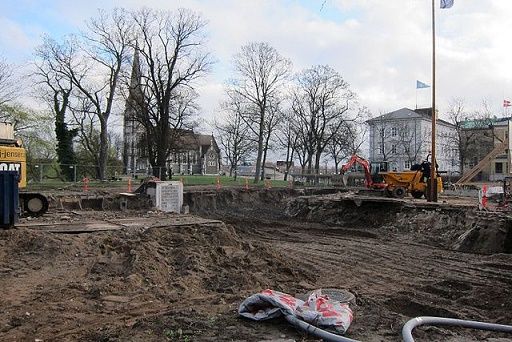
Traces of Copenhagen’s Stone Age past were found under the resistance museum just opposite the Anglican church (photo: Henrik Lundbak, Nationalmuseet)
Archaeologists from the Museum of Copenhagen have made a rather sensational discovery: evidence of a settlement estimated to be around 7,000 years old.
During the building work for the new museum of Danish resistance at Kastellet, flint arrowheads, animal bones and even a couple of human bones have come to light, a municipal press release reveals.
“Finding a Stone Age settlement is special because it reveals the history of the area long before it became Copenhagen,” said the deputy mayor for culture and leisure, Niko Grünfeld.
Read the rest of this article...
Iron Age finds to go on display in Alderney
A display of Iron Age finds that were dug up in Alderney are going on display in the island.
Guernsey Museums is also heading back to the island in July to carry out three archaeological excavations at the Nunnery, a Roman gate and a cemetery.
Dr Jason Monaghan, head of heritage services at Guernsey Museums, said the Iron Age finds were of a "really high quality for such a small place".
"This must mean it was an important place - we think the trade routes may have come right past Alderney," he added.
Read the rest of this article...
Meet the ancestors… the two brothers creating lifelike figures of early man
Compare and contrast (l-r): Homo sapiens and a Neanderthal man. Photograph: Kevin Webb/
The Natural History Museum, London
Dutch twins Adrie and Alfons Kennis are showing their uncanny models in museums all over Europe. Adrie discusses how their creations are realised and the extreme reactions they can provoke
Identical twins with a combined age of 102, Adrie and Alfons Kennis are among Europe’s most sought-after – and controversial – hominid palaeo-artists: sculptors of lifesize reconstructions of early humans.
Working from a studio in their home town of Arnhem in the Netherlands, the brothers bring a surplus of exuberance to their creations, which are richly animated, expressive and – how better to put it? – human, even when they aren’t quite human. “If we have to make a reconstruction,” says Adrie, “we always want it to be a fascinating one, not some dull white dummy that’s just come out of the shower.”
In the 10 or so full-sized reconstructions completed during their career they have run the gamut of human history, from “Lucy” – the earliest known hominin fossil – to Homo erectus, Neanderthal man and, of course, Homo sapiens. Just last week, they put the finishing touches to a model for St Fagans National Museum of History in Wales. Due to be unveiled in October, it will be the third Kennis & Kennis work on display in the UK.
The process is exhausting. First, they rebuild the skeleton, sometimes using fossils from several different sites, with the help of computer scans and 3D printing. The skeleton is suspended with wire cables and the spine is made flexible using silicone cartilage between the vertebrae. “We use a kind of paraffin wax clay to sculpt the muscles,” says Adrie, “and we make arteries using small ropes which lie over the muscles.” Layers of another clay are then wrapped around the sculpture as skin, and a mould is made to replicate the sculpture in silicone. “We do five layers of silicone to make the skin colour,” explains Adrie, “because real skin is translucent.”
Read the rest of this article...
Thursday, April 26, 2018
Ash from destructive hill fort fire 'preserved in peat'
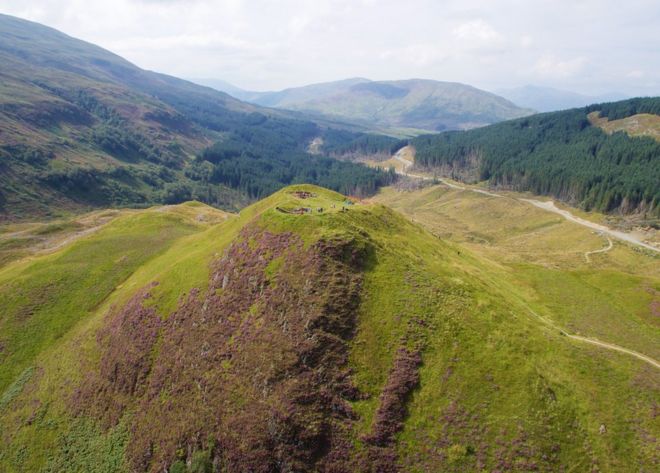
Dun Deardail was built 2,500 years ago
NEVIS LANDSCAPE PARTNERSHIP
Archaeologists believe they have found, preserved in peat, charcoal from a fire that destroyed an ancient hillfort.
Dun Deardail was built about 2,500 years ago on a prominent knoll on Sgorr Chalum, a hill overlooking the River Nevis in Glen Nevis.
Charcoal found in surrounding peatbog has been analysed.
Four "significant fire events" were identified as layers of charcoal or soot. One, from around 310BC, is thought to be the fort's burning.
Archaeologists said the fire that destroyed Dun Deardail would have "created towering plumes of smoke rising up from the fort, expelling ash and charcoal into the air".
Read the rest of this article...
Megalithic Malta : Prehistoric but far from Primitive
If the Neolithic (New Stone Age) seems remote, primitive and ‘Just a load of old stones’, take a visit to Malta. Here you can go back in time over 5,000 years; the remains of the amazing temples and the figurines and artefacts that folk left behind here are sophisticated and imaginative. As far back as 4,000 BC, the sites here bear witness to a culture and a civilisation that was full of art, architecture and spirituality; society here was vibrant and the island is still littered with impressive structures that, even now, fill us with awe.
Unique and, oh, SO Ancient
The megalithic (‘huge stones’) temples in Malta are unique. Nowhere else can you find structures quite like these. Huge stones were not that unusual in the Neolithic; explore Orkney’s stone circles and Maes Howe tomb, wander along the long lines of standing stones at Carnac in France or gaze at the massive blocks at Stonehenge and you will see large and heavy stones used for monumental effect.
Read the rest of this article...
Monday, April 23, 2018
Neolithic Surgeons May Have Practiced on Animals
PARIS, FRANCE—Paleontologists Alain Froment and Fernando Ramirez Rozzi of the French National Center for Scientific Research suggest a hole in a cow skull uncovered at the Neolithic site of Champ-Durand in southwestern France could be evidence of a surgical procedure. According to a Gizmodo report, their analysis of the hole found no trace of fracturing or splintering, indicating it was not caused by goring from another cow, or a puncture from a powerful blow with a stone tool.
Read the rest of this article...
Stonehenge archaeology 'under threat' from Highways England diggers
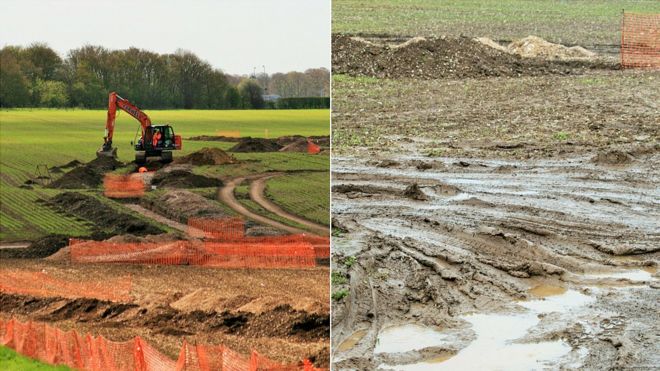
Stonehenge Alliance said using heavy machinery on wet ground could "devastate any fragile archaeological deposits"
Heavy diggers being used by Highways England near Stonehenge are threatening its "fragile archaeology", campaigners have warned.
The agency has been surveying the proposed site of a controversial tunnel near the monument since January.
Stonehenge Alliance said archaeological evidence may be lost due to heavy machinery being used on wet ground.
Highways England said the claims were "alarmist and untrue" and "due care" was being "exercised at all times".
Plans for 1.8-mile (2.9km) underground dual carriageway as part of a £1.6bn upgrade of the A303, were unveiled by the government in January.
But Dr Kate Fielden, from Stonehenge Alliance - a campaign group which includes archaeologists and environmental campaigners - said what Highways England were doing in the area "beggars belief".
Read the rest of this article...
DES OCCUPATIONS DU NÉOLITHIQUE À L’ÂGE DU FER SUR LE CONTOURNEMENT OUEST DE STRASBOURG
Une équipe d’archéologues de l’Inrap mène actuellement une fouille archéologique à Berstett (Bas-Rhin), sur prescription de l’Etat (Drac Grand Est), en amont de la construction de l’autoroute du Contournement Ouest de Strasbourg portée par le Groupe Vinci Autoroutes. Les archéologues mettent principalement au jour des vestiges des périodes du Néolithique jusqu’à l’âge du Fer.
Read the rest of this article...
Thursday, April 19, 2018
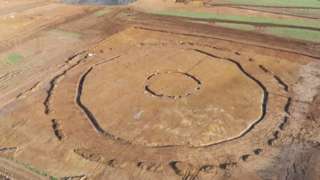
Raunds henge 'discovered' by Warth Park building work
An archaeological site thought to be 4,000 years old has been fully unearthed by work to extend an industrial estate.
Builders have uncovered the henge, which is 100m (330ft) in diameter, at Warth Park in Raunds, Northamptonshire.
An aerial photo showing the scale of the Neolithic monument first emerged on Twitter on Tuesday, but was deleted.
However, archaeologists say that site, known as Cotton Henge, has previously been investigated twice before.
Oxford Archaeology East, working on behalf of developer Roxhill, said the henge was first identified by aerial photography in the 1970s.
They added that it was likely to date from the late Neolithic period (circa 3000BC -2500BC) and forms part of a larger group of ceremonial landscape features located and excavated as part of the Raunds Area Project.
Read the rest of this article...
The nineteenth century doctor who practiced neolithic trepanation
Human skull illustrating different methods of trephination owned by Dr. T. Wilson Parry, skull of Guanche, Canary Islands, 1871-1930 (approx). Credit: Science Museum, London. CC BY
Using images from the Science Museum and Wellcome Collection we explore the neolithic practice of trepanation
Archaeologists might not be able to agree on the reason why our ancestors made holes in their skulls, but what they can agree on is that humans on every continent have done it at some point in history, suggesting the seemingly-bizarre practice developed independently across multiple civilizations.
To date, thousands of skulls with trepanation holes have been unearthed at archaeological sites around the world.
Read the rest of this article...
Skull and mandible
Bronze Age skull and mandible of an adult male recovered from Rathlin Island, Co. Antrim.
The skull and mandible were both modelled 360 using AgiSoft PhotoScan before being assembled in Blender. Outputs included animations and the SketchFab model as educational aids for our osteoarchaeology students.
Created by Dr Siobhán McDermott, Centre for Archaeological Fieldwork, QUB. #ActualLivingTechnician.
Read the rest of this article...
Tuesday, April 17, 2018
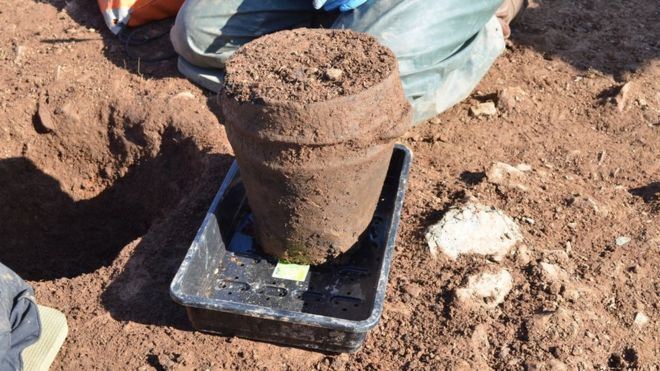
Bronze age pot uncovered in Cornwall field
A tenant farmer on the National Trust land where the pot was found had suggested the archaeology team should investigate his field
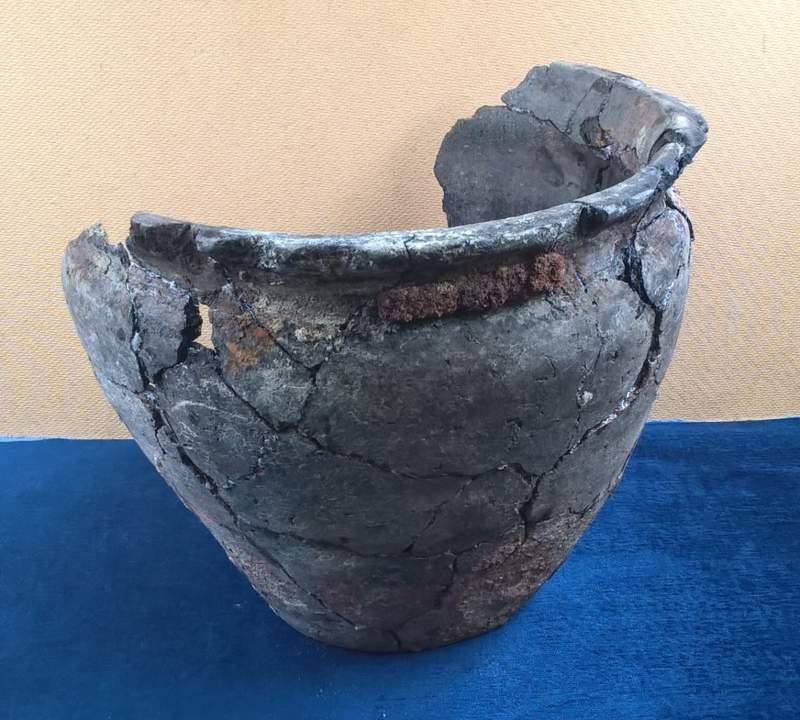
An intact earthenware pot thought to date back to the Bronze Age has been unearthed in a field in Cornwall.
The pot, which is 12in (30cm) high, is about 4,000 years old and thought to contain human remains.
It was found just below the surface, along with other Bronze Age artefacts like pottery and flint tools, at Hendersick Barrow near Looe.
Lead archaeologist Dr Catherine Frieman said: "It's almost a miracle that a plough has never hit it."
The project is part of the Southeast Kernow Archaeological Survey, with input from the Australian National University (ANU).
Read the rest of this article...
Tuesday, March 27, 2018
Skilled female potters travelled around the Baltic nearly 5000 years ago
These are Neolithic Corded ware pottery recovered in Southern Finland
[Credit: Elisabeth Holmqvist-Sipilä]
Was it the fine pottery itself, or the artisans who made it, that moved around the Baltic Sea region during the Corded Ware Culture of late Neolithic period? Are the archaeological artefacts found in Finland imported goods or were they made out of Finnish clay by artisans who had mastered the new technology? These are the questions researchers are trying to answer in the most extensive original study of archaeological ceramics ever undertaken in the Nordic countries.
Researchers mapped the arrival routes of pottery and people representing the Corded Ware Culture complex (c. 2900-2300 BCE) into the Nordic countries by identifying the areas where the pottery was made.
Corded Ware pottery was very different from earlier Stone Age pottery. It represented a new technology and style, and as a new innovation, used crushed ceramics -- or broken pottery -- mixed in with the clay.
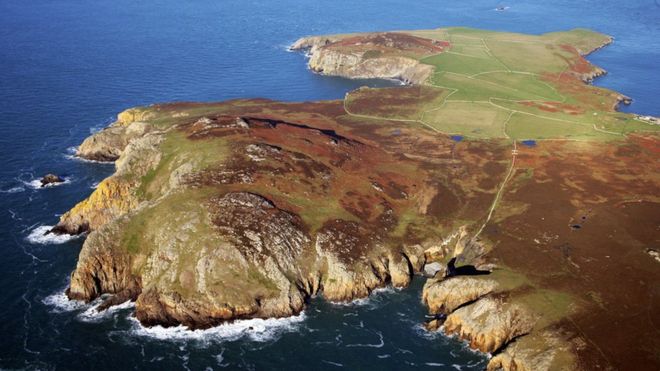
Ramsey Island: New survey finds 'Bronze Age' site
Ramsey Island is owned and managed by the RSPB
New archaeological sites on a small island off the coast of west Wales have been discovered.
The laser scan of Ramsey Island uncovered a "hidden" landscape thought to date back to the Bronze Age.
The survey, taken from the air, has also seen a detailed 3D model of the two mile-long beauty spot made for the first time.
Experts say the data could also be used to see if climate change affects the environment on the island.
Royal Commission archaeologist Dan Hunt described the findings as "incredible".
He added: "It has presented us with a stunning view of the island in enormous detail."
The archaeologists sorting out Orkney's Neolithic bones
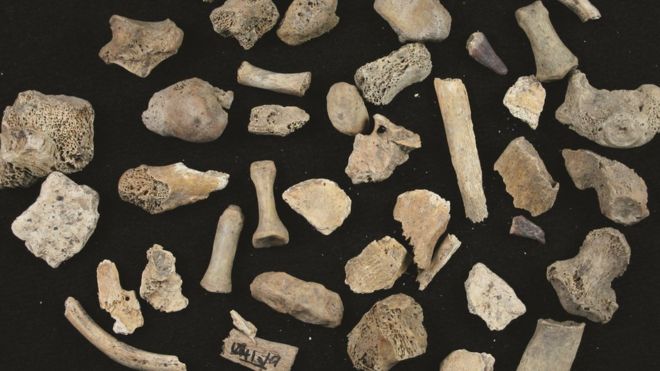
Archaeologists excavating Neolithic tombs in Orkney are used to finding jumbled collections of bones
A new study could potentially transform our understanding of the way Neolithic people dealt with their dead.
Archaeologists excavating Neolithic tombs in Orkney are used to finding jumbled collections of bones that seem unconnected.
Now, work by Dr Rebecca Crozier, from the University of Aberdeen, suggests whole bodies were placed in the chambered structures.
She said they could have been dismembered after being buried.
She told BBC Radio Orkney: "What we're trying to do is look at all the bones and try and understand why they are in the mess that we finding them in.
Read the rest of this article...
Monday, March 19, 2018
Site of huge Iron Age feast celebration found on Orkney
Windwick Bay at South Ronaldsay, close to the site of the massive cliff top feast held more than 1,700 years ago. PIC: www.geography.co.uk
Archaeologists have identified the site of a huge Iron Age feast on Orkney where more than 10,000 animals were cooked and eaten in a vast cliff top celebration.
Tests have shown that horses, cattle, red deer and otters were on the menu at the gathering above Windwick Bay, South Ronaldsay, more than 1,700 years ago.
Archaeologists from the University of the Highlands and Islands have been working at The Cairns for several years.
A large number of jewellery fragments and tools have already been discovered at the site, where the remains of an Iron Age broch and metalworking site can be found, with recent radiocarbon tests carried out at a midden - or rubbish tip - nearby.
Read the rest of this article...
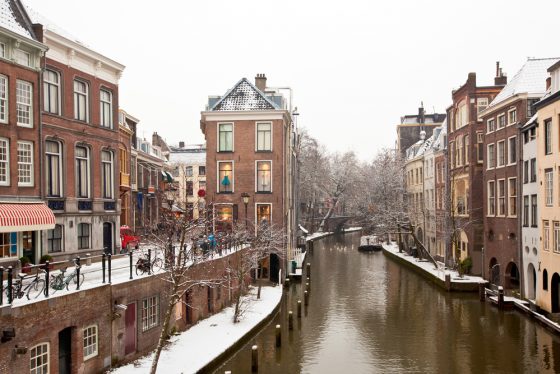
Utrecht’s history goes back 11,000 years, archaeologists say
The history of Utrecht begins at least 8,000 years earlier than was previously thought, local broadcaster RTV Utrecht reported this week.
The discovery was made when archaeologists were digging at the site of the Prinses Máxima Centrum for children with cancer ahead of its expansion.
The dig yielded traces of human habitation and objects from the early Stone Age, with some indications that Utrecht started as far back as 11,000 BC.
‘There have been prehistoric finds in Leidsche Rijn and Hoograven, particularly from the Bronze Age and the Iron Age. But this discovery means the history of Utrecht started 8,000 years earlier than the history books tell us,’ Utrecht alderman Kees Geldof told the broadcaster.
Not only were older indications of a human presence found at the site but the dig also showed evidence that the site had been inhabited without interruption throughout the Stone Age.
Read the rest of this article...
Thursday, March 1, 2018
15,000-year-old artefacts discovered along Scotland's Aberdeen bypass
Artefacts and structures found during archaeological excavations on the Aberdeen Western Peripheral Route/Balmedie to Tipperty (AWPR/B-T) project are shedding light on land use and settlement in the north east over the past 15,000 years, including Mesolithic pits, Roman bread ovens, prehistoric roundhouses and a cremation complex.
Since the archaeological excavations were completed, specialists have been analysing the artefacts and samples recovered from the various sites and will be detailing the results in a new limited edition book due to be published later this year.
Keith Brown, Cabinet Secretary for Economy, Jobs and Fair Work said: “When complete, the AWPR will help to reduce congestion, cut journey times, improve safety and lower pollution in Aberdeen City Centre, as well as enable local authorities to develop public transport solutions."
Read the rest of this article...
A beaker from the Chalcolithic period; a fluted carinated bowl from early Neolithic times;
impressed ware from the middle Neolithic
[Credit: Transport Scotland]
Keith Brown, Cabinet Secretary for Economy, Jobs and Fair Work said: “When complete, the AWPR will help to reduce congestion, cut journey times, improve safety and lower pollution in Aberdeen City Centre, as well as enable local authorities to develop public transport solutions."
Monday, February 26, 2018
Britain's prehistoric catastrophe revealed
Ancient Britons may have been nearly wiped out by bubonic plague brought by newcomers to the island
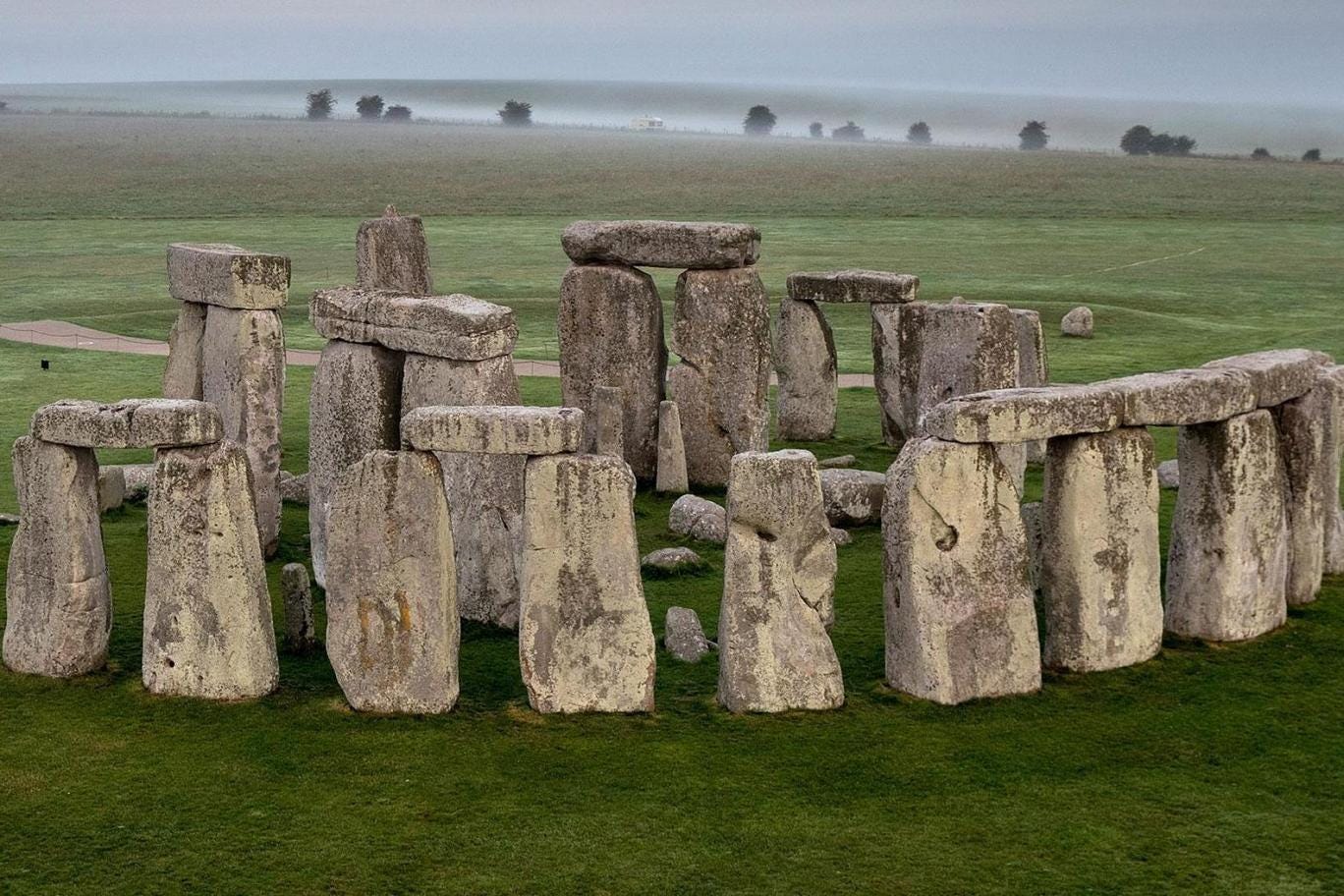
The builders of Stonehenge are thought to be the last of Britain's neolithic people Getty
Extraordinary new genetic evidence is revealing how Britain experienced a mysterious almost total change in its population in just a few centuries after the construction of Stonehenge.
It suggests that some sort of social, economic or epidemiological catastrophe unfolded.
The great 20-30 tonne stones of Stonehenge were erected by Neolithic farmers whose ancestors had lived in Britain for at least the previous 1,500 years – and new genetic research on 51 skeletons from all over Neolithic Britain has now revealed that during the whole of the Neolithic era, the country was inhabited mainly by olive-skinned, dark-haired Mediterranean-looking people.
Read the rest of this article...
The builders of Stonehenge are thought to be the last of Britain's neolithic people Getty
Extraordinary new genetic evidence is revealing how Britain experienced a mysterious almost total change in its population in just a few centuries after the construction of Stonehenge.
It suggests that some sort of social, economic or epidemiological catastrophe unfolded.
The great 20-30 tonne stones of Stonehenge were erected by Neolithic farmers whose ancestors had lived in Britain for at least the previous 1,500 years – and new genetic research on 51 skeletons from all over Neolithic Britain has now revealed that during the whole of the Neolithic era, the country was inhabited mainly by olive-skinned, dark-haired Mediterranean-looking people.
Read the rest of this article...
Subscribe to:
Posts (Atom)