Thursday, July 14, 2016

Evidence of Scotlands earliest farmers uncovered in Perthshire


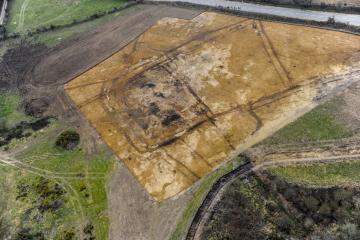
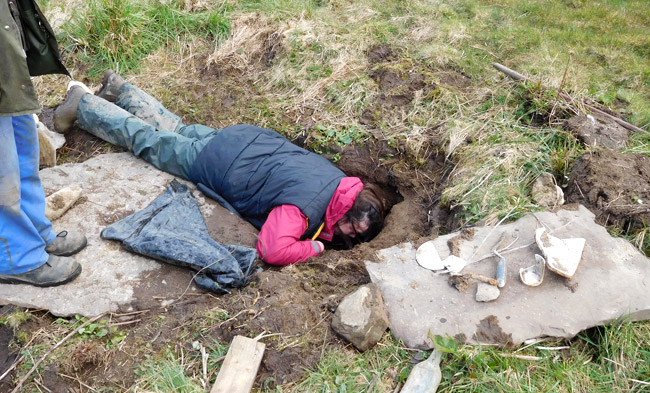
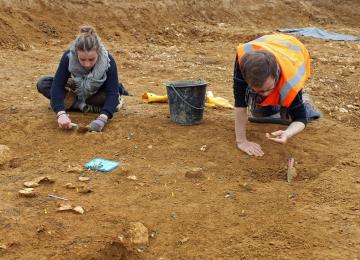
An archaeological dig next to the Perthshire village of Dunning has revealed traces of human activity dating back 10,000 years.

This included evidence of what experts believe is the earliest farming activity recorded in Scotland, and also remains of hunter-gathering activity dating back thousands of years before farming began.
The discoveries were made by archaeologists from the University of Glasgow as part of the ten year Strathearn Environs and Royal Forteviot (SERF) project.
This year the project received an archaeology grant of £100,000 from Historic Environment Scotland to carry out geophysical survey, excavation, archival research and reporting.
Read the rest of this article...

DU MÉSOLITHIQUE AU MOYEN ÂGE, DÉCOUVERTES ARCHÉOLOGIQUES SUR LE SITE DE PARC AL LANN À ERGUÉ-GABÉRIC


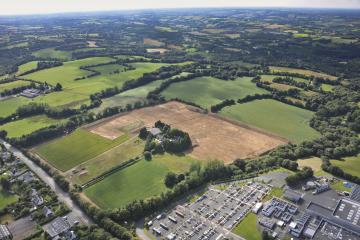
Au lieu-dit Parc al Lann à Ergué-Gabéric, les archéologues de l’Inrap mènent une fouille préventive sur 6 hectares, en amont d’un projet d’aménagement par Quimper communauté. Le site occupe une situation privilégiée avec une vue à 180 degrés sur un fond de vallée et les hommes s’y sont naturellement installé depuis des millénaires.

Read the rest of this article...

Homo erectus ging wie wir


1,5 Millionen Jahre alte Fußabdrücke geben Einblicke in das Leben von Frühmenschen
Fossile Knochen und Steinwerkzeuge verraten uns viel über die menschliche Evolution. Doch wie sich unsere Vorfahren zum Beispiel fortbewegten oder miteinander interagierten lässt sich daraus kaum ableiten. Unter der Leitung des Max-Planck-Instituts für evolutionäre Anthropologie in Leipzig und der University of Washington entdeckte ein internationales Forscherteam im Norden Kenias Fußspuren von Homo erectus, die die Fortbewegungsmuster und Gruppenstrukturen dieser Urmenschen hervorragend dokumentieren. So fanden die Forscher mithilfe neuester Analysemethoden heraus, dass die Gangart vom Homo erectus der des modernen Menschen stark ähnelt. Darüber hinaus belegen die Forscher anhand der Fußabdrücke ein Sozialverhalten, das mit dem moderner Menschen vergleichbar ist.
Read the rest of this article...

Monkeys used stone tools 700 years ago


Primate archaeology is a new and unusual-sounding field, but it has revealed ancient evidence of some clever and dextrous monkey culture.
Researchers from Oxford University, working in Brazil, found ancient "nut-cracking tools" - 700-year-old stone hammers that capuchin monkeys used to open cashew nuts.
One of the researchers, Dr Lydia Luncz, explains how the team found evidence of these "Stone Age monkeys".

Read the rest of this article...

Wednesday, July 6, 2016

Belgian Neanderthals 'were eating each other 40,000 years ago'


Members of human subspecies also appear to have fashioned tools out of bones of their own kind, researchers say


 The Goyet caves near Namur, where scientists found bones bearing marks left by intentional butchering. Photograph: YouTube

Belgian Neanderthals were eating each other 40,000 years ago, new research has shown.
The grisly discovery was made in a cave where scientists found bones bearing marks left by intentional butchering.
Not only were they cannibals, but the Neanderthals appear to have fashioned tools out of the bones of their own kind.
Neanderthals were a human subspecies that lived in Europe and western Asia for hundreds of thousands of years before becoming extinct between 30,000 and 40,000 years ago.
Read the rest of this article...

Monday, July 4, 2016

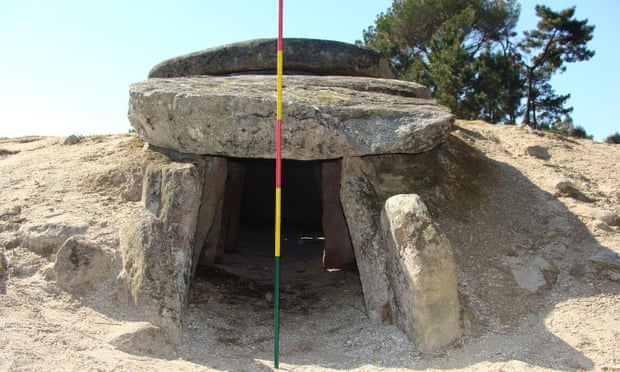
Prehistoric Tombs Enhanced Astronomical Viewing


Astronomers are exploring what might be described as the first astronomical observing tool, potentially used by prehistoric humans 6,000 years ago. They suggest that the long, narrow entrance passages to ancient stone, or 'megalithic', tombs may have enhanced what early human cultures could see in the night sky, an effect that could have been interpreted as the ancestors granting special power to the initiated. The team present their study at the National Astronomy Meeting, being held this week in Nottingham.

View of the passage and entrance while standing within the dolmens' chamber: the 'window of visibility' 
[Credit: F. Silva]

The team's idea is to investigate how a simple aperture, for example an opening or doorway, affects the observation of slightly fainter stars. They focus this study on passage graves, which are a type of megalithic tomb composed of a chamber of large interlocking stones and a long narrow entrance. These spaces are thought to have been sacred, and the sites may have been used for rites of passage, where the initiate would spend the night inside the tomb, with no natural light apart from that shining down the narrow entrance lined with the remains of the tribe's ancestors.

Read the rest of this article...

Friday, July 1, 2016

Ancient Theatre Of Larissa Opens To Public After 20 Centuries


One of the largest and well-preserved theatres of Greek antiquity opened to the public for the first time after 2,000 years last week in the city of Larissa in Thessaly, Greece.

Dating back to the early third century BC, the ancient theatre of Larissa lies on the south slope of the Medieval fortress at the city's heart, archaeologist Stavroula Sdrolia, head of the seventh Ephorate of Byzantine Antiquities said.

In antiquity, apart from theatrical performances, it also hosted the assemblies of the senior regional authority, while at the end of the first century BC, it was turned into a Roman arena, she explained.

Read the rest of this article...

Thursday, June 30, 2016

The prehistoric tombs that may have been used as 'telescopes'


Researchers think that the entrance passages to 6,000 year-old tombs could have been used to enhance visibility for ancient stargazers


The orientation of the tombs suggests that they are aligned to offer a view of Aldebaran, the brightest star in the constellation of Taurus. Photograph: University of Wales Trinity Saint David/Nottingham Trent University

Ancient passages to stone tombs could have been used by prehistoric humans to boost their view of the night skies as part of an ancient ritual, archaeologists have proposed.
Researchers say that the dark entrances to 6,000 year-old tombs in Portugal could have been an early form of astronomical tool that enhanced the visibility of the stars. In particular, they say, the orientation of the entrances to the passage graves suggests that they are aligned to offer a view of Aldebaran, the red star that is the brightest body in the constellation of Taurus.
The star might have been important to ancient communities who moved their herds and flocks to summer grazing grounds in the mountains each year. The annual event, the researchers argue, could have coincided with the star’s first appearance in the morning twilight each year. “This first rising of Aldebaran occurred at the end of April or beginning of May 6,000 years ago, so it would be a very good, very precise calendrical marker for them to know when it was time to move into the higher grounds,” said Dr Fabio Silva of the University of Wales Trinity Saint David.
Read the rest of this article...

Monday, June 27, 2016

THE DAY OF ARCHAEOLOGY 2016 WILL BE HELD ON FRIDAY 29 JULY!


We are looking for people working, studying or volunteering in the archaeological world to participate with us in a “Day of Archaeology” in July 2016. The resulting Day of Archaeology website will demonstrate the wide variety of work our profession undertakes day-to-day across the globe, and help to raise public awareness of the relevance and importance of archaeology to the modern world. We want anyone with a personal, professional or voluntary interest in archaeology to get involved, and help show the world why archaeology is vital to protect the past and inform our futures.

Explore posts from previous years here...

Metal detectorist who struck gold with Bronze Age ring during illegal search is fined after touting it to a museum

The Penannular ring, a gold ring with a small section missing, found on a Surrey bridle path by Ricky Smith CREDIT: SWNS

A metal detectorist who found a rare gold Bronze Age ring when he was illegally searching private land has been found guilty of theft after he contacted a museum about his find.
Ricky Smith, 34, discovered the Penannular ring - a gold ring with a small section missing - on a Surrey bridle path two years ago.
But the detectorist of 11 years, who was "in it for the money", failed to report his find of "treasure" to the coroner within two weeks as required by law. Instead, he touted the ring - worth between £500 and £600 - to a local museum, the court was told.
Read the rest of this article...

German 'Stonehenge' Opens To The Public


One of the most important relics of the Bronze Age, an ancient site known as the German Stonehenge, has opened to the public after years of reconstruction.
The so-called German Stonehenge is thought to be more than 4,300 years old [Credit: DW]
The "Ringheiligtum Pömmelte" as it is known thanks to its location near the eastern German town of Pömemlte, celebrated its opening as a cultural site on Tuesday (20.6.2016).

The formation, known as the Stonehenge of Germany, is estimated to be around 4,300 years old and was discovered in 1999 in the forest near the banks of the Elbe River. Made of wood, the archaeological wonder has not withstood the test of time well and has since been entirely reconstructed at a cost of 2 million euros ($2.27 million).


Read the rest of this article...

Monday, June 13, 2016

Archaeology in the Round?


A new website providing links to archaeological photo spheres is now online.

The purpose of the site is to make these photo spheres easily available and also to encourage people to make archaeological photo spheres and publish them on the site.


You can find the site at: archosphere.eu

Study: Stone Age migrants introduced agriculture to Europe

This undated picture provided by the Paliambela Excavation Project Archive, shows a human burial from the archaeological site of Paliambela in northern Greece.  
K. KOTSAKIS, P. HALSTEAD/PALIAMBELA EXCAVATION PROJECT ARCHIVE VIA AP

BERLIN -- Stone Age people from the Aegean Sea region moved into central and southern Europe some 8,000 years ago and introduced agriculture to a continent still dominated at the time by hunter-gatherers, scientists say.
The findings are based on genetic samples from ancient farming communities in Germany, Hungary and Spain. By comparing these with ancient genomes found at sites in Greece and northwest Turkey, where agriculture was practiced centuries earlier, researchers were able to draw a genetic line linking the European and Aegean populations.
The study challenges the notion that farming simply spread from one population to another through cultural diffusion. The findings were published Monday in the Proceedings of the National Academy of Science.
Read the rest of this article...

44 Celtic Gold Coins Found In Austria


Archaeologists have unearthed gold treasure in Austria thought to be worth as much as €50,000. The 44 Celtic gold coins, weighing 7.5 grams, were found on a site in Traun, near Linz in Upper Austria, that was being excavated before the building of a machinery hall.


The 44 Celtic gold coins were found on a site in Traun, near Linz in Upper Austria 
[Credit: OÖ Landesmuseum]
The gold pieces are thought to have been made in the Iron Age between the 1st and 2nd centuries BC in the region that is known as Bohemia today and likely ended up in Austria through trade.

According to the ORF, researchers at the provincial museum say the discovery is of the highest importance as it is one of the just three similar finds from the pre-Romanian time in Upper Austria.

This era is seen as the crossover from an economy based on trading goods to a monetary economy, which came with the Romans.

Read the rest of this article...

Sunday, May 29, 2016

Women In Southern Germany Corded Ware Culture May Have Been Highly Mobile


Women in Corded Ware Culture may have been highly mobile and may have married outside their social group, according to a study published May 25, 2016 in the open-access journal PLOS ONE by Karl-Göran Sjögren from Göteborg University, Sweden, and colleagues.


Examples of pottery from the Corded Ware period; these pieces date to ca. 2500 BC 
[Credit: WikiCommons]

The Corded Ware Culture is archaeologically defined by material traits, such as the burial of the dead under barrows alongside characteristic cord-ornamented pottery, and existed in much of Europe from ca. 2800-2200 cal. B.C.

To better understand this culture, the authors of the present study examined human bones and teeth from seven sites in Southern Germany dating from different periods of Corded Ware culture, including two large cemeteries. They used carbon dating and additional dietary isotope analysis to assess the diet and mobility of the population during this period.

Read the rest of this article...

Neanderthals Were Stocky From Birth


If a Neanderthal were to sit down next to us on the underground, we would probably first notice his receding forehead, prominent brow ridges and projecting, chinless face.


Reconstruction of a Neanderthal child from the Musee National de Prehistoire 
in Les Eyzies de Tayac, France [Credit: Don Hitchcock]

Only on closer inspection would we notice his wider and thicker body. Researchers from the Max Planck Institute for Evolutionary Anthropology in Leipzig have now investigated whether the differences in physique between Neanderthals and modern humans are genetic or caused by differences in lifestyle. Their analysis of two well-preserved skeletons of Neanderthal neonates shows that Neanderthals’ wide bodies and robust bones were formed by birth.

Read the rest of this article...

LA RICHE HISTOIRE DU SITE DE LAVALLOT NORD À GUIPAVAS


L'Inrap mène, depuis le 11 janvier 2016, une fouille préventive aux portes de Brest, sur le site de Lavallot Nord à Guipavas. Prescrite par la Drac Bretagne (service régional de l’Archéologie), elle permet la sauvegarde par l’étude des vestiges du sous-sol, préalablement à un projet d’aménagement porté par Brest Métropole Aménagement. La fouille révèle les témoignant d’une longue occupation depuis la fin du Néolithique. Mais c’est pendant l’Antiquité puis au Moyen Âge que le site révèle son histoire la plus dense.

Read the rest of this article...

Neanderthal stone ring structures found in French cave

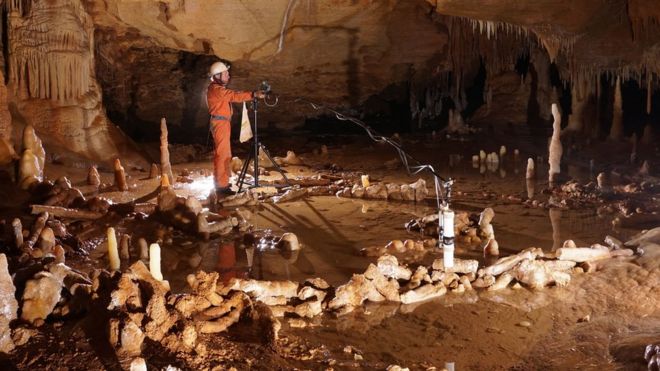
The structures were found deep inside the cave, so the builders would have needed fire to see 

Researchers investigating a cave in France have identified mysterious stone rings that were probably built by Neanderthals.

The discovery provides yet more evidence that we may have underestimated the capabilities of our evolutionary cousins.

The structures were made from hundreds of stalagmites, the mineral deposits which rise from the floors of caves.

Dating techniques showed that they were broken off 175,000 years ago.

The findings are reported in the journal Nature.

Read the rest of this article...

Saturday, May 14, 2016

'Stone Age Art' in Bavarian cave not carved by humans after all


The Mäanderhöhle cave near Bamberg was previously regarded as an archaeological sensation. It was thought to contain some of the oldest cave art in Germany. However, Julia Blumenröther, a former student at Universität Erlangen-Nürnberg, has demonstrated in her Master's thesis that the markings discovered inside the cave in 2005 are not fertility symbols carved by humans as previously thought. In fact, these lines occurred as a result of natural processes, the archaeologist says.
One of the caverns in the 75-metre long cave is full of spherical deposits of minerals known as cave clouds that form on rocks in a similar way to stalactites and stalagmites. In 2005, cave researchers discovered a large number of lines that looked like they could have been made by humans on the rock-hard surface of these cave clouds. An archaeologist studied these lines several years later and published his interpretation of them in a preliminary report, in which he said that the between 14,000 and 16,000 year-old lines were made by humans and probably depicted a phallus and abstract female figures.
Read the rest of this article...

Bronze Age Burial Found in England


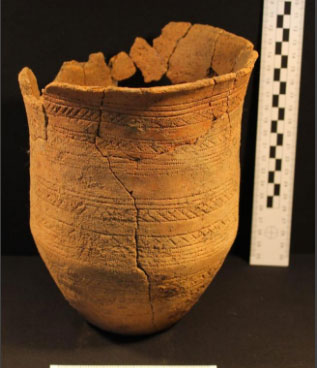
EVESHAM, ENGLAND—Archaeologists surveying a future development site in England’s West Midlands region were surprised to find a Bronze Age burial, reports the Worcester News. The team was following up on an earlier excavation at the site that revealed ditches thought to date to the Iron Age. In broadening their investigation to include a larger tract of land, the archaeologists discovered ditches with artifacts dating 1,000 years earlier than they expected, to the early Bronze Age. “The really unexpected find was a ‘beaker’ burial,” said Laurence Hayes of the environmental consulting firm RSK. “This large burial pit contained a near complete Early Bronze Age vessel known as a beaker, covered with intricate patterns, and a polished stone archer’s wrist guard.” 

Wednesday, May 11, 2016

Two finds in one at Harray chamber

County archaeologist Julie Gibson at the entrance to the underground chamber. (Archaeology Institute UHI)

A prehistoric underground structure has been rediscovered in Harray – rediscovered in that the archaeologists found it to be full of Victorian rubbish!
But although it had obviously been opened,  entered and used in the 19th century, the chamber appears to have gone unrecorded.
Martin Carruthers, of the Archaeology Institute UHI, and county archaeologist Julie Gibson made their way out to the site, near the Harray Manse, last weekend.
Martin explained: “It’s either a souterrain or a ‘well’ and, given similar examples elsewhere in the county, probably dates to the Iron Age.
“The site was discovered by the landowner Clive Chaddock, who, happily, also happens to be a colleague at Orkney College UHI!
Read the rest of this article...

Wednesday, May 4, 2016

Hominins may have been food for carnivores 500,000 years ago


Tooth-marks on a 500,000-year-old hominin femur bone found in a Moroccan cave indicate that it was consumed by large carnivores, likely hyenas, according to a study* published April 27, 2016 in the open-access journal PLOS ONE by Camille Daujeard from the Muséum National D'Histoire Naturelle, France, and colleagues.
During the Middle Pleistocene, early humans likely competed for space and resources with large carnivores, who occupied many of the same areas. However, to date, little evidence for direct interaction between them in this period has been found. The authors of the present study examined the shaft of a femur from the skeleton of a 500,000-year-old hominin, found in the Moroccan cave "Grotte à Hominidés" cave near Casablanca, Morocco, and found evidence of consumption by large carnivores.
Read the rest of this article...

Neandertals and Upper Paleolithic Homo sapiens had different dietary strategies

This is an image of a fossilized human molar used in the study of dietary habits of Neandertals and Upper Paleolithic Homo sapiens. Credit: Sireen El Zaatari 
PLOS ONE—When fluctuating climates in the Ice Age altered habitats, modern humans may have adapted their diets in a different way than Neandertals, according to a study published April 27, 2016 in the open-access journal PLOS ONE by Sireen El Zaatari of the University of Tübingen, Germany, and colleagues.
The Neandertal lineage survived for hundreds of thousands of years despite the severe temperature fluctuations of the Ice Age. The reasons for their decline around 40 thousand years ago remain unclear. The authors of this study investigated the possible influence of dietary strategies using the fossilized molars of 52 Neandertals and Upper Paleolithic Homo sapiens (modern humans). They analysed the type and degree of microwear on the teeth to attempt to draw conclusions about diet type and to establish a relationship with prevalent climactic conditions.
Read the rest of this article...

DNA secrets of Ice Age Europe unlocked

 
study of DNA from ancient human bones has helped unlock the secrets of Europe's Ice Age inhabitants.
Researchers analysed the genomes of 51 individuals who lived between 45,000 years ago and 7,000 years ago.
The results reveal details about the biology of these early inhabitants, such as skin and eye colour, and how different populations were related.
It also shows that Neanderthal ancestry in Europeans has been shrinking over time, perhaps due to natural selection.

Thursday, April 28, 2016

Stonehenge may have served as a cremation cemetery


Towering above the grassy Salisbury Plain, its eerie rock monoliths are steeped in myth and magical stories, yet despite decades of research, the original purpose of Stonehenge remains a mystery. 


Archaeologists excavated the burned bones that had been previously dug up from around  the site of Stonehenge during the 1920s. They say analysis suggests the site  was used as a cemetery
[Credit: Adam Stanford/Aerial-Cam Ltd] 

A new study by archaeologists, however, has suggested the imposing stone circle may have initially been used as a cremation cemetery for the dead. 

Charred remains discovered on the site were unearthed in holes - known as the Aubrey Holes - that have been found have to once held a circle of small standing stones. 

Fresh analysis of the burned bones has revealed they were buried in the holes over a period of 500 years between 3,100BC and 2,600BC.

Read the rest of this article...

Historic flint axes found in Denmark

The flint axes date back to the early Stone Age (photo: Viborg Museum)

A pair of old friends have found the largest flint axes in Danish history in a drained bog area near Tastum Lake just south of Skive in Jutland.
Archaeologists at nearby Viborg Museum theorise that the axes were placed in the bog as part of a ritual sacrifice sometime during the early Stone Age around 3800-3500 BC.
“It’s fascinating that they could master the flint and produce such a perfect axe,” said Mikkel Kieldsen, an archaeologist and curator at Viborg Museum.
“A lot of effort has been put into the axes, so the sacrifice must have really meant something.”
Read the rest of this article...

Researchers investigate world’s oldest human footprints with software designed to decode crime scenes


Researchers at Bournemouth University have developed a new software technique to uncover 'lost' tracks, hidden in plain sight at the world's oldest human footprint site in Laetoli (Tanzania). The software has revealed new information about the shape of the tracks and has found hints of a previously undiscovered fourth track-maker at the site. 


The Laetoli tracks were discovered by Mary Leakey in 1976 and are thought to be  around 3.6 million years old. There are two parallel trackways on the site, where two  ancient hominins walked across the surface. One of these trackways was obscured  when a third person followed the same path [Credit: Bournemouth University] 

The software was developed as part of a Natural Environments Research Council (NERC) Innovation Project awarded to Professor Matthew Bennett and Dr Marcin Budka in 2015 for forensic footprint analysis. They have been developing techniques to enable modern footwear evidence to be captured in three-dimensions and analysed digitally to improve crime scene practice.

Read the rest of this article...

DÉCOUVERTES ARCHÉOLOGIQUES À TIGERY (ESSONNE) : LE PLATEAU BRIARD DURANT LA PRÉHISTOIRE


Préalablement aux aménagements de la ZAC du Plessis-Saucourt par l’EPA Sénart sur la commune de Tigery (Essonne), une équipe d’archéologues de l’Inrap effectue, sur prescription de l’État (Drac Île-de-France), des recherches à Tigery (Essonne). 6 200 m2 sont ainsi explorés entre mars et juin 2016.

Les fouilles permettront de libérer le terrain pour les travaux d’aménagement. La construction du 1er bâtiment (6 500 m²) réalisé par Alséi pour l’accueil d’activités (bureaux et locaux de production) pourra ainsi démarrer dès la rentrée 2016.
Read the rest of this article...

Tuesday, April 26, 2016

Half of Western European men descended from one Bronze Age ‘king’

Mass graves were replaced by individual burials for the elite in the Bronze Age showing a shift in social structure  CREDIT: PA 

Half of Western European men are descended from one Bronze Age ‘king’ who sired a dynasty of elite nobles which spread throughout Europe, a new study has shown.
The monarch, who lived around 4,000 years ago, is likely to have been one of the earliest chieftains to take power in the continent.
He was part of a new order which emerged in Europe following the Stone Age, sweeping away the previous egalitarian Neolithic period and replacing it with hierarchical societies which were ruled by a powerful elite.
It is likely his power stemmed from advances in technology such as metal working and wheeled transport which enabled organised warfare for the first time.
Read the rest of this article...

Sunday, April 24, 2016

The Archaeology of Anglesey


The Archaeology of Anglesey
1 to 5 November 2016
The island of Anglesey has a wealth of archaeological sites of all periods. This EMAS Archaeology study tour will visit the most important sites of the prehistoric, Roman and medieval periods.
Among the sites that we will visit are: the Neolithic and Early Bronze Age burial chamber, the rural Roman site and the 12th century chapel at Din Lligwy; the chambered cairn at Bryn Celli Ddu; the Neolithic burial chamber at Barclodiad Y Gawres; the Roman fort at Caer Gybi; the Roman watchtower and signal station at Caer Y Twr and the medieval priory at Penmon.
Click here for further details

Friday, April 22, 2016

3D print of Oetzi the Ice Man revealed

One of three replicas of Oetzi the Iceman created for teaching purposes by Gary Staab, from resin and mixed media. Photo: http://www.staabstudios.com/

Scientists presented Wednesday a life-sized copy, made using a 3D printer, of Oetzi the mummified 5,000-year-old "iceman" found in the Alps 25 years ago.
Pre-existing CT scans were used to make the resin replica which was then sculpted and hand-painted by US artist Gary Staab over many months, the South Tyrol Museum of Archeology, where Oetzi is housed, said.
"The reconstruction of the hands was a challenge, since they could not be captured on CT scans," the museum in Bolzano, northern Italy said.
Read the rest of this article...

Iron age man was as fond of Swiss cheese as we are


Archaeologists have uncovered evidence that Swiss cheesemaking dates back to prehistoric times, paving the way for such delicacies as Gruyere and Emmental.
An international team led by the University of York and Newcastle University looked at the composition of residues left on fragments of ceramic pots found at six sites in the Swiss Alps. The shards of pottery were known to date from Neolithic times to the Iron Age. The researchers found that the residue on those from the 1st millennium BC -- the Iron Age -- had the same chemical signatures associated with heating milk from animals such as cows, sheep and goats, as part of the cheesemaking process.
The ceramic fragments examined as part of this study were found in the ruins of stone buildings similar to those used by modern alpine dairy managers for cheese production during the summer months.
Read the rest of this article...

Bigger brains led to bigger bodies in our ancestors


AMERICAN MUSEUM OF NATURAL HISTORY—New research suggests that humans became the large-brained, large-bodied animals we are today because of natural selection to increase brain size. The work, published in the journal Current Anthropology, contradicts previous models that treat brain size and body size as independent traits responding to separate evolutionary pressures. Instead, the study shows that brain size and body size are genetically linked and that selection to increase brain size will "pull along" body size. This phenomenon played a large role in both brain- and body-size increases throughout human evolution and may have been solely responsible for the large increase in both traits that occurred near the origins of our genus, Homo.
"Over the last four million years, brain size and body size increased substantially in our human ancestors," said paper author Mark Grabowski, a James Arthur postdoctoral fellow in the Division of Anthropology at the American Museum of Natural History. "This observation has led to numerous hypotheses attempting to explain why observed changes occurred, but these typically make the assumption that brain- and body-size evolution are the products of separate natural selection forces."
Read the rest of this article...

Monday, April 18, 2016

Headdress reconstruction throws light on hunter-gatherer rituals


UNIVERSITY OF YORK—A research team led by archaeologists at the University of York used traditional techniques to create replicas of ritual headdresses made by hunter-gatherers 11,000 years ago in North Western Europe.
Flint blades, hammerstones and burning were among the tools and techniques they employed to fashion reproductions of shamanic headdresses discovered during excavations at the Early Mesolithic site at Star Carr in North Yorkshire.
The research published today in PLOS ONE is the first scientific analysis of the oldest known evidence of a shamanic costume in Europe. It challenges previously held assumptions over the care and time invested in the modification of the animal's "skull cap" in order to create these ritualistic artefacts.
Read the rest of this article...

Headdress study highlights ancient hunter-gatherer rituals


"This research shows how experimental archaeology can give important insights into rare ancient artifacts," said archaeologist Aimee Little.

An illustration of an Evenki shaman donning an antler headdress. 
Photo by Little et al./PLOS ONE

YORK, England, April 13 (UPI) -- Researchers in England have spent the last four years reconstructing ancient shamanic headdresses found at an Early Mesolithic archaeological site in North Yorkshire.
To get a better understanding of hunter-gatherer rituals, archaeologists at the University of York used flint blades, hammerstones and fire to recreate antlered deer skull caps.
Their analysis of the oldest evidence of a shamanic costume in Europe suggests these hunter-gatherers spent significant time and effort on ritualistic dress.
Researchers surveyed some 24 male red deer skull caps recovered from the Star Carr site -- all made from the top of the skull with the antlers attached. To make the skull caps, the lower jaw and cranial bones were removed while the frontal jaw bone was perforated.
Read the rest of this article...

Ancient Mass Graves Discovered in Greece


Archaeologists have discovered two mass graves near the Greek capital containing the skeletons of 80 men who may have been followers of ancient would-be tyrant Cylon of Athens.
France is famous for its wine, and for good reason ... they've been making wine longer than anyone else.
DCI
Regional archaeological services director Stella Chryssoulaki laid out the theory Thursday as she unveiled the findings at the Central Archaeological Council, the custodians of Greece’s ancient heritage.
Given “the high importance of these discoveries”, the council is launching further investigations, the culture ministry said in a statement.
Read the rest of this article...
Stone Age artists used rock art as a billboard


Six to seven thousand years ago, the road system in Norway was essentially non-existent. That meant Stone Age residents mainly used waterways as they moved from place to place, especially on the hunt. 


Forty-eight Stone Age petroglyphs include images of a reindeer herd, shown with all the  animals moving in the same direction. It’s possible that the artist was trying to say that  reindeer migrated this way 7,000 years ago
[Credit: Jan Magne Gjerde,  Tromsø Museum - The University Museum] 

One area called Gamnes, located between the outlet of a river and the mouth of a fjord that opens onto the Barents Sea, is particularly rich with rock art. There are petroglyphs of reindeer and moose, in herds and alone, with and without young animals. 

In general, animals depicted in rock carvings are shown moving in all different directions. But in Gamnes, most of the reindeer have been drawn with their muzzles pointed in the same way.

Read the rest of this article...

Wednesday, April 13, 2016

Sexually transmitted diseases 'led ancient humans to monogamy'

Researcher claim sexually transmitted diseases led to monogamy. Credit: Alamy

Why did humans become monogamous, apparently rejecting the promiscuity that is natural to most animals?

Was it morality? Religion? Maybe love?

The answer is germs, researchers said on Tuesday, arguing that the havoc caused by sexually transmitted diseases (STIs) convinced our ancestors it would be better to mate for life.

A research duo from Canada and Germany observed that STIs flourished among large groups of people living in the villages, towns and cities that arose after prehistoric hunter-gatherers settled down to farm.

Left unchecked, spreading diseases can affect individual fertility and a group's overall reproduction rate.

Falling population numbers would force a rethink of sexual behaviour - which in turn gives rise to social mores.


Read the rest of this article...

Monday, April 11, 2016

Neanderthal Y chromosome offers clues to what kept us separate species


CELL PRESS—Researchers reporting in the American Journal of Human Genetics, published by Cell Press, have completed the first in-depth genetic analysis of a Neanderthal Y chromosome. The findings offer new insights into the relationship between Neanderthals and modern humans and some of the genetic factors that might have kept the two lineages apart.

The Y chromosome was the main component remaining to be analyzed from the Neanderthal genome, the researchers say.

"Characterizing the Neanderthal Y chromosome helps us to better understand the population divergence that led to Neanderthals and modern humans," says Fernando Mendez of Stanford University. "It also enables us to explore possible genetic interactions between archaic and modern [gene] variants within hybrid offspring."

Mendez and his colleagues, including Carlos Bustamante, also at Stanford, and Sergi Castellano, from the Max Planck Institute for Evolutionary Anthropology in Germany, analyzed the Y chromosome from a Neanderthal male found in El Sidrón, Spain. Their analysis suggests that Neanderthals and modern humans diverged almost 590,000 years ago, consistent with earlier evidence.

Read the rest of this article...
Modern men lack Y chromosome genes from Neanderthals


Although it's widely known that modern humans carry traces of Neanderthal DNA, a new international study led by researchers at the Stanford University School of Medicine suggests that Neanderthal Y-chromosome genes disappeared from the human genome long ago. 


Modern men lack Y chromosome genes from Neanderthals Scientists believe Neanderthals died out about 40,000 years ago [Credit: Nicolas Primola/Shutterstock] 

The study is published in The American Journal of Human Genetics, in English and in Spanish, and will be available to view for free. The senior author is Carlos Bustamante, PhD, professor of biomedical data science and of genetics at the School of Medicine, and the lead author is Fernando Mendez, PhD, a postdoctoral scholar at Stanford. 

The Y chromosome is one of two human sex chromosomes. Unlike the X chromosome, the Y chromosome is passed exclusively from father to son. This is the first study to examine a Neanderthal Y chromosome, Mendez said. Previous studies sequenced DNA from the fossils of Neanderthal women or from mitochondrial DNA, which is passed to children of either sex from their mother.

Read the rest of this article...