Thursday, November 12, 2015

Early farmers exploited beehive products at least 8,500 years ago


Humans have been exploiting bees as far back as the Stone Age, according to new research from the University of Bristol published in Nature today.

Previous evidence from prehistoric rock art is inferred to show honey hunters and Pharaonic Egyptian murals show early scenes of beekeeping. However, the close association between early farmers and the honeybee remained uncertain.
This study has gathered together evidence for the presence of beeswax in the pottery vessels of the first farmers of Europe by investigating chemical components trapped in the clay fabric of more than 6,000 potsherds from over 150 Old World archaeological sites.
Read the rest of this article...

Ancient hominids used wooden spears to fend off big cats


Human ancestors living in Central Europe between 320,000 and 300,000 years ago may have used wooden spears to fend off fearsome, meat-eating rivals — saber-toothed cats.
From 2011 to 2013, a team led by paleontologist Jordi Serangeli of the University of Tübingen in Germany found five teeth and a partial leg bone from two of these roughly 200-kilogram predators at a site where researchers previously discovered ancient wooden spears. Whatever hominid species made the spears must have needed them to defend against attacks by saber-toothed cats, the researchers propose online October 23 in the Journal of Human Evolution.  

Limited signs of wear on teeth from one saber-toothed cat, found about 100 meters from the spear excavation, indicate that the creature was relatively young. Pits, scrapes and other marks on the leg bone of an adult male, found in spear-bearing sediment, indicate that hominids used the bone as a hammer for making stone tools.

Read the rest of this article...

Neolithic tomb discovered on Irish hilltop


A hilltop tomb recently discovered close to the edge of Tievebaun mountain on the Sligo/Leitrim border may be more than 5,000 years old , according to the archaeologist who found it. 


The tomb at Tievebaun discovered by archaeologist Michael Gibbons  
[Credit: Michael Gibbons] 

Michael Gibbons said a series of discoveries in this area – including animal enclosures, field systems, and booley settlements – suggests that there are layers of history spanning the Neolithic period, the iron age, the bronze age and the post medieval period on these uplands. 

Mr Gibbons, who discovered other tombs in this area a decade ago, said that the hilltop tomb, which was a sacred site up to 3,500 BC, was probably not discovered before now because of its dramatic setting on the edge of the mountain. 

Read the rest of this article...

Wednesday, November 11, 2015

New Drought Atlas Maps 2,000 Years of Climate in Europe


Numerous droughts have hit European agriculture over the ages, but their overall extent has been known mainly from scattered historical documents. Here, an English calendar page, circa 1310, shows men harvesting wheat. (Queen Mary’s Psalter, Wikimedia commons)

he long history of severe droughts across Europe and the Mediterranean has largely been told through historical documents and ancient journals, each chronicling the impact in a geographically restricted area. Now, for the first time, an atlas based on scientific evidence provides the big picture, using tree rings to map the reach and severity of dry and wet periods across Europe, and parts of North Africa and the Middle East, year to year over the past 2,000 years.

Together with two previous drought atlases covering North America and Asia, the Old World Drought Atlas significantly adds to the historical picture of long-term climate variability over the Northern Hemisphere. In so doing, it should help climate scientists pinpoint causes of drought and extreme rainfall in the past, and identify patterns that could lead to better climate model projections for the future. A paper describing the new atlas, coauthored by scientists from 40 institutions, appears today in the journalScience Advances.

Read the rest of this article...

Monday, November 2, 2015

Ice Age engravings found at Jersey archaeological site


A dig in Jersey has yielded a stash of hunter-gatherer artefacts from the end of the last Ice Age, including stone pieces criss-crossed by carved lines.
They are similar to engravings found from the same period in continental Europe, but are the first of their kind in the British Isles.
Archaeologists are in the early stages of analysing the finds, but estimate them to be at least 14,000 years old.
This places the camp among the earliest in northern Europe after the freeze.
It would also mean that the markings pre-date theearliest known art in the UK, which was found carved into stone walls and bones at Creswell Crags in Derbyshire in 2003.

Read the rest of this article...

Rare Unlooted Grave of Wealthy Warrior Uncovered in Greece


Archaeologists hail the burial, untouched for 3,500 years, as the biggest discovery on mainland Greece in decades.

The text message from the trench supervisor to archaeologists Jack Davis and Sharon Stocker was succinct: “Better come. Hit bronze.”
The excavators exploring a small stone shaft on a rocky promontory in southern Greece had found an unusual tomb of an ancient warrior. The burial may hold important clues to the origin of Greek civilization some 3,500 years ago.
Along with the well-preserved skeleton of a man in his early thirties, the grave contains more than 1,400 objects arrayed on and around the body, including gold rings, silver cups, and an elaborate bronze sword with an ivory hilt.
Read the rest of this article...

Anglesey dig unearths largest neolithic site in Wales


The largest ever Neolithic discovery in Wales has been made by archaeologists investigating the site of a new school.
More than 2,000 artefacts possibly dating back as much as 6,000 years have been discovered on the site at Llanfaethlu on Anglesey .
The ruins of three buildings have also been uncovered by the CR Archeology team who have been on site since November 2014.
Archeologist Cat Rees said: “Until about 50 years ago all we knew about this period in North Wales came from the megalithic tombs and chance finds but this changed with the discovery at Llandegai, Bangor of a single house.
“To date less than five have been found in the whole of North Wales.
Read the rest of this article...

Early Neolithic feasting rituals in Scotland


Between 2008 and 2012, archaeologists from Glasgow University Archaeological Research Division and later GUARD Archaeology Ltd, led by Maureen Kilpatrick, undertook a series of excavations at Snabe Quarry near Drumclog in South Lanarkshire, for Lafarge Tarmac Ltd, which uncovered five clusters of prehistoric pits and an undated sub-circular enclosure. 


Excavations at Snabe Quarry near Glasgow have revealed the  remains of feasting events from the fourth millennium BC  [Credit: © GUARD Archaeology Ltd] 

One cluster comprised sixteen pits to the east of the sub-circular enclosure, one of which yielded a late Mesolithic radiocarbon date. Another cluster of fourteen pits were also found to the west of the enclosure while further to the south-west another small cluster of seven pits contained domestic hearth charcoal waste. Radiocarbon dates from the early seventh millennium BC and early fourth millennium BC from this charcoal indicate the widely differing times this place in the landscape was occupied.

Read the rest of this article...

Thursday, October 29, 2015

ARCHAEOLOGISTS DISCOVER 10 GRAVES IN NECROPOLIS OF BRONZE AGE DANUBE RIVER CULTURE NEAR BULGARIA’S BALEY

The 2015 excavations of the necropolis of the settlement of the “Culture of the Encrusted Ceramics of the Lower Danube” took place in mid October 2015. Photo: Monitor daily

A total of 10 graves from the necropolis of a Late Bronze Age and Early Iron Age settlement located near the town of Baley, Vidin District, in Northwest Bulgaria, have been discovered and explored during the 2015 excavations of the site which belongs to the so called “Culture of the Encrusted Ceramics of the Lower Danube”.
In one of the ten newly found graves, the archaeologists have found a total of 16 ceramic vessels, some of which are funeral urns, reveals Nikolay Kazashki from the Vidin Regional Museum of History, who is the deputy head of the archaeological expedition in Baley.
The excavations are led by Assist. Prof. Georgi Ivanov, and consulted by Assoc. Prof. Stefan Alexandrov, both of whom are from the National Institute and Museum of Archaeology in Sofia.
The newly discovered artifacts from the Baley necropolis, which dates back to 1,600-1,100 BC, are from three distinct chronological stages of the Bronze Age culture, reports the Bulgarian dailyMonitor.
Read the rest of this article...

Wednesday, October 28, 2015

3,500-year-old warrior prince tomb is 'most exciting Ancient Greek find for decades'


Experts describe the discovery of tomb packed full of gold, silver and weapons, which sheds light on ancient Mycenaean and Minoan civilisations, as one of the most significant in decades

Flanked by a three-foot long bronze sword with an ivory handle and surrounded by a treasure trove of gold, silver and precious stones, he lay undisturbed for 3,500 years.
Now, the skeleton of an ancient Greek warrior, his tomb protected by a heavy stone slab, has been discovered by archaeologists in the Peloponnese.
Described as one of the most exciting discoveries in Greece for decades, the 30-35 year old man has been dubbed the “Griffin Warrior” after an ivory plaque depicting the half-lion, half-eagle mythical beast that was found alongside him.
Read the rest of this article...

Friday, October 23, 2015

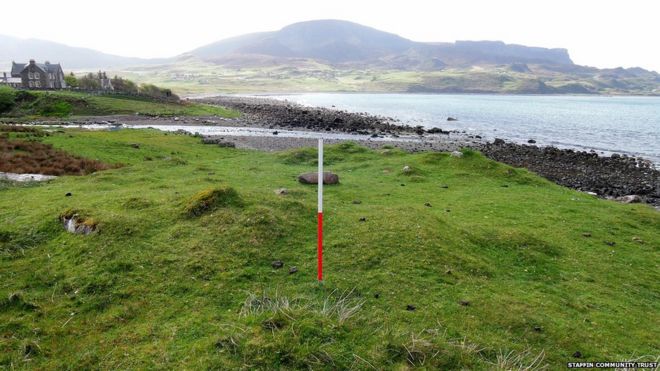
Hazelnut shells found at Skye Mesolithic site


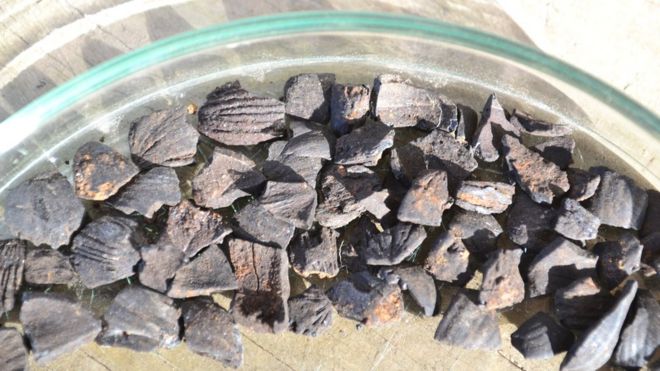
The remains of hazelnuts eaten by some of Skye's earliest inhabitants were found at a dig on the island, archaeologists have revealed.
Hazelnuts were a favourite snack of Mesolithic hunter-gatherers, according to archaeologists at the University of the Highlands and Islands (UHI).
The shells found at an excavation above Staffin Bay could be 8,000-years-old.
UHI carried out the dig along with Staffin Community Trust, school children and volunteers.

Read the rest of this article...

Plague traced back to Bronze Age


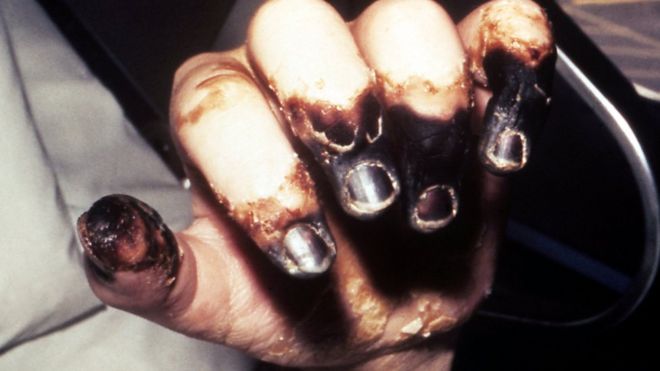
Plague has been a scourge on humanity for far longer than previously thought, ancient DNA shows.
Samples taken from the teeth of seven bodies contained traces of the bacterial infection in the Bronze Age.
They also showed it had, at the time, been unable to cause the bubonic form of plague or spread through fleas - abilities it evolved later.
The researchers, at the University of Copenhagen, say plague may have shaped early human populations.
Human history tells of three plague pandemics:

Read the rest of this article...

Monday, October 12, 2015

Oldest evidence of human activity found in Scotland


Archaeologists from the University of Reading have found the earliest dated evidence for human activity in Scotland - with a helping hand from a herd of pigs. 


Some of the tools found by the archaeologists  [Credit: University of Reading] 

The team made the remarkable discovery of a set of 12,000 year-old Ice Age stone tools while excavating Rubha Port an t-Seilich, on Islay in the Inner Hebrides in 2013. The tools include scrapers used for cleaning skins, sharp points likely used for hunting big game, such as reindeer, and much more. 

While the dig involved highly skilled archaeologists they have another team, or herd, to thank for the discovery. Pigs foraging along the Islay coastline uprooted Mesolithic objects in 2009 which ultimately led to the start of the excavation.

Read the rest of this article...
Digitising Yorkshire's savannah past


Ancient bones from a North Yorkshire cave, including the remains of rhinos, bears and hyenas, are to go on display in a "virtual museum" more than a century after they were excavated.
Some of the bones, found in Victoria Cave in the dales, date back more than one hundred thousand years.
At that time, such beasts were common in northern England.
A team of archaeologists from the organisation DigVentures has set out digitise the site's unique collection.
The cave was discovered in 1837 when a man noticed his dog disappear through an opening in the hill, and reappear through another.

Read the rest of this article...
Friday, October 9, 2015

First ancient African genome solves migration mystery


An ancient African genome has been sequenced for the first time.
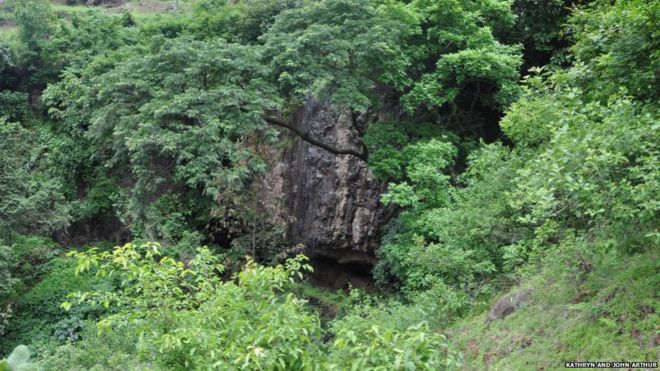
Researchers extracted DNA from a 4,500-year-old skull that was discovered in the highlands of Ethiopia.
A comparison with genetic material from today's Africans reveals how our ancient ancestors mixed and moved around the continents.
The findings, published in the journal Science, suggests that about 3,000 years ago there was a huge wave of migration from Eurasia into Africa.
This has left a genetic legacy, and the scientists believe up to 25% of the DNA of modern Africans can be traced back to this event.
"Every single population for which we have data in Africa has a sizeable component of Eurasian ancestry," said Dr Andrea Manica, from the University of Cambridge, who carried out the research.

Read the rest of this article...

Saturday, October 3, 2015

Mummification was common in Bronze Age Britain


Ancient Britons may have intentionally mummified some of their dead during the Bronze Age, according to archaeologists at the University of Sheffield. 


Bronze Age skeleton from Neat's Court excavation, on Isle of Sheppey, Kent  
[Credit: Geoff Morley]

The study, published in the Antiquity Journal, is the first to provide indications that mummification may have been a wide-spread funerary practise in Britain. 

Working with colleagues from the University of Manchester and University College London, Dr Tom Booth analysed skeletons at several Bronze Age burial sites across the UK. The team from the University of Sheffield’s Department of Archaeology found that the remains of some ancient Britons are consistent with a prehistoric mummy from northern Yemen and a partially mummified body recovered from a sphagnum peat bog in County Roscommon, Ireland.

Read the rest of this article...

ARCHAEOLOGISTS UNCOVER BRONZE AGE ‘SAUNA HOUSE’ IN ORKNEY


Archaeologists in Orkney have uncovered the remains of over 30 buildings dating from around 4000 BC to 1000 BC, together with field systems, middens and cemeteries. The find includes a very rare Bronze Age building which experts believed could have been a sauna or steam house, which may have been built for ritual purposes. 

EASE Archaeology recently made the exciting discovery on the periphery of the prehistoric Links of Noltland, on the island of Westray in Orkney, next to where the famous ‘Westray Wife’ was found in 2009, which is believed to be the earliest depiction of a human face in Britain. 

The work is being funded by Historic Scotland, who are this week merging with the Royal Commission on Ancient and Historic Monuments of Scotland (RCAHMS) to form a new heritage body called Historic Environment Scotland. 

Work has been carried out at the Links of Noltland for several years now but the most recent discovery, and one of the most remarkable to date, is that of an almost complete and remarkably well-preserved, very rare Bronze Age building which experts believe had a very specialised function and was used by select groups for activities such as rites of passage or spiritual ceremonies.  It’s also possible that the building could have been used as a sweat house or sauna, for a number of activities ranging from basic healing and cleansing, or as a place where women could come to give birth, the sick and elderly could come to die, or where bodies were taken before burial.


Read the rest of this article...
Monday, September 21, 2015

5,000-Year-Old Throne Found in Turkey


The remains of a 5,000-year-old adobe basament of a possible “throne” have been unearthed during excavations in Turkey, revealing the origins of the secularization of power and one of the first evidence of the birth of the state system.
Discovered in Aslantepe in the eastern Turkish province of Malatya, the structure consists of an adobe platform, raised by three steps above the floor, on top of which burnt wooden pieces were found.
“The burnt wooden fragments are likely the remains of a chair or throne,” excavation director Marcella Frangipane of La Sapienza University in Rome, told Discovery News.
Read the rest of this article...

Steinzeitliche Miniaturräder aus Holz


Kinderspielzeug, Anschauungsmaterial für Wagenbauer oder rituelle Gegenstände?
Im Olzreuter Ried bei Bad Schussenried in Oberschwaben fanden Archäologen des des Landesamts für Denkmalpflege im Regierungspräsidium Stuttgart zwei gut erhaltene hölzerne Miniaturräder aus dem 3. Jahrtausend v.Chr. Die Funde zeigen, dass in der Jungsteinzeit zwei unterschiedliche Konstruktionsprinzipien für Fuhrwerke bekannt waren.
Read the rest of this article...

Monday, September 14, 2015

Mesolithic site on Skye to be investigated

Archaeologists have described the site as having "huge potential"

Excavations of a Mesolithic site on Skye could give new insights into the lives of some of the island's earliest residents.
Archaeologists believe the location above Staffin Bay has the remains of a house that could be 8,000 years old.
Mesolithic flints have previously been found in an area of eroded grazing land near the site.
Archaeologists will work with Staffin Community Trust and volunteers in making small excavations.
Read the rest of this article...