Thursday, February 23, 2023

Neanderthals spread diverse cultures across Eurasia (before we came along)

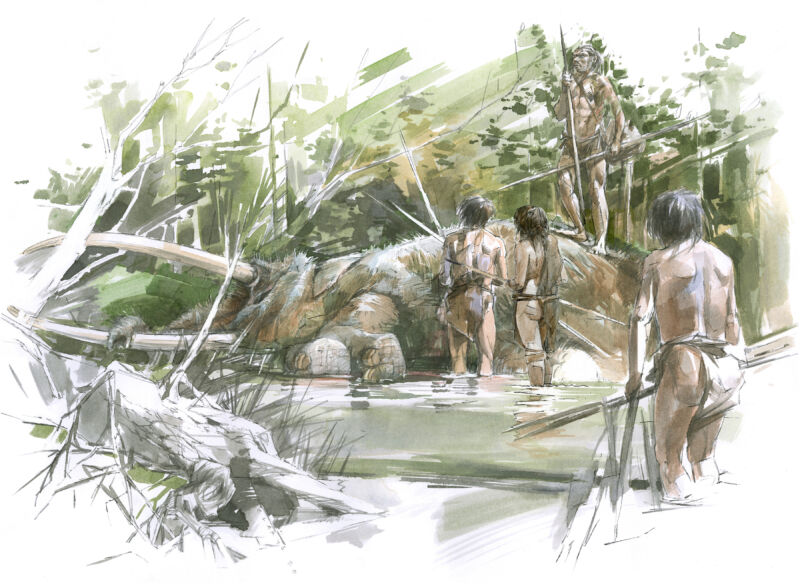
This artist's conception shows how Neanderthals might have faced down the mammoth task of butchering a freshly-killed elephant.

Two recent studies of Neanderthal archaeological sites (one on the coast of Portugal and one in central Germany) demonstrate yet again that our extinct cousins were smarter and more adaptable than we’ve often given them credit for. One study found that Neanderthals living on the coast of Portugal 90,000 years ago roasted brown crabs—a meal that’s still a delicacy on the Iberian coast today. The other showed that 125,000 years ago, large groups of Neanderthals came together to take down enormous Ice Age elephants in what’s now central Germany.

Individually, both discoveries are fascinating glimpses into the lives of a species that's hauntingly similar to our own. But to really understand the most important thing these Neanderthal diet discoveries tell us, we have to look at them together. Together, they show that Neanderthals in different parts of Europe had distinct cultures and ways of life—at least as diverse as the cultures that now occupy the same lands.

Read the rest of this article...

Thursday, February 16, 2023

Stunning reconstruction reveals 'lonely boy' with deformed skull who died in cave in Norway 8,300 years ago

Here we see a gif of a skull that gets muscles, eyes and finally hair and coloring added to it in 10 steps.It took Oscar Nilsson, a forensic artist based in Sweden, months to complete a reconstruction based on the boy's skull. (Image credit: Oscar Nilsson)

About 8,300 years ago, a teenage boy with an unusual skull and short stature may have scampered along the rocky coast of what is now Norway, pausing to regain his balance as he clutched a fishing rod. Now, a new full-body reconstruction of the Stone Age teenager — nicknamed Vistegutten, Norwegian for "the boy from Viste" — is on display at the Hå Gamle Prestegard museum in southern Norway.

The boy's reconstruction was a months-long project, but researchers have known about Vistegutten since 1907, when archaeologists found his remains in a Mesolithic, or Middle Stone Age, cave in Randaberg, along Norway's western coast. 

Read the rest of this article...

Monday, February 13, 2023

Never-Before-Seen Minoan Artifacts Exhibited in Oxford Museum

Minoan ladies women artifact Never-Before-See Minoan Artifacts Exhibited in Oxford’s Museum. Credit: ArchaiOptix / Wkimedia Commons CC BY-SA 4.0 

Over a hundred Minoan artifacts that have never left Crete and Greece before -including some which have never been displayed anywhere- launched on February 10 at Oxford’s Ashmolean Museum.

Labyrinth – Knossos, Myth and Reality is the first UK exhibition focusing on Knossos, the center of the Minoan civilization, which had been excavated by British archaeologist Sir Arthur Evans in the early 20th century.

The selection of Minoan artifacts, many of which were discovered after World War II, has been lent by the Archaeological Museum and the Ephorate of Antiquities of Heraklion, Crete, and will be exhibited until July 30, 2023, alongside discoveries from the Ashmolean’s Sir Arthur Evans Archive.

Read the rest of this article...

Sunday, February 12, 2023

Skegriedösen (Skegrie Dolmen) – 5,000-Year-Old Stone Chamber Tomb In Southern Sweden


Skegrie megalith grave in Skåne, Sweden. Image credit: Jorchr - CC BY-SA 3.0

Megalithic graves appeared more or less simultaneously in southern Sweden and were first used around 3500–3300 cal BC.

In comparison with other countries, Sweden has only about a hundred dolmens, mainly in Skåne, Halland, and Bohuslän. From the beginning, Sweden certainly possessed many more of them. Today, the existing number of these structures constitutes only a tiny part of what once existed.

No one knows precisely how these massive stones were moved and laid in their place.

Today we visit Skegriedösen (Skegrie Dolmen), located in Skegrie Parish in Trelleborg, Skåne, Sweden's most southern county. This dolmen (in Swedish - 'dös') is a stone chamber grave from the Neolithic times.

What we see today are the large boulders. All organic building materials such as reeds, birch bark, cloth, animal skins, and wood have disappeared over time.

Read the rest of this article...

Thursday, February 2, 2023

Nearly 600 obsidian handaxes from 1.2 million years ago found in Ethiopia show early humans were smarter than we think

Credit: FrankvandenBergh / iStock / Getty Images Plus

A trove of nearly 600 obsidian handaxes, dating back at least 1.2 million years, has been unearthed in Ethiopia, indicating the presence of a prehistoric “knapping workshop”.

Knapping is the technique used to create handaxes, which are often referred to as humanity’s “first great invention.”

Made by chipping shards off a piece of stone to make a sharp edge, handaxes were not attached to handles, but held in the hand. They have a distinctive teardrop or pear shape. They were made out of flint or, later, obsidian – a type of volcanic glass.

The first handaxes in the palaeontological record date back to at least 1.5 million years ago and were found in Tanzania’s Olduvai Gorge. Handaxes are believed to have spread throughout Africa, south Asia, the Middle East and Europe around 500,000 years ago. They were still being made as recently as 40,000 years ago.

Read the rest of this article...

Did Humanity Really Arise in One Place?

San hunter-gatherers—descended from the oldest distinct lineage of Homo sapiens—are one of many communities helping to rewrite the story of humanity’s origins.Martin Harvey/Getty Images

New evidence is prompting researchers to rethink Homo sapiens’ origin story—and what it means to be human.

AS A UNIVERSITY STUDENT in the early 2010s, I recall how beautifully simple our origin story was: Homo sapiens evolved in East African savannas around 150,000 years ago. Then, sometime around 70,000 years ago, a mutation occurred that endowed these individuals with the capacity for complex, symbolic behavior. This set them apart from any other species and allowed them to leave Africa and take over the world, replacing all other humans they encountered.

This “East Side Story” made sense, based on major finds in the 20th century. The oldest fully modern H. sapiens skulls, dating to at least 233,000 years ago, were found in Ethiopia’s Omo Valley. “Lucy,” the 3.2-million-year-old Australopithecus afarensis, was also unearthed in Ethiopia. The earliest stone tools, dated to 3.3 million years old, were discovered in Kenya.

Neanderthals hunted enormous elephants that fed 100 people for a month


The extinct straight-tusked elephant was even larger than modern African elephants, making it unclear if Neanderthal hunters could take one down, but a newly analysed trove of bones suggests it was possible

Neanderthals regularly hunted and butchered elephants in Europe thousands of years ago, according to an analysis of marks made by stone tools on a trove of bones.

The find suggests the ancient humans either lived in larger groups than previously suspected or that they had ways of processing the flesh so it didn’t spoil, says Wil Roebroeks at Leiden University in the Netherlands, given the amount of meat involved. “These elephants are really big calorie bombs.”

There has long been debate over whether Neanderthals, distant cousins of modern humans, could have hunted the straight-tusked elephants (Palaeoloxodon antiquus). These extinct giants stood 4 metres tall, making them larger than modern African elephants and woolly mammoths.

Read the rest of this article...

Perception versus reality: Implications of elephant hunting by Neanderthals

Reconstruction of Pleistocene hominins exploiting an elephant.

Neanderthals hunted elephants at Neumark-Nord 1 (Germany), a finding that has major implications for our understanding of social and cultural aspects of Neanderthal behavior.

Few members of the hominin lineage have been more maligned in popular culture than Neanderthals. From their discovery and the earliest depictions of Neanderthals at the turn of the 20th century, there has been an “othering” of our closest hominin cousins, to the extent that calling someone a cave man or Neanderthal is taken as an insult that implies being stupid or backward. Scientists have not been immune to this, and, indeed, many have pushed aspects of the incompetent Neanderthal trope through much of the 20th century [e.g., (1)]. However, some researchers voiced the need to moderate the conversation, and by the 1990s, many archaeologists began to characterize Neanderthals as successful big game hunters (2). This view, though, did not seem to extend beyond standard large game on the European landscape (e.g., horses, cattle, and deer).

Read the rest of this article...

Thursday, January 26, 2023

The Oldest Rune Stones in the World

The Svingerud Stone is the oldest rune stone, created almost two thousand years ago

There are many things that come into mind when thinking of Vikings – horned helmets, which are historically inaccurate, longships that brought terror to Europe, Norse gods that have been turned into Hollywood super heroes and, the subject of this article, their unique way of writing.

The runic alphabet developed among the early Germanic people of Northern Europe almost 2,000 years ago. How it was created it still not fully understood, though it is widely believed that contact with Mediterranean civilisations – Greeks, Etruscans and Romans – influenced the creation of this writing system.

Some of the best preserved examples of this script can be found on rune stones, including the lions-hare located in Sweden. They had many varied purposes ranging from marking territory to memorialising fallen kinsmen. Rune stones used to be highly colourful, though hundreds of years of being out in the open means very little is left for modern observers.

Here were look at some of the oldest rune stones found by archeologists.

Read the rest of this article...

Monday, January 23, 2023

Lasers Are Mapping Scotland’s Mysterious Iron Age Passages

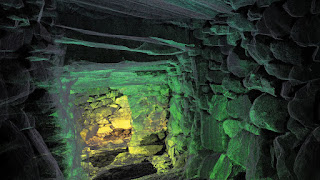
A laser scan of Cracknie souterrain, capturing every detail in 3D
PHOTOGRAPH: AOC ARCHAEOLOGY

In February 2022, Graeme Cavers and his team of archaeologists set off in search of a mysterious underground passage called a souterrain. There are around 500 of these Iron Age structures scattered throughout the Scottish Highlands, but nobody knows what they were built for, and no one has ever discovered one intact.

“Perhaps they were for storage, such as grain in sealed pots or dairy products like cheese,” says Matt Ritchie, resident archaeologist at Forestry and Land Scotland. “Perhaps they were for security, keeping valuables safe, or slaves or hostages secure. Or perhaps they were for ceremonial purposes, for household rituals, like a medieval shrine or private chapel.”

Site surveys can help shed light on the condition and structure of souterrains, but they can take at least a week using traditional methods, says Cavers, whose company AOC Archaeology was enlisted by Ritchie to help map the Cracknie Souterrain in Scotland’s Borgie Forest.

Read the rest of this article...

Enigmatic Ale’s Stones – Sweden’s Megalithic Ship-Like Formation


Ales stones, Hesten and others (Valleberga 20:1). Image credit: Jorchr - CC BY-SA 4.0

Myths, legends, and mystery surround this fascinating megalithic formation consisting of 58 (59) upright boulders and one vertical (weighing up to 1.8 tons each) - placed in a gigantic ship formation, 67 meters in length and 19 meters wide.

The largest stones are almost 3.5-meter and are called "bow" and "stern." They are directed towards the sunrise at the time of the summer solstice, and the sunset at the time of the winter solstice.

The Ales Stenar - Sweden's largest stone complex dates back to the Bronze or Iron Age. From a bird's eye view, it resembles the shape of a boat. It is not known who and for what purpose built it. Not even experts know why this complex was built.

Read the rest of this article...

Wednesday, January 18, 2023

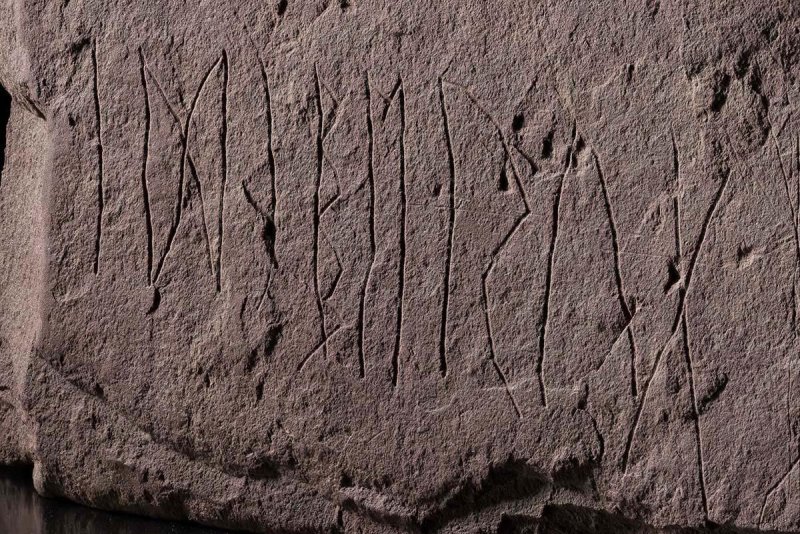
Found the world's oldest rune stone

Photo: Alexis Pantos/KHM, UiO.

During the first few centuries of the Common Era, during the period that archaeologists call the Roman Iron Age, Scandinavians came into contact with Roman society by trading goods and through their encounters with the Roman army. Archaeological material testifies to the fact that this is how they acquired knowledge about new customs and forms of organisation, and not least a written culture. 

Inspired by the classical alphabets, such as the Roman alphabet, the Germanic peoples created their own characters – runes. But exactly how old is the runic alphabet, and when were the first rune stones made? These are questions that researchers have been seeking to answer for many years. 

A new archaeological find is attracting international attention among runic scholars and archaeologists: the world's oldest dated rune stone was discovered during the autumn of 2021 when archaeologists at the Museum of Cultural History, University of Oslo, investigated a grave field in Hole near Tyrifjorden, Eastern Norway. Radiocarbon dates show that the age of the grave and thus the inscriptions on the stone probably date back to 1-250 CE. This rune stone is thus one of the very earliest examples of words recorded in writing in Scandinavia, and the inscriptions provide new insights into the development and use of runic writing during the early Iron Age. 

Read the rest of this article...
Norway reveals stone tablet providing clues to origins of Western writing

The ancient rune stone found by Norwegian researchers is believed to be between 1,800 and 2,000 years old. It was found buried beneath a later grave.
Photo courtesy of Museum of Cultural History

Jan. 17 (UPI) -- Norway is set to unveil an ancient rune stone found in the east of the country dating back as much as 2,000 years that is providing the missing pieces to the puzzle of the origins of writing in northern Europe.

Researchers from the University of Oslo's Museum of Cultural History found the block of sandstone on an Iron Age grave site dig near Tyrifjorden, northwest of Oslo, in late 2021. They now believe it is the world's oldest rune stone and that the characters on the stone are one of the earliest examples of writing in Scandinavia because radiocarbon dating shows the grave dates back to 1-250 CE.

The stone, which is creating a stir internationally among runologists and archaeologists, is going on display to the public as the centerpiece of a new exhibition opening on Saturday at the Historical Museum in Oslo.

Read the rest of this article...

Tuesday, January 17, 2023

Wishing well used for Bronze Age 'cult rituals' discovered in Bavaria

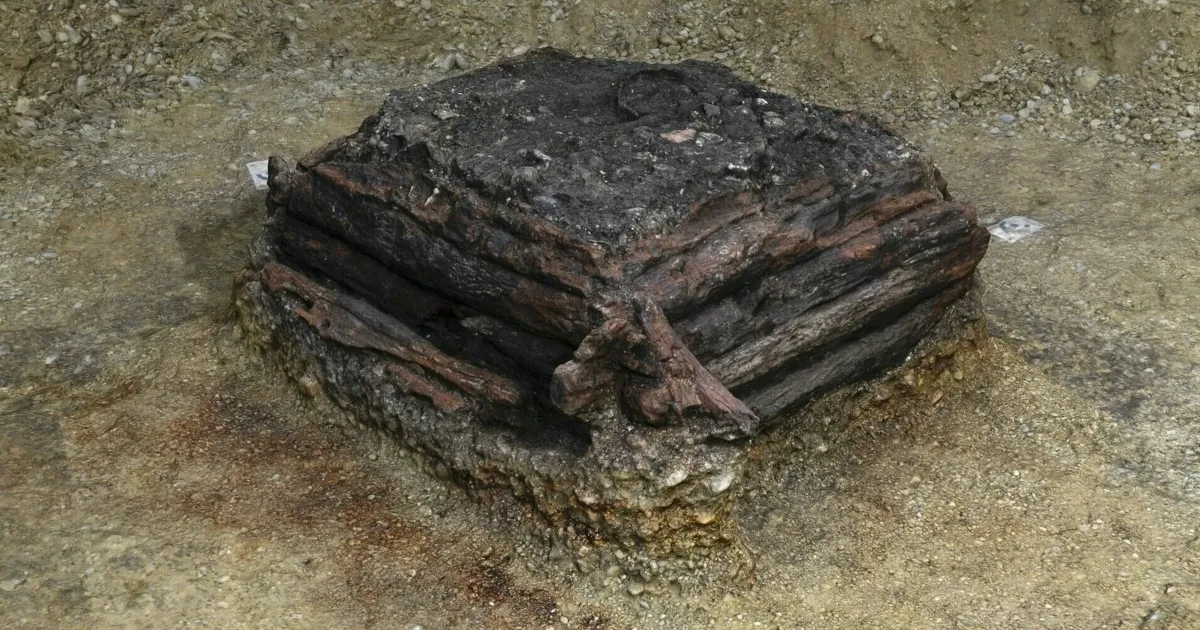
The wooden wishing well discovered by archaeologists in Bavaria, Germany.
(Image credit: The Bavarian State Office for Monument Protection)

Archaeologists in Bavaria, Germany, have unearthed a 3,000-year-old wooden wishing well overflowing with more than 100 artifacts dating to the Bronze Age.

Unlike modern-day wishing wells, where people toss in coins and make a wish, the items in this well were placed there for "ritual purposes" in what is now the Bavarian town of Germering. The artifacts included more than 70 well-preserved clay vessels, including numerous decorative bowls, cups and pots that were used for special occasions and not "simple everyday crockery," according to a translated statement(opens in new tab). 

Archaeologists also found more than two dozen bronze robe pins, a bracelet, four amber beads, two metal spirals, a mounted animal tooth and a wooden scoop. 

Read the rest of this article...

Brutality of prehistoric life revealed by Europe’s bog bodies

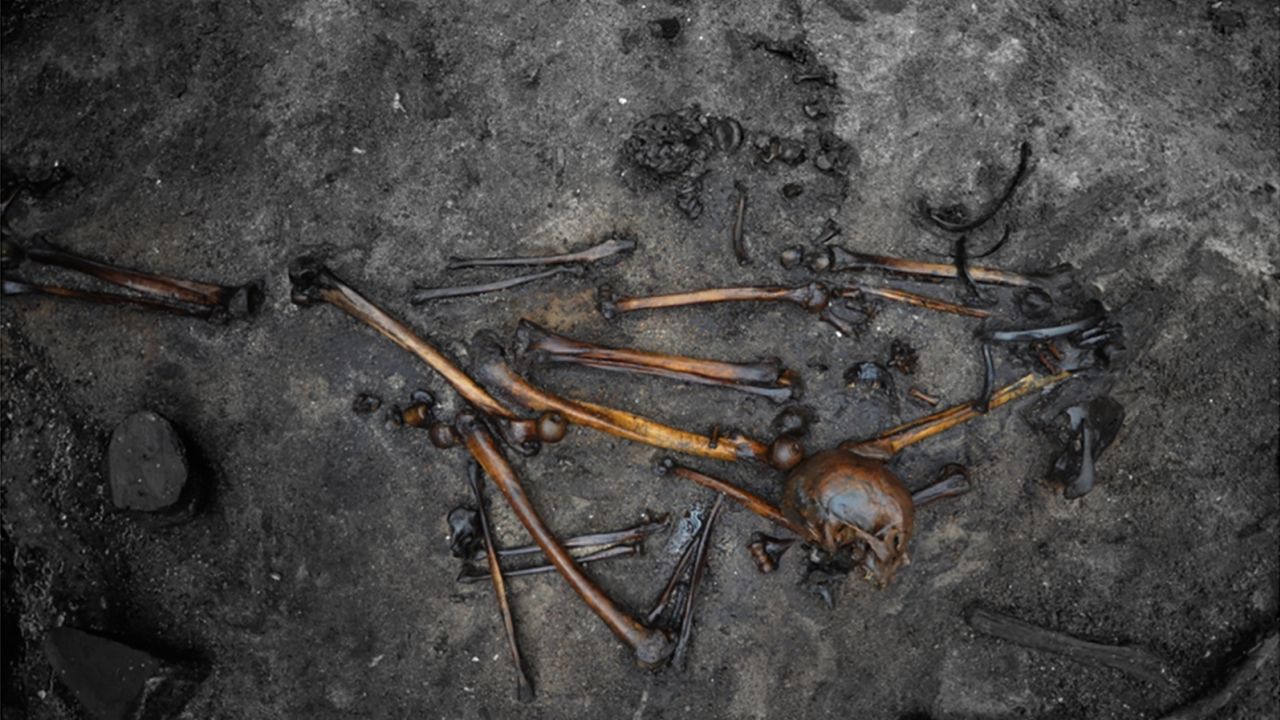
At Alken Enge in Denmark, the remains of at least 380 individuals were deposited in a wetland almost 2,000 years ago.


In 1984, a peat cutter discovered human remains in a bog in Cheshire, England. They belonged to a man who died a brutal death some 2,100 years ago before being placed in the bog — examination of his well-preserved mummy revealed blows to the head, a possible stab wound and a broken neck. Twisted sinew found still wrapped around his neck may have also been a garotte.

Now in the British Museum in London, the remains of the Lindow Man are perhaps the best known of Europe’s 2,000 or so “bog bodies.” These are mummies and skeletons that have been found mired in the peat and wetlands of Ireland, the United Kingdom, the Netherlands, Germany, Scandinavia, Poland and other parts of Eastern Europe.

The bodies — often exquisitely preserved by the bogs’ cool, acidic conditions and organic compounds— provide an exciting snap shot of the past. Archaeologists study their skin, bones, clothes, belongings and sometimes even their last meal. Now, researchers have undertaken the first comprehensive survey of bog bodies — a burial tradition they believe spanned 7,000 years — to build up a fuller picture of the phenomenon.

Read the rest of this article...
First of its kind study identifies how humans lost their body hair

Humans appear to have the genes for a full coat of body hair, but evolution has disabled them,  scientists at University of Utah Health and University of Pittsburgh report.
(CREDIT: Creative Commons)


Orangutans, mice, and horses are covered with it, but humans aren’t. Why we have significantly less body hair than most other mammals has long remained a mystery. But a first-of-its-kind comparison of genetic codes from 62 animals is beginning to tell the story of how people—and other mammals—lost their locks.

Humans appear to have the genes for a full coat of body hair, but evolution has disabled them,  scientists at University of Utah Health and University of Pittsburgh report in the journal eLife. The findings point to a set of genes and regulatory regions of the genome that appear to be essential for making hair.

Read the rest of this article...
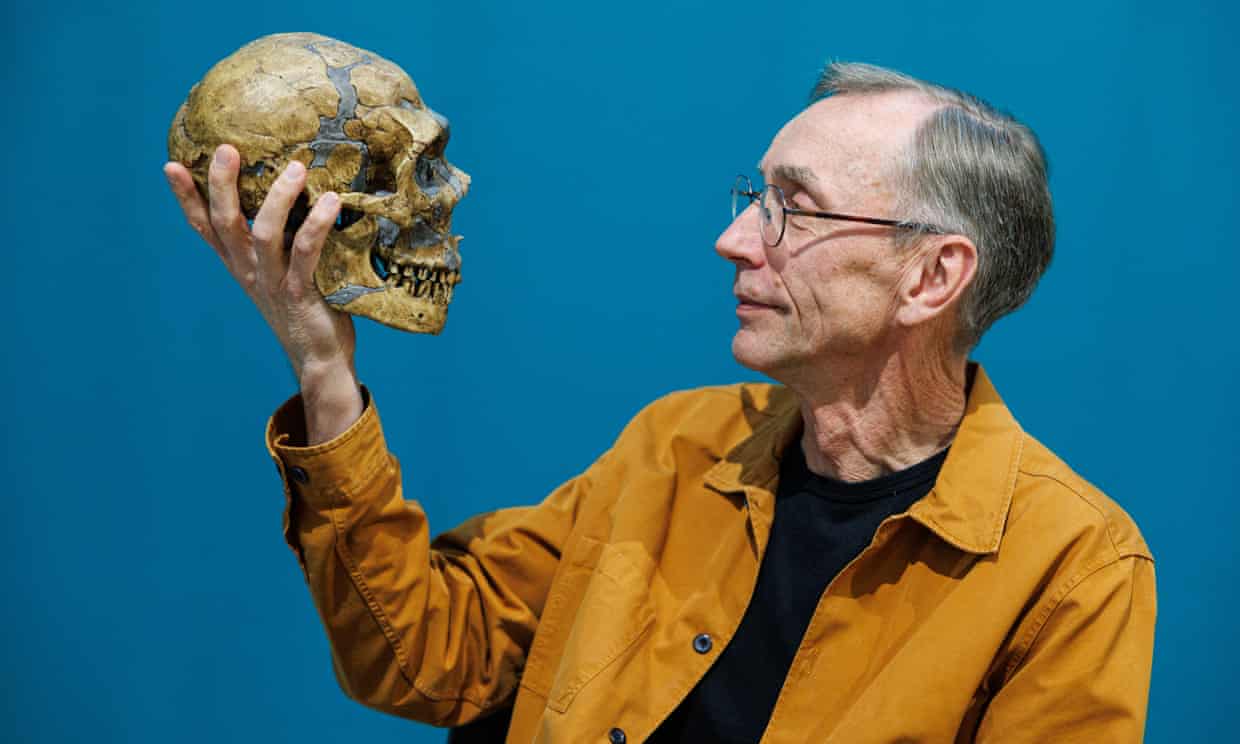
Svante Pääbo: ‘It’s maybe time to rethink our idea of Neanderthals’

Svante Pääbo says becoming a Nobel laureate has been ‘a burden … but a pleasant burden’. Photograph: Jens Schlueter/Getty Images

A greyish neanderthal skeleton stands at the door of Svante Pääbo’s office, acting like a doorman to check up on his visitors, who have grown considerably in number since it was announced he was to receive a Nobel prize. It clutches a white party balloon in its left hand and is missing its right lower arm.

“Unfortunately my son broke it off once,” says Pääbo with a chuckle, patting the skeleton’s head.

On the day the Guardian visits, the Swedish geneticist is still reeling from the shock of having been chosen as Nobel laureate for Medicine or physiology (the prize straddles both fields) in October. A bottle of champagne stands on his desk along with messages of congratulations from friends and colleagues. Over coffee and shortbread in a rare interview, he admits: “It’s a bit of a burden, to be honest, all the attention I’ve been getting. But it’s a pleasant burden, and one for which I know I can’t expect much sympathy.”

Read the rest of this article...
Wednesday, December 21, 2022

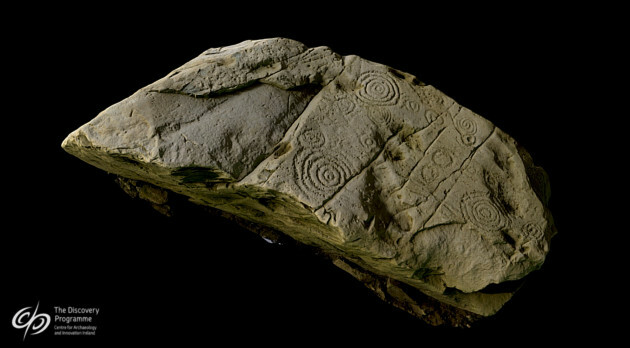
Winter solstice: Explore these new 3D scans of passage tomb megalithic art


A TREASURE TROVE of megalithic art imagery from a recently uncovered passage tomb is being released to mark the winter solstice.

The Dowth Hall tomb is part of the Brú na Boinne complex, and is located a stone’s throw away from the more famous Newgrange, Knowth, and Dowth tombs.

It was hidden underground until an excavation in 2017. What remains was damaged by the construction of a building above it in the 18th century.

The find was described as ‘the most significant’ of the past 50 years in Ireland.

An estimated one-third of the kerbstones – which would have surrounded the tomb – and orthostats – upright stones – found at Dowth Hall are decorated in Neolithic art.

Read the rest of this article...

Video: Marking the winter solstice at Maeshowe chambered cairn


With its south-westerly facing entrance,perhaps Maeshowe’s best known attribute is its orientation towards the setting sun around midwinter.

Five thousand years ago, as now, it may be that the solstice marked the passing of time – the death of the old year and the birth of the new one. In the dark depths of an Orkney winter today, the solstice remains a welcome indicator that the sun is returning.

Read the rest of this article...
Monday, December 19, 2022

Bog Body Discovered in Denmark


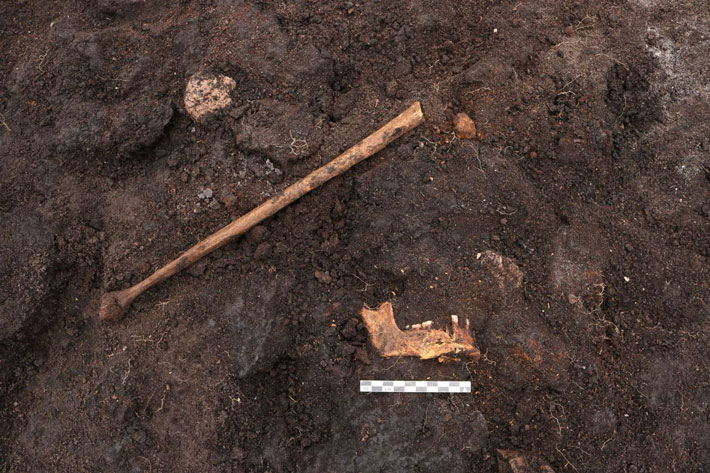
STENLØSE, DENMARK—Live Science reports that human and animal bones, as well as an unpolished flint ax head, were recovered from what was once a bog on Denmark’s island of Zealand during an investigation conducted before a construction project. The style of the ax suggests that the bones date to the early Neolithic period, more than 5,000 years ago, according to Emil Struve of the ROMU museums. “We know that traditions of human sacrifices date back that far—we have other examples of it,” he said. The human remains include leg bones, a pelvis, and part of a lower jaw with some teeth still attached. The rest of the body probably lay outside the protective layer of peat and was not preserved.

Read the rest of this article...