Thursday, May 28, 2015

'New species' of ancient human found

Researchers say the jaw bones and teeth are unlike any they have seen before

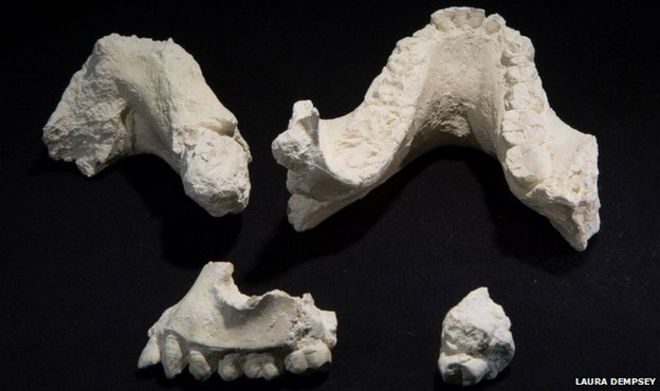
A new species of ancient human has been unearthed in the Afar region of Ethiopia, scientists report.
Researchers discovered jaw bones and teeth, which date to between 3.3m and 3.5m years old.
It means this new hominin was alive at the same time as several other early human species, suggesting our family tree is more complicated than was thought.
The new species has been called Australopithecus deyiremeda, which means "close relative" in the language spoken by the Afar people.

Read the rest of this article...

Tuesday, May 26, 2015

Danish Bronze Age girl may have been German


One of Denmark's proudest relics may not be Danish after all, researchers have found.

In a feat of laboratory sleuthing, scientists on Thursday provided a background to a mysterious Bronze Age teenager who died in modern-day Denmark 3,400 years ago.
 
The "Egtved Girl," uncovered at a village in the Jutland peninsula, was probably born in southwestern Germany and may have been married off to cement ties between powerful families, they said.
 
One of Denmark's proudest relics, the Egtved Girl was found in 1921 at a burial mound, inside an oak coffin that dates her interment to a summer's day in the year 1370 BC.

Read the rest of this article...

Our bond with dogs may go back more than 27,000 years


Dogs' special relationship to humans may go back 27,000 to 40,000 years, according to genomic analysis of an ancient Taimyr wolf bone reported in the Cell Press journal Current Biologyon May 21. Earlier genome-based estimates have suggested that the ancestors of modern-day dogs diverged from wolves no more than 16,000 years ago, after the last Ice Age.
The genome from this ancient specimen, which has been radiocarbon dated to 35,000 years ago, reveals that the Taimyr wolf represents the most recent common ancestor of modern wolves and dogs.
"Dogs may have been domesticated much earlier than is generally believed," says Love Dalén of the Swedish Museum of Natural History. "The only other explanation is that there was a major divergence between two wolf populations at that time, and one of these populations subsequently gave rise to all modern wolves." Dalén considers this second explanation less likely, since it would require that the second wolf population subsequently became extinct in the wild.
Read the rest of this article...

Thursday, May 21, 2015

Oldest stone tools pre-date earliest humans


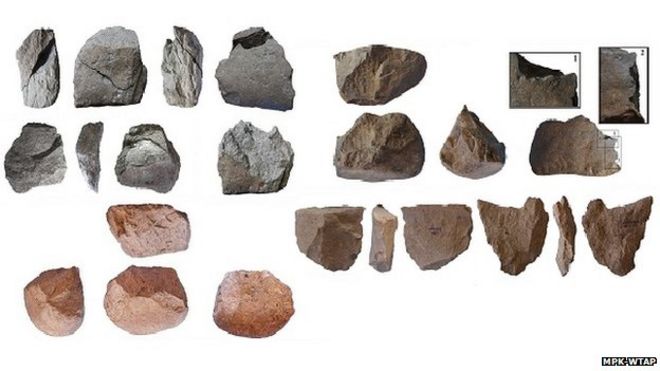
The tools includes sharp-edged flakes, hammers and anvils

The world's oldest stone tools have been discovered, scientists report.
They were unearthed from the shores of Lake Turkana in Kenya, and date to 3.3 million years ago.
They are 700,000 years older than any tools found before, even pre-dating the earliest humans in the Homo genus.
The find, reported in Nature, suggests that more ancient species, such asAustralopithecus afarensis or Kenyanthropus platyops, may have been more sophisticated than was thought.
"They are significantly earlier than anything that has been found previously," said Dr Nick Taylor, from the National Centre of Scientific Research (CNRS) in France and the University of Leiden in the Netherlands.

Read the rest of this article...

Tuesday, May 5, 2015

Prehistoric man with shield found after dig


An archeological dig in Pocklington has unearthed a prehistoric man buried with a shield.

The skeleton was found in one of the square barrows at the recently discovered Iron Age burial ground on Burnby Lane, which is where developer David Wilson Homes is planning to build 77 new houses.

MAP Archaeological Practice, the company which is carrying out the excavation work, says it has also discovered a man “of an impressive stature.”

The site has so far yielded more than 38 square barrows and in excess of 82 burials.

Read the rest of this article...

Neolithic fishing spear found in southern Denmark


At the archaeological investigations ahead of the construction of the future Fehmarn Belt Fixed Link, archaeologists from Museum Lolland-Falster have found an object that attracts particular attention. Jammed into the marine sediments was the head part of a fragmented fishing leister consisting of parts from both lateral prongs and a bone point slightly offset between them. It has long been presumed that there was a link between leister prongs and bone points, but this is probably the first time the connection has been documented in practice. The find thus confirms a theory that has been supported by archaeologists for decades, and which has been indicated by anthropological examples as well.


The Stone Age fishing leister, as it was found  [Credit: Museum Lolland-Falster]

"It is quite amazing that we have made a find that can help prove an old theory. So far, we have found a large number of individual leister prongs and bone points, but when we found them combined, it was quite remarkable. At last we are able to positively confirm the old theory because of this find," says Søren Anker Sørensen archaeologist at Museum Lolland-Falster.

Read the rest of this article...

Monday, April 27, 2015

France's prehistoric Chauvet cave opens


A stunning replica of the 36,000 year-old Grotte Chauvet, home to the oldest figurative cave drawings in the world and an Unesco Heritage site, opened to the public at the weekend. Here's a look inside the country's latest tourist attraction.

The grotto at Vallon-Pont d'Arc in the Ardeche region of southern France, is a reproduction of the closely guarded Grotte Chauvet, which was granted World Heritage status last year.
The French president had already officially inaugurated the museum earlier this month and it officially opened to the public on Saturday.
The replica cave, which took a team of scientists two and a half years to create, will enable tourists from around the world to continue to see the frescos of painted animals without damaging the original cave.
Read the rest of this article...

Tuesday, April 21, 2015

New Thoughts on Neanderthal Cooking


Neanderthals went extinct in most of Europe around 40,000 years ago, some 5,000 years after the arrival of the first modern humans. “The issue of Neanderthal extinction is very complex, and very little is agreed upon,” Anna Goldfield of Boston University said at the annual meeting of the Society for American Archaeology, reported in Live Science. She thinks that mastery of fire may have given modern humans an advantage over Neanderthals in the struggle for survival. Cooking would have provided modern humans with more calories from the same amount of food, and it kills bacteria, making the food safer to eat.

Read the rest of this article...

Saturday, April 18, 2015

Study report revisits cave of prehistoric cannibals


In 2012, a detailed report of prehistoric cannibalism in Gough’s cave in Cheddar Gorge (Somerset), UK, attracted media attention with thenews that a group of prehistoric humans, otherwise known as Magdalenians, systematically and ritualistically consumed and utilized the remains of members of their own group about 14,700 years ago.   
Now, a new report published in the Journal of Human Evolution sheds additional light on the discovery, narrowing the time frame in which the cannibalistic events took place and the extent of the activity.
Read the rest of this article...

More Evidence of Cannibalism Found in Gough’s Cave

(The Trustees of the Natural History Museum, London)

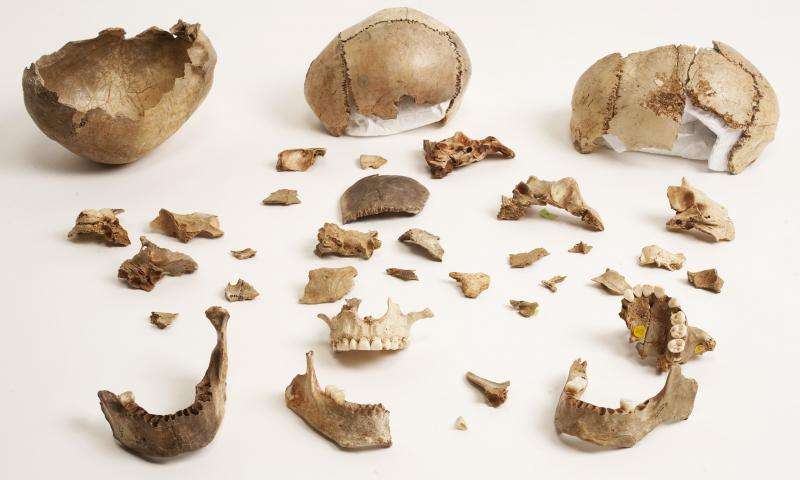
Ancient human remains from Gough’s Cave, located in southwest England, exhibit signs of a sophisticated culture of butchering and carving of human remains, according to scientists from the Natural History Museum of London, University College London, and IPHES and the Universitat Rovira I Virgili in Spain. In 2011, scientists from the museum announced that the earliest-known skull cups had been found in Gough’s Cave. “We’ve identified a far greater degree of human modification than recorded in earlier research. We’ve found undoubting evidence for defleshing, disarticulation, human chewing, crushing of spongy bone, and the cracking of bones to extract marrow,” Silvia Bello of the Natural History Museum said in a press release. 

Read the rest of this article...

Friday, April 17, 2015

Ältester Nachweis von Pilzen als Nahrungsmittel


Untersuchungen von altem Zahnstein ergaben, dass Menschen bereits in der Altsteinzeit Pflanzen und Pilze konsumierten.

Über die Nahrungsgewohnheiten der Menschen, die im Jungpaläolithikum, dem jüngeren Abschnitt der Altsteinzeit vor 18.000 bis 12.000 Jahren während der archäologischen Kulturstufe des Magdaléniens lebten, ist nur wenig bekannt. Besonders schwer lassen sich pflanzliche Nahrungsstoffe nachweisen, denn sie hinterlassen nur geringe Spuren im menschlichen Körper. Unter der Leitung von Robert Power vom Max-Planck-Institut für evolutionäre Anthropologie in Leipzig hat ein internationales Forscherteam den uralten Zahnstein von Menschen aus dem Magdalénien untersucht, deren Überreste man in der El Mirón-Höhle in Spanien ausgegraben hatte. Die Forscher konnten nachweisen, dass diese Menschen bereits im Jungpaläolithikum zusätzlich zu anderen Nahrungsbestandteilen auch verschiedene pflanzliche Nahrungsstoffe und Pilze auf der Speisekarte hatten.

Read the rest of this article...

Thursday, April 16, 2015

Palaeolithic remains show cannibalistic habits of human ancestors


Aalysis of ancient cadavers recovered at a famous archaeological site confirm the existence of a sophisticated culture of butchering and carving human remains, according to a team of scientists from the Natural History Museum, University College London, and a number of Spanish universities.

Gough's Cave in Somerset was thought to have given up all its secrets when excavations ended in 1992, yet research on human bones from the site has continued in the decades since. After its discovery in the 1880s, the site was developed as a show cave and largely emptied of sediment, at times with minimal archaeological supervision. The excavations uncovered intensively-processed human bones intermingled with abundant butchered large mammal remains and a diverse range of flint, bone, antler, and ivory artefacts.
New radiocarbon techniques have revealed remains were deposited over a very short period of time, possibly during a series of seasonal occupations, about 14,700 years ago.

Read the rest of this article...
Complex cognition shaped the Stone Age hand axe, study shows


Emory Health Sciences—The ability to make a Lower Paleolithic hand axe depends on complex cognitive control by the prefrontal cortex, including the "central executive" function of working memory, a new study finds.
PLOS ONE published the results, which counter theories that Stone Age hand axes are simple tools that don't involve higher-order executive function of the brain.
"For the first time, we've showed a relationship between the degree of prefrontal brain activity, the ability to make technological judgments, and success in actually making stone tools," says Dietrich Stout, an experimental archeologist atEmory University and the leader of the study. "The findings are relevant to ongoing debates about the origins of modern human cognition, and the role of technological and social complexity in brain evolution across species."
Read the rest of this article...

Neanderthals manipulated the bodies of adults and children shortly after death


Since the Marillac site in France was unearthed, the discovery of fossil remains of animals (90% belonging to reindeer), humans and Mousterian tools has enabled the site to be identified as a hunting area for Neanderthals (Homo neanderthalensis). But the most surprising thing about the site is the presence of a large quantity of bone remains of these hominids, many of which are yet to be analysed.

Now, a study published in the ‘American Journal of Physical Anthropology’ has for the first time analysed the fragments of three individuals found between 1967 and 1980 at the French site dating back some 57,600 years. These are an incomplete diaphysis (middle part of long bones) of a right radius, another of a left fibula and the majority of a right femur. The latter belonged to a child.

Read the rest of this article...

Monticello, un établissement métallurgique néolithique


Watch the video...

Britain’s Oldest Cremated Human Bone Discovered


It had been thought that the nomadic hunter-gatherers of Britain’s Mesolithic period may have abandoned their dead, but a deposit containing cremated human bone was uncovered by a team from Oxford Archaeology in southeastern England. The bone probably represents at least one adult, whose remains were recovered with a large amount of charcoal, perhaps from a pyre that would have had to have reached a high temperature to achieve the complete combustion of the corpse. “We were expecting this cremation to date to the Bronze Age: we were so surprised when the first radiocarbon date came back as Mesolithic that we did two more to double check!” said Nick Gilmour, excavation leader. Sharp flint blades were found in the same pit, and although they were not finished tools, they could have been used for cutting. Three similar Mesolithic cremations are known in Ireland, and several have been found in continental Europe. For another find dating to this period, see "Beachcombing in the Mesolithic."

Read the rest of this article...
Sunday, April 12, 2015

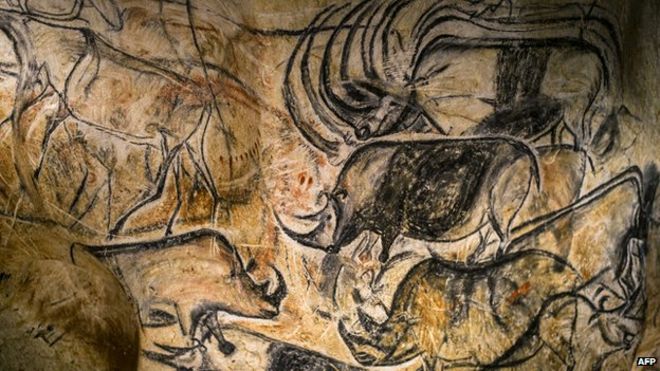
France creates replica cave for spectacular prehistoric art


The replica cave art shows hundreds of animals - many no longer found in Europe
France has inaugurated a giant replica cave containing reproductions of prehistoric drawings of animals.
The original drawings, showing bears, panthers, rhinos and other creatures, are roughly 32,000 years old.
President Francois Hollande toured the site on Friday - a copy of the closely-guarded Grotte Chauvet in the Ardeche region of southern France.
The original is closed to the public. The copy, at nearby Vallon-Pont d'Arc, is expected to attract many tourists.
The Chauvet drawings are believed to be the oldest cave art in the world. The limestone cave, with hundreds of vivid charcoal images, was discovered by potholers in 1994 and is now a Unesco World Heritage site.
Read the rest of this article...

Replica of prehistoric French grotto to open

The replica of the Chauvet cave at Pont d'Arc is to open its doors. Photo: AFP

A stunning replica of the 36,000 year-old Grotte Chauvet, home to the oldest figurative cave drawings in the world and an Unesco Heritage site, is to be officially opened by President François Hollande on Friday. Here's a look inside.
The grotto at Vallon-Pont d'Arc in the Ardeche region of southern France, is a reproduction of the closely guarded Grotte Chauvet, which was granted World Heritage status last year.
The French president will officially inaugurate the museum on Friday before its opening on April 25th.
Read the rest of this article...

Excavating the Cromlech Tumulus on Slievemore: The story so far


Looking south across the western part of the site. The enclosure wall can be seen on the right of the picture whilst the western end of the ovoid building can be seen at the left. 
Image: Achill Archaeological Field School

Last year (2014), Achill Archaeological Field School detailed the background to an exciting excavationthat was about to begin on Slievemore Mountain, on Achill, the largest island in Ireland, located off the north west coast of County Mayo.

The site was first noted on the 1838 edition of the Ordnance Survey map where the labels ‘Cromlech’ and ‘Tumulus’ are used, apparently relating to two separate but adjacent sites a little to the west of a well known Neolithic court tomb. On later editions of the Ordnance Survey map and in most subsequent discussions the two terms are conflated and used to describe all of the visible archaeology in that location. Serious archaeological discussion of the site began in the 1890’s when Col. W.G. Wood Martin described the various elements as a ‘sepulchral complex’. Subsequent opinions have been divided over how the site should be categorised.

Read the rest of this article...
Are Neanderthal bone flutes the work of Ice Age hyenas?


'Bone flutes' found accross Europe in caves are more likely to be the scavenged remains of cave bears finds this study. Credit: Cajus G. Diedrich

A study in Royal Society Open Science says that so called 'Neanderthal bone flutes' are no more than the damaged bones of cave bear cubs left by scavengers during the Ice Age.

The paper suggests that the 'flutes', which are often attributed as being the oldest musical instruments in the world, were misidentified when they were first discovered in the 1920s. The author of the paper, Cajus G. Diedrich, says the bones are the damaged remains of bear cubs left by the teeth of Ice Age spotted hyenas.

The cave bear bones, discovered in cave systems in Eastern Europe, appear to have aligned holes drilled into their lengths which makes them resemble broken flutes. In past work researchers have identified the holes as matching with a musical diatonic scale sequence, among the most widespread of musical scales known, and cited this as evidence that the bones are early musical instruments. Some musicians have even been able to create music from replicas of the bones.

Read the rest of this article...

Saturday, April 11, 2015

Embracing skeletons unearthed in Greece


Almost 6,000 years ago, the man was placed behind the woman with his arms around her body, and their legs were intertwined. They were buried. 


A rare ancient Greek gravesite containing two intertwined corpses was discovered  by an international team that included Michael Galaty, head of Mississippi  State University's anthropology and Middle Eastern cultures department  [Credit: Mississippi State University] 

Why they were interred in this manner is not yet determined, but the international team that discovered them in Greece is still searching for answers, according to team member Michael Galaty, a Mississippi State University archaeologist. 

"There've only been a couple of prehistoric examples of this behavior around the world, but even when couples are buried together, they're beside each other and not typically touching," he said. "This couple was actually spooning. We assume they were partners of some kind, and because of DNA analysis, we do know they are male and female." Not only does Galaty head MSU's anthropology and Middle Eastern cultures department, but he also serves as interim director of the university's Cobb Institute of Archeology.

Read the rest of this article...

Climate change is destroying Greenland’s earliest history

The settlement Qajaa at Ilulissat Ice Fjord in West Greenland. Over the past 3500 years this has been home to the three main Greenlandic cultures, attracted by the bountiful fishing opportunities at this boundary between water and ice. They have all used area to dispose of their tools of wood, bone, and even skin, forming an ancient rubbish dump known as a kitchen midden. These deposits have been preserved ever since in the permafrost of West Greenland. (Photo: Bo Elberling)

The frozen ground around Ilulissat Ice Fjord in western Greenland is a treasure trove for archaeologists.
The permafrost in this area, which is on the UNESCO World Heritage list, acts like a giant freezer, preserving the remains of the three major cultures of Greenland’s past in deposits known as kitchen middens -- essentially ancient dunghills created by the early cultures on Greenland.
These are the Saqqaq, Dorset and Thule peoples, who at various times in the last 3500 years all lived in the old settlement of Qajaa, in south Greenland.
Read the rest of this article...

Jewelry Styles Suggest Northern Europeans Resisted Farming


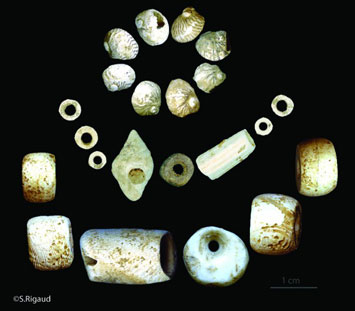
Previous scholarship has shown a link between foraging and farming lifestyles and the adoption of particular ornaments. Now, for the first time, a team of researchers from the Center for International Research in the Humanities and Social Sciences (CIRHUS), a collaborative arrangement between France’s National Center for Scientific Research and New York University, has studied the beads and bracelets worn by Europeans during the early Neolithic period to trace the spread of farming on the continent. They examined more than 200 bead types from more than 400 European archaeological sites spanning a 3,000 year period. Ornaments linked to farming populations, such as human-shaped beads and bracelets composed of perforated shells, spread from eastern Greece and the shores of the Black Sea to France’s Brittany region, and from the Mediterranean Sea northward to Spain. 

Read the rest of this article...

Friday, April 10, 2015

L’australopithèque Little Foot a 3 670 000 ans


Des chercheurs d’institutions américaines, canadiennes, sud-africaines, et françaises publient cette semaine dans la revue Nature la datation de Little Foot. Découvert au nord-ouest de Johannesburg, au cœur du berceau de l’Humanité, dans la grotte de Silberberg (Sterkfontein), ce squelette presque complet d’un australopithèque est exceptionnel. Treize années ont été nécessaires à l’équipe de Ron Clarke (université de Witwatersrand, Afrique du Sud) pour dégager Little Foot (ou StW 573) de sa gangue rocheuse, des millions d’années après sa mort.

Read the rest of this article...

Monday, March 23, 2015

Woolly mammoth could roam again as extinct DNA merged with elephant


Harvard University spliced recreated genes from a woolly mammoth into the DNA of an elephant and found they functioned normally


A major step forward in bringing back the woolly mammoth has been taken by scientists at Harvard University who have inserted DNA from the extinct mammal into the genetic code of an elephant.
Geneticists have studied DNA from mammoths which were preserved in Arctic permafrost looking for genes which separated them from elephants, such as hairiness and ear size.
They then replicated the genes and spliced them into the genetic code of an elephant where they functioned normally.
It is the first time that mammoth genes have been alive for more than 3,300 years - although so far it has only been done in the lab.
Read the rest of this article...
Did a volcanic cataclysm 40,000 years ago trigger the final demise of the Neanderthals?


The Campanian Ignimbrite (CI) eruption in Italy 40,000 years ago was one of the largest volcanic cataclysms in Europe and injected a significant amount of sulfur-dioxide (SO2) into the stratosphere. Scientists have long debated whether this eruption contributed to the final extinction of the Neanderthals. This new study by Benjamin A. Black and colleagues tests this hypothesis with a sophisticated climate model. 


Figure 4 in B.A. Black et al.: This image shows annually averaged temperature  anomalies in excess of 3°C for the first year after the Campanian Ignimbrite (CI)  eruption compared with spatial distribution of hominin sites with radiocarbon ages  close to that of the eruption [Credit: B.A. Black et al. and the journal Geology] 

Black and colleagues write that the CI eruption approximately coincided with the final decline of Neanderthals as well as with dramatic territorial and cultural advances among anatomically modern humans. Because of this, the roles of climate, hominin competition, and volcanic sulfur cooling and acid deposition have been vigorously debated as causes of Neanderthal extinction.

Read the rest of this article...

Wednesday, March 18, 2015

DNA study shows Celts are not a unique genetic group

A depiction of the Celtic Queen Boudicca from AD 1. Why are Celts' descendents not a single genetic grouping?

A DNA study of Britons has shown that genetically there is not a unique Celtic group of people in the UK.
According to the data, those of Celtic ancestry in Scotland and Cornwall are more similar to the English than they are to other Celtic groups.
The study also describes distinct genetic differences across the UK, which reflect regional identities.
And it shows that the invading Anglo Saxons did not wipe out the Britons of 1,500 years ago, but mixed with them.
Published in the Journal Nature, the findings emerge from a detailed DNA analysis of 2,000 mostly middle-aged Caucasian people living across the UK.
Read the rest of this article...

Tuesday, March 17, 2015

Wealth and power may have played a stronger role than 'survival of the fittest'


The DNA you inherit from your parents contributes to the physical make-up of your body -- whether you have blue eyes or brown, black hair or red, or are male or female. Your DNA can also influence whether you might develop certain diseases or disorders such as Crohn's Disease, cystic fibrosis, hemophilia or neurofibromatosis, to name a few.

In a study led by scientists from Arizona State University, the University of Cambridge, University of Tartu and Estonian Biocentre, and published March 13 in an online issue of the journal Genome Research, researchers discovered a dramatic decline in genetic diversity in male lineages four to eight thousand years ago -- likely the result of the accumulation of material wealth, while in contrast, female genetic diversity was on the rise. This male-specific decline occurred during the mid- to late-Neolithic period.
Melissa Wilson Sayres, a leading author and assistant professor with ASU's School of Life Sciences, said, "Instead of 'survival of the fittest' in biological sense, the accumulation of wealth and power may have increased the reproductive success of a limited number of 'socially fit' males and their sons."

Read the rest of this article...

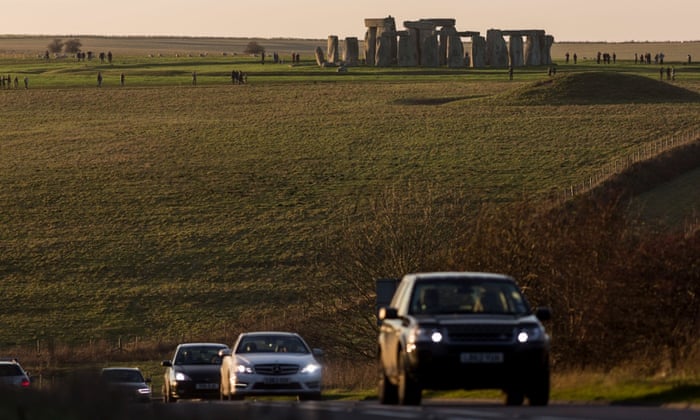
Dan Snow attacks Stonehenge road and tunnel plans


Historian and broadcaster says proposals to remodel A303 would harm neolithic structure, but heritage groups say they could actually help preserve monument


The historian Dan Snow has likened government plans to build a tunnel and widen the road at Stonehenge to vandals and zealots who destroy artefacts of ancient civilisations.
Snow, who is president of the Council for British Archaeology, said: “Of all our many treasures on these islands, none is more internationally revered than Stonehenge.
Read the rest of this article...

Friday, March 13, 2015

Caver finds 20,000 year-old drawings


Prehistoric cave drawings have been discovered in the northern region of Cantabria, dating back about 20,000 years, making the area "the European capital of rock art".

The discovery is the first time that Paleolithic art had been found in the immediate area, the government of Cantabria said in a statement on Thursday.
Culture minister Miguel Angel Serna said the findings make the region a "museum of the Paleolithic period."
"A finding of these characteristics is not found every day, and represents a significant contribution to our heritage, making Cantabria the European capital of rock art," said Serna in a statement.
The art was discovered in the cave 'Aurea', located 50 metres above the river Deva, by the president of a caving club and his wife, La Razón reported.
Read the rest of this article...

Neanderthals modified eagle claws 130,000 years ago


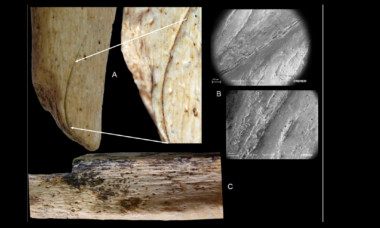
Krapina Neanderthals may have manipulated white-tailed eagle talons to make jewelry 130,000 years ago, before the appearance of modern human in Europe, according to a study* published March 11, 2015 in the open-access journal PLOS ONE by David Frayer from the University of Kansas and colleagues from Croatia.

Researchers describe eight mostly complete white-tailed eagle talons from the Krapina Neanderthal site in present-day Croatia, dating to approximately 130,000 years ago. These white-tailed eagle bones, discovered more than 100 years ago, all derive from a single time period at Krapina. Four talons bear multiple edge-smoothed cut marks, and eight show polishing facets or abrasion. Three of the largest talons have small notches at roughly the same place along the plantar surface.
Read the rest of this article...
Unique tooth reveals details of the Peking Man’s life


In 2011 a tooth from the Peking Man was found in a box at the Museum of Evolution at Uppsala University. In the latest issue of Acta Anthropologica Sinica, researchers at Uppsala University and a Chinese research institute have now published their analysis of the tooth. The discovery gives us new knowledge about one of the most mythical ancestors of the modern man.
When 40 old, forgotten boxes were found and unpacked by Per Ahlberg, Martin Kundrát and curator Jan Ove Ebbestad in 2011, the tooth was one of the most interesting finds. Two Chinese paleontologists, Liu Wu and Tong Haowen from the Institute of Vertebrate Palaeontology and Palaeoanthropology (IVPP) in Beijing, were invited to study the tooth. They could quickly determine that it was a canine tooth from a Peking Man.
‘It is a spectacular find’, says Per Ahlberg. ‘We can see numerous details that tell us about this individual’s life. The crown of the tooth is relatively small, which indicates that it belonged to a woman. The tooth is quite worn, so the individual must have been quite old when she died. In addition, two large chips have been knocked out of the enamel, as if hit by something, or perhaps by biting into something really hard such as a bone or a hard nut. At least one of the chips was old when the individual died, since it is partly worn down.
Read the rest of this article...

Thursday, March 12, 2015

Ancient Fossils Reveal Diversity in the Body Structure of Human Ancestors


Recently released research on human evolution has revealed that species of early human ancestors had significant differences in facial features. Now, a University of Missouri researcher and her international team of colleagues have found that these early human species also differed throughout other parts of their skeletons and had distinct body forms. The research team found 1.9 million-year-old pelvis and femur fossils of an early human ancestor in Kenya, revealing greater diversity in the human family tree than scientists previously thought.
“What these new fossils are telling us is that the early species of our genus, Homo, were more distinctive than we thought. They differed not only in their faces and jaws, but in the rest of their bodies too,” said Carol Ward, a professor of pathology and anatomical sciences in the MU School of Medicine. “The old depiction of linear evolution from ape to human with single steps in between is proving to be inaccurate. We are finding that evolution seemed to be experimenting with different human physical traits in different species before ending up with Homo sapiens.”
Read the rest of this article...

Call for Stonehenge access ban to prevent damage


Conservationists have called for the closing of Stonehenge, the popular tourist attraction and monument that is several thousand years old, on the Summer and Winter solstice due to the damage caused by visitors on these days. 


The heritage group claim the damage is "only the tip of a large pile of vandalism"  over the last few years [Credit: SWNS Group] 

A report reveals how during Winter Solstice celebrations at the site in December last year, chewing gum was stuck onto the ancient monument, graffiti was sprayed on the ancient stones, attempts were made to light fires on them, and lines of oil were dripped on several stones. 

Things were much worse during the Summer Solstice in June, when volunteers and staff were "left in tears" and had to clean up vomit and feces. The "appalling stench" and the "urine, vomit and feces" were left around the stones after 37,000 revelers descended on the site to watch the sunrise.

Read the rest of this article...

Tuesday, March 10, 2015

Archaeologists uncover royal Celtic burial site in small French town


France’s National Archaeological Research Institute (Inrap) on Wednesday revealed the discovery of an ancient grave site, probably that of a Celtic prince, which is helping shed light on trade between some of Europe’s earliest civilizations.

Archaeologists uncovered the tomb dating from the fifth century BC in an industrial zone in the small town of Lavau, in France’s Champagne region. Inrap, which routinely scours construction sites in order to find and preserve the country’s archaeological heritage, began excavating at Lavau site in October 2014.

A 40-metre-wide burial mound of the Celtic ruler crowns a larger funeral complex, which archaeologists said preceded the royal’s final resting place, and could have first been built during the Bronze Age.

Read the rest of this article...

Isis attacks on ancient sites erasing history of humanity, says Iraq


The Iraqi antiquities ministry has acknowledged reports of a new attack by Islamic State militants on an ancient Assyrian city north-east of Mosul, reiterated calls for the international community to intervene and condemned the jihadi group for “erasing the history of humanity”.
There have been reports that Isis bulldozed landmarks in the ancient city of Dur Sharrukin, now called Khorsabad. The ministry said it was in keeping with the militant group’s “criminal ideology and persistence in destroying and stealing Iraq’s antiquities”.
Read the rest of this article...

Thursday, March 5, 2015

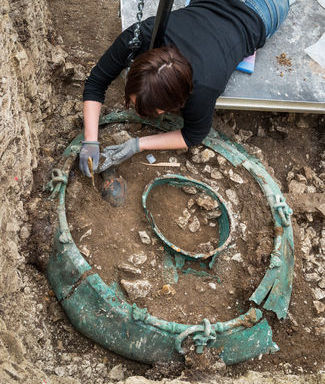
Magnificent Iron Age cauldron discovered in France


Very interesting news from France where archaeologists working for INRAP have found the remains of a magnificent bronze cauldron. It was discovered inside a large burial mound, which dates from the 5th century BC. Most likely the final resting place of a local Iron Age aristocrat, the mound measures approximately 40m in diameter and is located near the small village of Lavau, in northwestern France. 

Although the excavation is still ongoing, the central burial chamber is starting reveal some of its treasures. The most impressive of these to date is a very large bronze cauldron, which is most likely of Greek or Etruscan manufacture. An item of great prestige, the cauldron reflects the very high status of the person interred inside the burial mound. 

Read the rest of this article...

'First human' discovered in Ethiopia


Scientists have unearthed the jawbone of what they claim is one of the very first humans.
The 2.8 million-year-old specimen is 400,000 years older than researchers thought that our kind first emerged.
The discovery in Ethiopia suggests climate change spurred the transition from tree dweller to upright walker.
The head of the research team told BBC News that the find gives the first insight into "the most important transitions in human evolution".

Start Quote

This is the most important transition in human evolution”
Prof Brian VillmoareUniversity of Nevada
Prof Brian Villmoare of the University of Nevada in Las Vegas said the discovery makes a clear link between an iconic 3.2 million-year-old hominin (human-like primate) discovered in the same area in 1974, called "Lucy".
Read the rest of this article...

Genomes document ancient mass migration to Europe


DNA analysis has revealed evidence for a massive migration into the heartland of Europe 4,500 years ago.
Data from the genomes of 69 ancient individuals suggest that herders moved en masse from the continent's eastern periphery into Central Europe.
These migrants may be responsible for the expansion of Indo-European languages, which make up the majority of spoken tongues in Europe today.
Read the rest of this article...