Tuesday, February 26, 2019

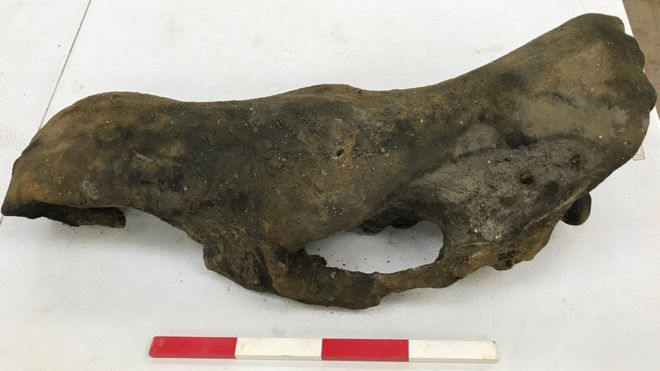
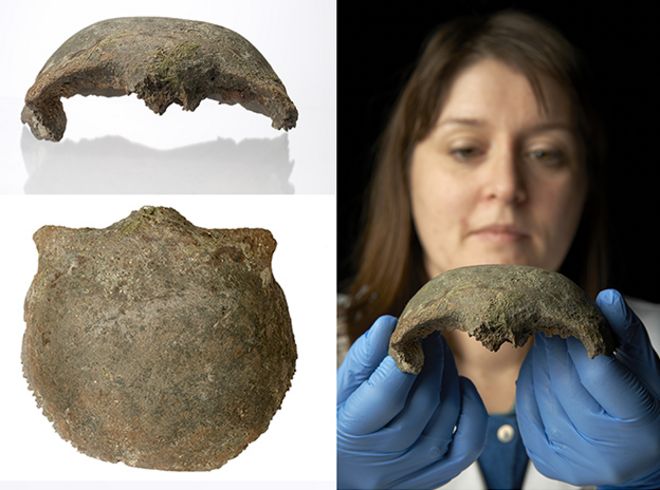
Neolithic skull found by Thames 'mudlarkers'

The frontal bone was radiocarbon dated to 3,600 BC
MUSEUM OF LONDON

Here's a piece of history pulled from the muddy banks of the River Thames.

It's a skull fragment that is 5,600 years old. It dates to a time long before there was any permanent settlement on the site we now know as London.

Investigations indicate it belonged to a male over the age of 18.

There are older Neolithic remains that have been recovered in the region, but what makes this specimen especially interesting is that it's the earliest ever skull found by "mudlarkers".

If you haven't heard of them before - they're the band of mostly amateur archaeologists who scour the Thames' edges at low tide for objects of intrigue and antiquity. And they're constantly picking up fascinating items - many of which end up in the Museum of London, where this frontal bone will now be displayed from Wednesday.

Read the rest of this article...


Watch the video

Tuesday, February 19, 2019

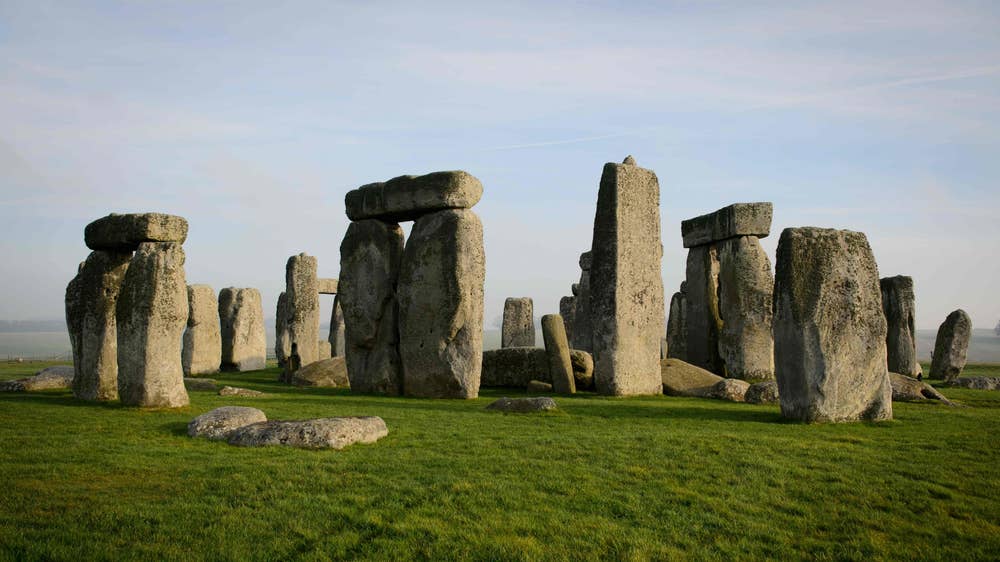
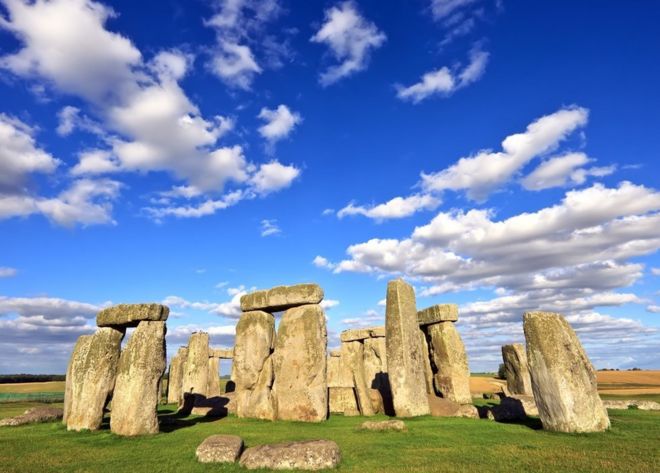
Stonehenge: Archaeologists discover long-lost tools used to build ancient monument

Scientists know the Stonehenge early phase standing stones (the so-called bluestones rather than the later more famous and much larger sarsen stones) come from this and other Pembrokeshire prehistoric quarries – because of chemical identification tests they have carried out on the rocks.
So far, only two quarries have been identified – both on the northern slopes of the Preseli Hills in Pembrokeshire, southwest Wales - but geologists, who have studied the Stonehenge bluestones, think it is likely there were at least three or four other quarries that have yet to be found.
The discovery of the tools is likely to rekindle one of archaeology’s biggest debates – how did the builders of Stonehenge transport the bluestones (an estimated 79 of them, each weighing approximately 2 tonnes) from southwest Wales to Salisbury Plain.
Read the rest of this article...

Suspected Neanderthal footprints have been found in Gibraltar


A footprint which could belong to one of the last Neanderthals to walk the Earth has been found in Gibraltar.
Although most Neanderthals died out by around 40,000 years ago, some did survive at the edge of the Iberian peninsular, where stone tools prove they were still alive around 28,000 years ago.
Now researchers at The Gibraltar National Museum, who have spent the last decade studying ancient paths in the sand dunes above Catalan Bay, believe they have discovered the footprint of a teenage Neanderthal who lived around 29,000 years ago.
Read the rest of this article...

Britain’s largest Neolithic house ‘built in Scotland’

The remains of the largest Neolithic hall found in Britain, which was were discovered in Carnoustie, Angus. 
PIC: GUARD Archaeology.

The largest Neolithic house in Britain was built in Scotland around 6,000 years ago, archaeologists have confirmed

Two halls which were used as houses and likely home to large numbers of people have been discovered in Carnoustie, Angus.

The site is far larger and older than previously thought with archaeological work shedding new light on some of Scotland’s earliest communities.

Analysis shows food was processed and consumed in the halls with pottery made and used there.

It is possible that animals were also kept in part of the building.

Read the rest of this article...

Ancient burial site and monument found in England's New Forest

he urns contained cremated human bone and had been placed into small pits 
[Credit: New Forest National Park Authority via BBC]

Archaeologists and volunteers have found an important prehistoric burial site near Beaulieu dating back thousands of years.
A community dig in a field at East End set out to investigate what they thought was a Bronze Age barrow which had been ploughed over and they were thrilled to find four cremation burial urns dating from that period around 3,000 years ago.

But as the excavation progressed further, the evidence began suggesting that the site might have been an important place for even older human activity which Bronze Age settlers then adapted.

New Forest National Park Authority Community Archaeologist James Brown said: ‘We were elated to find the urns – they were inverted in what we originally thought was the ditch around the barrow and one has a decorative band pattern on it that will help us to date them. These urns were domestic pots and contain cremated human bone placed into small pits. So we know this site was a place of memorial for people in the New Forest around 3,000 years ago.

Read the rest of this article...

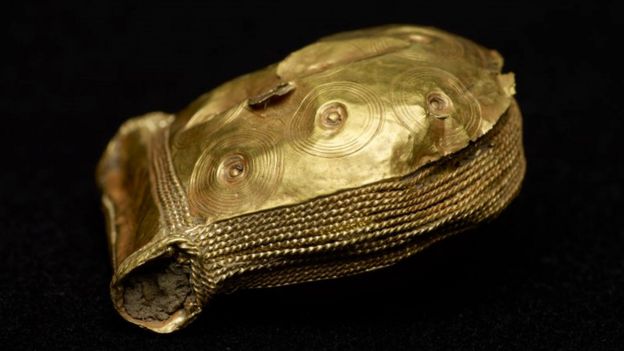
Pembrokeshire chariot burial finds ruled as treasure

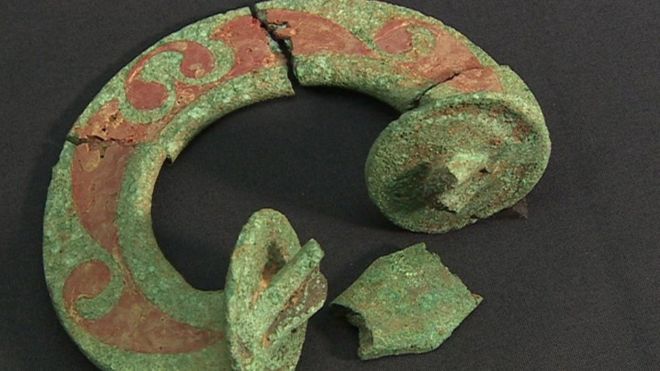
his terret ring would have guided the chariot reins
Parts of an Iron Age chariot found by a metal detectorist have been declared treasure by the Pembrokeshire coroner.
Mike Smith made the discovery in February 2018 on farmland in the south of the county.
The court at Milford Haven heard on Thursday the finds were part of the ritual burial of an entire chariot and that the site is now legally protected.
Mr Smith says the 2,000-year-old finds could be worth a "life-changing" six to seven figure sum.
The nine artefacts are now Crown property and a independent valuation committee will decide on the payment to Mr Smith.

Read the rest of this article...

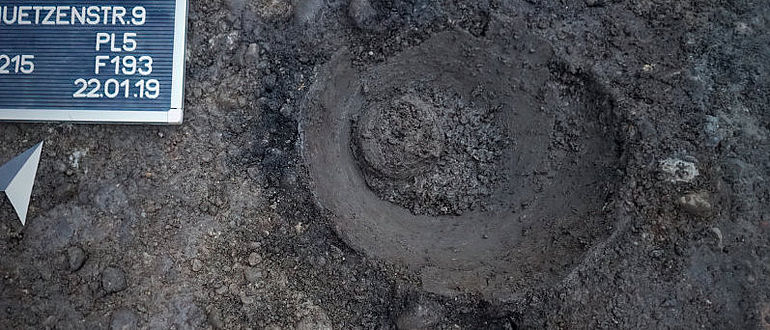
Mittelalterliche Siedlungsspuren gesucht – 3.000 Jahre altes Grab gefunden


Dynamische Interaktionszone am Nordrand des Kaukasus
Ein internationales Forschungsteam koordiniert von der Eurasien-Abteilung des Deutschen Archäologischen Instituts (DAI) in Berlin und dem Max-Planck-Institut für Menschheitsgeschichte in Jena (MPI-SHH) konnte erstmals systematische paläogenetische Untersuchungen im Kaukasus durchführen. Die kürzlich erschienene Studie fußt auf den Analysen genomweiter Daten von 45 Individuen aus der Steppen- und der Gebirgszone des Nordkaukasus. Die zwischen 6500 und 3500 Jahre alten Skelette zeigen, dass die genetische Signatur in den nördlichen Bergflanken den Gruppen südlich des Kaukasus ähnelt und dort eine scharfe genetische Grenze zu den Steppengebieten im Norden verläuft. 

Read the rest of this article...

Thursday, December 6, 2018

Stonehenge tunnel: The background to the row

Will tunnel destroy secrets of Stonehenge?

Stonehenge is one of the UK's most popular tourist attractions, drawing 1.5m visitors visitors alone last year. But plans to build a road tunnel nearby to help ease congestion have enraged some archaeologists.

Here is the background to the row.

Why is a tunnel being built?

Visitors to Stonehenge typically arrive there via the A303, a major link road between London and the South West.

However, the single carriageway section of road past the site is a notorious bottleneck, especially in the summer months.

Read the rest of this article...

First ancient DNA from mainland Finland reveals origins of Siberian ancestry in region


New study shows that the genetic makeup of northern Europe traces back to migrations from Siberia that began at least 3,500 years ago and that, as recently as the Iron Age, ancestors of the Saami lived in a larger area of Finland than today.

Researchers from the Max-Planck-Institute for the Science of Human History and the University of Helsinki have analyzed the first ancient DNA from mainland Finland. As described in Nature Communications, ancient DNA was extracted from bones and teeth from a 3,500 year-old burial on the Kola Peninsula, Russia, and a 1,500 year-old water burial in Finland. The results reveal the possible path along which ancient people from Siberia spread to Finland and Northwestern Russia.

Researchers found the earliest evidence of Siberian ancestry in Fennoscandia in a population inhabiting the Kola Peninsula, in Northwestern Russia, dating to around 4,000 years ago. This genetic ancestry then later spread to populations living in Finland. The study also found that people genetically similar to present-day Saami people inhabited areas in much more southern parts of Finland than the Saami today.

Read the rest of this article...

Tuesday, October 23, 2018

Archaeologists uncover rare Celtic remains

A bronze clothes pin and ceramic object typically found in the 1st century BC.
(Kanton Luzern)

Archaeologists from canton Lucerne have uncovered rare Celtic remains on a construction site in the city of Egolzwil about 35 kilometres from the city of Lucerne. The discovery of a bronze piece of jewellery is considered a particularly exceptional finding.

The fact that Celts once lived in canton Lucerne has been known since sacrificial remains were found on the site of a former lake in the area some time ago. However, this new discovery, reported on Tuesday, is the first traces of settlements that have been found to date, which archaeologists hope can shed light on the history of the Celts in the area.

The excavation uncovered ceramic fragments, remains of burnt houses, and animal bones. A bronze brooch or clothes pin, believed to be a piece of jewellery used to tie clothes such as cloaks and coats, was also uncovered.

Based on the findings, archaeologists believe the settlement dates back to the first century BC.

Read the rest of this article...

World's oldest intact shipwreck discovered in Black Sea

Archaeologists say the 23-metre vessel has lain undisturbed for more than 2,400 years

Archaeologists have found what they believe to be the world’s oldest intact shipwreck at the bottom of the Black Sea where it appears to have lain undisturbed for more than 2,400 years.

The 23-metre (75ft) vessel, thought to be ancient Greek, was discovered with its mast, rudders and rowing benches all present and correct just over a mile below the surface. A lack of oxygen at that depth preserved it, the researchers said.

“A ship surviving intact from the classical world, lying in over 2km of water, is something I would never have believed possible,” said Professor Jon Adams, the principal investigator with the Black Sea Maritime Archaeology Project (MAP), the team that made the find. “This will change our understanding of shipbuilding and seafaring in the ancient world.”

Read the rest of this article...

A14 road workers find woolly mammoth bones

The remains are thought to date back to the last Ice Age

Road workers building a new bypass have unearthed the Ice Age remains of a woolly mammoth and a woolly rhino.

The team, working on improvements to the A14 between Cambridge and Huntingdon, discovered a number of bones while digging near Fenstanton.

Experts believe the remains, found in what was once an ancient river, could be at least 130,000 years old.

Palaeontologist Dean Lomax said discoveries like this were "exciting" and "quite uncommon".

Read the rest of this article...

Tuesday, October 2, 2018

Ancient cemetery unearthed in Albania


URAN, Albania (AP) — In a rich agricultural basin near the town of Korca in southeastern Albania, gas pipeline construction work is offering archaeologists a unique insight into 5,000 years of history in a country that was off most experts’ radar during decades of isolationist Communist rule.

The excavations near the village of Turan, which ended Friday after 18 months, have unearthed one of the biggest ancient cemeteries in Albania, with about 1,000 layered burials, several of them richly furnished.

And under the bottom layer are traces of a rare Neolithic settlement demarcated by holes in the ground that supported the now-rotted wooden skeletons of small huts.

More than 20 Neolithic sites have been found in Albania, dating roughly from the 7th to the 3rd millennia B.C., which are some of the earliest farming settlements in Europe. But according to Turan lead archaeologist Iris Pojani, the pipeline work provided the opportunity — and the funding — to excavate an unusually large inhabited area from that era.

Read the rest of this article...

Monday, August 6, 2018

Experts ask if there was a tsunami in ancient Orkney

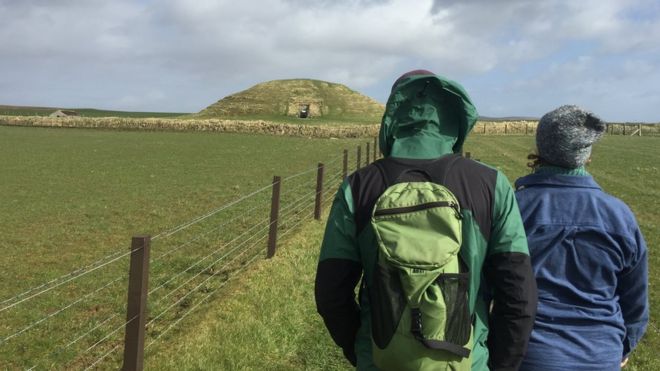
Maesehowe is Orkney's most famous burial cairn, and a popular tourist attraction

A new academic paper has suggested it is possible neolithic mass burials in Orkney and Shetland contain the bodies of tsunami victims.

The authors said archaeologists should test remains to see if the bones show the distinctive signs of drowning in sea water.

Prof James Goff said the work was based on findings from the southern hemisphere.

It is published in the Journal of Archaeological Method and Theory.

Prof Goff, from the University of New South Wales, told BBC Radio Orkney there are sites in the Solomon Islands and Vanuatu where there are "known tsunamis that have happened in prehistory at the times that these mass burials date to".

Read the rest of this article...

Stonehenge: Origins of those who built world-famous monument revealed by groundbreaking scientific research

Experts have discovered act of cremation actually crystallises a bone’s structure and allows its origins to be detected – something previously thought to be impossible


A new scientific research collaboration is, for the first time, revealing who built Stonehenge. The cutting-edge study sheds a remarkable light on the geographical origins of the Neolithic community that first constructed the ancient site.

Complex tests carried out on 25 Neolithic people who were buried at or following the time of the initial construction of the now world-famous monument, have revealed that 10 of them lived nowhere near Stonehenge, but in western Britain, and that half of those 10 potentially came from southwest Wales (where the earliest Stonehenge monoliths came from).

The other 15 could be local to Stonehenge, Wiltshire-origin individuals, or the children of other descendants of migrants from the west. All the remains were cremations.


Read the rest of this article...

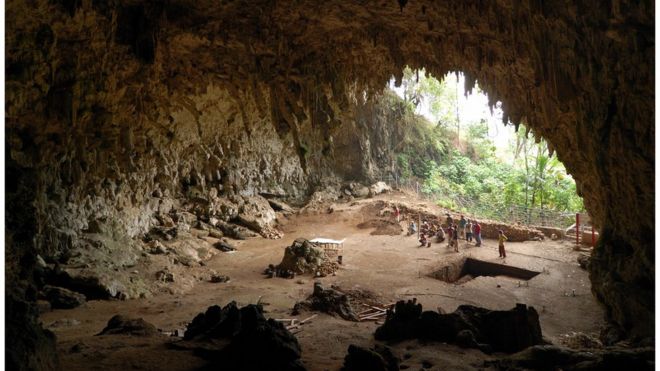
Small height evolved twice on 'Hobbit' island of Flores

Liang Bua cave, where the Hobbit remains were found
ROSINO / CREATIVE COMMONS

A new study has shown that small height evolved twice in humans on the Indonesian island of Flores.

Scientists decoded the DNA of modern-day "pygmy" people to find out if they might be partly descended from the extinct Hobbit species.

The remains of these Hobbits were found during an archaeological dig on Flores 15 years ago.

The new analysis, published in the journal Science, found no trace of the Hobbit's DNA in the present-day people.

This is important because some scientists had wondered whether modern humans (Homo sapiens) could have mixed with the Hobbit population when they first arrived on the island thousands of years ago. In theory, this could have led to Hobbit genes being passed down into living people on the island.

Read the rest of this article...

Stonehenge: First residents from west Wales

Researchers have shown that cremated humans at Stonehenge were from the same region of Wales as the stones used in construction.
The key question was to understand the geographic origin of the people buried at Stonehenge.
The key innovation was finding that high temperatures of cremation can crystallise a skull, locking in the chemical signal of its origin.
The first long-term residents of Stonehenge, along with the first stones, arrived about 5,000 years ago.

Read the rest of this article...

Friday, July 27, 2018

Roadworks reveal remains of Iron Age village in York

An enclosure measuring 16 metres across is believed to date from the Iron Age 
[Credit: City of York Council]

The earliest find – a large ring ditch which could have been an enclosure or roundhouse – appears to date from the Iron Age, around 2,500 years ago. At around 16 metres in diameter, it is one of the biggest to be unearthed in York.

Pits and what looks to be a hearth have been found alongside, during roadworks at the roundabout of the junction with the road to Wetherby, on York’s outer ring road

A nearby ditch has produced a series of related finds, including decorated pottery fragments, a piece of quern-stone and industrial waste material in the form of molten slag.

Read the rest of this article...

Treasure found across Northern Ireland


More than 40 objects found across Northern Ireland between 2009 and 2016 have been officially categorised as "treasure" by a coroner.
The items include a variety of precious rings, jewellery and Viking coins.
They were found by members of the public through metal-detecting, as well as by archaeologists on excavation.
After examination both by the coroner and the British Museum, some of the treasured items are now being held at the Ulster Museum in Belfast.
In Northern Ireland, any search for archaeological material that involves disturbing the ground requires a licence in advance from the Department for Communities' Historic Environment Division (HED)

Read the rest of this article...

Thursday, July 19, 2018

Lessons From A Real Atlantis

Before it was lost to the bottom of sea, Doggerland was made up of woodland, meadows, marshes and rivers,  as shown by simulations [Credit: Philip Murgatroyd]

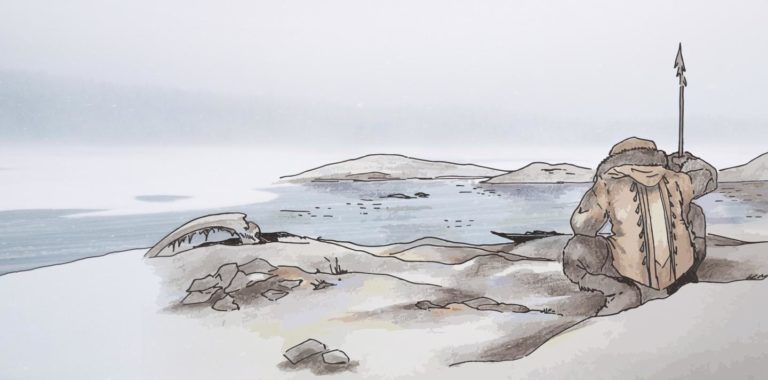
The discoveries, both on land and underwater, are helping to fill in some of the blanks about Europe’s prehistory and are offering insights into how our species responded to global climate change in the past.

Around 8,500 years ago, after the end of the last ice age, global warming triggered huge rises in sea levels due to the melting of glaciers and ice sheets that had covered much of the northern hemisphere.

An area of land twice the size of the European Union was lost to the rising seas, prompting mass migration across the continents.

Much of the human experience of this cataclysm, however, has remained buried out of reach of even the most assiduous investigator, leaving a huge gap in the story of our ancestors.

Read the rest of this article...