Thursday, January 26, 2023

The Oldest Rune Stones in the World

The Svingerud Stone is the oldest rune stone, created almost two thousand years ago

There are many things that come into mind when thinking of Vikings – horned helmets, which are historically inaccurate, longships that brought terror to Europe, Norse gods that have been turned into Hollywood super heroes and, the subject of this article, their unique way of writing.

The runic alphabet developed among the early Germanic people of Northern Europe almost 2,000 years ago. How it was created it still not fully understood, though it is widely believed that contact with Mediterranean civilisations – Greeks, Etruscans and Romans – influenced the creation of this writing system.

Some of the best preserved examples of this script can be found on rune stones, including the lions-hare located in Sweden. They had many varied purposes ranging from marking territory to memorialising fallen kinsmen. Rune stones used to be highly colourful, though hundreds of years of being out in the open means very little is left for modern observers.

Here were look at some of the oldest rune stones found by archeologists.

Read the rest of this article...

Monday, January 23, 2023

Lasers Are Mapping Scotland’s Mysterious Iron Age Passages

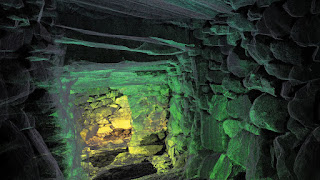
A laser scan of Cracknie souterrain, capturing every detail in 3D
PHOTOGRAPH: AOC ARCHAEOLOGY

In February 2022, Graeme Cavers and his team of archaeologists set off in search of a mysterious underground passage called a souterrain. There are around 500 of these Iron Age structures scattered throughout the Scottish Highlands, but nobody knows what they were built for, and no one has ever discovered one intact.

“Perhaps they were for storage, such as grain in sealed pots or dairy products like cheese,” says Matt Ritchie, resident archaeologist at Forestry and Land Scotland. “Perhaps they were for security, keeping valuables safe, or slaves or hostages secure. Or perhaps they were for ceremonial purposes, for household rituals, like a medieval shrine or private chapel.”

Site surveys can help shed light on the condition and structure of souterrains, but they can take at least a week using traditional methods, says Cavers, whose company AOC Archaeology was enlisted by Ritchie to help map the Cracknie Souterrain in Scotland’s Borgie Forest.

Read the rest of this article...

Enigmatic Ale’s Stones – Sweden’s Megalithic Ship-Like Formation


Ales stones, Hesten and others (Valleberga 20:1). Image credit: Jorchr - CC BY-SA 4.0

Myths, legends, and mystery surround this fascinating megalithic formation consisting of 58 (59) upright boulders and one vertical (weighing up to 1.8 tons each) - placed in a gigantic ship formation, 67 meters in length and 19 meters wide.

The largest stones are almost 3.5-meter and are called "bow" and "stern." They are directed towards the sunrise at the time of the summer solstice, and the sunset at the time of the winter solstice.

The Ales Stenar - Sweden's largest stone complex dates back to the Bronze or Iron Age. From a bird's eye view, it resembles the shape of a boat. It is not known who and for what purpose built it. Not even experts know why this complex was built.

Read the rest of this article...

Wednesday, January 18, 2023

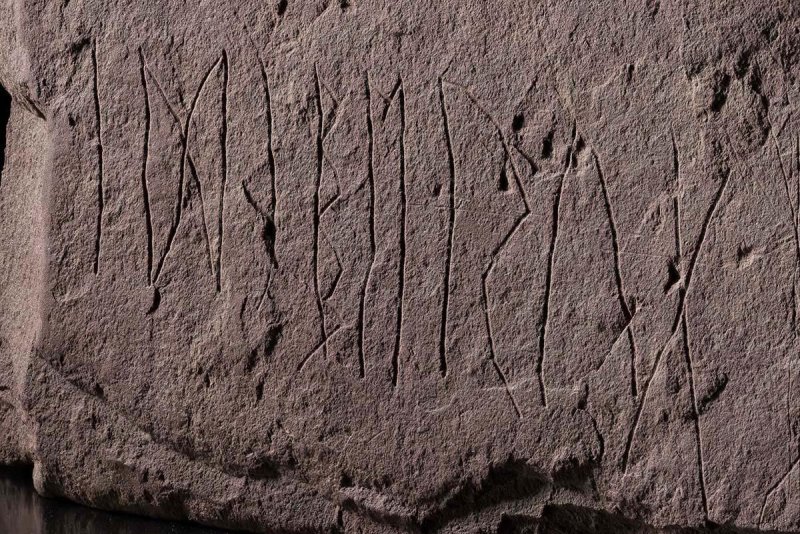
Found the world's oldest rune stone

Photo: Alexis Pantos/KHM, UiO.

During the first few centuries of the Common Era, during the period that archaeologists call the Roman Iron Age, Scandinavians came into contact with Roman society by trading goods and through their encounters with the Roman army. Archaeological material testifies to the fact that this is how they acquired knowledge about new customs and forms of organisation, and not least a written culture. 

Inspired by the classical alphabets, such as the Roman alphabet, the Germanic peoples created their own characters – runes. But exactly how old is the runic alphabet, and when were the first rune stones made? These are questions that researchers have been seeking to answer for many years. 

A new archaeological find is attracting international attention among runic scholars and archaeologists: the world's oldest dated rune stone was discovered during the autumn of 2021 when archaeologists at the Museum of Cultural History, University of Oslo, investigated a grave field in Hole near Tyrifjorden, Eastern Norway. Radiocarbon dates show that the age of the grave and thus the inscriptions on the stone probably date back to 1-250 CE. This rune stone is thus one of the very earliest examples of words recorded in writing in Scandinavia, and the inscriptions provide new insights into the development and use of runic writing during the early Iron Age. 

Read the rest of this article...

Norway reveals stone tablet providing clues to origins of Western writing

The ancient rune stone found by Norwegian researchers is believed to be between 1,800 and 2,000 years old. It was found buried beneath a later grave.
Photo courtesy of Museum of Cultural History

Jan. 17 (UPI) -- Norway is set to unveil an ancient rune stone found in the east of the country dating back as much as 2,000 years that is providing the missing pieces to the puzzle of the origins of writing in northern Europe.

Researchers from the University of Oslo's Museum of Cultural History found the block of sandstone on an Iron Age grave site dig near Tyrifjorden, northwest of Oslo, in late 2021. They now believe it is the world's oldest rune stone and that the characters on the stone are one of the earliest examples of writing in Scandinavia because radiocarbon dating shows the grave dates back to 1-250 CE.

The stone, which is creating a stir internationally among runologists and archaeologists, is going on display to the public as the centerpiece of a new exhibition opening on Saturday at the Historical Museum in Oslo.

Read the rest of this article...

Tuesday, January 17, 2023

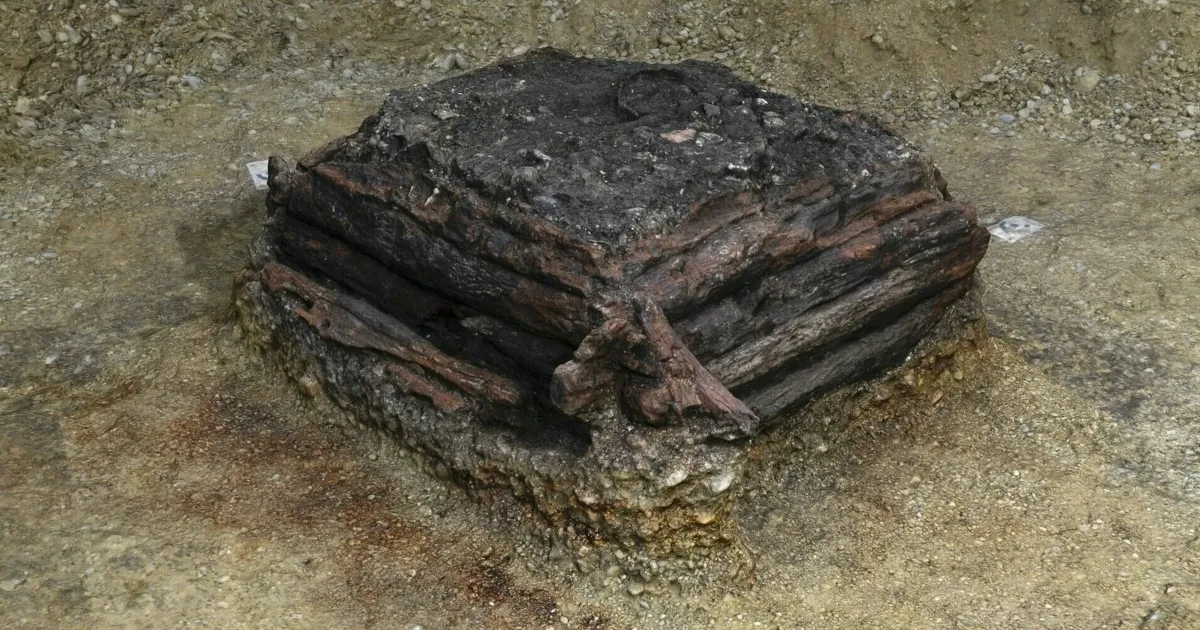
Wishing well used for Bronze Age 'cult rituals' discovered in Bavaria

The wooden wishing well discovered by archaeologists in Bavaria, Germany.
(Image credit: The Bavarian State Office for Monument Protection)

Archaeologists in Bavaria, Germany, have unearthed a 3,000-year-old wooden wishing well overflowing with more than 100 artifacts dating to the Bronze Age.

Unlike modern-day wishing wells, where people toss in coins and make a wish, the items in this well were placed there for "ritual purposes" in what is now the Bavarian town of Germering. The artifacts included more than 70 well-preserved clay vessels, including numerous decorative bowls, cups and pots that were used for special occasions and not "simple everyday crockery," according to a translated statement(opens in new tab). 

Archaeologists also found more than two dozen bronze robe pins, a bracelet, four amber beads, two metal spirals, a mounted animal tooth and a wooden scoop. 

Read the rest of this article...

Brutality of prehistoric life revealed by Europe’s bog bodies

At Alken Enge in Denmark, the remains of at least 380 individuals were deposited in a wetland almost 2,000 years ago.


In 1984, a peat cutter discovered human remains in a bog in Cheshire, England. They belonged to a man who died a brutal death some 2,100 years ago before being placed in the bog — examination of his well-preserved mummy revealed blows to the head, a possible stab wound and a broken neck. Twisted sinew found still wrapped around his neck may have also been a garotte.

Now in the British Museum in London, the remains of the Lindow Man are perhaps the best known of Europe’s 2,000 or so “bog bodies.” These are mummies and skeletons that have been found mired in the peat and wetlands of Ireland, the United Kingdom, the Netherlands, Germany, Scandinavia, Poland and other parts of Eastern Europe.

The bodies — often exquisitely preserved by the bogs’ cool, acidic conditions and organic compounds— provide an exciting snap shot of the past. Archaeologists study their skin, bones, clothes, belongings and sometimes even their last meal. Now, researchers have undertaken the first comprehensive survey of bog bodies — a burial tradition they believe spanned 7,000 years — to build up a fuller picture of the phenomenon.

Read the rest of this article...

First of its kind study identifies how humans lost their body hair

Humans appear to have the genes for a full coat of body hair, but evolution has disabled them,  scientists at University of Utah Health and University of Pittsburgh report.
(CREDIT: Creative Commons)


Orangutans, mice, and horses are covered with it, but humans aren’t. Why we have significantly less body hair than most other mammals has long remained a mystery. But a first-of-its-kind comparison of genetic codes from 62 animals is beginning to tell the story of how people—and other mammals—lost their locks.

Humans appear to have the genes for a full coat of body hair, but evolution has disabled them,  scientists at University of Utah Health and University of Pittsburgh report in the journal eLife. The findings point to a set of genes and regulatory regions of the genome that appear to be essential for making hair.

Read the rest of this article...

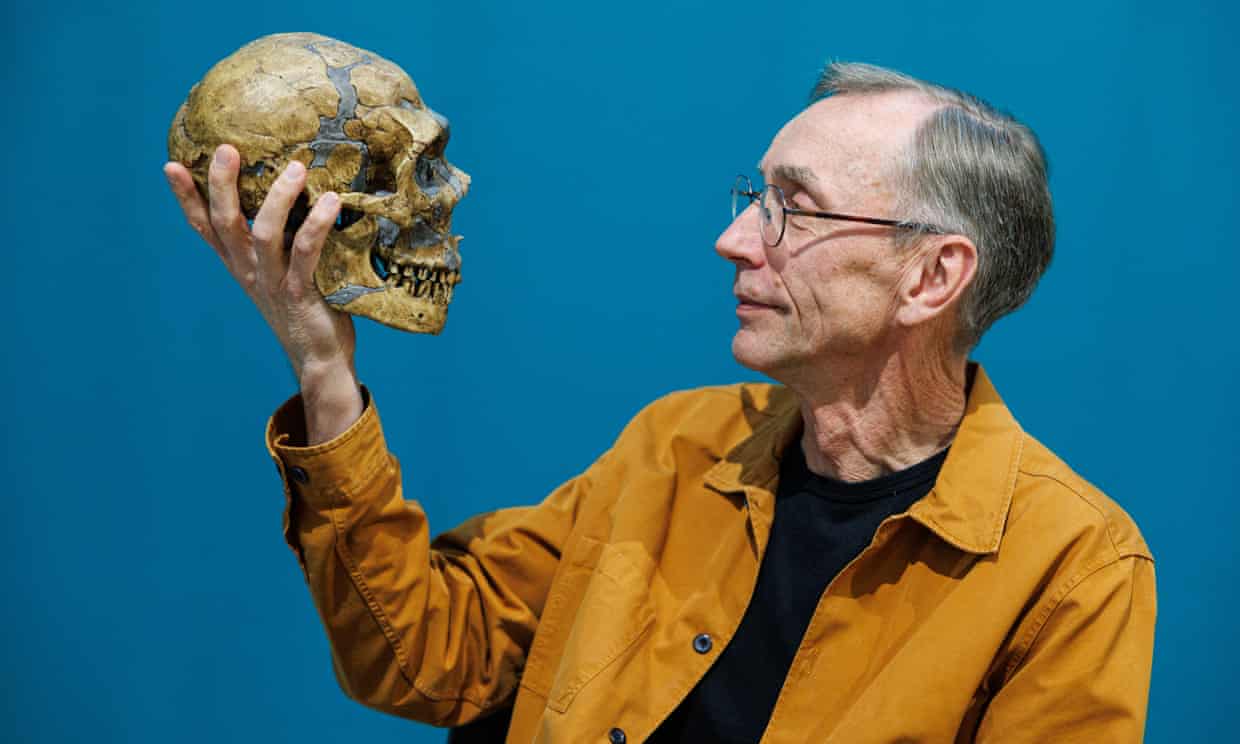
Svante Pääbo: ‘It’s maybe time to rethink our idea of Neanderthals’

Svante Pääbo says becoming a Nobel laureate has been ‘a burden … but a pleasant burden’. Photograph: Jens Schlueter/Getty Images

A greyish neanderthal skeleton stands at the door of Svante Pääbo’s office, acting like a doorman to check up on his visitors, who have grown considerably in number since it was announced he was to receive a Nobel prize. It clutches a white party balloon in its left hand and is missing its right lower arm.

“Unfortunately my son broke it off once,” says Pääbo with a chuckle, patting the skeleton’s head.

On the day the Guardian visits, the Swedish geneticist is still reeling from the shock of having been chosen as Nobel laureate for Medicine or physiology (the prize straddles both fields) in October. A bottle of champagne stands on his desk along with messages of congratulations from friends and colleagues. Over coffee and shortbread in a rare interview, he admits: “It’s a bit of a burden, to be honest, all the attention I’ve been getting. But it’s a pleasant burden, and one for which I know I can’t expect much sympathy.”

Read the rest of this article...

Wednesday, December 21, 2022

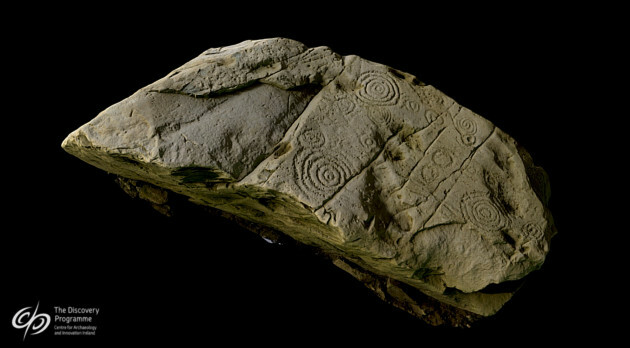
Winter solstice: Explore these new 3D scans of passage tomb megalithic art


A TREASURE TROVE of megalithic art imagery from a recently uncovered passage tomb is being released to mark the winter solstice.

The Dowth Hall tomb is part of the Brú na Boinne complex, and is located a stone’s throw away from the more famous Newgrange, Knowth, and Dowth tombs.

It was hidden underground until an excavation in 2017. What remains was damaged by the construction of a building above it in the 18th century.

The find was described as ‘the most significant’ of the past 50 years in Ireland.

An estimated one-third of the kerbstones – which would have surrounded the tomb – and orthostats – upright stones – found at Dowth Hall are decorated in Neolithic art.

Read the rest of this article...

Video: Marking the winter solstice at Maeshowe chambered cairn


With its south-westerly facing entrance,perhaps Maeshowe’s best known attribute is its orientation towards the setting sun around midwinter.

Five thousand years ago, as now, it may be that the solstice marked the passing of time – the death of the old year and the birth of the new one. In the dark depths of an Orkney winter today, the solstice remains a welcome indicator that the sun is returning.

Read the rest of this article...

Monday, December 19, 2022

Bog Body Discovered in Denmark


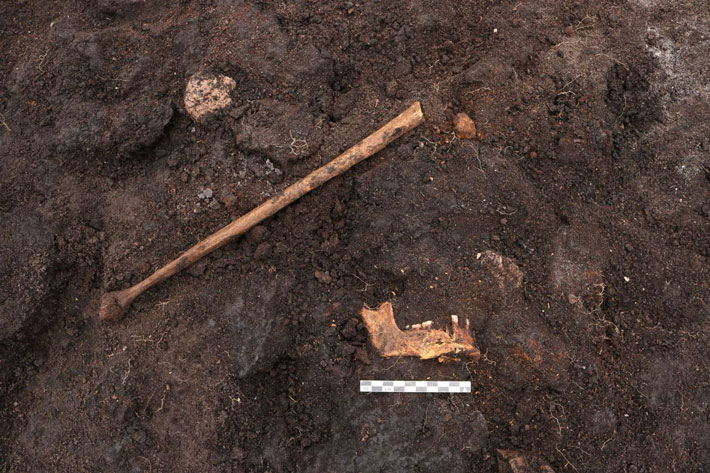
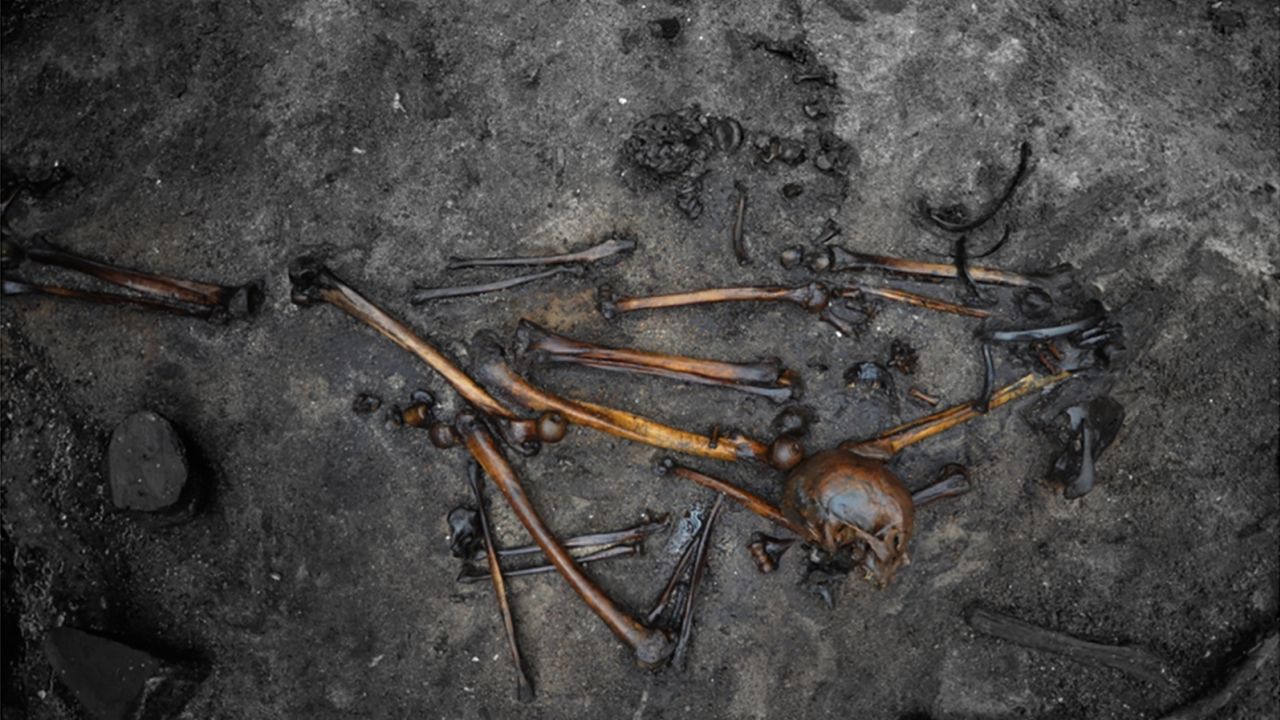
STENLØSE, DENMARK—Live Science reports that human and animal bones, as well as an unpolished flint ax head, were recovered from what was once a bog on Denmark’s island of Zealand during an investigation conducted before a construction project. The style of the ax suggests that the bones date to the early Neolithic period, more than 5,000 years ago, according to Emil Struve of the ROMU museums. “We know that traditions of human sacrifices date back that far—we have other examples of it,” he said. The human remains include leg bones, a pelvis, and part of a lower jaw with some teeth still attached. The rest of the body probably lay outside the protective layer of peat and was not preserved.

Read the rest of this article...

U.K. Archaeologists Say That Ancient Tools Discovered Around Stonehenge Point to a More Advanced Society Than Previously Known


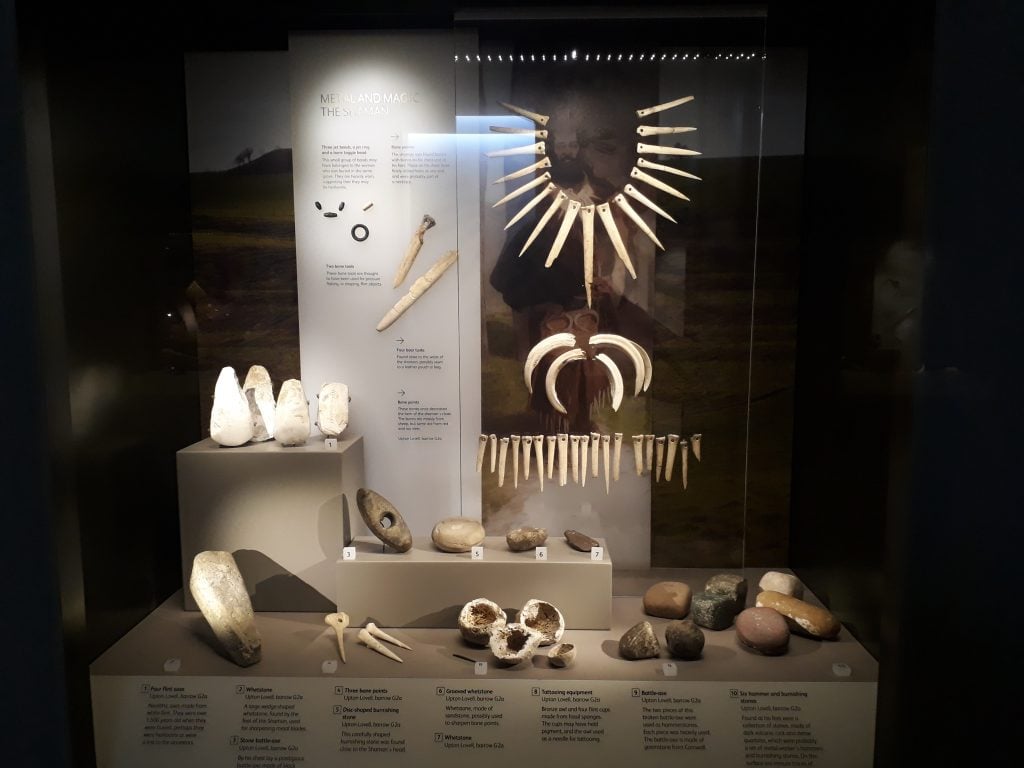
Archaeologists at the University of Leicester have just re-examined five 4,000-year-old tools like flint cups and Neolithic axes that have puzzled experts since their discovery 220 years ago in a Bronze-Age burial near Stonehenge. Four were examined for the first time.

Based on the bones, cups, and cobbles surrounding two bodies at the grave—most recently dated 1850–1700 B.C.E.—researchers have hypothesized over the past century that these grave goods belonged to a costumed shaman, or a goldsmith of status.

Applying contemporary technologies including microwear analysis and scanning electron microscopy to the tools’ surfaces, researchers have revealed their owner was more likely a gold worker who coaxed the precious metal into sheets to gild other items.

Read the rest of this article...
Monday, October 31, 2022

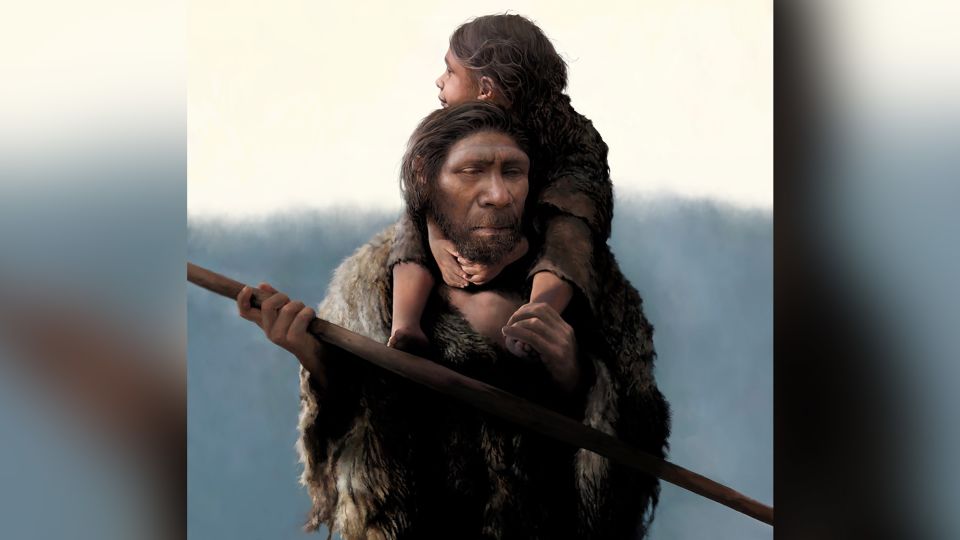
Sex with humans – not climate change, disease or war – spelled the end for Neanderthals, scientists believe


They began to encounter each other around 60,000 years ago across Europe and Asia but within 20,000 years, Neanderthals had died out

The demise of the Neanderthals is often blamed on climate change, disease, or violent clashes with modern humans.

However, an expert at the Natural History Museum (NHM) in London believes it was making love, not war, with Homo sapiens that may have led the rival Neanderthals down an evolutionary cul-de-sac.

The NHM’s Prof Chris Stringer said it was telling that the DNA of Homo sapiens is never found in Neanderthal specimens, despite their DNA being found in modern humans.

Read the rest of this article...
Six recent discoveries that have changed how we think about human origins


Scientific study of human evolution historically reassured us of a comforting order to things. It has painted humans as as cleverer, more intellectual and caring than our ancestral predecessors.

From archaeological reconstructions of Neanderthals as stooped, hairy and brutish, to “cavemen” movies, our ancient ancestors got a bad press.

Over the last five years discoveries have upended this unbalanced view. In my recent book, Hidden Depths: The Origins of Human Connection, I argue that this matters for how we see ourselves today and so how we imagine our futures, as much as for our understanding of our past.

Six revelations stand out.

1. There are more human species than we ever imagined

Species such as Homo Longi have only been identified as recently as 2018. There are now 21 known species of human.

Read the rest of this article...
Monday, October 24, 2022

Norwich timber henge burnt in Neolithic winter solstice excavated

The late Neolithic to Bronze Age monument is close to many other prehistoric sites, including burial barrows and mines

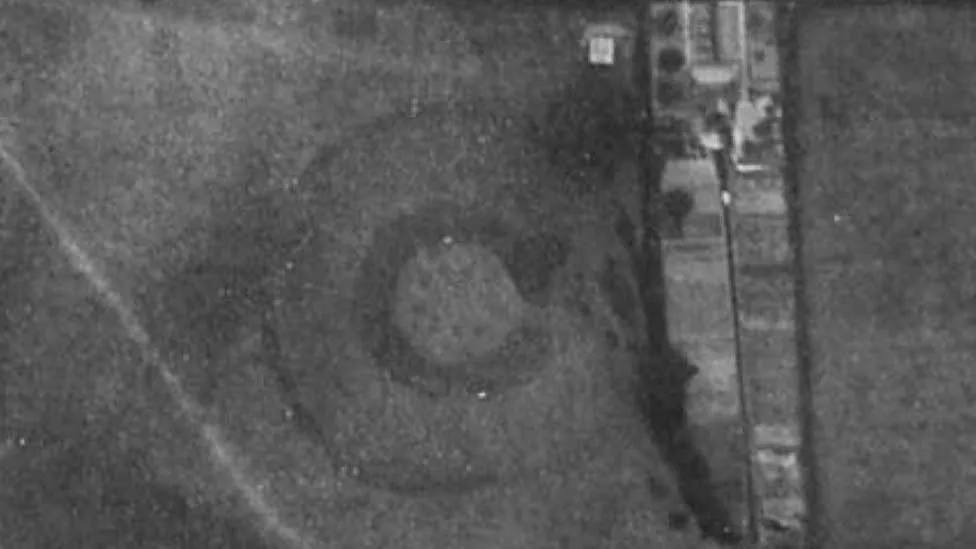
A 5,000-year-old timber circle burnt down during a Neolithic midwinter solstice has been excavated for the first time since the 1930s.

Arminghall Henge, just outside Norwich, was discovered by a pilot in 1929 surveying for ancient monuments.

The blaze would have created "a hell of a bonfire which burnt for days", archaeologist Andy Hutcheson said.

Dr Hutcheson said following the dig they now believe it was deliberately set alight during a winter gathering.

Radiocarbon dating in 2010 suggested it was built between 3525BC to 2700BC.

Read the rest of this article...

500,000-Year-Old Tools In Polish Cave May Have Belonged To Extinct Hominid Species

Flint artifacts from the Tunel Wielki cave, made half a million years ago possibly by Homo heildelbergensis. Image credit: M. Kot

The findings suggest humans crossed into central Europe earlier than previously thought.

Stone tools created half a million years in what is now Poland were probably the work of an extinct hominid species called Homo heidelbergensis, thought to be the last common ancestor of Neanderthals and modern humans. Previously, researchers were unsure if humans had made it to central Europe by this point in history, so the new discovery may shed new light on the chronology of our expansion across the region.

“Peopling of Central Europe by Middle Pleistocene hominids is highly debatable, mainly due to the relatively harsh climatic and environmental conditions that require cultural and anatomical adjustments,” explain the authors of a new study on the artifacts. In particular, they note that evidence of human occupation north of the Carpathian Mountains during this period is extremely scarce, primarily thanks to the difficulty that ancient hominids would have faced when attempting to cross the range.

Read the rest of this article...
Ancient DNA reveals the social lives of the oldest known family group


Neanderthal is an insult still lobbed about to suggest someone is dim-witted and out of touch.

The more we learn about our Stone Age cousins, however, the more it appears the opposite is true. Neanderthals weren’t brutish cave dwellers — they made sophisticated tools, yarn and art, and they buried their dead with care.

A new discovery in a Siberian cave this week reveals an intimate portrait of Neanderthal family life and shows it may be time for Homo sapiens to ditch that superiority complex once and for all.

Scientists have uncovered the oldest known family group, using ancient DNA from Neanderthals who lived in Chagyrskaya Cave in southern Siberia in Russia.

Read the rest of this article...
Saturday, October 22, 2022

Arab DNA Shows Route of Early Human Migration from Africa


Recent studies on Arab DNA confirmed what researchers have believed for many years, but hadn’t been able to prove definitively. Testing suggests that ancient Arabia indeed served as a “cornerstone” for early human migration out of Africa.

In the largest-ever study of human genomes in the Arab world, the study was able to pinpoint the most ancient of all Middle Eastern populations, allowing researchers to trace very early human migration patterns, according to Smithsonian Magazine.

In the study, published online in the journal Nature Communications, the findings state that the area served as a key crossroads in the migration of people out of Africa.

Read the rest of this article...

The first horse herders and the impact of early Bronze Age steppe expansions into Asia


The Eurasian steppes reach from the Ukraine in Europe to Mongolia and China. Over the past 5000 years, these flat grasslands were thought to be the route for the ebb and flow of migrant humans, their horses, and their languages. de Barros Damgaard et al. probed whole-genome sequences from the remains of 74 individuals found across this region. Although there is evidence for migration into Europe from the steppes, the details of human movements are complex and involve independent acquisitions of horse cultures. Furthermore, it appears that the Indo-European Hittite language derived from Anatolia, not the steppes. The steppe people seem not to have penetrated South Asia. Genetic evidence indicates an independent history involving western Eurasian admixture into ancient South Asian peoples.

Read the rest of this article...