Thursday, June 30, 2016

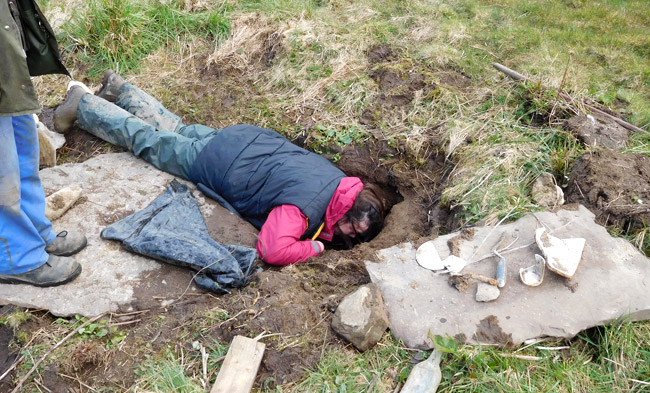
The prehistoric tombs that may have been used as 'telescopes'


Researchers think that the entrance passages to 6,000 year-old tombs could have been used to enhance visibility for ancient stargazers
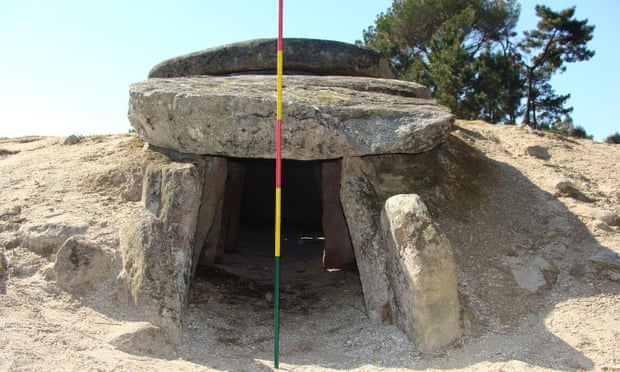

The orientation of the tombs suggests that they are aligned to offer a view of Aldebaran, the brightest star in the constellation of Taurus. Photograph: University of Wales Trinity Saint David/Nottingham Trent University

Ancient passages to stone tombs could have been used by prehistoric humans to boost their view of the night skies as part of an ancient ritual, archaeologists have proposed.
Researchers say that the dark entrances to 6,000 year-old tombs in Portugal could have been an early form of astronomical tool that enhanced the visibility of the stars. In particular, they say, the orientation of the entrances to the passage graves suggests that they are aligned to offer a view of Aldebaran, the red star that is the brightest body in the constellation of Taurus.
The star might have been important to ancient communities who moved their herds and flocks to summer grazing grounds in the mountains each year. The annual event, the researchers argue, could have coincided with the star’s first appearance in the morning twilight each year. “This first rising of Aldebaran occurred at the end of April or beginning of May 6,000 years ago, so it would be a very good, very precise calendrical marker for them to know when it was time to move into the higher grounds,” said Dr Fabio Silva of the University of Wales Trinity Saint David.
Read the rest of this article...

Monday, June 27, 2016

THE DAY OF ARCHAEOLOGY 2016 WILL BE HELD ON FRIDAY 29 JULY!


We are looking for people working, studying or volunteering in the archaeological world to participate with us in a “Day of Archaeology” in July 2016. The resulting Day of Archaeology website will demonstrate the wide variety of work our profession undertakes day-to-day across the globe, and help to raise public awareness of the relevance and importance of archaeology to the modern world. We want anyone with a personal, professional or voluntary interest in archaeology to get involved, and help show the world why archaeology is vital to protect the past and inform our futures.

Explore posts from previous years here...

Metal detectorist who struck gold with Bronze Age ring during illegal search is fined after touting it to a museum

The Penannular ring, a gold ring with a small section missing, found on a Surrey bridle path by Ricky Smith CREDIT: SWNS

A metal detectorist who found a rare gold Bronze Age ring when he was illegally searching private land has been found guilty of theft after he contacted a museum about his find.
Ricky Smith, 34, discovered the Penannular ring - a gold ring with a small section missing - on a Surrey bridle path two years ago.
But the detectorist of 11 years, who was "in it for the money", failed to report his find of "treasure" to the coroner within two weeks as required by law. Instead, he touted the ring - worth between £500 and £600 - to a local museum, the court was told.
Read the rest of this article...

German 'Stonehenge' Opens To The Public


One of the most important relics of the Bronze Age, an ancient site known as the German Stonehenge, has opened to the public after years of reconstruction.
The so-called German Stonehenge is thought to be more than 4,300 years old [Credit: DW]
The "Ringheiligtum Pömmelte" as it is known thanks to its location near the eastern German town of Pömemlte, celebrated its opening as a cultural site on Tuesday (20.6.2016).

The formation, known as the Stonehenge of Germany, is estimated to be around 4,300 years old and was discovered in 1999 in the forest near the banks of the Elbe River. Made of wood, the archaeological wonder has not withstood the test of time well and has since been entirely reconstructed at a cost of 2 million euros ($2.27 million).


Read the rest of this article...

Monday, June 13, 2016

Archaeology in the Round?


A new website providing links to archaeological photo spheres is now online.

The purpose of the site is to make these photo spheres easily available and also to encourage people to make archaeological photo spheres and publish them on the site.


You can find the site at: archosphere.eu

Study: Stone Age migrants introduced agriculture to Europe

This undated picture provided by the Paliambela Excavation Project Archive, shows a human burial from the archaeological site of Paliambela in northern Greece.  
K. KOTSAKIS, P. HALSTEAD/PALIAMBELA EXCAVATION PROJECT ARCHIVE VIA AP

BERLIN -- Stone Age people from the Aegean Sea region moved into central and southern Europe some 8,000 years ago and introduced agriculture to a continent still dominated at the time by hunter-gatherers, scientists say.
The findings are based on genetic samples from ancient farming communities in Germany, Hungary and Spain. By comparing these with ancient genomes found at sites in Greece and northwest Turkey, where agriculture was practiced centuries earlier, researchers were able to draw a genetic line linking the European and Aegean populations.
The study challenges the notion that farming simply spread from one population to another through cultural diffusion. The findings were published Monday in the Proceedings of the National Academy of Science.
Read the rest of this article...

44 Celtic Gold Coins Found In Austria


Archaeologists have unearthed gold treasure in Austria thought to be worth as much as €50,000. The 44 Celtic gold coins, weighing 7.5 grams, were found on a site in Traun, near Linz in Upper Austria, that was being excavated before the building of a machinery hall.


The 44 Celtic gold coins were found on a site in Traun, near Linz in Upper Austria 
[Credit: OÖ Landesmuseum]
The gold pieces are thought to have been made in the Iron Age between the 1st and 2nd centuries BC in the region that is known as Bohemia today and likely ended up in Austria through trade.

According to the ORF, researchers at the provincial museum say the discovery is of the highest importance as it is one of the just three similar finds from the pre-Romanian time in Upper Austria.

This era is seen as the crossover from an economy based on trading goods to a monetary economy, which came with the Romans.

Read the rest of this article...

Sunday, May 29, 2016

Women In Southern Germany Corded Ware Culture May Have Been Highly Mobile


Women in Corded Ware Culture may have been highly mobile and may have married outside their social group, according to a study published May 25, 2016 in the open-access journal PLOS ONE by Karl-Göran Sjögren from Göteborg University, Sweden, and colleagues.


Examples of pottery from the Corded Ware period; these pieces date to ca. 2500 BC 
[Credit: WikiCommons]

The Corded Ware Culture is archaeologically defined by material traits, such as the burial of the dead under barrows alongside characteristic cord-ornamented pottery, and existed in much of Europe from ca. 2800-2200 cal. B.C.

To better understand this culture, the authors of the present study examined human bones and teeth from seven sites in Southern Germany dating from different periods of Corded Ware culture, including two large cemeteries. They used carbon dating and additional dietary isotope analysis to assess the diet and mobility of the population during this period.

Read the rest of this article...

Neanderthals Were Stocky From Birth


If a Neanderthal were to sit down next to us on the underground, we would probably first notice his receding forehead, prominent brow ridges and projecting, chinless face.


Reconstruction of a Neanderthal child from the Musee National de Prehistoire 
in Les Eyzies de Tayac, France [Credit: Don Hitchcock]

Only on closer inspection would we notice his wider and thicker body. Researchers from the Max Planck Institute for Evolutionary Anthropology in Leipzig have now investigated whether the differences in physique between Neanderthals and modern humans are genetic or caused by differences in lifestyle. Their analysis of two well-preserved skeletons of Neanderthal neonates shows that Neanderthals’ wide bodies and robust bones were formed by birth.

Read the rest of this article...

LA RICHE HISTOIRE DU SITE DE LAVALLOT NORD À GUIPAVAS


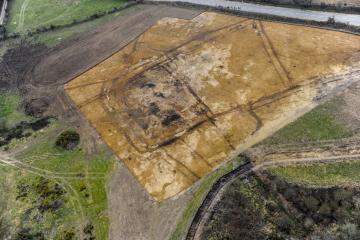
L'Inrap mène, depuis le 11 janvier 2016, une fouille préventive aux portes de Brest, sur le site de Lavallot Nord à Guipavas. Prescrite par la Drac Bretagne (service régional de l’Archéologie), elle permet la sauvegarde par l’étude des vestiges du sous-sol, préalablement à un projet d’aménagement porté par Brest Métropole Aménagement. La fouille révèle les témoignant d’une longue occupation depuis la fin du Néolithique. Mais c’est pendant l’Antiquité puis au Moyen Âge que le site révèle son histoire la plus dense.

Read the rest of this article...
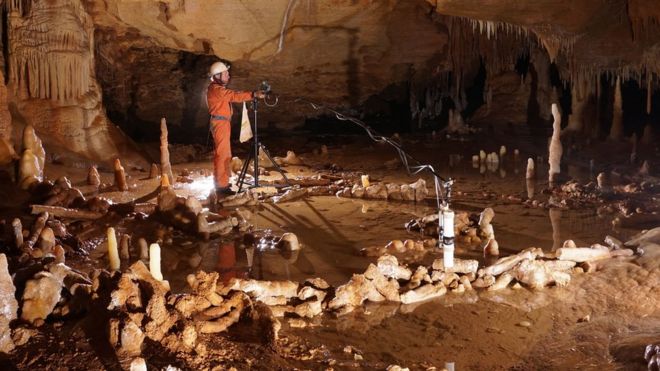
Neanderthal stone ring structures found in French cave

The structures were found deep inside the cave, so the builders would have needed fire to see 

Researchers investigating a cave in France have identified mysterious stone rings that were probably built by Neanderthals.

The discovery provides yet more evidence that we may have underestimated the capabilities of our evolutionary cousins.

The structures were made from hundreds of stalagmites, the mineral deposits which rise from the floors of caves.

Dating techniques showed that they were broken off 175,000 years ago.

The findings are reported in the journal Nature.

Read the rest of this article...
Saturday, May 14, 2016

'Stone Age Art' in Bavarian cave not carved by humans after all


The Mäanderhöhle cave near Bamberg was previously regarded as an archaeological sensation. It was thought to contain some of the oldest cave art in Germany. However, Julia Blumenröther, a former student at Universität Erlangen-Nürnberg, has demonstrated in her Master's thesis that the markings discovered inside the cave in 2005 are not fertility symbols carved by humans as previously thought. In fact, these lines occurred as a result of natural processes, the archaeologist says.
One of the caverns in the 75-metre long cave is full of spherical deposits of minerals known as cave clouds that form on rocks in a similar way to stalactites and stalagmites. In 2005, cave researchers discovered a large number of lines that looked like they could have been made by humans on the rock-hard surface of these cave clouds. An archaeologist studied these lines several years later and published his interpretation of them in a preliminary report, in which he said that the between 14,000 and 16,000 year-old lines were made by humans and probably depicted a phallus and abstract female figures.
Read the rest of this article...

Bronze Age Burial Found in England


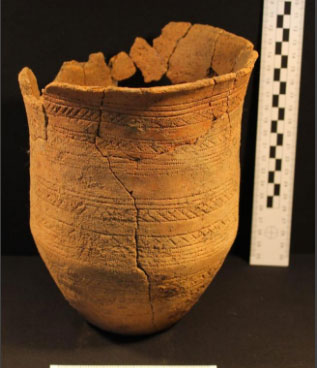
EVESHAM, ENGLAND—Archaeologists surveying a future development site in England’s West Midlands region were surprised to find a Bronze Age burial, reports the Worcester News. The team was following up on an earlier excavation at the site that revealed ditches thought to date to the Iron Age. In broadening their investigation to include a larger tract of land, the archaeologists discovered ditches with artifacts dating 1,000 years earlier than they expected, to the early Bronze Age. “The really unexpected find was a ‘beaker’ burial,” said Laurence Hayes of the environmental consulting firm RSK. “This large burial pit contained a near complete Early Bronze Age vessel known as a beaker, covered with intricate patterns, and a polished stone archer’s wrist guard.” 

Wednesday, May 11, 2016

Two finds in one at Harray chamber

County archaeologist Julie Gibson at the entrance to the underground chamber. (Archaeology Institute UHI)

A prehistoric underground structure has been rediscovered in Harray – rediscovered in that the archaeologists found it to be full of Victorian rubbish!
But although it had obviously been opened,  entered and used in the 19th century, the chamber appears to have gone unrecorded.
Martin Carruthers, of the Archaeology Institute UHI, and county archaeologist Julie Gibson made their way out to the site, near the Harray Manse, last weekend.
Martin explained: “It’s either a souterrain or a ‘well’ and, given similar examples elsewhere in the county, probably dates to the Iron Age.
“The site was discovered by the landowner Clive Chaddock, who, happily, also happens to be a colleague at Orkney College UHI!
Read the rest of this article...
Wednesday, May 4, 2016

Hominins may have been food for carnivores 500,000 years ago


Tooth-marks on a 500,000-year-old hominin femur bone found in a Moroccan cave indicate that it was consumed by large carnivores, likely hyenas, according to a study* published April 27, 2016 in the open-access journal PLOS ONE by Camille Daujeard from the Muséum National D'Histoire Naturelle, France, and colleagues.
During the Middle Pleistocene, early humans likely competed for space and resources with large carnivores, who occupied many of the same areas. However, to date, little evidence for direct interaction between them in this period has been found. The authors of the present study examined the shaft of a femur from the skeleton of a 500,000-year-old hominin, found in the Moroccan cave "Grotte à Hominidés" cave near Casablanca, Morocco, and found evidence of consumption by large carnivores.
Read the rest of this article...
Neandertals and Upper Paleolithic Homo sapiens had different dietary strategies

This is an image of a fossilized human molar used in the study of dietary habits of Neandertals and Upper Paleolithic Homo sapiens. Credit: Sireen El Zaatari 
PLOS ONE—When fluctuating climates in the Ice Age altered habitats, modern humans may have adapted their diets in a different way than Neandertals, according to a study published April 27, 2016 in the open-access journal PLOS ONE by Sireen El Zaatari of the University of Tübingen, Germany, and colleagues.
The Neandertal lineage survived for hundreds of thousands of years despite the severe temperature fluctuations of the Ice Age. The reasons for their decline around 40 thousand years ago remain unclear. The authors of this study investigated the possible influence of dietary strategies using the fossilized molars of 52 Neandertals and Upper Paleolithic Homo sapiens (modern humans). They analysed the type and degree of microwear on the teeth to attempt to draw conclusions about diet type and to establish a relationship with prevalent climactic conditions.
Read the rest of this article...

DNA secrets of Ice Age Europe unlocked

 
study of DNA from ancient human bones has helped unlock the secrets of Europe's Ice Age inhabitants.
Researchers analysed the genomes of 51 individuals who lived between 45,000 years ago and 7,000 years ago.
The results reveal details about the biology of these early inhabitants, such as skin and eye colour, and how different populations were related.
It also shows that Neanderthal ancestry in Europeans has been shrinking over time, perhaps due to natural selection.

Thursday, April 28, 2016

Stonehenge may have served as a cremation cemetery


Towering above the grassy Salisbury Plain, its eerie rock monoliths are steeped in myth and magical stories, yet despite decades of research, the original purpose of Stonehenge remains a mystery. 


Archaeologists excavated the burned bones that had been previously dug up from around  the site of Stonehenge during the 1920s. They say analysis suggests the site  was used as a cemetery
[Credit: Adam Stanford/Aerial-Cam Ltd] 

A new study by archaeologists, however, has suggested the imposing stone circle may have initially been used as a cremation cemetery for the dead. 

Charred remains discovered on the site were unearthed in holes - known as the Aubrey Holes - that have been found have to once held a circle of small standing stones. 

Fresh analysis of the burned bones has revealed they were buried in the holes over a period of 500 years between 3,100BC and 2,600BC.

Read the rest of this article...

Historic flint axes found in Denmark

The flint axes date back to the early Stone Age (photo: Viborg Museum)

A pair of old friends have found the largest flint axes in Danish history in a drained bog area near Tastum Lake just south of Skive in Jutland.
Archaeologists at nearby Viborg Museum theorise that the axes were placed in the bog as part of a ritual sacrifice sometime during the early Stone Age around 3800-3500 BC.
“It’s fascinating that they could master the flint and produce such a perfect axe,” said Mikkel Kieldsen, an archaeologist and curator at Viborg Museum.
“A lot of effort has been put into the axes, so the sacrifice must have really meant something.”
Read the rest of this article...