Thursday, January 28, 2016

Sicily the superpower: British Museum revisits island's golden ages


New exhibition will explore periods under Norman and Greek rule when island was one of Europe’s most enlightened cultures
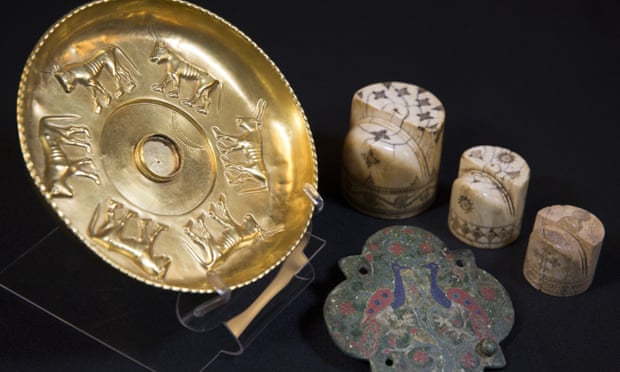
 A gold libation bowl (600-800BC) decorated with bulls, an enamelled casket lid (1250-1300AD) and three ivory chess pieces (1100-1200AD). 
Photograph: Dan Kitwood/Getty Images

In 1066 the Normans were not just conquering grey, cold England. They were also in sunny, fertile Sicily creating what became one of the most enlightened cultures in Europe.
The little known story of the other Norman conquest is to be told in an exhibition exploring 4,000 years of history on the island of Sicily, the British Museumannounced on Thursday.
More than 200 objects will be brought together to prove there is a lot more to Sicily than lemons and the mafia. The show’s main focus will be on two major eras: Greek rule after the 7th century BC and Norman rule from the end of the 11th century.
Read the rest of this article...

No fairy tale: Origins of some famous stories go back thousands of years


Statistical analysis of language evolution helps estimate storytelling dates

ONCE UPON A TIME  Some folktales such as “Rumpelstiltskin” (left) and “Beauty and the Beast” (right) may have been told in some form for thousands of years, statistical analysis shows.

“Beauty and the Beast” is practically “a tale as old as time.” So are a few other folktales, new research shows.
Statistical ties between a set of folktales and languages from parts of Europe and Asia have helped researchers date the origins of some stories to thousands of years ago. The roots of the oldest one — a folktale called “The Smith and the Devil” — stretch back to the Bronze Age. The findings, reported January 20 in Royal Society Open Science, may dispel the thought that some well-known folktales such as “Rumpelstiltskin” and “Beauty and the Beast” are recent inventions.
“These stories are far older than the first literary evidence for them,” says coauthor Jamie Tehrani, an anthropologist at Durham University in England.  
When linguists study a language’s evolution, they trace grammatical and phonetical structure through time. “What we were interested in doing is seeing if you could do that for other elements of culture,” Tehrani says.

Read the rest of this article...

Thursday, January 21, 2016

Uncovering the Culture of Bronze Age Logboats


The advent of metal tools created demand for a European trade network—and boats to deliver the goods.

When people first took to the water, it’s likely they did so in boats carved from the trunks of large trees. The first “logboats” are thought to predate both pottery and agriculture by thousands of years. Their invention opened up new lands to settlement and made long distance travel easier, but during the Bronze Age, which lasted from roughly 2000 to 500 BCE in Northern Europe, logboats began to change. According to archaeologist Ole Thirup Kastholm, of Denmark’s Roskilde Museum, the changing boat designs were a symptom—and reflection—of the broader cultural transformations that were sweeping across the continent.  
During the Bronze Age, early European societies were beginning to exchange goods and ideas across the continent. Fueled by a demand for tin and copper—the base metals needed to smelt bronze—massive trade networks began to grow. “Some trading networks went as far as from the North to the Mediterranean,” says Kastholm.
Read the rest of this article...

Monday, January 18, 2016

Walking back in time to the
 Bronze Age


A leading archaeologist has called for Peterborough to become a national bronze age heritage centre after an incredible 3,000 year old settlement was discovered.

Two Bronze Age round houses, dating back to around 1290 BC were discovered in Must Farm Quarry, off Funthams Lane near Whittlesey.

The 3,000 year old houses, which were built on stilts were destroyed by a fire and collapsed into a river - which preserved bowls, tools and even timber in clay.

Now archaeologists have been able to learn more about how our ancestors lived after a £1.1 million project to excavate the site, funded by government heritage agency Historic England and quarry-owners Forterra, was launched.

Read the rest of this article...

New finds at ancient Hephaestia on Limnos


A major temple with finds dating from two main periods – one in the 7th-6th century B.C. and the second in the 3rd-2nd century B.C – was discovered during an archaeological excavation at ancient Hephaestia on the Greek island of Limnos, according to state broadcaster ERT. The finds came to light near the ancient city’s theatre. 


The ancient theatre at Hephaestia on the Greek island of Limnos  [Credit: limnosgreece] 

Lesbos Antiquities Ephorate Pavlos Triantafyllidis stated that the workings on the archaeological site, funded by the General Secretariat for the Aegean and Island Policy, will continue. 

Read the rest of this article...

Saturday, January 16, 2016

Grisly find suggests humans inhabited Arctic 45,000 years ago

To hunt mammoths in the Arctic, humans had to have the hunting tools, insulated clothes and shelter to survive in the Arctic.

In August of 2012, an 11-year-old boy made a gruesome discovery in a frozen bluff overlooking the Arctic Ocean. While exploring the foggy coast of Yenisei Bay, about 2000 kilometers south of the North Pole, he came upon the leg bones of a woolly mammoth eroding out of frozen sediments. Scientists excavating the well-preserved creature determined that it had been killed by humans: Its eye sockets, ribs, and jaw had been battered, apparently by spears, and one spear-point had left a dent in its cheekbone—perhaps a missed blow aimed at the base of its trunk.
When they dated the remains, the researchers got another surprise: The mammoth died 45,000 years ago. That means that humans lived in the Arctic more than 10,000 years earlier than scientists believed, according to a new study. The find suggests that even at this early stage, humans were traversing the most frigid parts of the globe and had the adaptive ability to migrate almost everywhere.
Read the rest of this article...

Meet the archaeologists making ancient rock art into 3D reality


An event next Monday (18 January 2016) will give the public a chance to experience at first hand the technologies that have enabled archaeologists to create 3D visualisations of images etched into rock thousands of years ago. The day-long event is free and open to all.

High in the Italian Alps, thousands of stick-like images of people and animals, carved into rock surfaces, offer a tantalising window into the past. Archaeologists believe that the earliest of these 150,000 images date from the Neolithic but that most originate from the Iron Age. The UNESCO-protected ‘Pitoti’ (little puppets) of the Valcamonica valley extend over an area of some three square kilometres and have been described as one of the world’s largest pieces of anonymous art.
An event taking place next Monday (18 January 2016) at Downing College, Cambridge, will give the public an opportunity to learn more about a fascinating project to explore and re-animate the Pitoti of Valcamonica.
Read the rest of this article...

'Cave of forgotten dreams' may hold earliest painting of volcanic eruption


France's iconic Chauvet cave holds mysterious spray-shaped imagery, made around the time when nearby volcanoes were spewing lava.


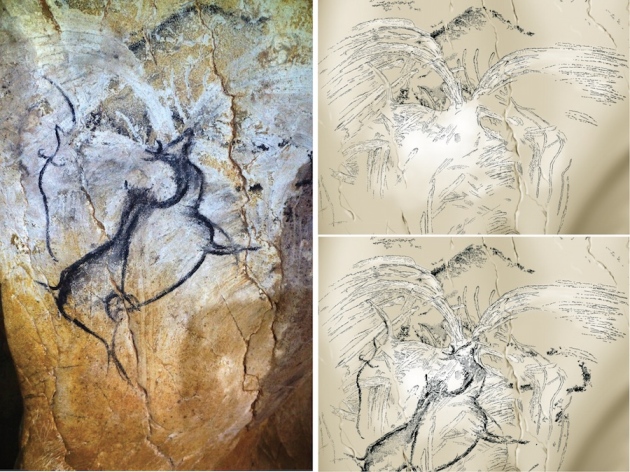
Spray-shaped drawings in an inner gallery of the Chauvet cave may depict a volcanic eruption. Left: general view; right: traced detail, with an overlaid charcoal painting of a giant deer species removed (lower right).

Mysterious paintings in one of the world’s most famous caves could mark the oldest-known depiction of a volcanic eruption. Spray-shaped images in Chauvet cave in France were painted at around the same time as nearby volcanoes spewed lava high into the sky, reports a paper published this month in PLoS ONE1.
Chauvet-Pont D'Arc cave, in southern France, is one of the world’s oldest and most impressive cave-art sites. Discovered in 1994 and popularized in the Werner Herzog documentary 'Cave of Forgotten Dreams', Chauvet contains hundreds of paintings that were made as early as 37,000 years ago.
Read the rest of this article...

Chauvet Cave painting depicts 36,000 year-old volcanic eruption


Scientists believe that they have identified the oldest known images of erupting volcanoes, daubed in red and white pigments over other cave paintings in south-eastern France around 36,000 years ago. 


Scientists may have discovered the oldest images of a volcano in the world after  finding cave paintings of a disaster 36,000 years ago in the Chauvet caves  [Credit: Getty Images] 

The puzzling and apparently abstract images were first found in 1994 among startlingly precise paintings of lions, mammoths and other animals at a complex of caverns at Chauvet in the Ardèche. 

A team of French scientists, ranging from geologists to palaeontologists, now believe that the surging, fountain-like images are the only example in Europe of prehistoric paintings of landscapes or natural phenomena. The oldest images of volcanoes previously identified were drawn 8,000 years ago at Catalhoyuk in central Turkey.

Read the rest of this article...

Friday, January 15, 2016

New discoveries concerning Ötzi's genetic history


EUROPEAN ACADEMY OF BOZEN/BOLZANO (EURAC)—A study was published last week on the DNA of Helicobacter pylori, the pathogen extracted from the stomach of Ötzi, the ice mummy who has provided valuable information on the life of Homo Sapiens. New research at the European Academy of Bolzano/Bozen (EURAC) further clarifies the genetic history of the man who lived in the Eastern Alps over 5,300 years ago. In 2012 a complete analysis of the Y chromosome (transmitted from fathers to their sons) showed that Ötzi's paternal genetic line is still present in modern-day populations. In contrast, studies of mitochondrial DNA (transmitted solely via the mother to her offspring) left many questions still open.

Read the rest of this article...

Intact horse skeleton discovered in ancient cemetery in southern coastal Athens


A burial site containing an unusually well preserved skeleton of a horse, intact even down to the hooves, was among the finds discovered during landscaping works around the Stavros Niarchos Foundation Cultural Centre in the Faliro Delta, a prime tract of land in southern coastal Athens and previously hosted the country's only pari-mutuel horse track. The find was presented to the Central Archaeological Council during a session held on Tuesday, with members stressing its importance.
"In the Faliro necropolis we have found four complete horse graves, as well as parts of other skeletons, therefore, it is not something rare for the area. What is rare and surprised us was the degree of preservation of the specific skeleton, which even has its hooves. For zoo-archaeologists or a university, this find could be an excellent opportunity for a study. Having such a large number of skeletons - four is quite a number - such a study could reach a number of conclusions on the breeds and the evolution of the species. From this point of view, this find is very important," the top archaeologist Stella Chrysoulaki explained.
Read the rest of this article...

NEW DISCOVERIES CONCERNING ÖTZI’S GENETIC HISTORY


The Iceman’s maternal genetic line originated in the Alps and is now extinct.

A study was published last week on the DNA of Helicobacter pylori, the pathogen extracted from the stomach of Ötzi, the ice mummy who has provided valuable information on the life of Homo Sapiens; new research at the European Academy of Bolzano/Bozen (EURAC) further clarifies the genetic history of man who lived in the Eastern Alps over 5,300 years ago. In 2012 a complete analysis of the Y chromosome (transmitted from fathers to their sons) showed that Ötzi’s paternal genetic line is still present in modern-day populations. In contrast, studies of mitochondrial DNA (transmitted solely via the mother to her offspring) left many questions still open. To clarify whether the genetic maternal line of the Iceman, who lived in the eastern Alps over 5,300 years ago, has left its mark in current populations, researchers at the European Academy of Bolzano/Bozen (EURAC) have now compared his mitochondrial DNA with 1,077 modern samples.

Read the rest of this article...

The Ancient Greek Drinking Party


The Ancient Greek Drinking Party

a lecture by Michael Duigan

Friday, 12 February 2016

7:00 pm

Activity Space 1, Clore Learning Centre

Museum of London, London Wall

EC2Y 5HN

FREE TO EMAS MEMBERS £3:00 NON-MEMBERS


Go to the EMAS Website...

Thursday, January 14, 2016

Apulian burial rituals prove you can take it with you


Death is inevitable, but what death shows us about the social behaviors of the living is not. And recent University of Cincinnati research examining the ancient bereavement practices from the the Central Apulian region in pre-Roman Italy helps shed light on economic and social mobility, military service and even drinking customs in a culture that left no written history. 


Red-figure hydria with grave scene: Women offering fillets to the deceased.  Apulian Greek 450-300 BCE, terracotta [Credit: archaeology.wiki] 

For instance, by focusing on the logistics of burials, treatment of deceased bodies and grave contents dating from about 525-200 BC, UC Classics doctoral student Bice Peruzzi found indication of strong social stratification and hierarchy. She also found indications of the commonality of military service since men's tombs of the era routinely contained metal weaponry lying across or near the skeletal remains.

Read the rest of this article...

Sulawesi find: 118,000-year-old stone tools point to 'archaic group of humans'


Discovery of 311 implements on Indonesian island suggest modern humans settling there 60,000 years ago would have met an ‘isolated human lineage’


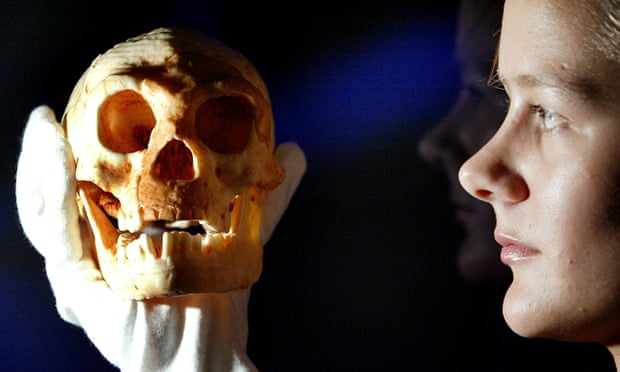
A model of a skull from a species of Hobbit-sized humans called Homo floresiensis, which was found in a cave on the Indonesian island of Flores. Scientists now believe they may have had relatives on other islands. 
Photograph: Stephen Hird/Reuters/Corbis

The diminutive prehistoric human species dubbed the “Hobbit” that inhabited the Indonesian island of Flores long before the arrival of Homo sapiens apparently had company on other islands.
Stone tools that are at least 118,000 years old have been discovered on the island of Sulawesi, indicating a human presence, scientists said on Wednesday. No fossils of these individuals were found in conjunction with the tools at the site called Talepu, leaving the toolmakers’ identity a mystery.
Read the rest of this article...

Bronze Age stilt houses unearthed in Cambridgeshire


Large circular wooden houses built on stilts collapsed in a dramatic fire 3,000 years ago and plunged into a river, preserving their contents in astonishing detail. Archaeologists say the excavations have revealed the best-preserved Bronze Age dwellings ever found in Britain. 


Archaeologists at Must Farm have uncovered the charred wooden roof structure  of a 3,000 year old round house [Credit: Cambridge Archaeological Unit] 

Archaeologists have revealed exceptionally well-preserved Bronze Age dwellings during an excavation at Must Farm quarry in the East Anglian fens that is providing an extraordinary insight into domestic life 3,000 years ago. The settlement, dating to the end of the Bronze Age (1200-800 BC), would have been home to several families who lived in a number of wooden houses on stilts above water.

Read the rest of this article...

Dog domestication may have increased harmful genetic changes, UCLA biologists report


The domestication of dogs may have inadvertently caused harmful genetic changes, a UCLA-led study suggests.
Domesticating dogs from gray wolves more than 15,000 years ago involved artificial selection and inbreeding, but the effects of these processes on dog genomes have been little-studied.
UCLA researchers analyzed the complete genome sequences of 19 wolves; 25 wild dogs from 10 different countries; and 46 domesticated dogs from 34 different breeds. They found that domestication may have led to a rise in the number of harmful genetic changes in dogs, likely as a result of temporary reductions in population size known as bottlenecks. 
“Population bottlenecks tied to domestication, rather than recent inbreeding, likely led to an increased frequency of deleterious genetic variations in dogs,” said Kirk Lohmueller, senior author of the research and assistant professor of ecology and evolutionary biology in the UCLA College.  

Wednesday, January 13, 2016

Bronze Age houses: What the finds tell us


At a quarry in Cambridgeshire, archaeologists say they have discovered Britain's "Pompeii - a number of well-preserved dwellings dating back to the Bronze Age. The artefacts found there reveal new details about the period between 2500 and 2000BC and those who lived through it.

One of the finds at Must Farm quarry in Cambridgeshire were pots with meals still inside. According to Selina Davenport, an archaeologist who helped uncover the Bronze Age dwellings, the find suggests that the pots were being used to make pottage.
"Think porridge and add a few extra herby things, and if you were lucky you might have had honey to dollop in the middle. It isn't a great meal, and if someone put a bowl in front of you, you wouldn't light up," says Chris Gosden, Professor of European Archaeology at the University of Oxford.

Read the rest of this article...

Bronze Age village found near ancient Roman city


A 3,500-year-old settlement has been unearthed near an ancient Roman city in northeast Italy.

The Roman city of Aquileia, in Friuli Venezia Giulia, is one of Italy's 51 world heritage sites but the discovery of a Bronze Age village just outside the city has cast new light on the area's human history, Corriere della Sera reported.
The village was found next to an ancient Roman canal, known as the Canale Anfora, by a team of archaeologists from the University of Udine.
From 200BC until 400AD Aquileia – today home to just 3,500 inhabitants – was one of the biggest and most important market towns in Europe, with a population of some 100,000.
Read the rest of this article...
Dorset's oldest settlement 'could fall into sea'


Parts of what is believed to be Dorset's oldest human settlement could be lost to coastal erosion, archaeologists have warned. 


Excavations were carried out in 2009, metres from the cliff edge  at Doghouse Hill 
[Credit: Paul Baker] 

Hunter-gatherers lived on Doghouse Hill near Seatown up to 10,000 years ago. The settlement was on land a mile inland, but erosion means it is now on a cliff edge which has crumbled further during the winter storms. Archaeology writer Paul Baker said there was an "imminent danger" of landslips. 

The National Trust, which owns Golden Cap Estate, led excavations in 2009 that unearthed a stone hearth, fire pit and pot shards from Bronze Age periods (2,500 to 1,000BC) and other relics from the Mesolithic Age (10,000 to 4,000BC) when Dorset was inhabited by hunter-gathers living off the land.

Read the rest of this article...